
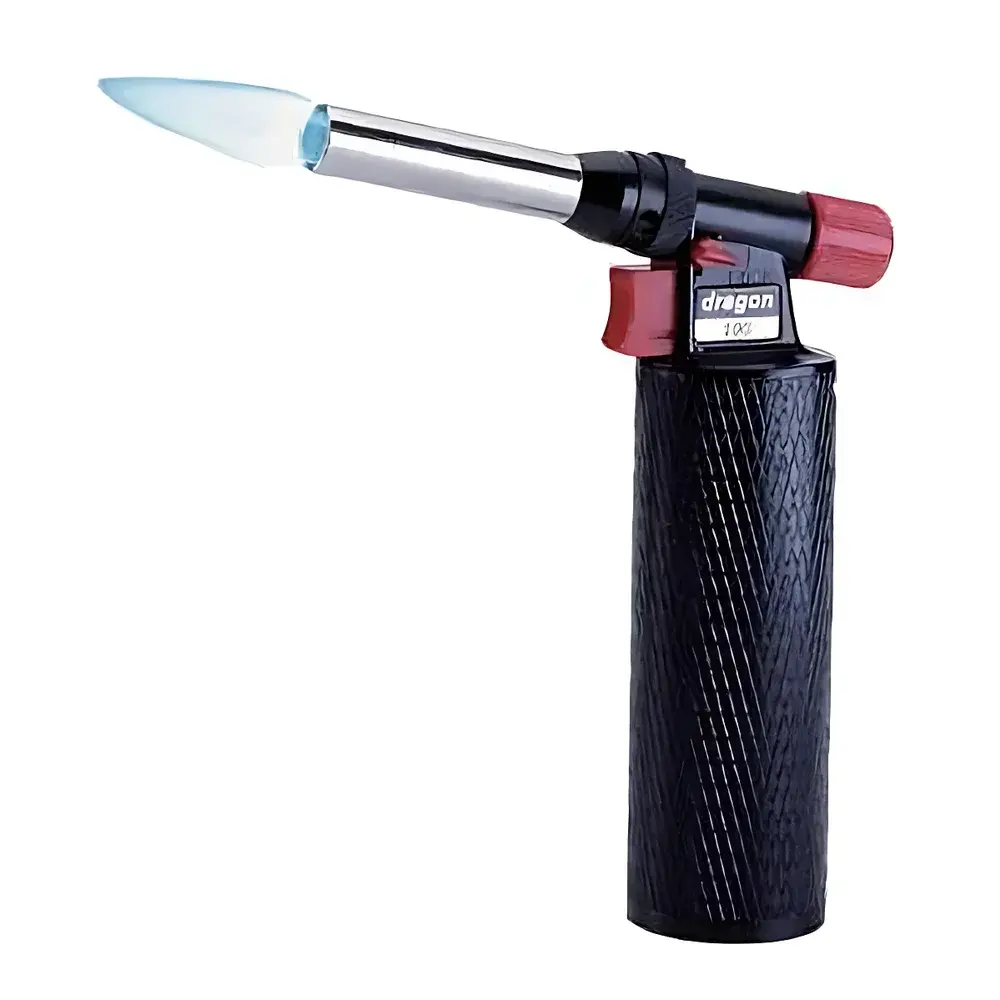
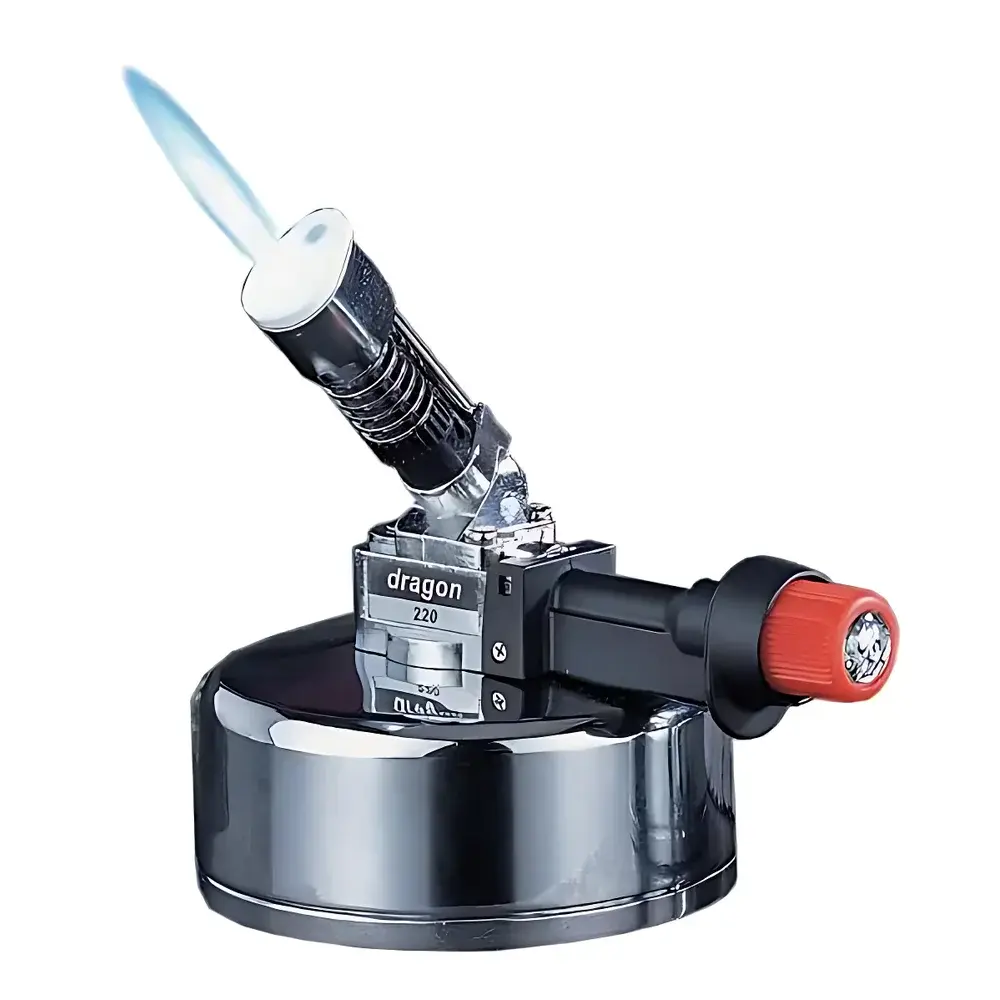
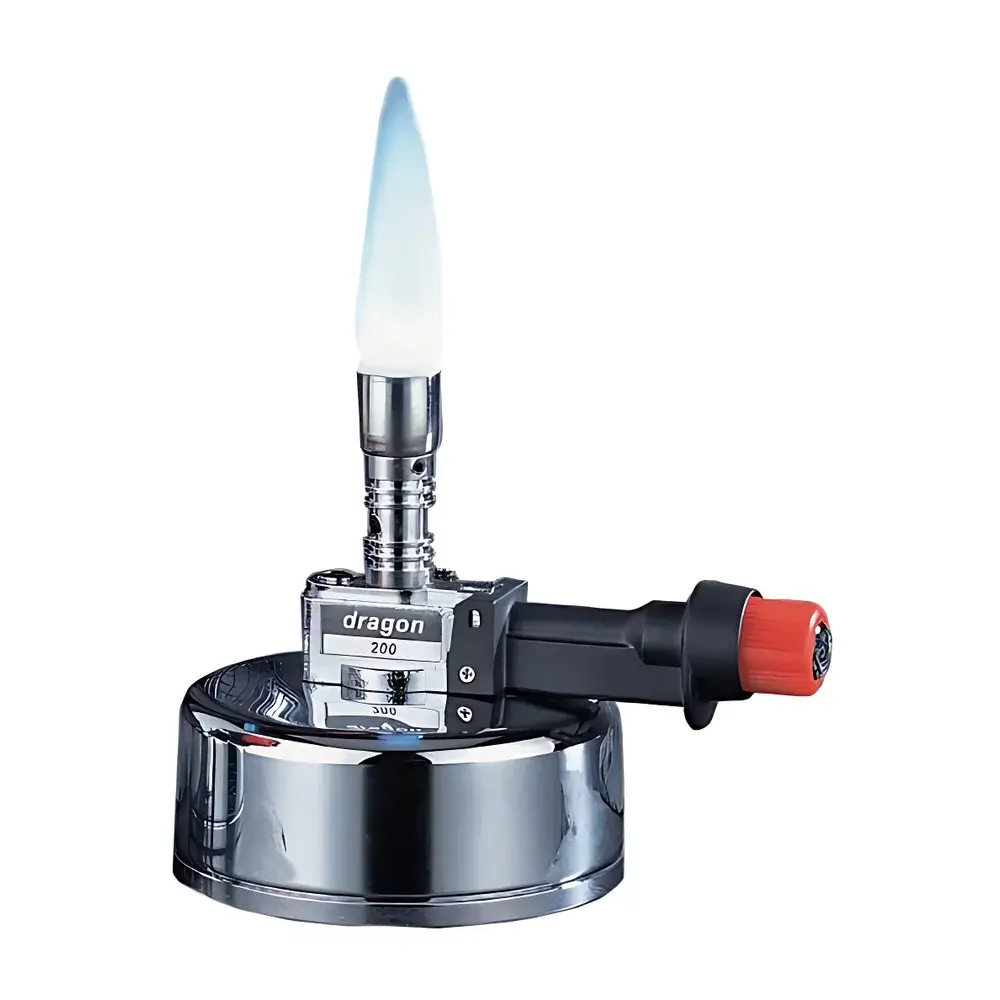
WIGGENS Dragon Economical Bunsen Burner
| Brand | WIGGENS |
|---|---|
| Origin | Germany |
| Model | Dragon |
| Maximum Flame Temperature | 1300 °C |
| Fuel Consumption | 45 g/h |
| Compatible Fuel | n-Butane |
| Ignition Type | Piezoelectric Electronic Ignition |
| Design Variant | Tabletop (Dragon 200 & Dragon 220), Angled Flame Configuration (Dragon 220) |
Overview
The WIGGENS Dragon Economical Bunsen Burner is a precision-engineered, laboratory-grade open-flame heating device designed for reliable thermal application in academic, industrial, and quality control laboratories. Unlike conventional atmospheric burners relying on manual ignition and fixed air–fuel mixing, the Dragon series employs a calibrated venturi-based gas-air mixing chamber and integrated piezoelectric ignition to deliver consistent stoichiometric combustion of n-butane. This enables stable, non-luminous blue flames with minimal soot formation and high thermal efficiency—critical for applications demanding repeatable heat input without carbon deposition or localized overheating. With a maximum adiabatic flame temperature of 1300 °C under optimal air-to-fuel ratio conditions, the Dragon burner meets ISO 8573-1 Class 3 compressed gas purity requirements when used with certified butane fuel cylinders, ensuring compliance with general laboratory safety protocols (DIN EN 13861, DGUV Regulation 100-500).
Key Features
- Piezoelectric electronic ignition system eliminates match dependency and reduces operator exposure to open flame during startup.
- Adjustable collar and needle valve allow precise control over air intake and fuel flow, enabling seamless transition between oxidizing (blue) and reducing (yellow-tipped) flame regimes.
- Stainless steel body and brass nozzle assembly provide corrosion resistance and long-term dimensional stability under repeated thermal cycling.
- Refillable n-butane fuel cartridge design conforms to UN 1950 transport regulations and features over-pressure relief and leak-tight O-ring sealing per EN 15202 standards.
- Dragon 200: Vertical-axis tabletop configuration optimized for benchtop sterilization of inoculation loops and glassware annealing.
- Dragon 220: Angled-flame geometry (15° tilt) facilitates ergonomic access to narrow-necked vessels and improves flame alignment during tube-sealing or localized soldering tasks.
Sample Compatibility & Compliance
The Dragon Bunsen Burner is compatible with standard laboratory-grade n-butane (≥99.5% purity, ASTM D1835 compliant) supplied in disposable or refillable cartridges rated for ≤2.0 MPa working pressure. It does not support propane, natural gas, or hydrogen due to differing stoichiometric air requirements and flame velocity characteristics. The burner’s flame envelope dimensions (typical height: 80–120 mm; cone diameter: 10–15 mm) are validated for use with borosilicate glassware (e.g., Pyrex®, Duran®) and stainless steel instruments. Device construction complies with IEC 61010-1:2010 for electrical safety (ignition module) and carries CE marking under the EU Machinery Directive 2006/42/EC. No GLP/GMP-specific validation documentation is provided; users must perform in-house operational qualification (OQ) per SOPs aligned with ISO/IEC 17025.
Software & Data Management
The Dragon Bunsen Burner operates as a standalone analog device with no embedded firmware, digital interface, or data logging capability. Flame temperature and heat flux are determined empirically using calibrated thermocouples (Type K, ±1.5 °C accuracy) or infrared pyrometers traceable to NIST standards. While no software is bundled, the burner integrates seamlessly into laboratory workflows governed by FDA 21 CFR Part 11–compliant electronic lab notebooks (ELNs) when experimental parameters—including fuel batch number, ambient humidity, and observed flame morphology—are manually recorded with audit-trail timestamps.
Applications
- Sterilization of microbiological tools (inoculating loops, forceps, scalpel blades) prior to aseptic technique execution.
- Localized heating of glass tubing for bending, sealing, or capillary puller preheating in microfluidics fabrication.
- Thermal treatment of metal samples in metallurgy education labs (e.g., tempering demonstration, oxide layer observation).
- Controlled dehydration of crystalline hydrates during gravimetric analysis procedures.
- Flame test qualitative analysis for alkali and alkaline earth metals (Na⁺: yellow; K⁺: violet; Ca²⁺: brick-red) in general chemistry instruction.
- Pre-heating of crucibles and evaporation dishes before quantitative residue determination (USP <211>).
FAQ
Can the Dragon Bunsen Burner operate with propane or liquefied petroleum gas (LPG)?
No. The burner is calibrated exclusively for n-butane. Propane requires different injector orifice sizing and air shutter settings due to higher Wobbe index and lower flame speed; using it may cause flashback or incomplete combustion.
Is the fuel cartridge refillable in the field?
Yes—cartridges are designed for safe refilling using a dedicated butane transfer station meeting EN 14752 requirements. Refilling must occur in well-ventilated areas away from ignition sources.
What maintenance is required to ensure long-term performance?
Monthly inspection of the air inlet mesh for dust blockage, annual replacement of the piezoelectric crystal if ignition latency exceeds 2 seconds, and periodic cleaning of the nozzle orifice with methanol and #0000 steel wool.
Does WIGGENS supply calibration certificates for the Dragon series?
No. As a Class I non-measuring thermal device under EU Measuring Instruments Directive (MID), formal metrological calibration is not applicable. Users should verify flame stability and temperature consistency against reference standards per internal QA protocols.



