
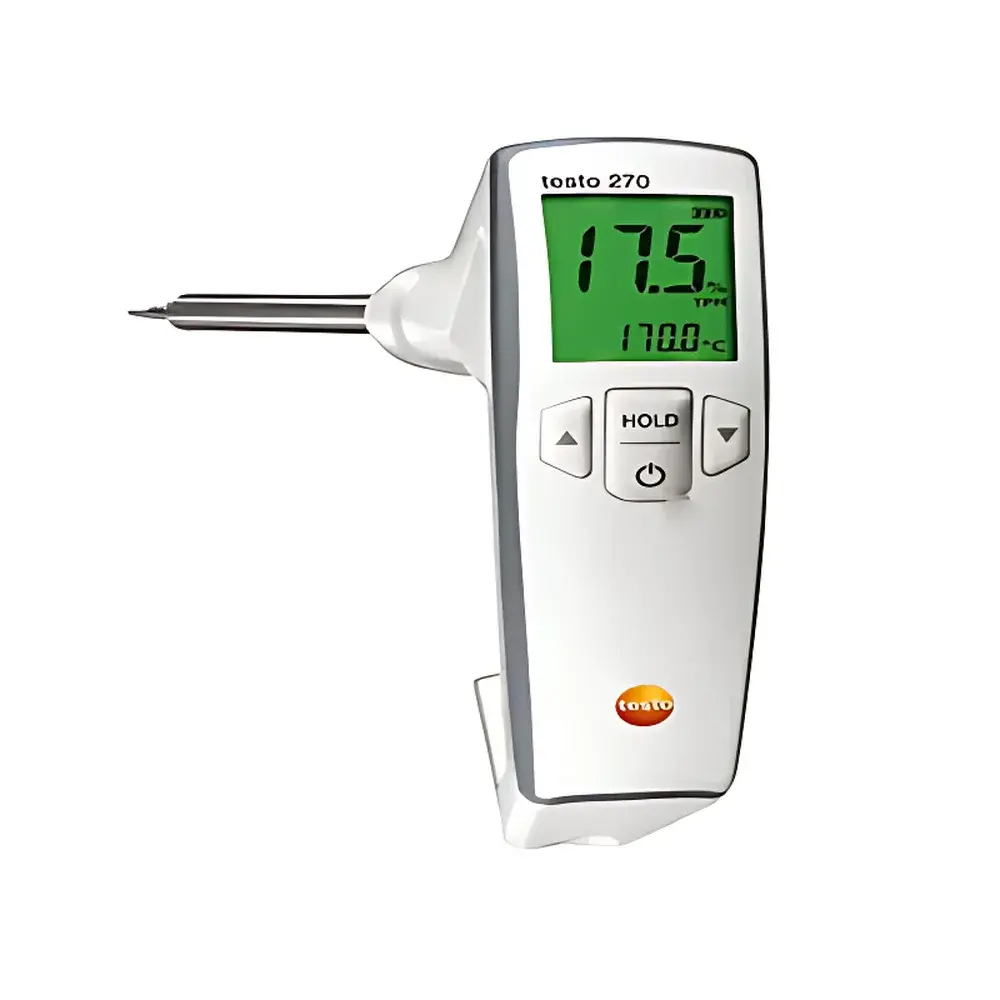
testo 270 Edible Oil Quality Analyzer
| Brand | testo |
|---|---|
| Origin | Germany |
| Model | 0563 2750 |
| Measurement Principle | Capacitive TPM Sensing |
| Temperature Range | +40 to +200 °C |
| TPM Range | 0.0–40.0 % TPM |
| TPM Accuracy | ±2 % TPM (at +40 to +190 °C) |
| Temperature Accuracy | ±1.5 °C |
| Resolution | 0.5 % TPM / 0.1 °C |
| Response Time | ~30 s |
| Weight | 255 g |
| Dimensions (L×W×H) | 170 × 50 × 300 mm |
| Probe Diameter | 11 mm |
| Probe Tip Length | 35 mm |
| Housing Material | Glass-fiber-reinforced ABS/ABS-PC |
| Battery | 1.5 V AAA (LR03), ~25 h runtime |
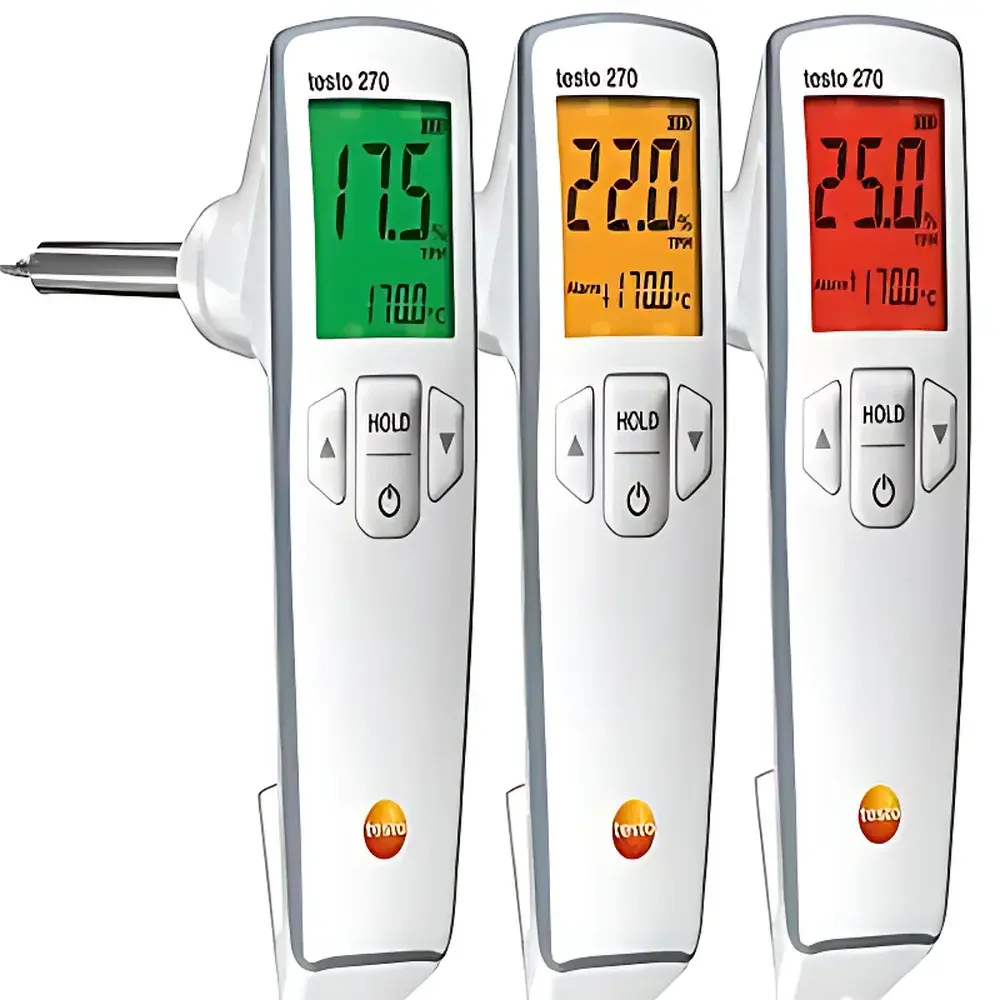
| Display | 2-line LCD with tri-color backlight (green/yellow/red) |
| Operating Humidity | 0–90 % RH |
| Storage Temp | −20 to +70 °C |
Overview
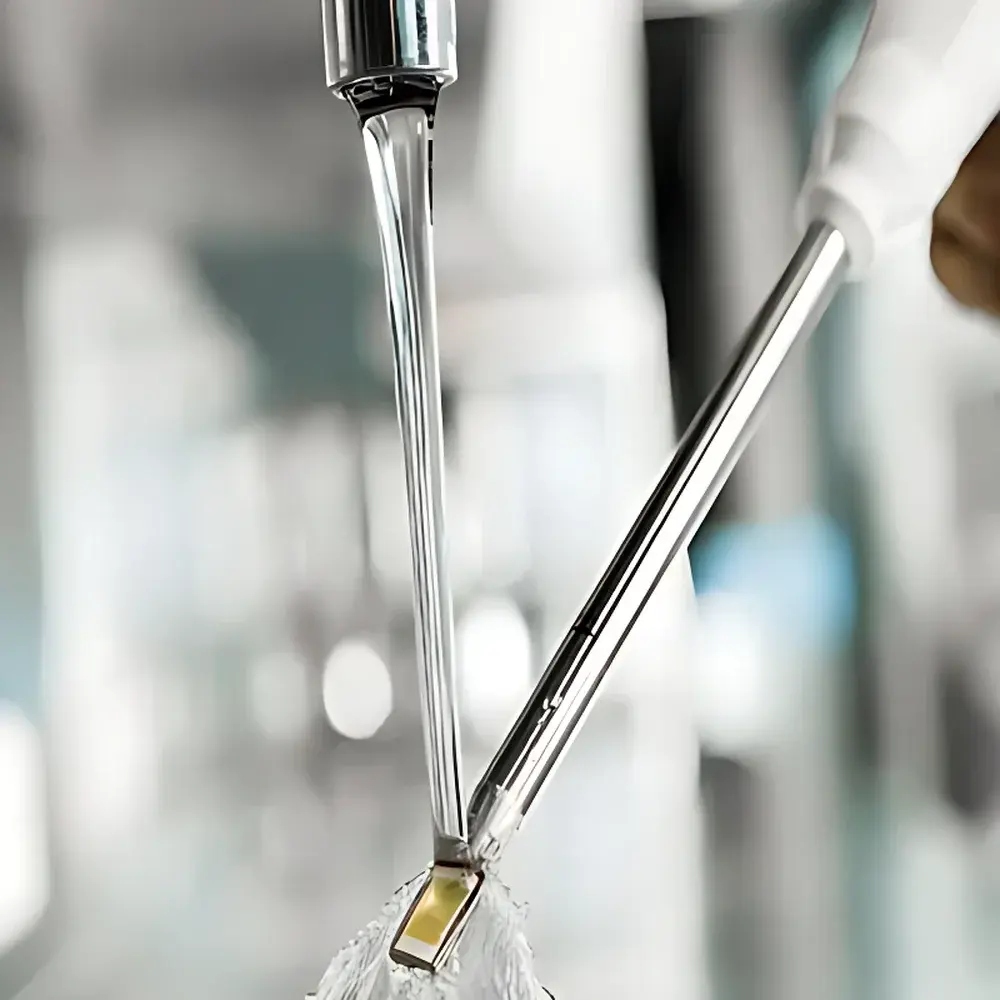
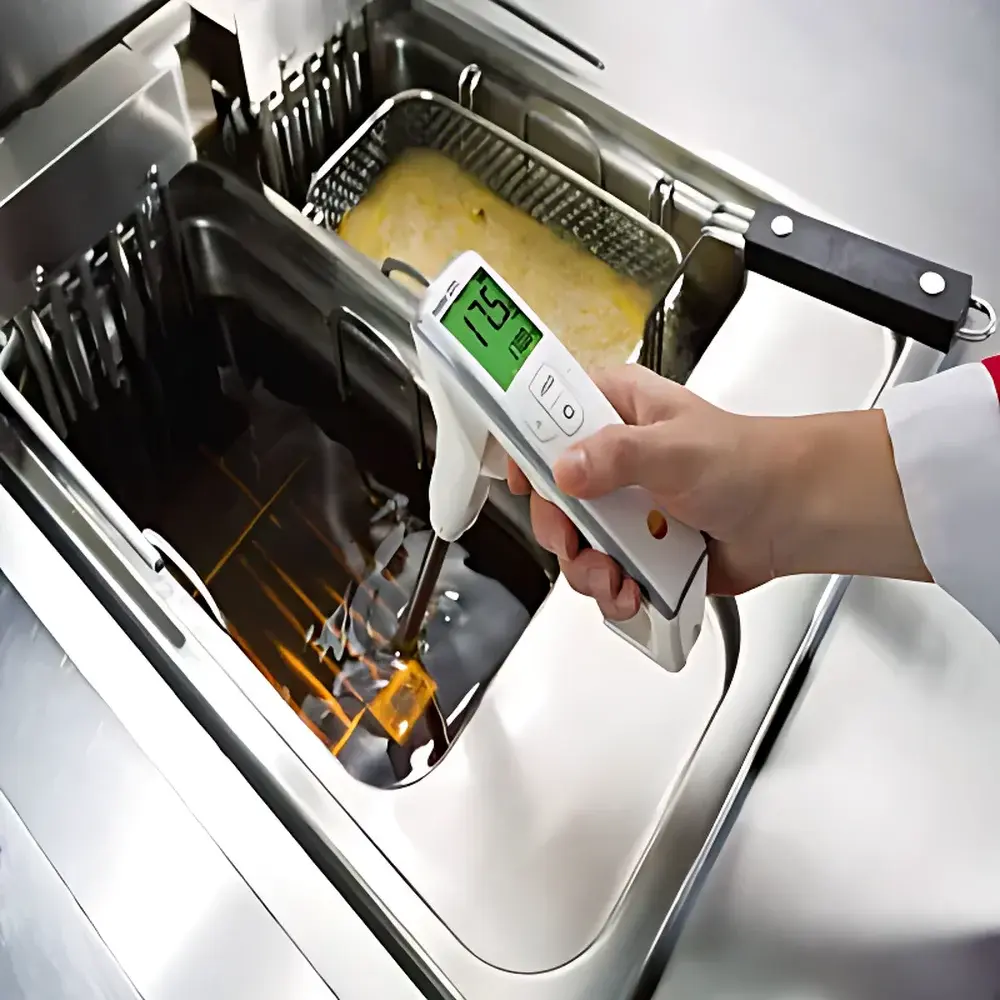
The testo 270 Edible Oil Quality Analyzer is a purpose-built, handheld instrument engineered for real-time, in-situ assessment of frying oil degradation in commercial food preparation environments. It employs a proprietary capacitive sensor technology to quantify Total Polar Materials (TPM) — a globally recognized chemical indicator of thermal-oxidative breakdown in edible oils. As frying oil degrades under high-temperature use, polar compounds (e.g., free fatty acids, aldehydes, polymers) accumulate; TPM concentration correlates directly with oil safety, flavor stability, and compliance with food hygiene regulations. Unlike subjective sensory evaluation or offline lab testing, the testo 270 delivers objective, quantitative TPM data directly in hot oil (up to +200 °C), eliminating cooling delays and cross-contamination risks. Its design adheres to operational constraints of professional kitchens: rapid response (~30 s), robust mechanical construction, and full IP65 ingress protection for safe rinsing under running water. The device operates without consumables or reagents—calibration is performed on-site using certified reference calibration oil, ensuring traceability and measurement continuity across shifts and locations.
Key Features
- Capacitive TPM sensor with embedded metal cradle for mechanical protection and consistent immersion geometry
- Integrated PTC thermistor for simultaneous oil temperature monitoring (+40 to +200 °C, ±1.5 °C accuracy)
- Tri-color LED-backlit LCD display (green/yellow/red) providing immediate visual status indication aligned with regulatory TPM thresholds (e.g., EU Commission Regulation (EU) No 1333/2008 guidelines)
- User-configurable upper/lower TPM alarm limits with PIN-protected settings to prevent accidental modification
- Auto-Hold and manual Hold functions for stable reading capture during dynamic frying conditions
- Detachable, dishwasher-safe housing (DIN EN ISO 15820 compliant cleaning protocols supported)
- Ergonomic, heat-shielded grip design minimizing operator exposure to thermal radiation from fryers
- Lightweight (255 g) and compact form factor (170 × 50 × 300 mm) optimized for one-handed operation in confined kitchen spaces
Sample Compatibility & Compliance
The testo 270 is validated for direct immersion in all common frying media including vegetable oils (soybean, sunflower, palm, canola), animal fats (lard, tallow), and blended frying oils. It meets CE marking requirements under Directive 2014/30/EU (EMC) and is constructed to comply with food-contact material provisions of Regulation (EC) No 1935/2004. While not a laboratory-grade analytical instrument, its TPM measurement methodology aligns with the principles outlined in AOCS Cd 20-91 (capacitance-based polar compound detection) and supports adherence to national food safety standards that reference TPM thresholds—such as Germany’s LFGB §36 (max. 24–27 % TPM), France’s DGCCRF recommendations (≤24 % TPM), and UK Food Standards Agency guidance. Routine on-site calibration using included testo-certified calibration oil (0554 1201) ensures metrological consistency and satisfies internal quality assurance requirements under HACCP and ISO 22000 frameworks.
Software & Data Management
The testo 270 operates as a standalone field instrument with no embedded data logging or wireless connectivity. All measurements are displayed in real time and retained only on-screen until overwritten by subsequent readings. However, its design facilitates integration into structured quality management systems: each unit ships with a factory calibration certificate (traceable to national standards), user training card, and multilingual operating manual compliant with IEC 62366-1 usability engineering requirements. For facilities requiring audit-ready records, manual entry of TPM values into digital logbooks or paper-based HACCP checklists is supported by the device’s clear numeric readout (%TPM, °C) and unambiguous color-coded status feedback. The absence of firmware updates or cloud dependencies ensures long-term operational reliability and simplifies validation under GMP or GLP environments where software change control is mandated.
Applications
- Continuous monitoring of frying oil integrity in fast-food chains, hotel kitchens, and contract catering operations
- Preventive maintenance scheduling for fryer filtration and oil replacement cycles based on actual degradation—not elapsed time
- Training and verification tool for kitchen staff performing daily oil quality checks per corporate food safety protocols
- On-site verification during health authority inspections or third-party food safety audits (e.g., BRCGS, SQF, ISO 22000)
- Quality assurance support in food manufacturing facilities producing battered or fried products (e.g., frozen snacks, ready meals)
- Field validation of oil recycling or reclamation processes prior to reuse or disposal
FAQ
Does the testo 270 require periodic recalibration by an external lab?
No. Field calibration is performed by the user using the included testo calibration oil (0554 1201) and follows a documented two-point procedure outlined in the manual. Annual verification against traceable reference standards is recommended but not mandatory for routine food service use.
Can the probe be immersed in cold oil or water?
The sensor is rated for operation between +40 °C and +200 °C. Immersion below +40 °C may yield unstable or non-linear TPM readings and is not supported per specification.
Is the device suitable for measuring TPM in used cooking oil collected for biodiesel production?
While the sensor responds to polar content, the testo 270 is calibrated and validated exclusively for food-grade frying oil applications. It is not intended for industrial waste stream analysis or fuel precursor characterization.
How does the IP65 rating impact cleaning procedures?
IP65 permits low-pressure water jet cleaning (IEC 60529). The unit may be rinsed under tap water after use, but submersion, steam cleaning, or solvent exposure is prohibited.
What happens if the battery dies mid-measurement?
The LCD retains the last stable reading for up to 10 seconds after power loss. Replacement AAA batteries restore full functionality without data loss or recalibration requirement.





