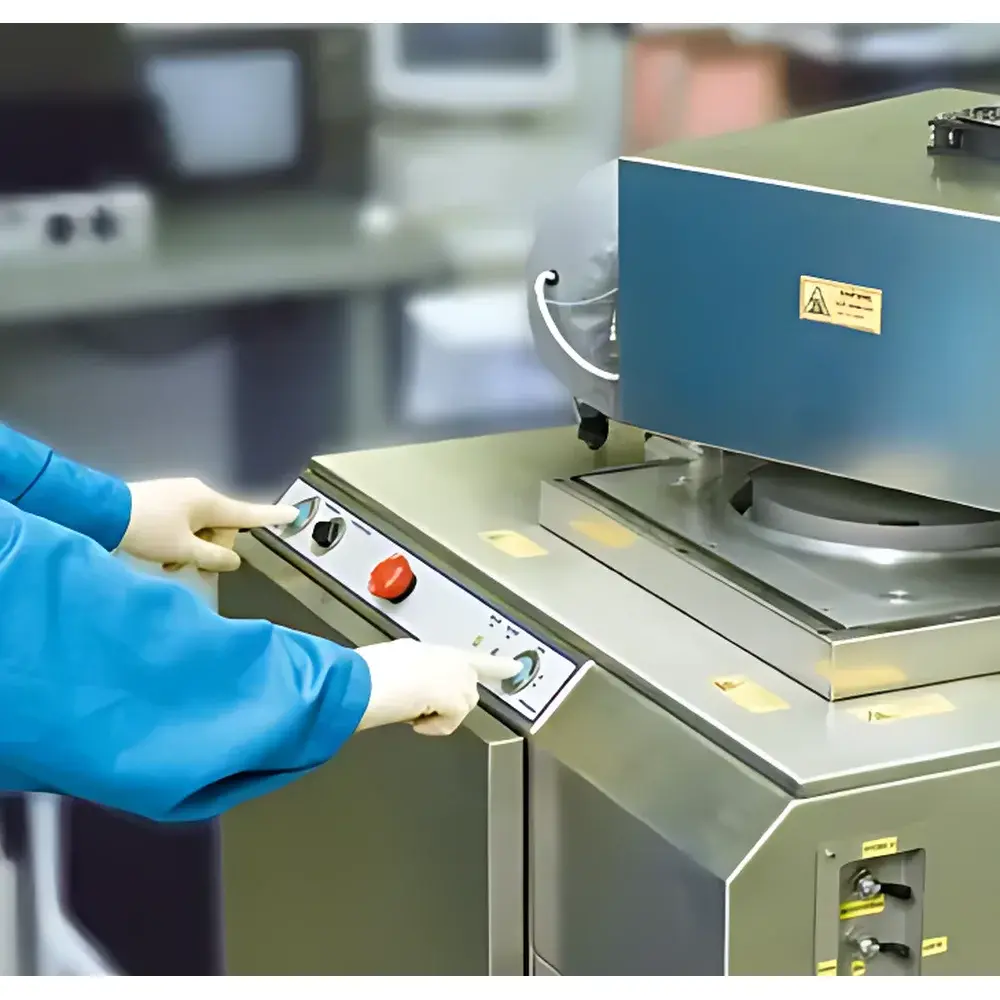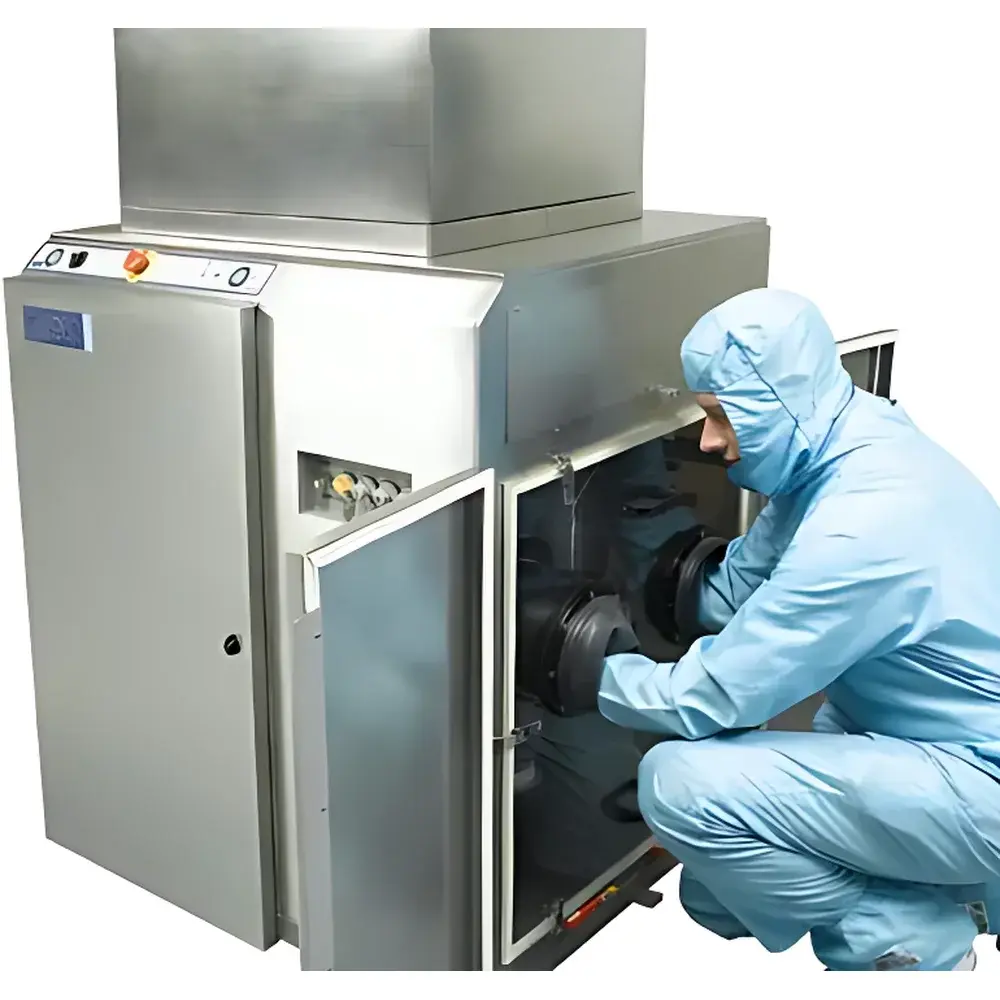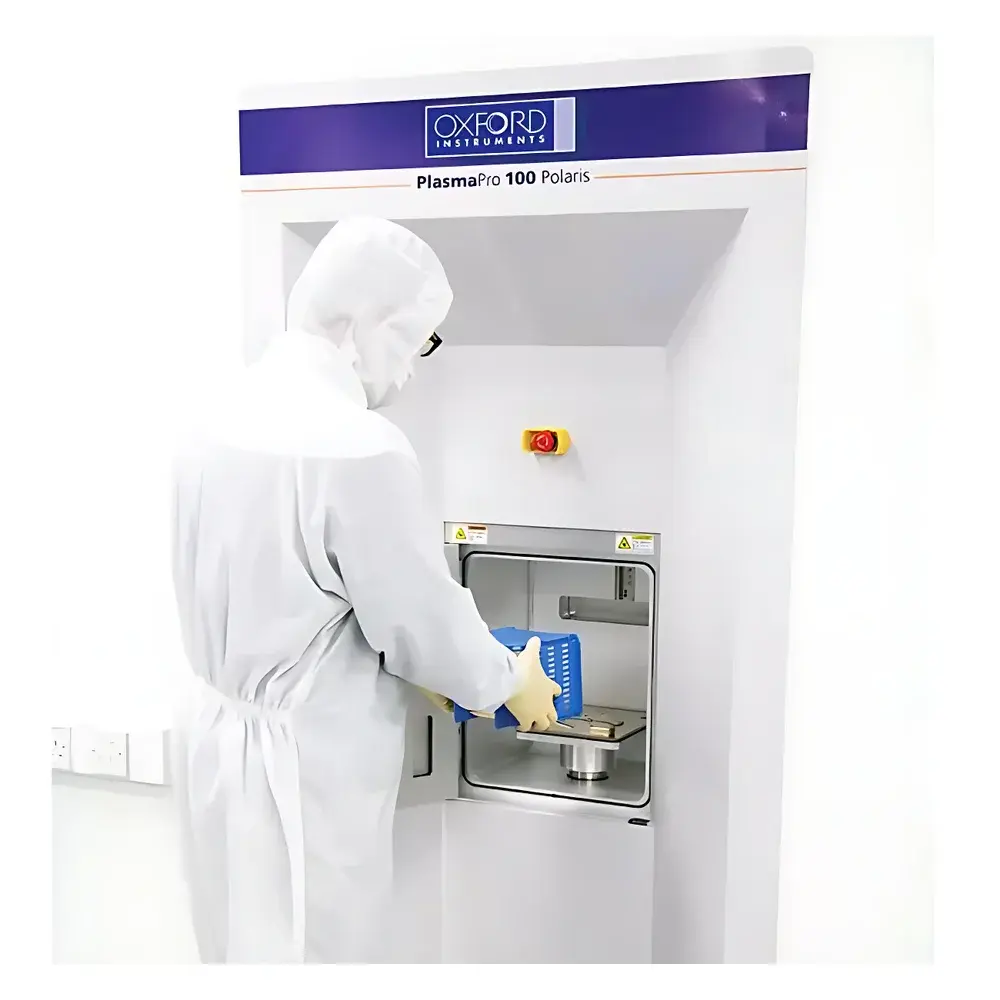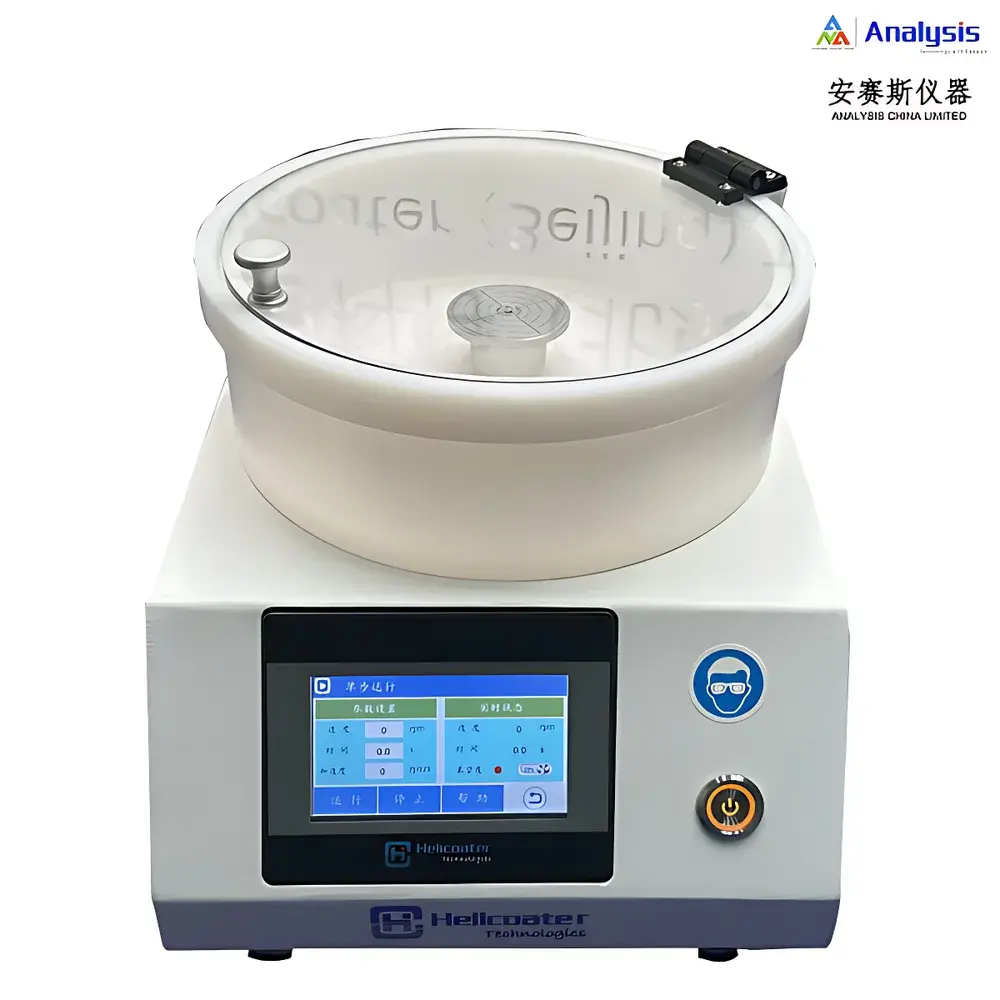
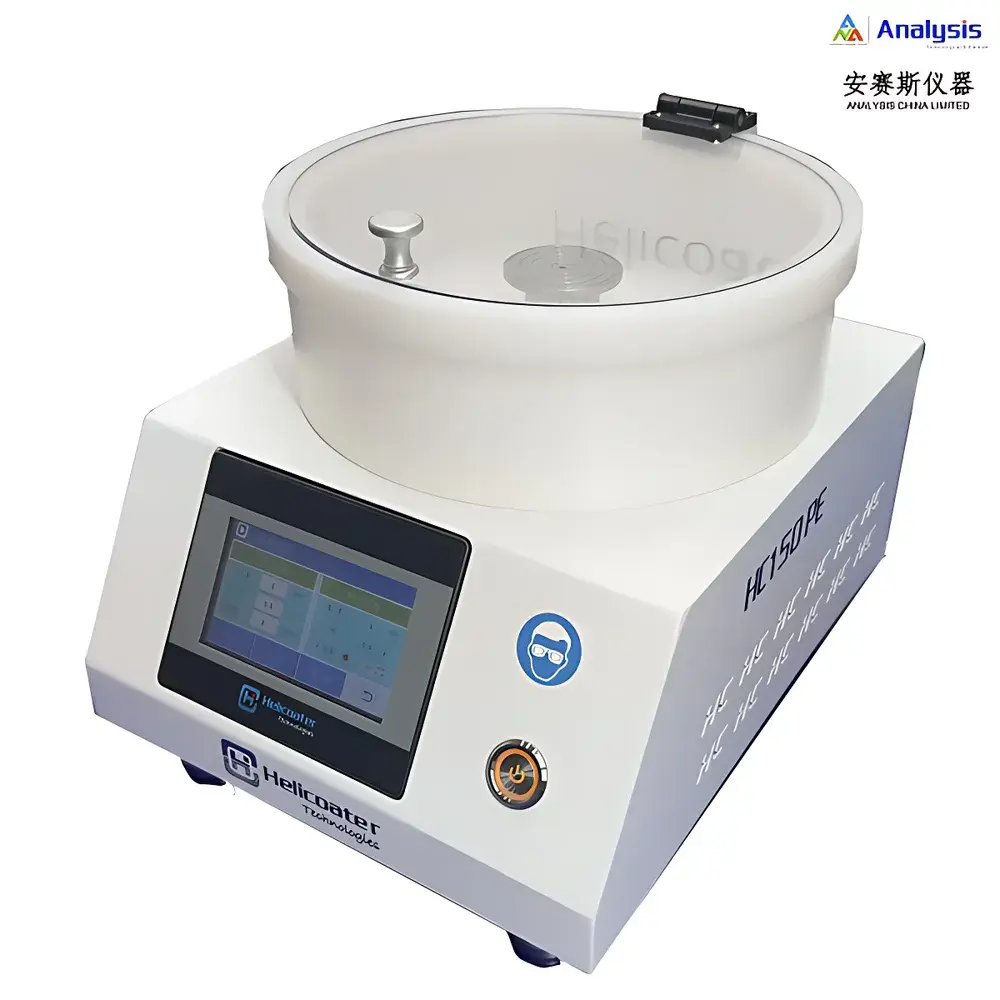
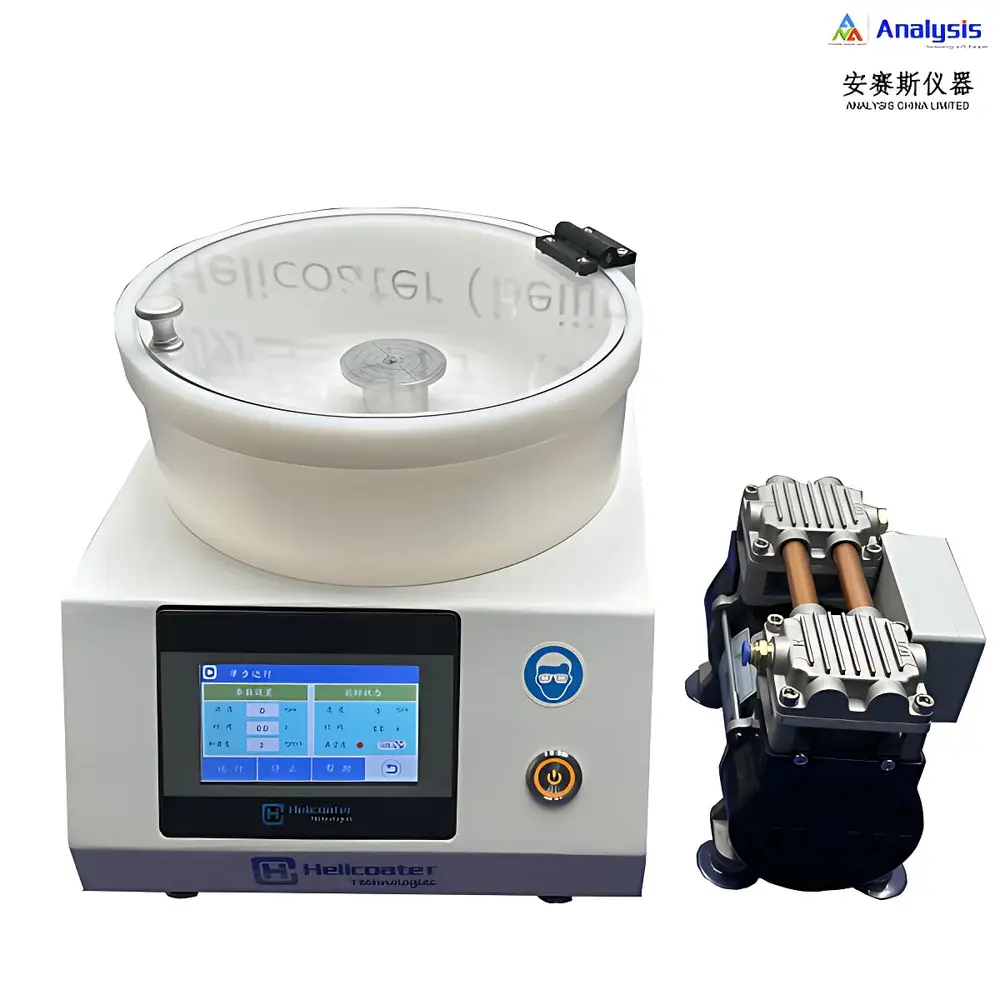
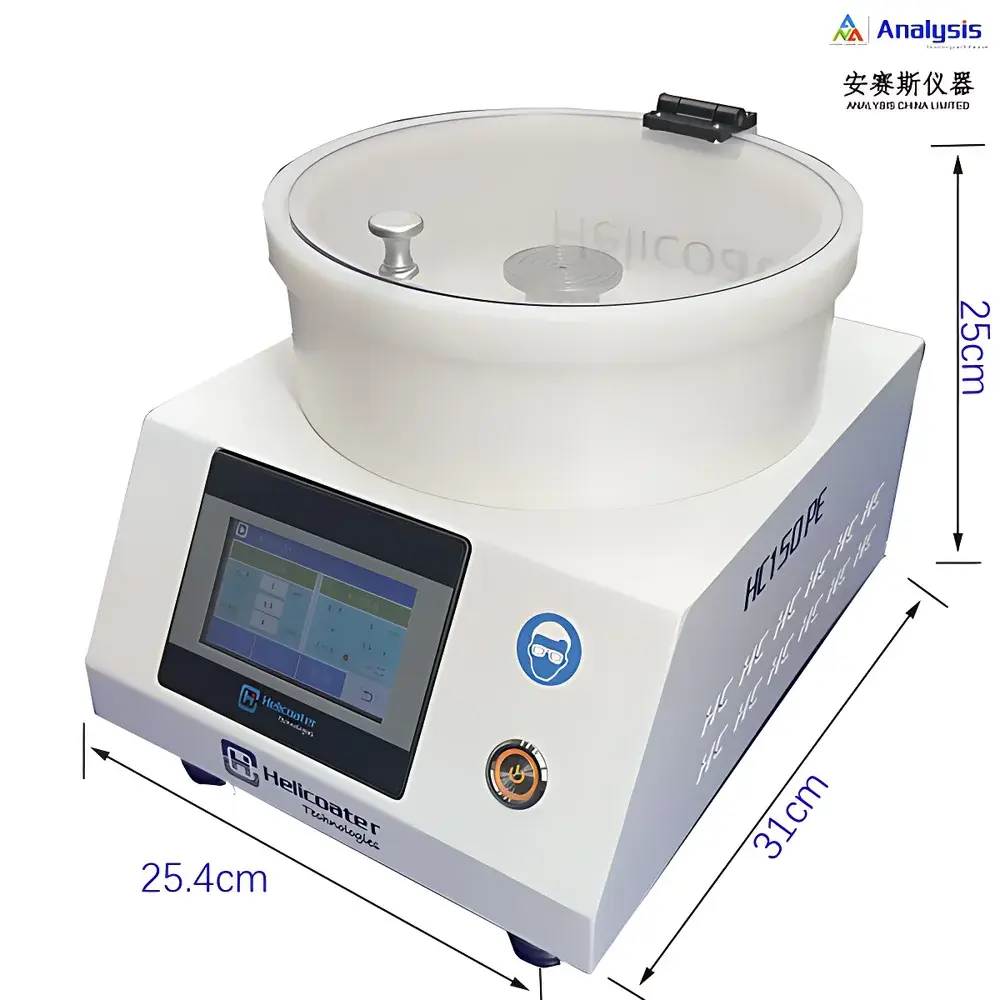
Analysis HC150SE Programmable Spin Coater
| Brand | Analysis |
|---|---|
| Origin | Beijing, China |
| Model | HC150SE |
| Max. Speed | 12000 rpm |
| Speed Accuracy | ±1 rpm |
| Speed Stability | <1 rpm |
| Max. Acceleration | 30000 rpm/s |
| Substrate Diameter | 5–150 mm (up to 6-inch wafers) |
| Chamber Diameter | 212 mm |
| Programmable Steps | 10 programs × 10 steps each |
| Touchscreen | 4.3″ color LCD |
| Control System | Industrial-grade PLC |
| Vacuum Interlock | Yes |
| Leveling Feet | Adjustable |
| Chamber Material | HDPE (chemically resistant) |
| Dimensions (L×W×H) | 310 × 254 × 254 mm |
| Power Input | AC 200–230 V |
Overview
The Analysis HC150SE Programmable Spin Coater is an engineered solution for high-precision thin-film deposition in semiconductor fabrication, microelectronics R&D, and advanced materials development. Based on centrifugal spin-coating principles—where rotational kinetic energy governs solvent evaporation and film thickness uniformity—the HC150SE delivers repeatable, controllable coating across substrates from 5 mm to 150 mm (6-inch) diameter. Its modular architecture separates the chemically inert HDPE process chamber from the stainless-steel mainframe, enabling rapid decontamination and glovebox integration without compromising structural integrity or thermal stability. Designed for cleanroom-adjacent and inert-atmosphere environments, the system meets core operational requirements for photolithography pre-processing, sol-gel coating, perovskite film formation, and conductive polymer layering.
Key Features
- Industrial-grade programmable logic controller (PLC) with deterministic real-time response, supporting up to 10 independent coating protocols—each comprising 10 sequential steps with individually defined speed, acceleration, dwell time (0.1 s resolution), and dispense synchronization.
- High-fidelity rotational control: speed range 100–12000 rpm, resolution 1 rpm, accuracy ±1 rpm, and stability maintained below ±1 rpm under load—critical for sub-50 nm film thickness repeatability (e.g., photoresist, PEDOT:PSS, or metal oxide precursors).
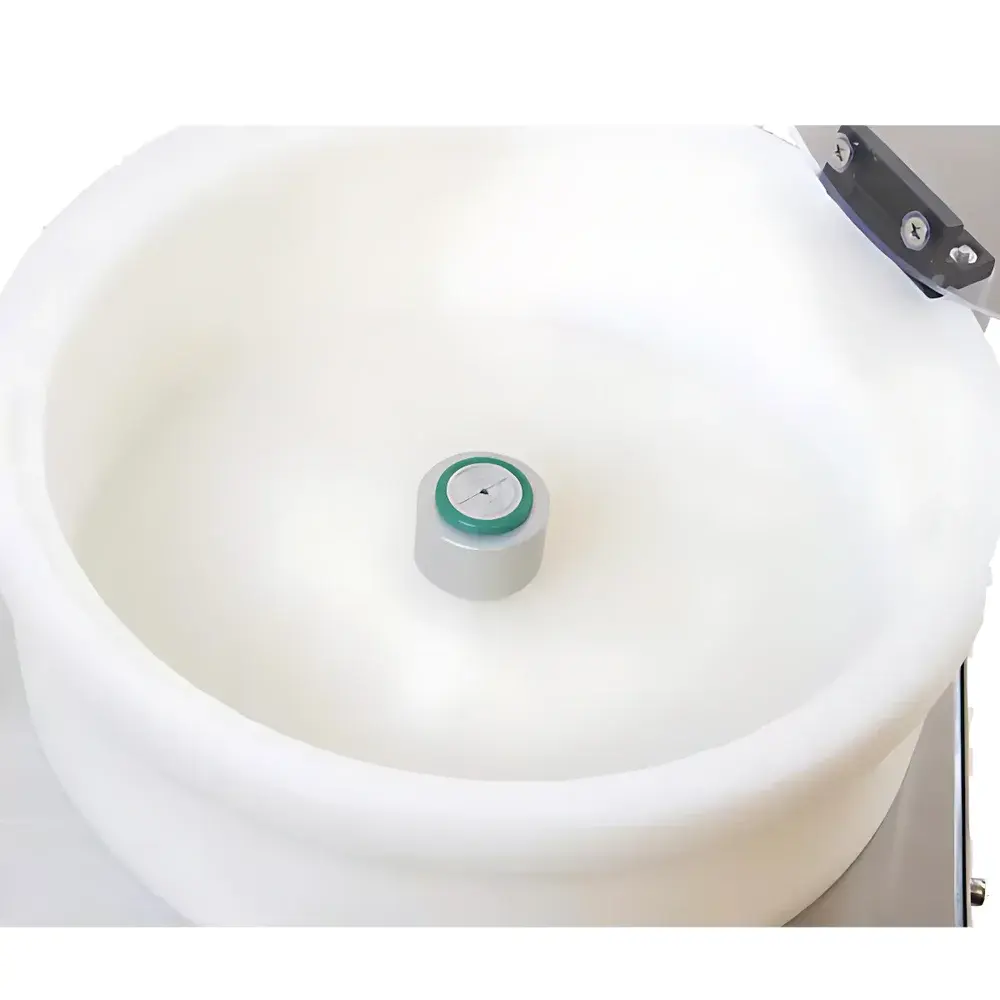
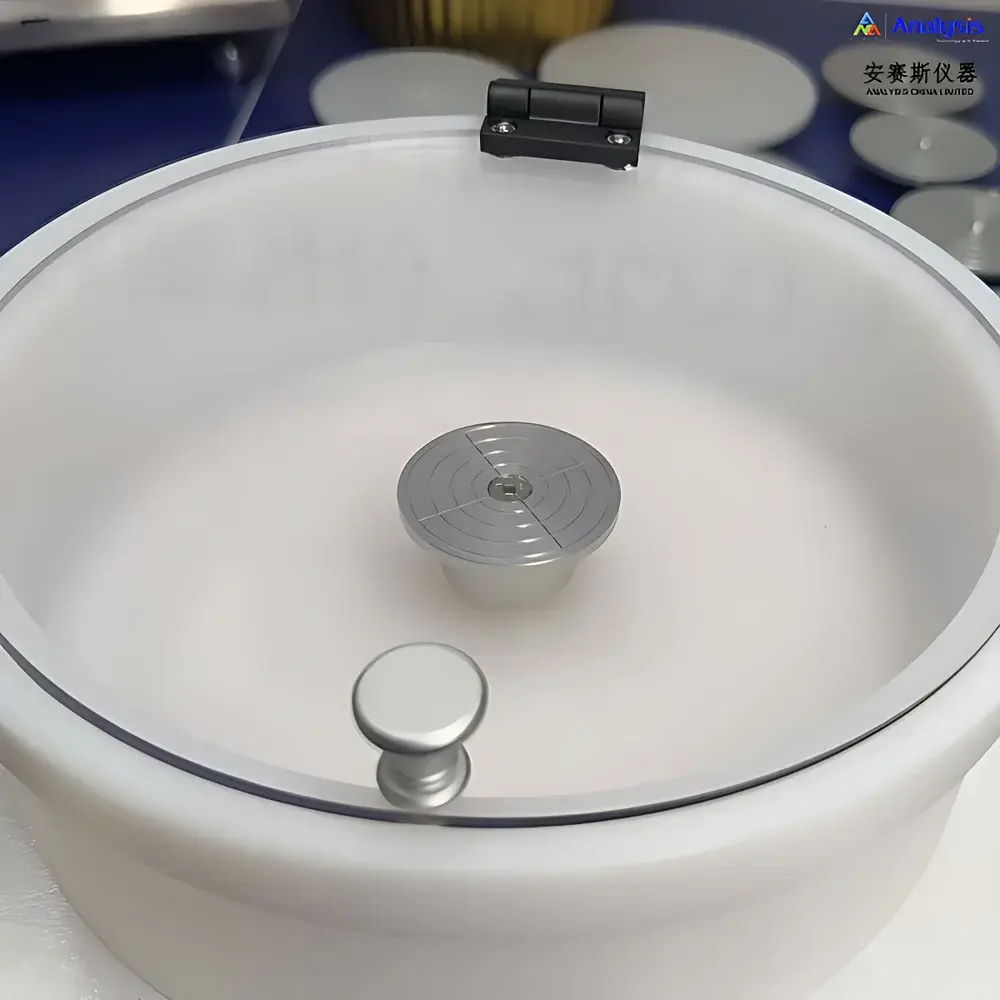
- Chemically robust HDPE chamber (CNC-machined, concave inner wall geometry) minimizes edge splashing and residue accumulation; compatible with common solvents including PGMEA, acetone, IPA, chlorobenzene, and NMP.
- Integrated vacuum interlock circuitry halts rotation if chamber vacuum seal integrity falls below threshold—ensuring operator safety and preventing uncontrolled solvent dispersion during high-speed spin.
- 4.3-inch color TFT touchscreen interface with intuitive icon-based navigation, real-time parameter monitoring (actual vs. setpoint RPM, elapsed time, error codes), and password-protected user access levels (operator, engineer, administrator).
- Compact footprint (310 × 254 × 254 mm) and low-profile design enable seamless installation inside nitrogen-purged or argon-filled gloveboxes (minimum internal height ≥280 mm required).
Sample Compatibility & Compliance
The HC150SE accommodates rigid planar substrates including silicon wafers (5–150 mm), fused silica, quartz, glass slides, ITO/PET flexible films, and ceramic carriers. Chuck compatibility supports both vacuum- and mechanical-clamp mounting configurations (adapter kits optional). The system complies with general electrical safety standards (IEC 61000-6-2/6-4) and is constructed to support GLP-aligned documentation workflows. While not certified to ISO 14644 cleanroom classes itself, its sealed chamber design, absence of internal lubricants, and non-shedding HDPE surface make it suitable for Class 100–1000 environments when operated with appropriate exhaust filtration. Vacuum interlock functionality aligns with SEMI S2-0215 safety guidelines for rotating equipment in semiconductor tool integration.
Software & Data Management
No proprietary PC software is required for basic operation—the onboard PLC handles all sequencing, timing, and fault logging autonomously. All program parameters and execution logs (including timestamped start/stop events, speed deviations >±2 rpm, vacuum loss incidents, and emergency stops) are stored in non-volatile memory and accessible via touchscreen history browser. For traceability-critical applications (e.g., QC labs under ISO/IEC 17025 or FDA-regulated R&D), optional RS-232 or USB-C serial export enables CSV-formatted log transfer to LIMS or ELN systems. Audit trail capability—including user ID tagging and change timestamps—can be enabled through firmware configuration to satisfy 21 CFR Part 11 electronic record requirements when paired with validated external data acquisition.
Applications
- Semiconductor front-end processing: photoresist spin-coating for mask alignment, lift-off processes, and bilayer resist stacks.
- Perovskite solar cell R&D: controlled deposition of MAPbI₃, CsPbBr₃, and mixed-halide precursors requiring precise solvent evaporation kinetics.
- Flexible electronics: uniform coating of conductive inks (Ag nanowire, graphene oxide dispersions) onto PET or PEN substrates.
- MEMS/NEMS fabrication: sacrificial layer (e.g., PMMA) and structural polymer (SU-8, PI) patterning with thickness control down to ±3% CV across 150 mm wafers.
- Academic thin-film research: reproducible preparation of MOF thin films, 2D material dispersions (MoS₂, h-BN), and bio-polymer coatings (chitosan, collagen) under inert atmosphere.
FAQ
What substrate sizes does the HC150SE support?
It accepts substrates from Ø5 mm to Ø150 mm (6-inch wafers), with chuck adaptability for standard wafer carriers and custom fixtures.
Is the chamber compatible with aggressive solvents like HF or piranha solution?
HDPE exhibits excellent resistance to most organic solvents and dilute acids/bases, but is not rated for concentrated HF, hot piranha, or molten alkali metals; consult chemical compatibility charts prior to use.
Can the HC150SE be integrated into automated cluster tools?
Yes—via dry-contact I/O signals (start/stop, vacuum OK, error output) and optional Modbus RTU over RS-485 for higher-level SECS/GEM protocol mapping.
Does the system include calibration certification?
Factory calibration of speed and timer functions is performed per internal QA protocol; NIST-traceable calibration certificates are available as a paid add-on service.
What maintenance is required for long-term reliability?
Routine tasks include HDPE chamber cleaning with IPA, vacuum chuck inspection every 200 cycles, and annual verification of motor encoder linearity and vacuum sensor drift.