
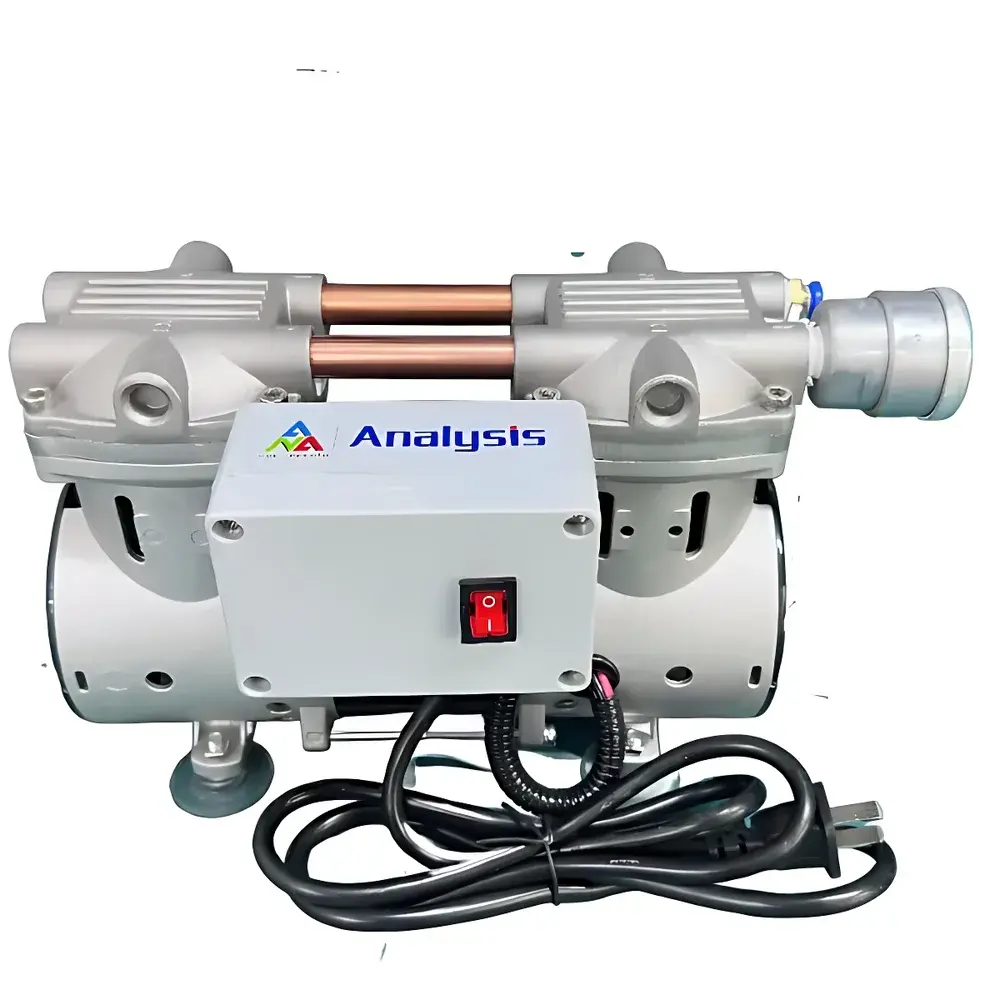
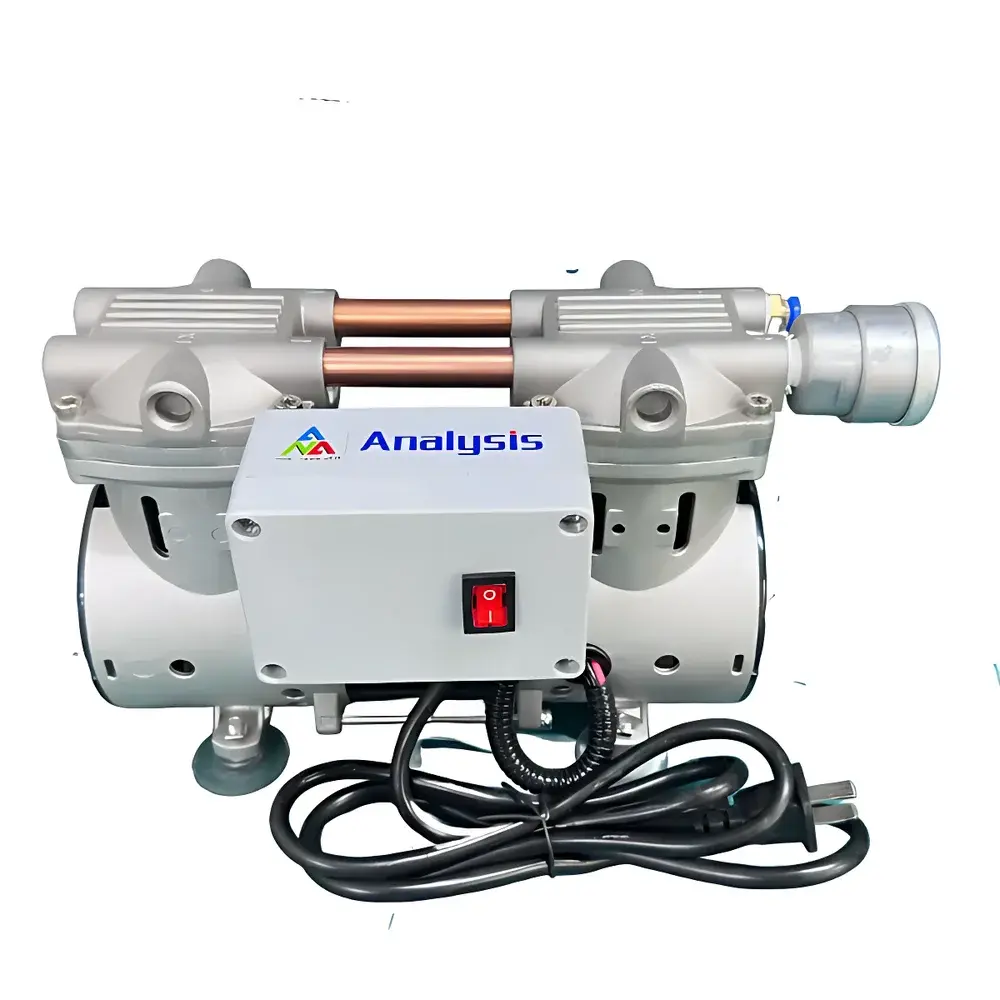
Analysis HCV500 Oil-Free Vacuum Pump
| Brand | Analysis |
|---|---|
| Origin | Beijing, China |
| Manufacturer Type | OEM Manufacturer |
| Region of Origin | Domestic (China) |
| Model | HCV500 |
| Quotation | Upon Request |
| Instrument Category | Other Vacuum Pumps |
| Product Type | Oil-Free Vacuum Pump |
| Pumping Speed | 100 L/min |
| Ultimate Vacuum | −92 kPa |
| External Dimensions | L237 × W94 × H162 mm |
| Weight | 6 kg |
| Motor Power | 320 W |
| Rated Voltage/Frequency | 220 V / 50 Hz (customizable) |
| Ambient Operating Temperature | 5–40 °C |
| Insulation Class | B |
| Thermal Protector | Auto-resetting at 130 ± 5 °C |
| Inlet/Outlet Port Thread | G1/4″ NPT |
| Tubing Connection | 6 mm × 4 mm vacuum hose |
Overview
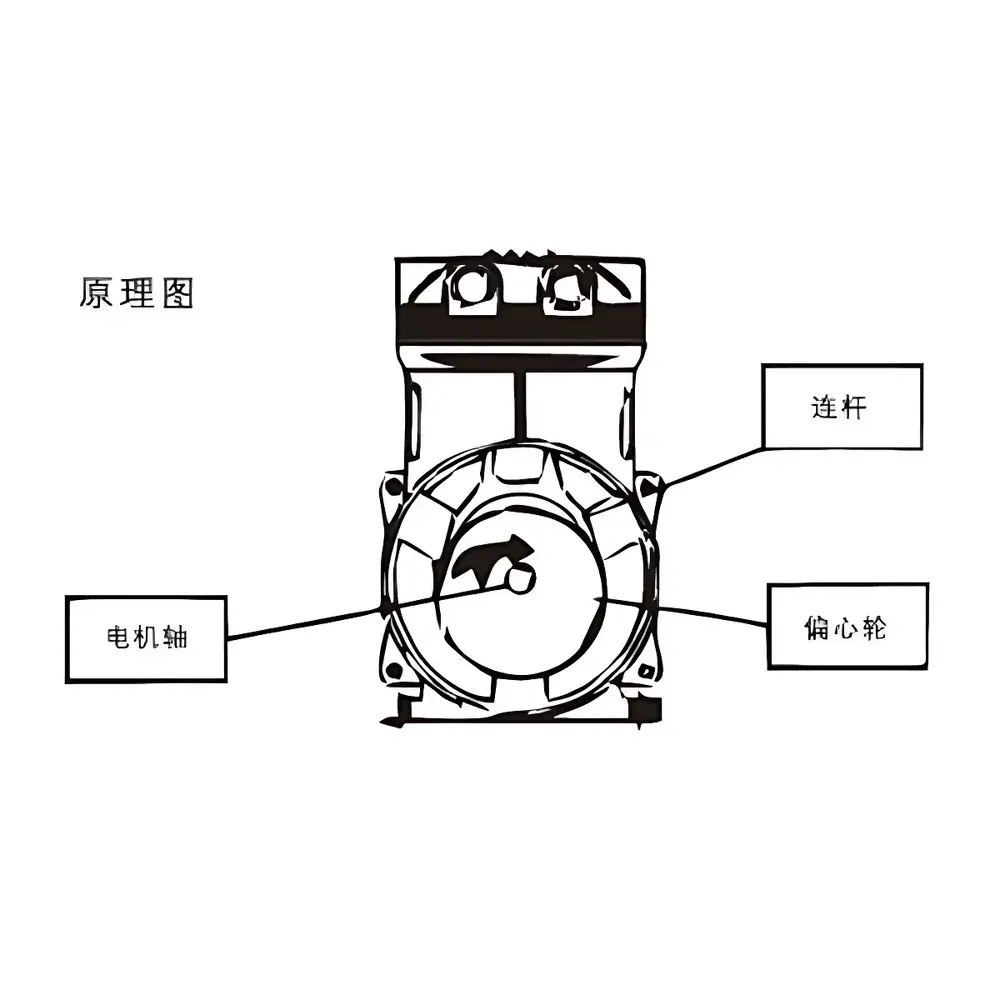
The Analysis HCV500 Oil-Free Vacuum Pump is a compact, brushless-motor-driven positive displacement vacuum source engineered for clean, maintenance-free operation in laboratory, industrial, and analytical environments. Based on a reciprocating piston mechanism with precision-machined eccentric cam and low-friction polymer bearings, the pump operates without lubricating oil—eliminating hydrocarbon contamination, vapor backstreaming, and scheduled oil changes. This architecture ensures stable vacuum generation across continuous duty cycles, with thermally optimized housing design limiting temperature rise to ≤15 K above ambient under full-load conditions. Its ultimate vacuum of −92 kPa (≈85 mbar abs) supports medium-vacuum applications including vacuum filtration, desiccation, sample degassing, and vacuum-assisted material handling—without compromising air purity or introducing particulate or volatile organic residue into sensitive processes.
Key Features
- Oil-free operation: Fully sealed dry-running piston system prevents oil mist, vapor carryover, and cross-contamination—critical for GLP/GMP-compliant labs and ISO Class 5+ cleanrooms.
- Low thermal signature: Integrated thermal protector (auto-resetting at 130 ± 5 °C) and aluminum-alloy heat-dissipating housing maintain stable performance at ambient temperatures from 5 to 40 °C.
- Compact footprint & portability: Dimensions of 237 × 94 × 162 mm and mass of only 6 kg enable benchtop integration, mobile cart mounting, or OEM integration into analytical instruments (e.g., GC sample concentrators, vacuum ovens, or vacuum desiccators).
- Quiet operation: Acoustic noise level ≤52 dB(A) at 1 m distance—achieved via balanced eccentric drive, vibration-damped motor mount, and acoustic enclosure geometry—suitable for shared lab spaces.
- High reliability & service life: Rated for ≥10,000 hours MTBF; wear-resistant PTFE-coated piston rings and self-lubricating composite bearings eliminate need for routine lubrication or seal replacement.
- Electrical safety compliance: IP20-rated enclosure, Class B insulation, and CE-marked power input (220 V / 50 Hz, configurable for 110 V / 60 Hz upon request) meet IEC 61000-6-3 EMC and IEC 61000-6-4 immunity standards.
Sample Compatibility & Compliance
The HCV500 is compatible with non-corrosive, non-condensable gases and dry air streams only. It is not rated for solvent vapors, acidic or alkaline gases, or particulate-laden inlet streams without upstream filtration (e.g., sintered stainless-steel pre-filter or HEPA-grade particulate trap). The pump meets RoHS Directive 2011/65/EU and REACH Annex XVII requirements for restricted substances. Its construction materials—including FDA-compliant elastomers in inlet/outlet seals—support use in food packaging R&D and pharmaceutical process validation per USP Analytical Instrument Qualification guidelines. For regulated environments, optional audit-trail-capable digital I/O (0–10 V analog output, RS-485 Modbus RTU) enables integration into 21 CFR Part 11–compliant data acquisition systems.
Software & Data Management
While the HCV500 operates as a standalone analog device, its electrical interface supports external monitoring and control via third-party DAQ systems. A 0–10 V analog output (proportional to motor speed or vacuum level, field-configurable) allows real-time logging of operational status in LabVIEW, MATLAB, or SCADA platforms. Optional RS-485 communication module (sold separately) provides Modbus RTU register access to runtime parameters—including cumulative operating hours, thermal event count, and instantaneous current draw—enabling predictive maintenance scheduling and equipment lifecycle tracking in centralized CMMS environments.
Applications
- Vacuum drying and degassing of polymers, ceramics, and battery electrode slurries prior to sintering or coating.
- Support vacuum filtration in environmental water testing (e.g., EPA Method 1664B for oil & grease), pharmaceutical dissolution testing (USP ), and microbiological membrane filtration.
- OEM integration into automated vacuum packaging test rigs, vacuum impregnation systems for porous metal castings, and vacuum-assisted resin transfer molding (VARTM) development platforms.
- Lab-scale vacuum desiccation of hygroscopic reference standards (e.g., potassium hydrogen phthalate, sodium chloride) per ISO 8573-1 purity class 4 requirements.
- Secondary vacuum backing for turbomolecular or diffusion pumps in surface analysis instrumentation requiring oil-free foreline pressure stabilization.
FAQ
Can the HCV500 be used with solvents or corrosive gases?
No. It is designed exclusively for dry, non-aggressive gas streams. Solvent vapors or acidic gases will degrade internal polymer components and void warranty.
Is the pump suitable for continuous 24/7 operation?
Yes—when operated within ambient temperature limits (5–40 °C) and with adequate ventilation. Duty cycle derating is not required below 40 °C ambient.
What maintenance is required?
None beyond periodic inspection of inlet filter (if installed) and verification of thermal protector function during annual IQ/OQ protocols.
Does it comply with FDA or EU GMP requirements?
As a Class I auxiliary device, it meets material biocompatibility and electrical safety prerequisites for GMP environments when validated as part of an integrated system per Annex 15 and ASTM E2500.
Can vacuum level be digitally controlled or monitored?
Not natively—but analog output (0–10 V) or optional RS-485 interface enables external PID control loops and vacuum setpoint regulation via PLC or PC-based controllers.
Related Products



