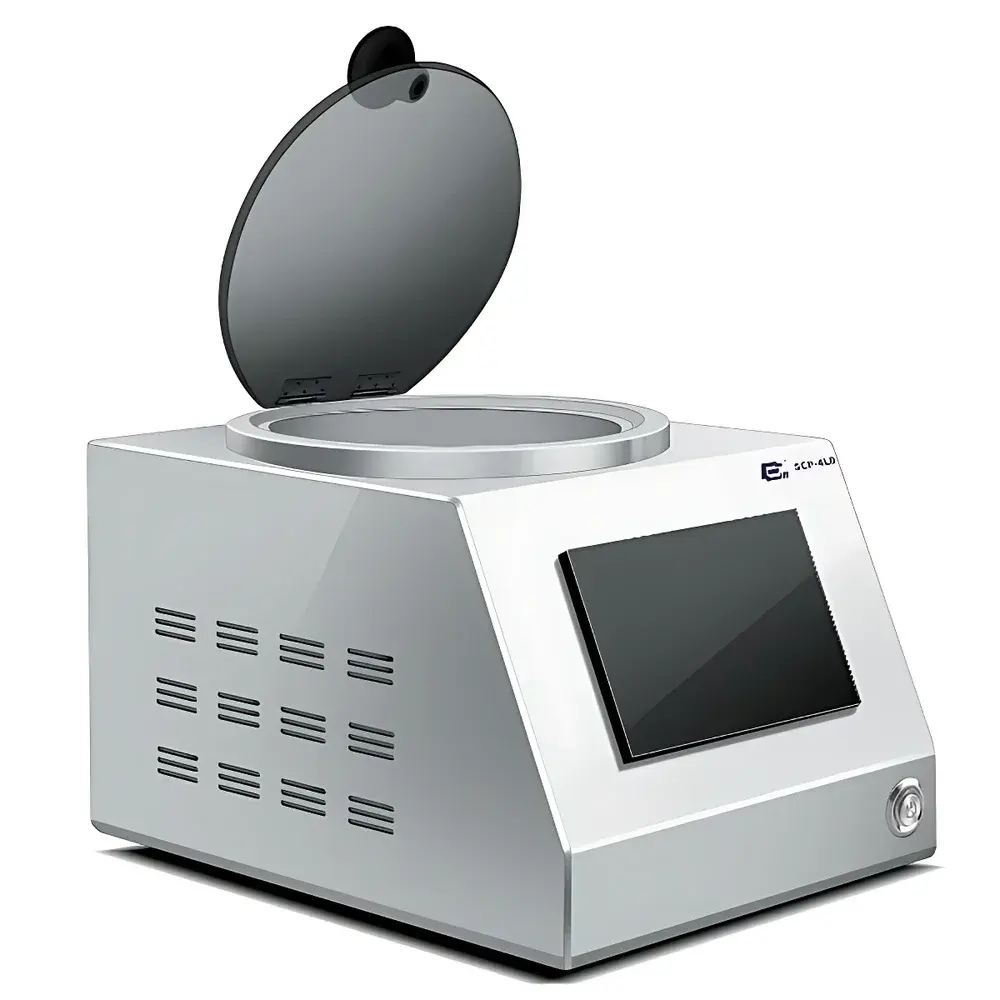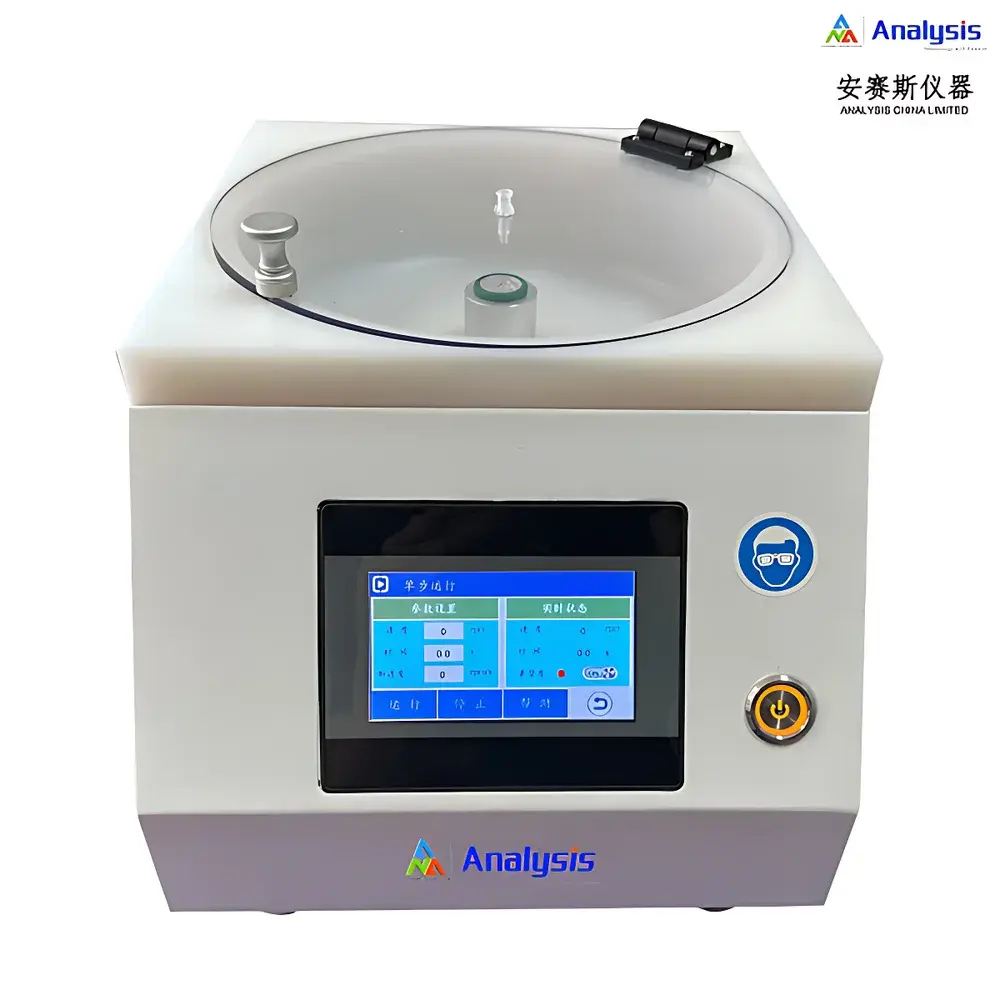
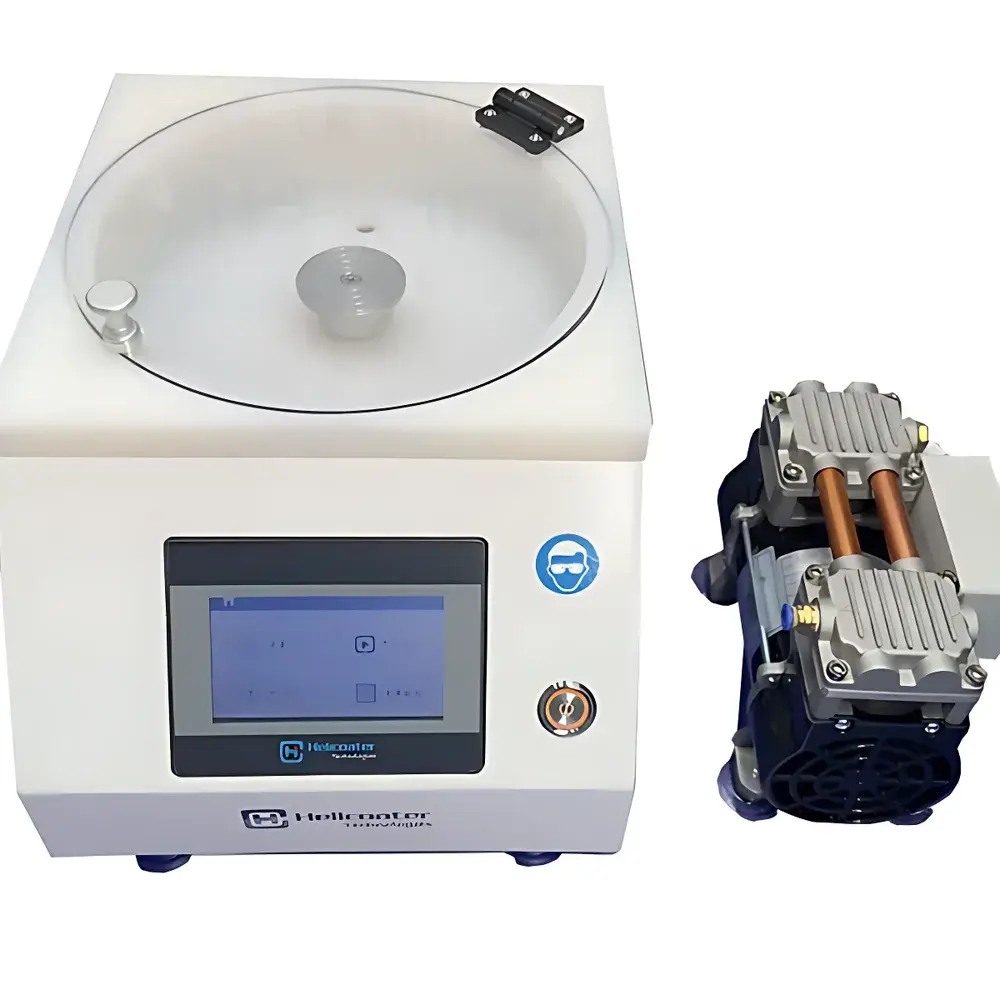
Analysis HC160PE Programmable Spin Coater
| Brand | Analysis |
|---|---|
| Origin | Beijing, China |
| Model | HC160PE |
| Rotation Speed | 100–12,000 rpm |
| Speed Resolution | 1 rpm |
| Max. Acceleration (no-load) | 30,000 rpm/s |
| Substrate Diameter Range | 5–160 mm |
| Chamber Diameter | 220 mm |
| Control Interface | 4.3″ color touchscreen |
| Programmability | 100 user-defined programs, up to 10 steps per program |
| Spin Time Range | 0.1–3000 s (resolution: 0.1 s) |
| Vacuum Interlock | yes |
| Lid Safety Interlock | yes |
| Motorized Dispense Interface | 1 channel (optional auto-dispense upgrade) |
| Leveling Base | adjustable |
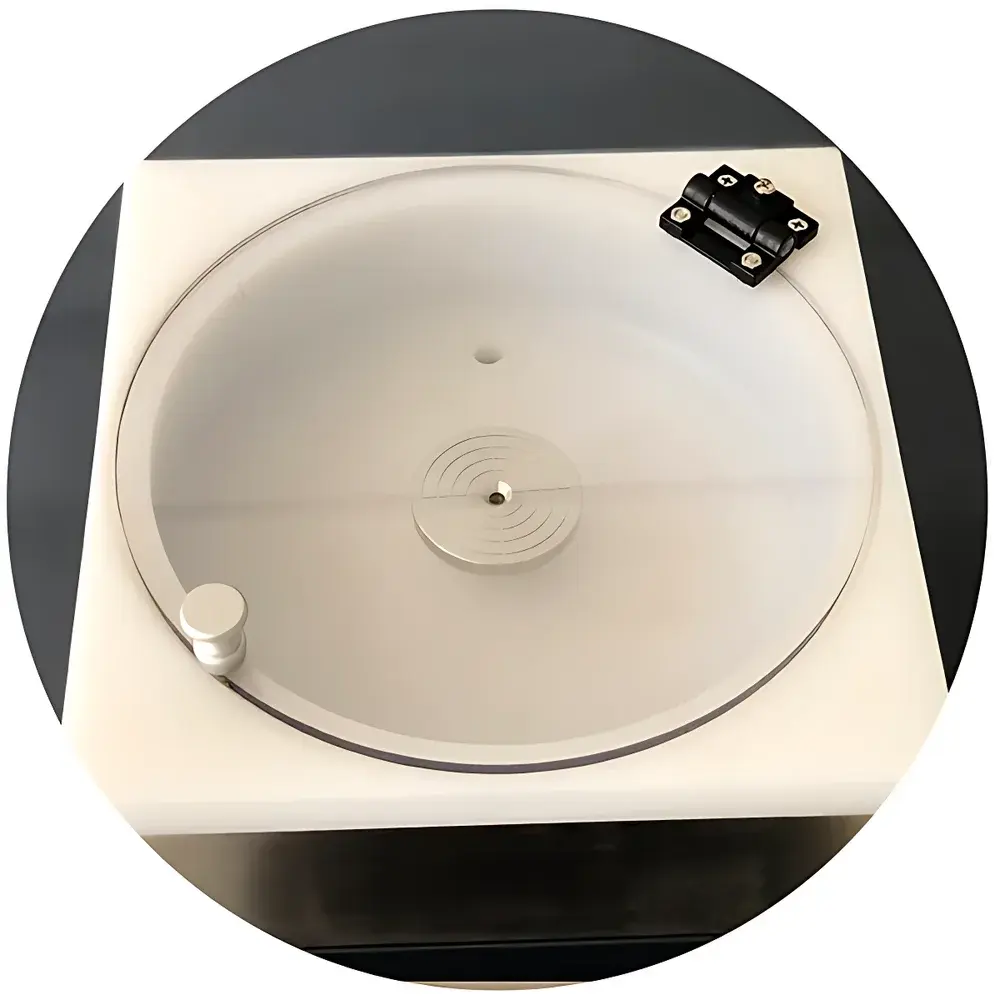
| Construction | 一体 molded HDPE chamber with concave splash-resistant interior walls |
| Included | oil-free vacuum pump, three standard chucks (customizable) |
Overview
The Analysis HC160PE Programmable Spin Coater is an engineered solution for precise, repeatable thin-film deposition in semiconductor R&D, MEMS fabrication, photovoltaics, and advanced materials laboratories. Based on the fundamental principle of centrifugal force-driven fluid thinning—where rotational motion induces shear thinning and solvent evaporation—the HC160PE delivers controlled film thickness uniformity across substrates ranging from microscale wafers (5 mm) to full 160 mm diameter discs. Its compact footprint and glovebox-compatible design enable integration into inert-atmosphere processing environments, supporting spin-coating of oxygen- or moisture-sensitive photoresists, perovskites, sol-gel precursors, and conductive polymers. The system operates under a robust industrial PLC architecture, ensuring deterministic timing, synchronized vacuum engagement, and fail-safe mechanical interlocks—critical for process reproducibility and operator safety in Class 100–1000 cleanroom settings.
Key Features
- High-resolution speed control (1 rpm resolution) across a broad 100–12,000 rpm range, enabling fine-tuned optimization of film thickness and edge profile for diverse resist viscosities (1–1000 cP).
- Ultra-fast acceleration capability (up to 30,000 rpm/s, no-load), minimizing transient spin-up effects and improving start-of-process repeatability—particularly critical for low-volume dispense protocols.
- Chemically resistant, seamless HDPE chamber with patented concave inner wall geometry to suppress droplet rebound and minimize edge bead formation and chamber contamination.
- Integrated oil-free vacuum pump and dual-safety interlock system: lid-closed detection and real-time vacuum pressure monitoring (<5 kPa threshold) prevent unintended rotation and ensure substrate adhesion integrity.
- 4.3″ capacitive touchscreen HMI with intuitive workflow navigation, password-protected parameter editing, and on-device program storage (100 × 10-step sequences).
- Motor-actuated dispensing interface compatible with third-party syringe pumps or OEM auto-dispense modules; supports timed dispense-on-spin initiation and post-dispense dwell.
- Adjustable leveling base with precision bubble-level indicator ensures consistent substrate planarity—essential for <±0.5% thickness uniformity across 150 mm wafers.
Sample Compatibility & Compliance
The HC160PE accommodates rigid, flat substrates including silicon, quartz, glass, sapphire, and flexible metal foils (with appropriate chuck adaptation). Standard chucks support 5–160 mm diameters; custom chuck geometries (e.g., rectangular, notched, or multi-die carriers) are available upon specification. All wetted surfaces are HDPE or anodized aluminum—compatible with common photoresists (e.g., AZ®, Shipley®), developer solutions, and organic solvents (IPA, PGMEA, chlorobenzene). The system meets CE marking requirements for electromagnetic compatibility (EN 61326-1) and low-voltage safety (EN 61000-6-3). While not certified to ISO 14644-1 cleanroom classification itself, its sealed chamber design and absence of internal lubricants permit operation in ISO Class 5 environments when installed with HEPA-filtered exhaust ducting.
Software & Data Management
No external PC software is required for routine operation; all programs, logs, and error histories are stored locally in non-volatile memory. Each program record includes timestamp, speed/time profiles, vacuum status, and interlock events. Upon power loss, the system retains the last 20 executed program IDs and full parameter sets—ensuring continuity during scheduled maintenance or facility outages. Audit trail functionality supports GLP-compliant documentation: all parameter changes are logged with date/time stamps and (if enabled) operator ID via password authentication. For integration into MES or LabVantage platforms, RS-232 and optional Ethernet (Modbus TCP) interfaces provide raw execution data and status polling—fully compatible with FDA 21 CFR Part 11–aligned validation packages when deployed with electronic signature modules.
Applications
- Photolithography: Uniform spin-coating of g-line, i-line, and deep-UV resists (e.g., S1813, SPR220) on Si/SiO₂ wafers with thickness control down to ±2 nm (measured by ellipsometry).
- Perovskite solar cell R&D: Controlled deposition of MAPbI₃ precursor solutions under nitrogen glovebox conditions, leveraging programmable multi-step ramps to manage crystallization kinetics.
- MEMS packaging: Dielectric layer coating (e.g., BCB, polyimide) on wafer-level packaged sensors, where edge exclusion and void-free coverage are validated via SEM cross-section analysis.
- Nanomaterials: Graphene oxide, MoS₂, and quantum dot ink deposition for printed electronics—enabled by low-speed, high-torque stability at ≤500 rpm with programmable deceleration profiles.
- Quality assurance: In-house QC of resist lot consistency using standardized 100/3000/6000 rpm tristep protocols aligned with ASTM D724–22 (Standard Test Method for Surface Wettability of Paper).
FAQ
Does the HC160PE support remote monitoring or network connectivity?
Yes—via optional RS-232 or Ethernet (Modbus TCP) interface; firmware v2.3+ enables real-time status queries, program upload/download, and event logging export.
Can I use non-standard substrate shapes, such as rectangular chips or diced dies?
Yes—custom chucks (vacuum or mechanical clamp type) can be fabricated per dimensional specifications; contact technical support with GD&T drawings.
Is the HDPE chamber resistant to strong acids like HF or piranha solution?
HDPE exhibits excellent resistance to diluted HF (<5%) and basic piranha (H₂O₂:NH₄OH), but not concentrated sulfuric-peroxide mixtures; alternative PTFE-lined chambers are available as accessories.
What vacuum level is required for reliable substrate retention at 12,000 rpm?
A minimum of −65 kPa (absolute) is recommended; the built-in oil-free pump achieves −85 kPa typical—verified by integrated pressure transducer feedback to the PLC.
How is calibration traceability maintained for speed and time parameters?
Speed is calibrated against NIST-traceable optical tachometer readings; timebase accuracy is derived from temperature-compensated crystal oscillator (±10 ppm over 0–40°C); calibration certificate provided with each unit.