
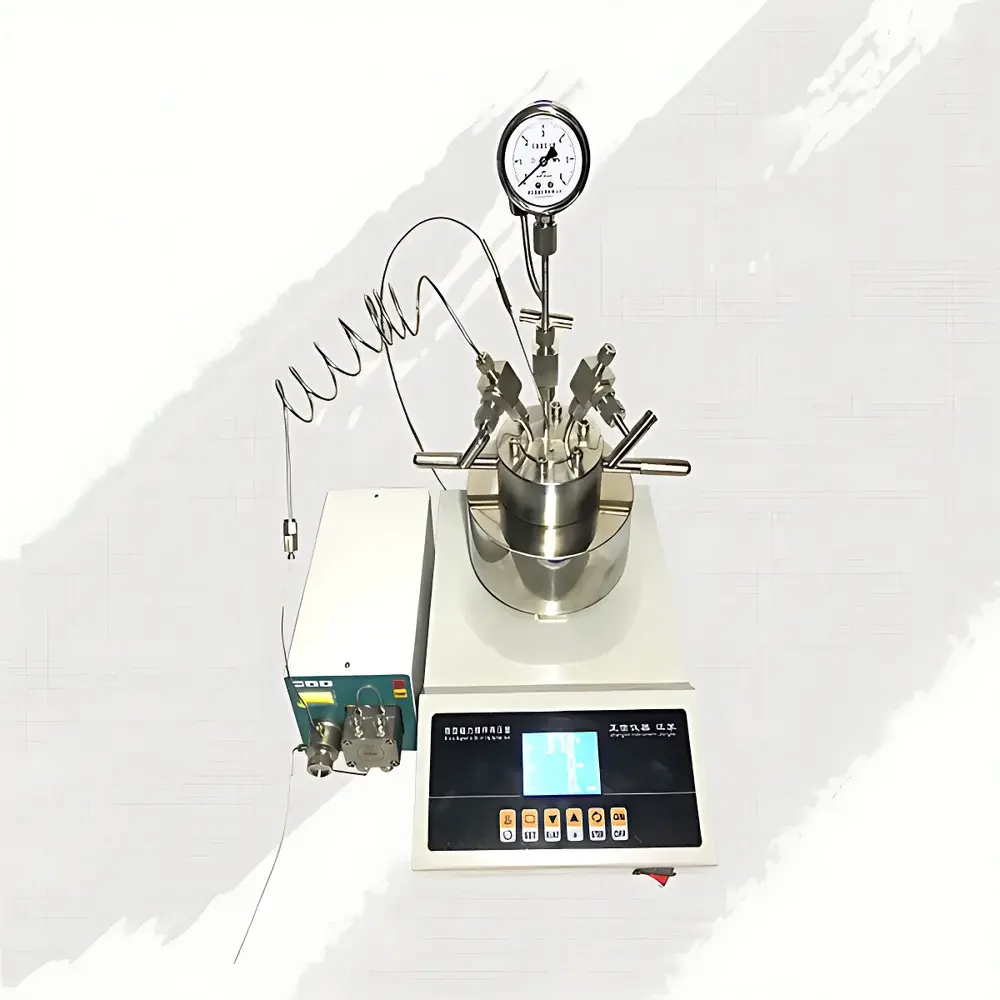
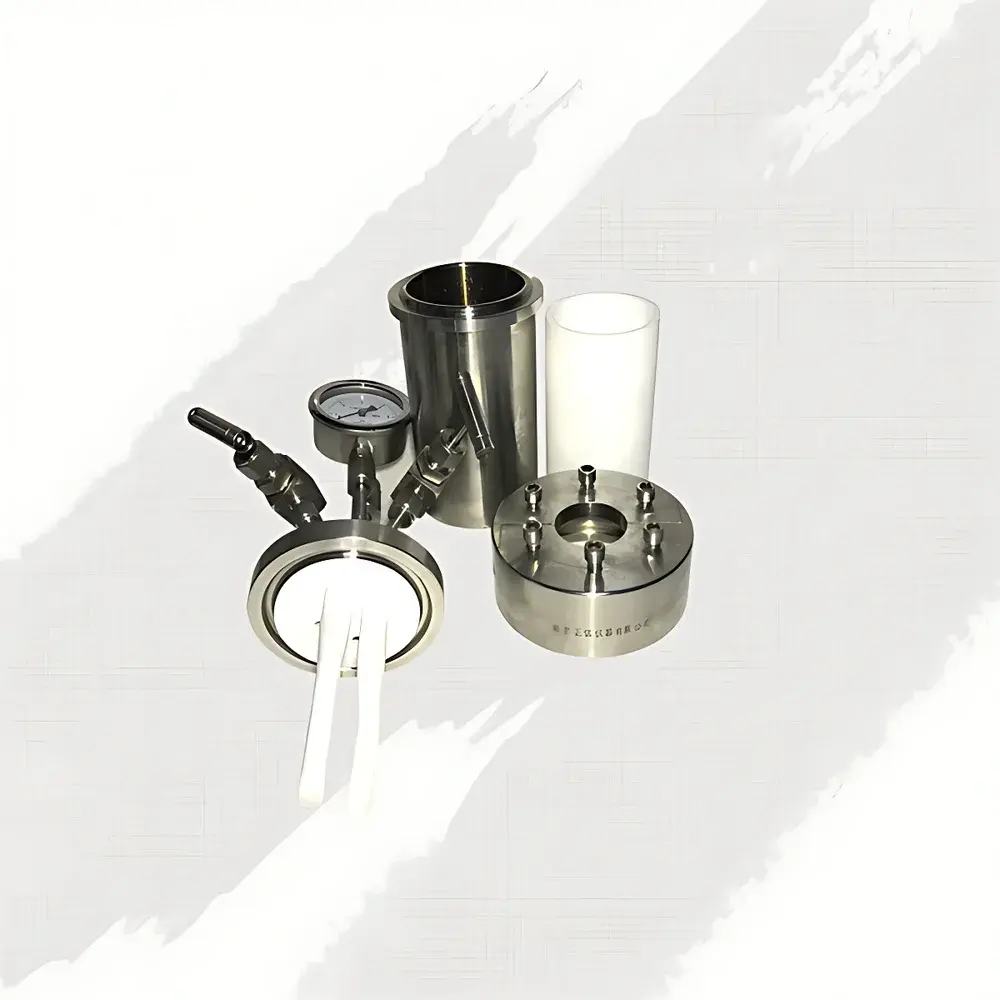
Zhengxin ZXYIQI PFA Quick-Release Magnetic Stirring High-Pressure Reactor
| Brand | Zhengxin Instrument Factory (ZXYIQI) |
|---|---|
| Origin | Jiangsu, China |
| Manufacturer Type | Authorized Distributor |
| Product Origin | Domestic (China) |
| Model | Q-PSK Series |
| Capacity | 0.025–1 L |
| Vessel Material | 304/316L/310S/904L stainless steel, Hastelloy, titanium |
| Working Pressure Range | –0.1 to 30 MPa |
| Vacuum Level | –0.1 MPa (absolute) |
| Maximum Operating Temperature | 350 °C |
| Stirring Speed | 0–1000 rpm |
| Heating Method | Embedded modular PID-controlled resistive heating |
| Temperature Control Accuracy | ±1 °C |
| Sealing System | Dual-stage (soft PTFE + hard metal face seal) |
| Safety Features | Overpressure rupture disc (Hastelloy), overtemperature/time alarm with audible and visual alert |
| Stirring Mechanism | Rare-earth permanent magnet coupling with brushless DC motor |
| Internal Lining Options | PTFE, quartz, PPL |
| Compliance | Designed for ASTM E2515, ISO 17025-compliant lab environments |
Overview
The Zhengxin ZXYIQI PFA Quick-Release Magnetic Stirring High-Pressure Reactor (Model Q-PSK) is an engineered solution for controlled, scalable synthesis under elevated temperature and pressure conditions. Built upon Couette-flow magnetic coupling principles, it enables hermetic containment of reactive media while maintaining precise rotational agitation without mechanical shaft penetration—eliminating seal wear and cross-contamination risks. The reactor’s monolithic vessel body is CNC-machined from solid forged stainless steel billet (304, 316L, or higher-grade alloys), ensuring structural integrity across thermal cycling and pressure ramping protocols. Its operational envelope spans vacuum (–0.1 MPa abs) to 30 MPa, with continuous thermal stability up to 350 °C—making it suitable for kinetic studies, catalytic screening, hydrogenation, supercritical fluid reactions, and inert-atmosphere polymerization in academic and industrial R&D laboratories.
Key Features
- Quick-release clamping system using six symmetrically distributed Allen-head tensioning screws and interlocking cam lugs—enabling sub-60-second separation of lid and vessel without torque tools.
- Dual-seal architecture: primary dynamic seal via high-purity PTFE gasket (ASTM D471 compliant), secondary static seal via precision-ground metal-to-metal contact surface (Hastelloy C-276 optional).
- Brushless DC drive with rare-earth NdFeB magnets ensures silent, maintenance-free stirring at 0–1000 rpm with programmable direction reversal and torque monitoring capability.
- Modular heating module with embedded NiCr resistance wire and thermally optimized aluminum heat spreader—achieving uniform axial/radial temperature distribution (±1.5 °C across vessel height).
- Integrated safety subsystem: real-time pressure transduction (0.25% FS accuracy), dual independent thermal cutoffs (K-type thermocouple + redundant RTD), and certified burst disc (ASME BPVC Section VIII compliant).
Sample Compatibility & Compliance
The Q-PSK series accommodates corrosive, pyrophoric, oxygen-sensitive, and highly viscous reaction mixtures through configurable internal linings—including PTFE (up to 260 °C), fused quartz (UV-transparent, HF-resistant), and polyphenylsulfone (PPL). All wetted components meet USP Class VI biocompatibility requirements. Pressure containment design adheres to PED 2014/68/EU Annex I essential safety requirements and incorporates ASME B16.5 flange interface standards. Optional traceable calibration certificates (NIST-traceable pressure and temperature sensors) are available for ISO/IEC 17025-accredited labs. The system supports inert gas purging (via dual-port valve manifold) and is compatible with Schlenk-line integration for air-free chemistry workflows.
Software & Data Management
While the base unit operates via front-panel PID controller with LCD interface, optional RS485/Modbus RTU or Ethernet/IP connectivity enables integration into centralized laboratory information management systems (LIMS). When paired with Zhengxin’s ZX-Control Suite (v3.2+), users gain time-stamped, encrypted logging of temperature, pressure, stir speed, and event flags—including automatic generation of PDF reports compliant with FDA 21 CFR Part 11 requirements (electronic signatures, audit trail, data immutability). Raw datasets export in CSV/Excel format; trend analysis supports Arrhenius modeling and reaction order determination.
Applications
This reactor serves as a platform for method development and small-batch process optimization in heterogeneous catalysis (e.g., Fischer–Tropsch, hydrodesulfurization), pharmaceutical API synthesis (including high-pressure hydrogenation steps), nanomaterial nucleation under supercritical CO₂, and specialty polymerization (e.g., polyimide, polysiloxane). It is routinely deployed in university chemistry departments for teaching advanced kinetics, in QC labs for accelerated stability testing per ICH Q1A(R3), and in catalyst evaluation centers for turnover frequency (TOF) benchmarking under realistic process conditions.
FAQ
What materials are available for the reactor vessel body?
Standard options include ASTM A240 304 and 316L stainless steel; custom builds support 310S, 904L, Hastelloy C-276, and Grade 2 titanium—each certified with mill test reports (MTRs).
Can the reactor be operated under vacuum prior to pressurization?
Yes—the integrated compound gauge supports absolute vacuum down to –0.1 MPa, enabling degassing, solvent removal, or inert atmosphere establishment before introducing reactive gases.
Is third-party validation support available for GMP environments?
Yes—Zhengxin provides IQ/OQ documentation templates, installation qualification checklists, and on-site operational qualification assistance aligned with Annex 15 and ASTM E2500 guidelines.
How is temperature uniformity verified across the reaction volume?
Each unit undergoes thermal mapping per ASTM E2251 using ≥5 calibrated PT100 probes during factory acceptance testing; full mapping report supplied with delivery.
What maintenance intervals are recommended for the magnetic coupling system?
No scheduled maintenance is required—the permanent magnet assembly is sealed, non-contact, and rated for >10,000 hours of continuous operation at rated torque.



