
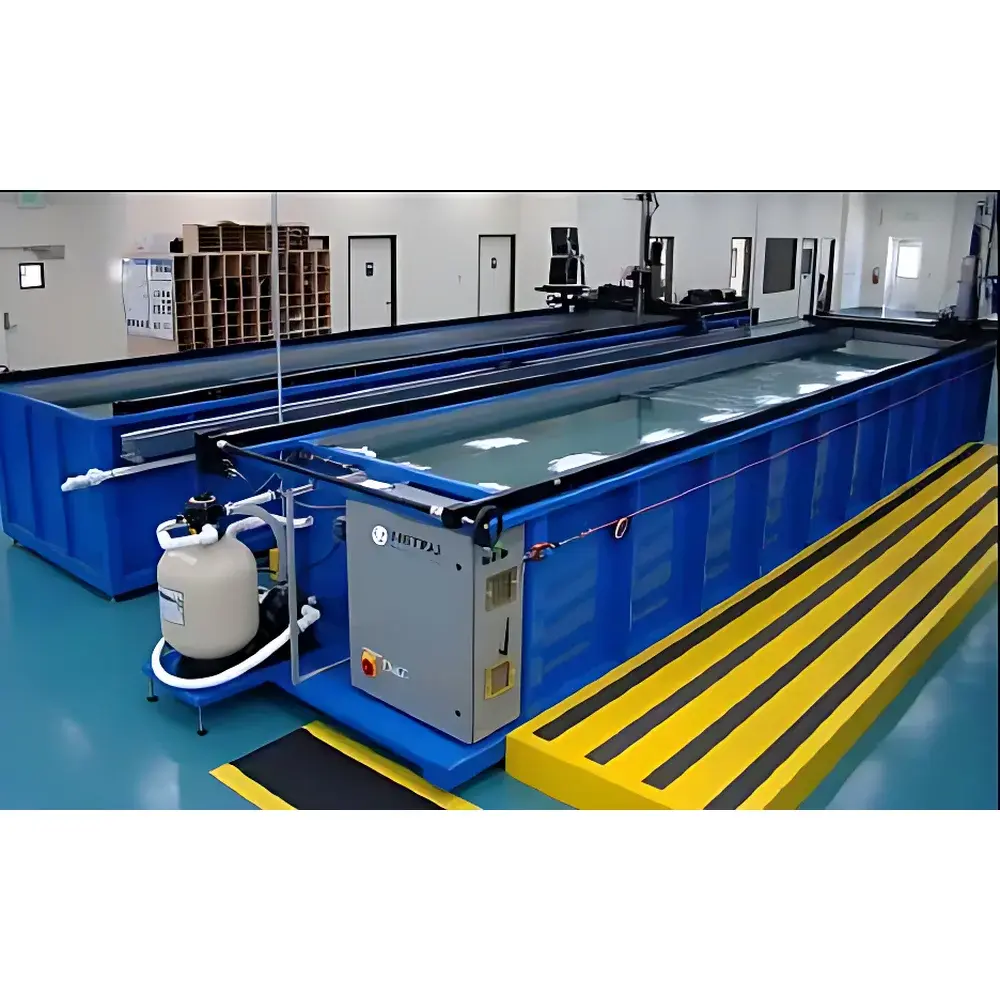
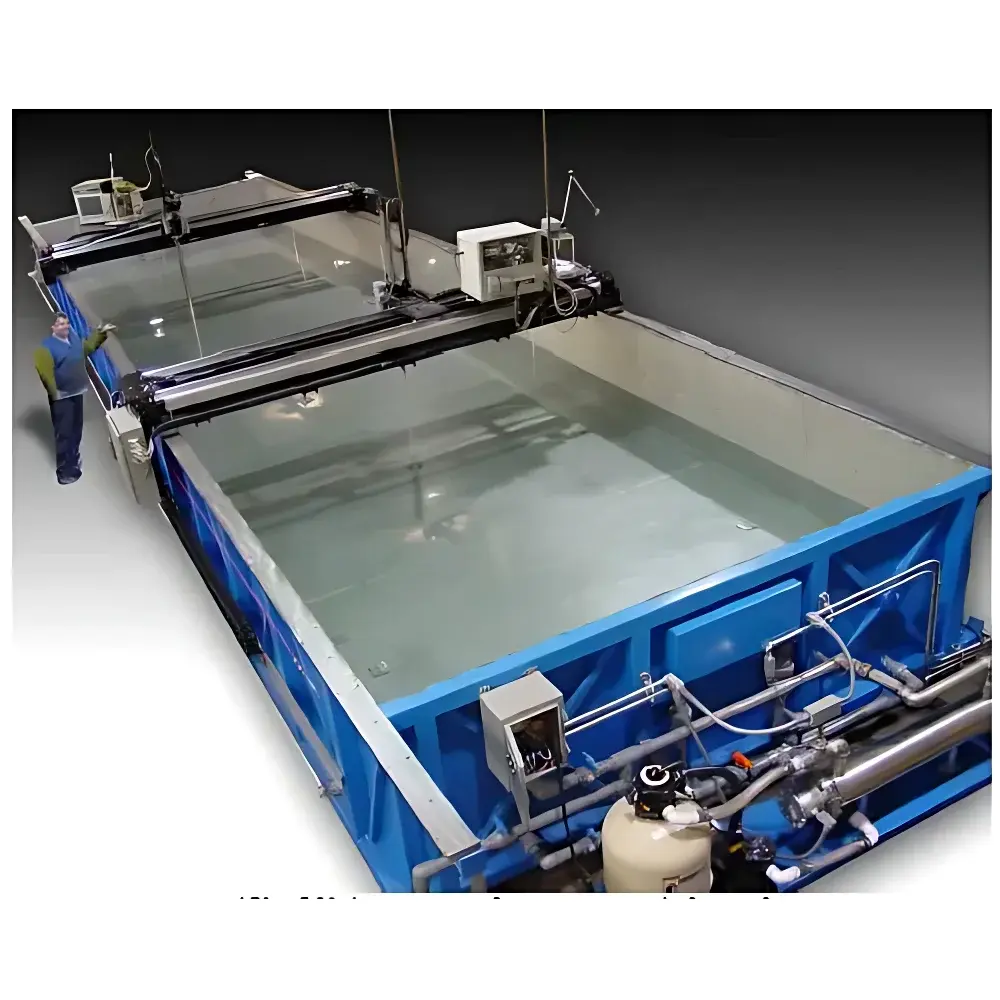
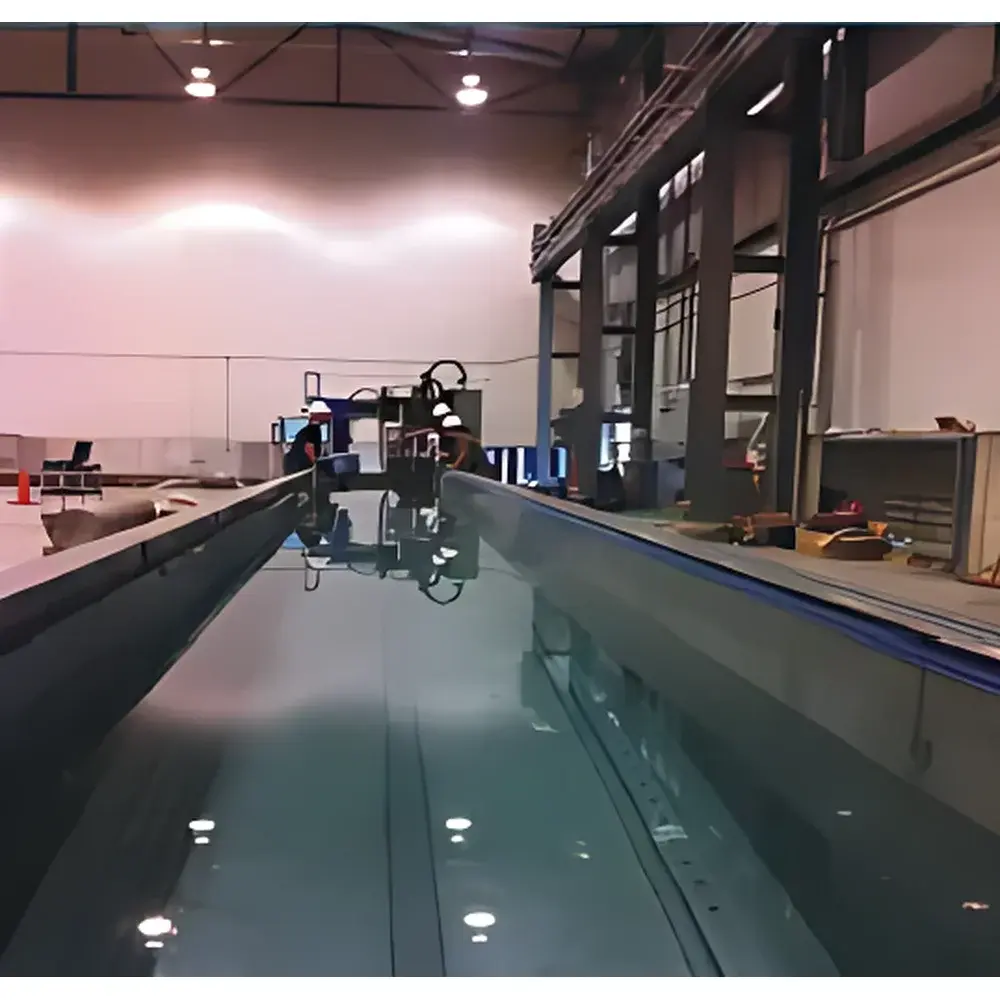
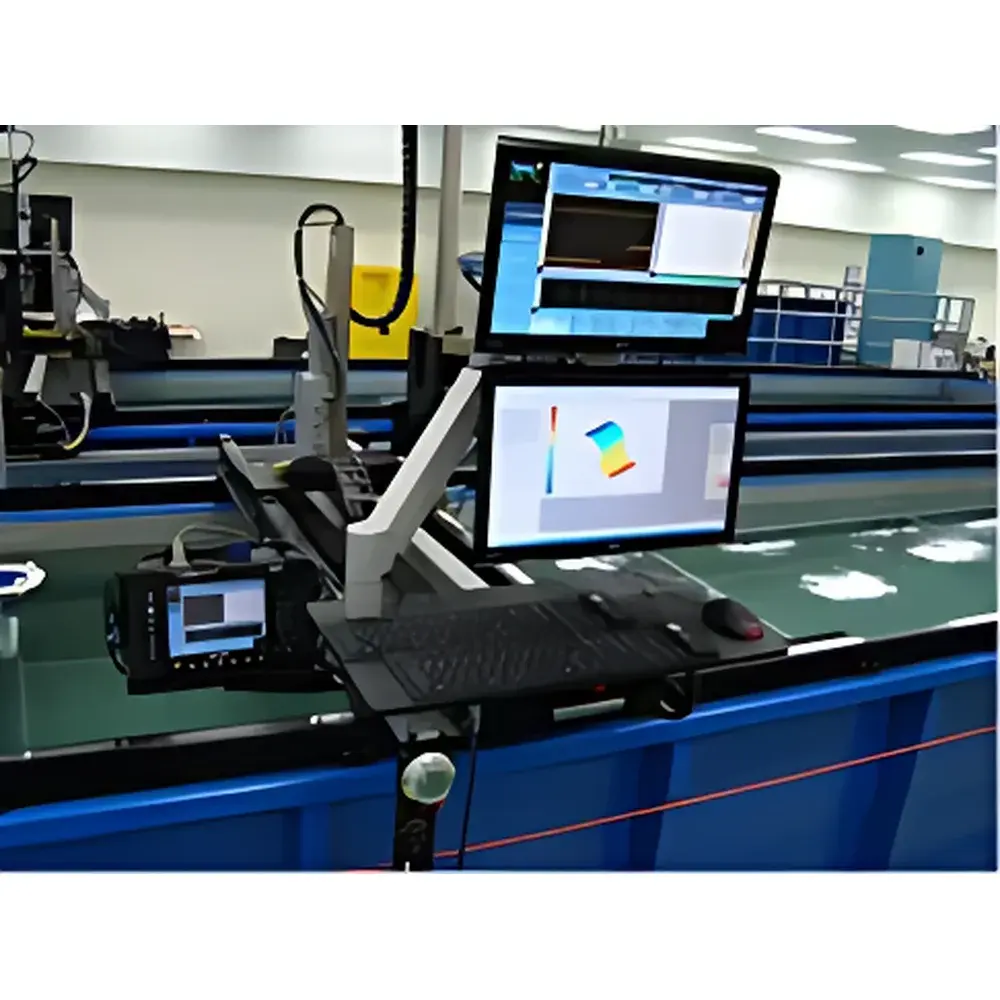
Analysis UPK-T156 Large-Scale Immersion Ultrasonic C-Scan System
| Brand | Analysis |
|---|---|
| Origin | USA |
| Model | UPK-T156 |
| Instrument Type | Digital |
| Inspection Method | Pulse-Echo |
| Waveform Type | Pulsed Ultrasonic |
| Scan Envelope | 4000 × 1500 × 900 mm |
| Gain Range | 0–110 dB |
| Vertical Linearity | ≤2% |
| Horizontal Linearity | ≤2% |
| Dynamic Range | ≥95 dB |
| Transducer Configuration | Single-Crystal or Through-Transmission |
Overview
The Analysis UPK-T156 Large-Scale Immersion Ultrasonic C-Scan System is a high-precision, multi-axis automated ultrasonic inspection platform engineered for non-destructive evaluation (NDE) of large-format industrial components. Operating on the pulse-echo and through-transmission principles of ultrasonic wave propagation in water-coupled environments, the system acquires spatially resolved amplitude- and time-of-flight-based data to generate two-dimensional C-scan images. These images quantitatively map internal discontinuities—including delaminations, disbonds, voids, inclusions, porosity, and weld anomalies—in structural materials such as carbon-fiber-reinforced polymers (CFRP), aluminum-lithium alloys, titanium billets, ceramic matrix composites (CMCs), sputtering targets, and welded pressure vessel sections. Designed for integration into production QA/QC workflows and R&D laboratories, the UPK-T156 delivers metrologically traceable defect characterization with sub-millimeter positional resolution across its full 4 m × 1.5 m × 0.9 m scanning envelope.
Key Features
- Robust gantry architecture with precision-ground linear rails and synchronous belt-driven motion systems—engineered for long-term stability under continuous industrial operation.
- Digital pulsed ultrasonic receiver with 12-bit ADC resolution, real-time gain control (0–110 dB), and ≥95 dB dynamic range to resolve low-amplitude echoes from deep-seated flaws.
- High-fidelity transducer interface supporting single-element immersion probes (5–25 MHz) and dual-probe through-transmission configurations for enhanced signal-to-noise ratio in attenuative materials.
- Vertical linearity ≤2% and horizontal linearity ≤2%, ensuring geometric fidelity and dimensional accuracy per ASTM E1316 and ISO 16810 compliance requirements.
- Modular software-configurable scan patterns—including raster, spiral, and custom path definitions—to accommodate irregular geometries and localized region-of-interest (ROI) interrogation.
- Integrated temperature-stabilized water tank with filtration and degassing subsystems to maintain consistent acoustic coupling and minimize signal drift during extended scans.
Sample Compatibility & Compliance
The UPK-T156 accommodates flat, curved, and contoured parts up to 4 m in length, 1.5 m in width, and 0.9 m in immersion depth. It supports specimens ranging from thin polymer films (300 mm), provided acoustic impedance matching and near-field zone considerations are addressed during probe selection and setup. The system conforms to key international NDT standards, including ASTM E114 (standard practice for ultrasonic pulse-echo straight-beam examination), ASTM E273 (examination of pipe welds), ISO 7963 (characterization of ultrasonic testing equipment), and EN 12668-1 (non-destructive testing—equipment for ultrasonic testing). Its hardware and firmware architecture support audit-ready documentation for GLP and GMP-regulated environments, with optional 21 CFR Part 11-compliant electronic signature and data integrity modules available upon configuration.
Software & Data Management
The system runs on Analysis’ proprietary C-Scan Studio v5.x platform—a Windows-based application offering real-time A-scan/B-scan/C-scan visualization, automated defect sizing (per ASTM E2373), thickness mapping, and statistical process control (SPC) reporting. All raw RF data are stored in HDF5 format with embedded metadata (scan parameters, calibration records, operator ID, timestamp). Export options include DICOM-RT, TIFF, CSV, and XML for integration with enterprise quality management systems (QMS) and digital twin platforms. Version-controlled software updates, password-protected user roles (Operator, Technician, Administrator), and full audit trail logging ensure regulatory readiness and operational accountability.
Applications
- Automated inspection of aerospace composite panels and honeycomb structures for disbonds and impact damage.
- Quality assurance of nuclear-grade stainless steel welds and cladding layers in power generation components.
- Characterization of sputter target microstructure homogeneity and subsurface cracking prior to PVD deposition.
- In-process verification of adhesive bond integrity in automotive battery module housings and EV structural assemblies.
- Research-grade volumetric analysis of additive-manufactured metal parts for lack-of-fusion defects and residual stress-induced porosity.
- Periodic in-service inspection of offshore pipeline girth welds and subsea valve bodies under API RP 1104 guidelines.
FAQ
What transducer frequencies are supported by the UPK-T156 system?
Standard configurations support immersion transducers from 2.25 MHz to 25 MHz; custom broadband or focused transducers can be integrated upon request.
Can the system perform through-transmission inspection without manual repositioning?
Yes—the UPK-T156 supports simultaneous transmitter/receiver mounting on independent Z-axes, enabling fully automated through-transmission mode with synchronized pulse triggering.
Is the system compatible with third-party robotics or PLC-controlled factory automation?
Yes—it provides TCP/IP and Modbus TCP interfaces for seamless integration into Industry 4.0 production lines and MES/SCADA environments.
Does the system meet NADCAP AC7114 requirements for ultrasonic inspection capability?
When configured with certified calibration procedures, documented uncertainty budgets, and qualified personnel, the UPK-T156 satisfies AC7114 Section 8.3 for automated immersion C-scan systems.
What is the typical lead time for delivery and installation?
Standard UPK-T156 systems ship within 12–16 weeks after order confirmation; site commissioning and IQ/OQ validation services are available globally via Analysis-certified field engineers.



