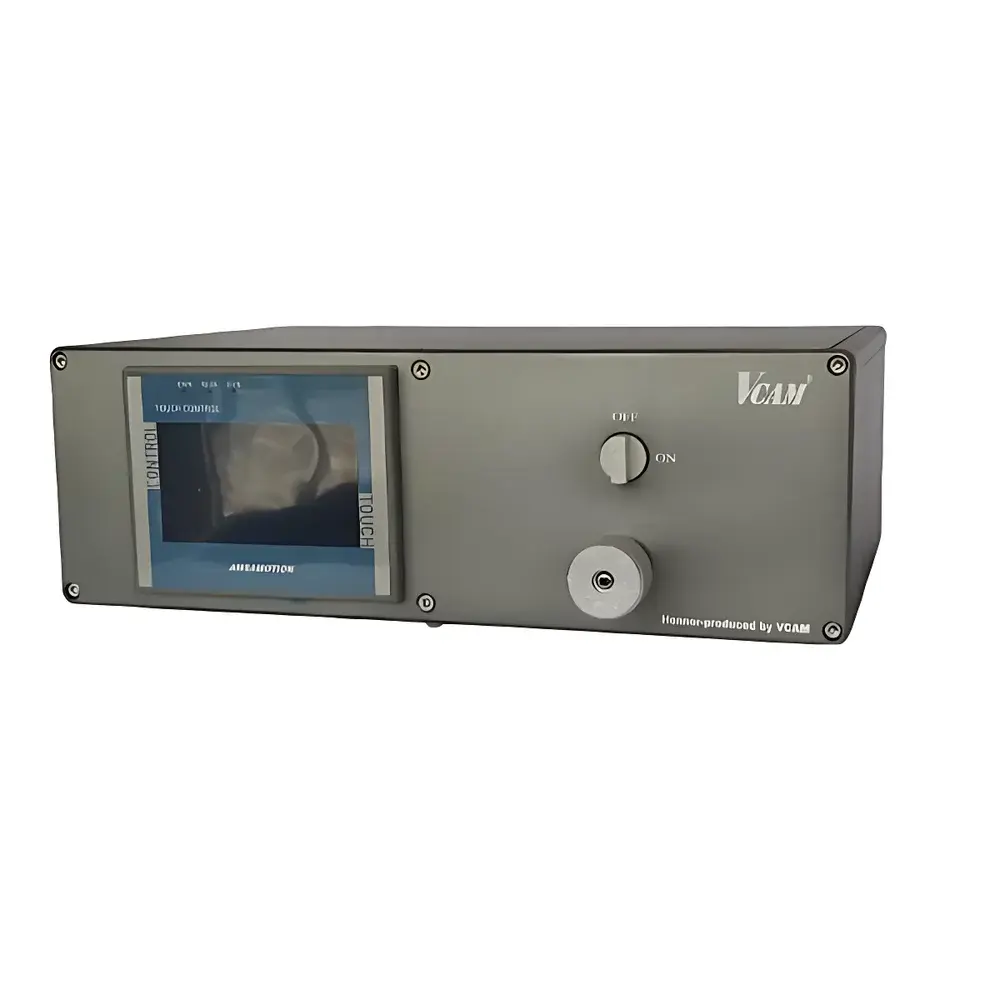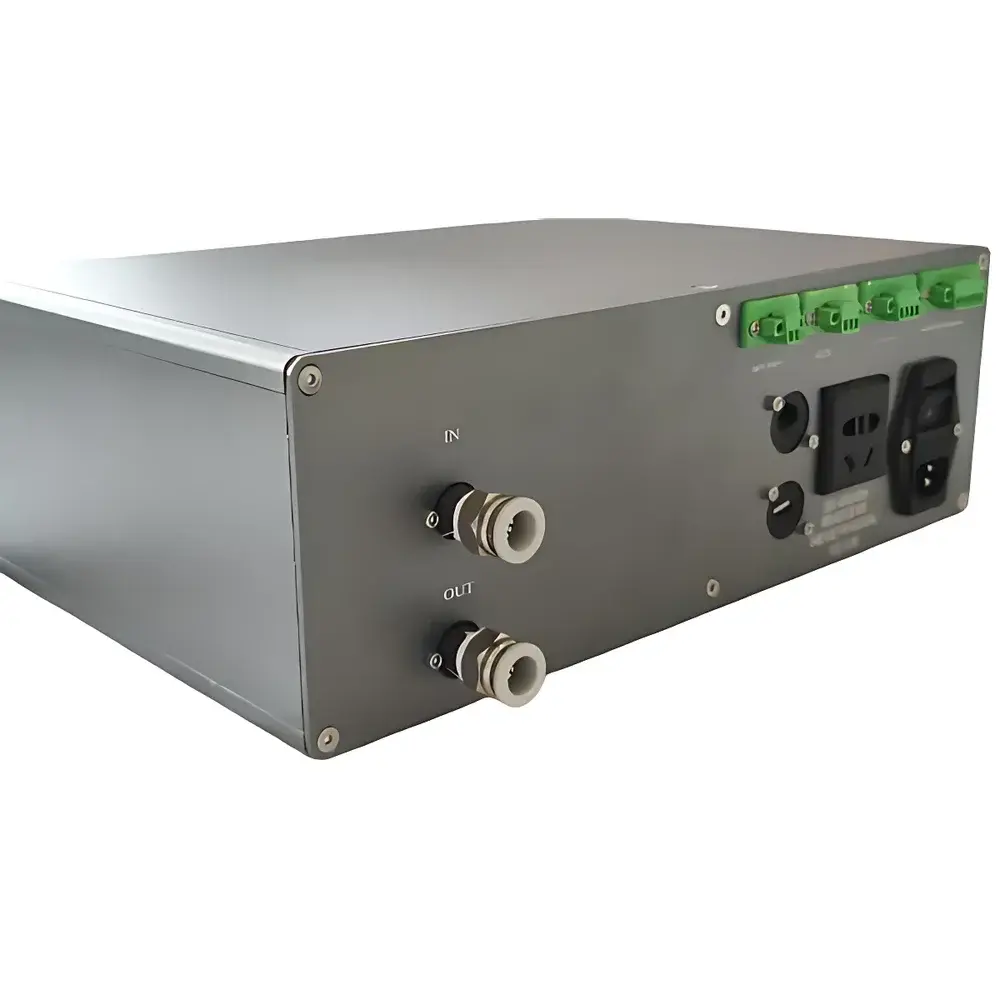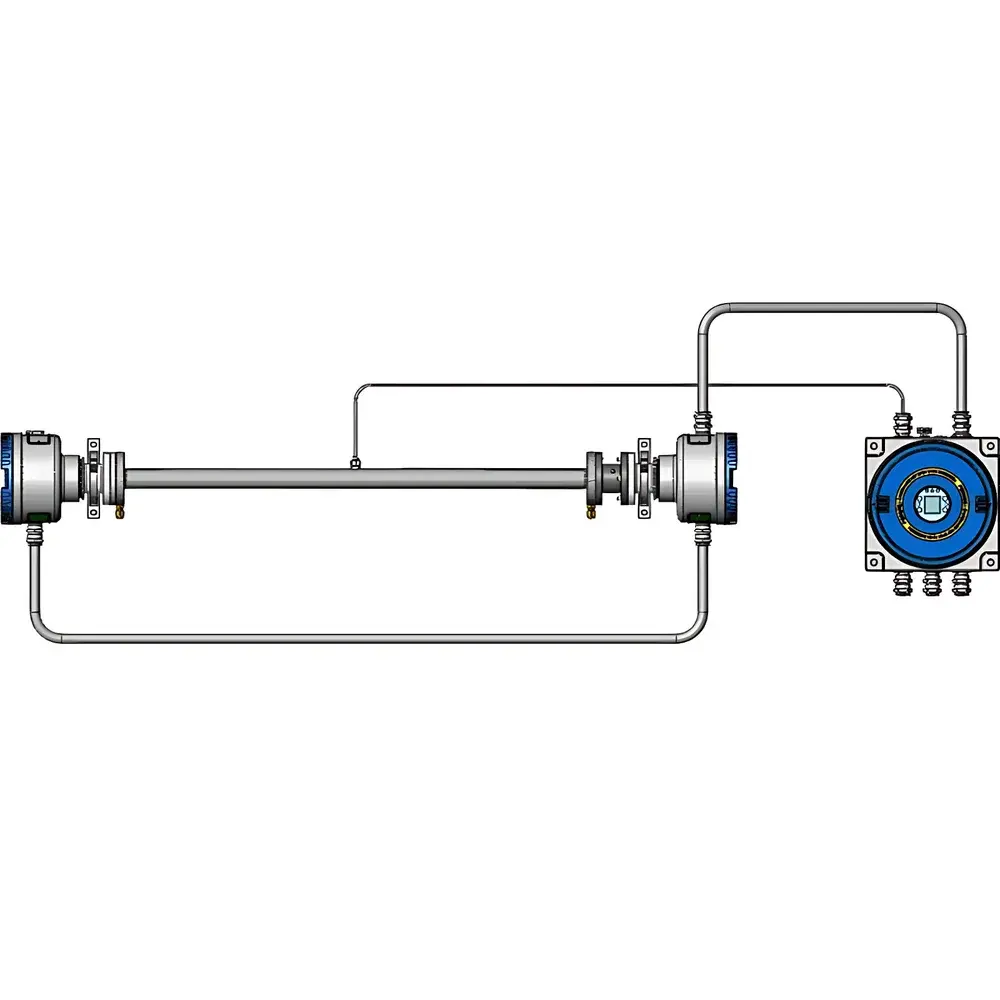
FPI LGA-6500 Laser Gas Analyzer
| Brand | FPI |
|---|---|
| Origin | Zhejiang, China |
| Manufacturer Type | Original Equipment Manufacturer (OEM) |
| Country of Origin | China |
| Model | LGA-6500 |
| Pricing | Available upon Request |
Overview
The FPI LGA-6500 Laser Gas Analyzer is an industrial-grade, extractive (bypass) process gas analyzer engineered for continuous, real-time quantification of specific gaseous species in demanding industrial environments. It operates on the principle of Tunable Diode Laser Absorption Spectroscopy (TDLAS), a mature and highly selective optical absorption technique that exploits narrow-line absorption features of target molecules in the near-infrared (NIR) spectral region. Unlike broad-band methods such as NDIR or electrochemical sensors, TDLAS enables parts-per-trillion (ppt) to parts-per-million (ppm) level detection sensitivity with exceptional specificity—minimizing cross-interference from background gases, water vapor, or particulate-laden streams. The LGA-6500 is designed for installation in bypass sample conditioning systems where process gas is extracted, conditioned (filtered, cooled, pressure-regulated), and delivered to the optical measurement cell under controlled temperature and pressure. This architecture ensures stable optical path integrity while enabling safe, non-intrusive monitoring of high-temperature (>800 °C), high-pressure (>10 bar), and chemically aggressive streams—common in blast furnaces, cracking furnaces, syngas lines, and flue gas ducts.
Key Features
- High-selectivity TDLAS detection with wavelength modulation spectroscopy (WMS) for enhanced signal-to-noise ratio and baseline stability
- Integrated temperature and pressure compensation algorithms compliant with ideal gas law (PV = nRT) and HITRAN-based line strength modeling
- Robust optical design featuring hermetically sealed, thermally stabilized laser diode and InGaAs photodetector assembly
- Full-system explosion-proof certification (Ex d IIB T4 Gb / Ex tb IIIC T135°C Db per IEC 60079-0, -1, -7, -31) suitable for Zone 1/21 hazardous areas
- Modular sample interface supporting standard 1/4″ VCR or Swagelok fittings; compatible with third-party sample conditioning skids (e.g., ABB, Siemens, Endress+Hauser)
- Self-diagnostic firmware with real-time laser wavelength lock verification, photodiode responsivity monitoring, and optical path contamination alerts
Sample Compatibility & Compliance
The LGA-6500 supports extractive analysis of a wide range of process gases—including CO, CO₂, CH₄, NH₃, H₂S, O₂ (via paramagnetic or zirconia auxiliary sensor), HF, HCl, and H₂O—across concentrations from 0–100% vol down to low-ppm levels, depending on path length and molecular absorption cross-section. Sample compatibility is governed by upstream conditioning: the analyzer requires particle-free (<0.3 µm), dew-point-controlled (<−20 °C), and pressure-stabilized (±1 kPa) gas streams. It complies with key international standards for industrial emissions and process safety, including EN 15267-3 (QAL1 certified performance validation), ISO 14064-1 (GHG monitoring), and EPA Method 3A/7E for stack gas analysis. For regulated pharmaceutical or food-grade applications, the system architecture supports audit-ready data logging aligned with FDA 21 CFR Part 11 requirements when deployed with validated software modules.
Software & Data Management
The embedded firmware provides dual-mode operation: standalone local display (7″ resistive touchscreen) with real-time concentration plots, alarm thresholds, and calibration logs; and industrial Ethernet (TCP/IP) or RS-485 Modbus RTU connectivity for integration into DCS, SCADA, or MES platforms. Firmware version 3.2+ includes configurable data export (CSV/JSON), time-synchronized timestamping (NTP-supported), and secure user access levels (Operator, Engineer, Administrator). Optional FPI Insight™ PC software enables advanced spectral fitting diagnostics, multi-component interference correction, and automated zero/span validation reporting traceable to NIST-traceable reference gases. All raw absorbance spectra and processed concentration values are stored onboard with 32 GB internal flash memory (≥12 months at 1 Hz sampling), supporting GLP/GMP-compliant data retention policies.
Applications
- Combustion optimization and excess air control in coal-fired and CFB boilers (power generation)
- Real-time syngas composition monitoring (H₂/CO/CO₂/CH₄) in gasification and Fischer–Tropsch units (coal-to-liquids, ammonia synthesis)
- Ammonia slip detection downstream of SCR reactors in cement kilns and waste incinerators
- HF/HCl monitoring in alkylation units and fluid catalytic cracking (FCC) regenerators (refining)
- Process gas purity assurance in medical oxygen production and semiconductor bulk gas delivery systems
- Leak detection and fugitive emission quantification in LNG terminals and pipeline compressor stations
FAQ
What gas species can the LGA-6500 measure simultaneously?
The LGA-6500 performs single-species measurement per optical channel. Multi-gas configurations require multiple laser modules or sequential wavelength scanning—typically implemented via custom OEM integration.
Is calibration required on-site, and how often?
Initial factory calibration uses NIST-traceable gas standards. Field zero/span verification is recommended every 3–6 months depending on sample cleanliness; automatic baseline correction reduces drift-related recalibration frequency.
Can the analyzer operate without external cooling water?
Yes—the optical module is air-cooled with intelligent thermal management; no chiller or coolant loop is required for ambient operation up to 55 °C cabinet temperature.
Does it support SIL2 functional safety certification?
The base unit does not carry IEC 61508 SIL2 certification; however, safety instrumented functions (SIFs) may be implemented using redundant LGA-6500 units with external logic solvers meeting SIL2 requirements.
How is optical alignment maintained during thermal cycling?
The optical bench employs monolithic Invar construction and kinematic mounting to minimize thermal expansion mismatch; active laser wavelength feedback ensures continuous spectral lock across −20 °C to +60 °C ambient ranges.