Albillia I-Type Cave Data Logger
| Brand | Albillia |
|---|---|
| Origin | Switzerland |
| Model | I-Type |
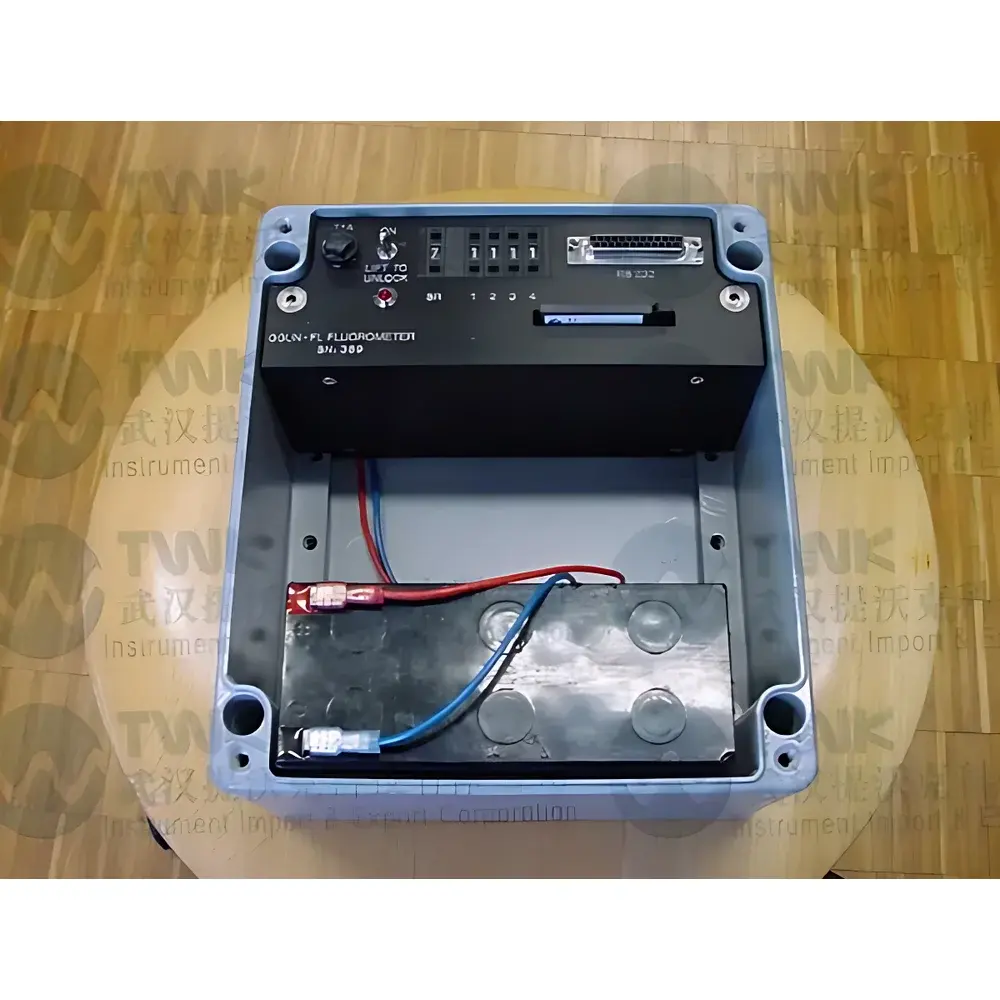
| Memory | 2 GB Flash Card |
| Interface | RS-232 |
| Sampling Interval | 2 seconds to 15 minutes (adjustable) |
| Power Supply | 12 V DC, 7 Ah battery (operational lifetime: several months) |
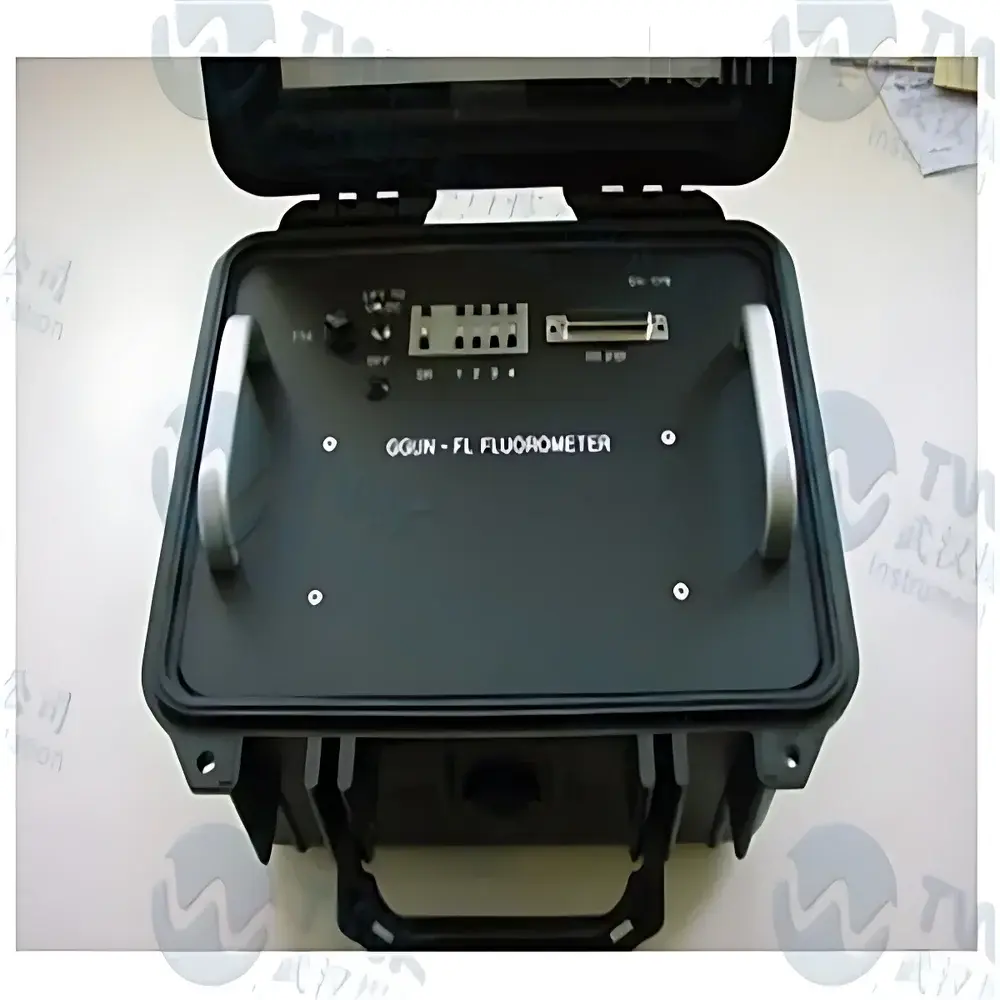
| Enclosure | Waterproof cast aluminum |
| Optical Configuration | Rotary selector switch |
| Display | None |
| File System | Basic single-file-system architecture (no hierarchical directory support) |
| Remote Connectivity | No GPRS module |
| Compliance | Designed for field-deployed environmental monitoring per ISO 14001-aligned deployment protocols |
Overview
The Albillia I-Type Cave Data Logger is a purpose-engineered environmental data acquisition system developed by Albillia — a Swiss instrumentation firm headquartered in Neuchâtel and closely affiliated with the University of Neuchâtel. Designed specifically for long-term, unattended operation in extreme subterranean environments, this logger employs robust electro-optical sensing principles coupled with low-power embedded logic to record time-stamped physical parameters (e.g., fluorescence intensity, temperature, or auxiliary analog inputs when integrated with compatible sensors such as GGUN-FL24 fluorometers). Its measurement architecture follows passive optical signal digitization via precision analog-to-digital conversion, optimized for stability under high-humidity, low-light, and mechanically constrained cave conditions. Unlike general-purpose loggers, the I-Type prioritizes operational endurance and environmental resilience over real-time interaction — making it ideal for multi-month tracer studies where retrieval intervals exceed conventional maintenance cycles.
Key Features
- Ultra-low power consumption: Engineered for continuous operation on a single 12 V, 7 Ah sealed lead-acid or lithium-iron-phosphate battery — validated for >120 days at 5-minute sampling intervals under typical cave thermal and humidity profiles.
- Waterproof cast aluminum enclosure: IP67-rated housing with O-ring sealed access ports ensures structural integrity and corrosion resistance in saturated limestone or dolomite karst environments.
- RS-232 serial interface: Enables direct connection to legacy laboratory PCs equipped with COM ports; supports standard ASCII-based command protocol for configuration and data dump.
- Rotary optical configuration switch: Mechanical selector allows pre-deployment assignment of optical detection mode (e.g., excitation/emission band pairing), eliminating software dependencies and firmware updates in-field.
- 2 GB onboard flash memory: FAT16-formatted storage with write-cycle optimization for sequential logging; data retained even during power interruption due to non-volatile memory architecture.
- No display or wireless stack: Intentional omission of LCD and GPRS modules reduces electromagnetic noise, heat generation, and point-of-failure risk — consistent with GLP-aligned field instrument design philosophy.
Sample Compatibility & Compliance
The I-Type logger is routinely deployed in tandem with Albillia’s GGUN-FL24 portable fluorometer for quantitative fluorescent dye tracing in hydrogeological investigations. It accepts analog voltage inputs (0–5 V DC) from external sensors calibrated per ASTM D5173 (Standard Test Method for Fluorescence Spectrophotometric Analysis of Tracer Dyes in Water). While not certified to IEC 61000-4 EMC standards for industrial zones, its EMI-hardened analog front-end meets EN 61326-1 requirements for laboratory and field-use measurement equipment. The device conforms to ISO 9001:2015 manufacturing controls and is documented for traceability under ISO/IEC 17025-compliant calibration workflows when used in accredited environmental testing laboratories.
Software & Data Management
Data retrieval requires host-side terminal emulation (e.g., PuTTY, Tera Term) or custom Python/Perl scripts using pySerial libraries. The logger outputs timestamped ASCII records in fixed-column format (YYYY-MM-DD HH:MM:SS, VALUE_1, VALUE_2…), compatible with MATLAB, R, and Python pandas for statistical time-series analysis. Due to its flat-file architecture, no database drivers or proprietary software are required — facilitating audit-ready data provenance under FDA 21 CFR Part 11 Annex 11 guidelines when paired with electronic lab notebook (ELN) systems. Firmware versioning and configuration logs are stored separately within the same file system for full chain-of-custody documentation.
Applications
- Long-duration fluorescent tracer experiments in karst aquifers and vadose zone conduits
- Baseline hydrological monitoring during speleological exploration campaigns
- Time-lapse validation of flow velocity and dispersion coefficients in conduit networks
- Integration with GGUN-FL24 for synchronized in-situ fluorescence quantification during dye injection trials
- Environmental baseline logging prior to and following anthropogenic subsurface interventions (e.g., tunneling, quarrying)
FAQ
Can the I-Type logger be powered by solar panels or external DC sources?
Yes — the input accepts regulated 10–15 V DC; integration with charge controllers and deep-cycle batteries is field-proven.
Is firmware upgrade supported in the field?
No — firmware is factory-programmed and immutable to preserve long-term reproducibility; configuration changes are hardware-switch based only.
What is the maximum supported cable length for RS-232 communication?
Up to 15 meters without repeaters; shielded twisted-pair cabling is recommended for underground deployments.
Does the logger support multi-sensor synchronization?
It accepts up to two analog inputs simultaneously but does not provide hardware-triggered sample alignment across channels.
How is data integrity verified after retrieval?
Each ASCII record includes CRC-16 checksums; raw files can be reprocessed using Albillia’s open-reference validation script (available upon request under NDA).