
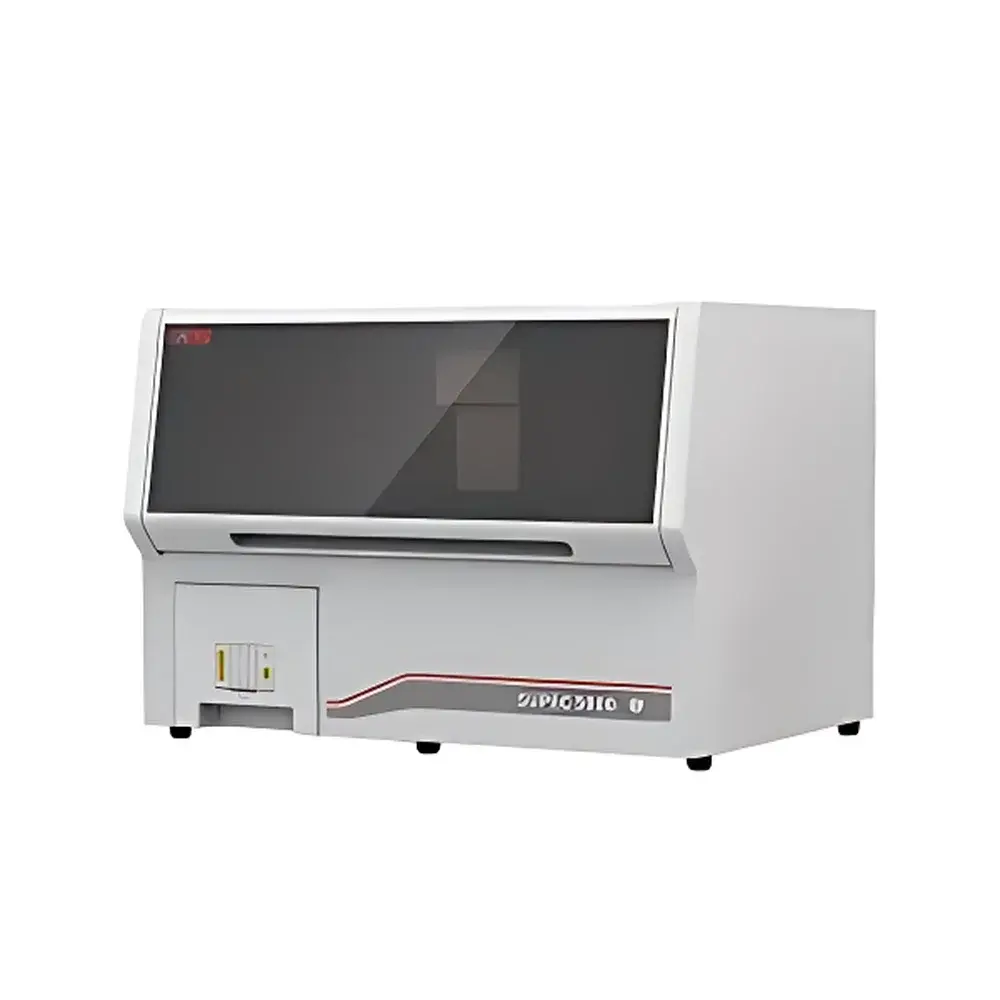
EXPEC SUPEC 5000 Series Fully Automated Permanganate Index Analyzer
| Brand | EXPEC |
|---|---|
| Origin | Zhejiang, China |
| Manufacturer Type | Authorized Distributor |
| Instrument Type | Laboratory Benchtop Analyzer |
| Model | SUPEC 5000 |
| Measurement Principle | Boiling Water Bath Digestion Coupled with Potassium Permanganate Titration |
| Compliance | GB 11892, GB/T 5750.7, National Surface Water Monitoring Operational Guidelines |
| Sample Throughput | Multi-position Parallel Processing |
| Operating Temperature Range | 70–80 °C (Titration Zone), 100 °C (Digestion Bath) |
| Safety Features | Auto Water Level Control, Dry-Run Prevention, Thermal Insulation Enclosure |
| Reagent Delivery | Multi-channel Independent Injection System |
| Sample Handling | Motorized Pull-Out Tray with Position-Encoded Cup Carrier |
| Endpoint Detection | Vision-Based Colorimetric Recognition Algorithm |
| Data Integrity | Audit Trail Enabled, CFR 21 Part 11–Ready Software Architecture |
| Physical Design | Front-Access Hinged Chamber with Sealed Reaction Compartment |
Overview
The EXPEC SUPEC 5000 Series Fully Automated Permanganate Index Analyzer is a laboratory-grade benchtop instrument engineered for precise, reproducible determination of the permanganate index (also known as oxygen consumption or CODMn) in water samples. It implements the standardized boiling water bath digestion method followed by potassium permanganate titration — fully aligned with Chinese national standards GB 11892 and GB/T 5750.7, as well as the operational protocols of China’s National Surface Water Environmental Quality Monitoring Network. Unlike spectrophotometric or electrochemical alternatives, this system adheres strictly to the classical redox titration principle: under acidic or neutral conditions, excess KMnO4 oxidizes organic and inorganic reductants in the sample during controlled 30-minute boiling; residual permanganate is then back-titrated with standardized sodium oxalate solution at elevated temperature (70–80 °C). The endpoint is determined via real-time colorimetric analysis using an embedded vision sensor calibrated to detect the characteristic decolorization from purple to colorless.
Key Features
- Fully automated boiling water bath digestion module with programmable fill/drain cycles, real-time water level monitoring, and dry-run prevention circuitry to ensure thermal stability and compliance with GB 11892 digestion time/temperature requirements.
- High-precision robotic arm with heat-resistant gripper end-effector, capable of handling sample cups up to 100 °C without thermal drift or positional error—enabling safe, repeatable transfer between digestion, cooling, and titration stations.
- Temperature-regulated titration zone maintained at 70–80 °C via PID-controlled heating plate and insulated chamber, minimizing endpoint variability caused by ambient fluctuations.
- Multi-channel independent reagent injection system with non-contact dispensing nozzles and dedicated fluid paths per reagent—eliminating cross-contamination risks between KMnO4, Na2C2O4, H2SO4, and AgNO3 solutions.
- Motorized pull-out sample tray with position-encoded cup slots and mechanical detents—allowing rapid batch loading/unloading while preserving spatial registration for traceable sample tracking.
- Front-access hinged reaction chamber with light-tight sealing gasket and laminar airflow management—preventing particulate ingress and ensuring optical integrity during endpoint recognition.
Sample Compatibility & Compliance
The SUPEC 5000 accommodates standard 100 mL borosilicate glass sample cups and supports raw, filtered, or preserved water matrices including surface water, groundwater, drinking water, and wastewater effluents within defined turbidity and chloride interference limits (<200 mg/L Cl−). All analytical workflows are validated against GB 11892 and GB/T 5750.7 protocols, with built-in procedural checks for digestion completeness, reagent blank verification, and duplicate sample reconciliation. The system architecture supports GLP/GMP-aligned operation: electronic signatures, user role-based access control, full audit trail logging (including timestamped image capture of each titration), and exportable CSV/Excel reports compliant with ISO/IEC 17025 documentation requirements.
Software & Data Management
Controlled via EXPEC’s proprietary Analytical Workflow Manager (AWM) v3.x software, the SUPEC 5000 provides intuitive method configuration, real-time status visualization, and integrated data validation. Each analysis session generates a complete digital record—including raw vision frames, pump actuation logs, temperature profiles, and endpoint confidence scores—stored with SHA-256 hash integrity verification. The software supports 21 CFR Part 11 readiness through optional PKI certificate integration, electronic signature enforcement, and immutable audit trail export. Data export formats include ASTM E1382-compliant .csv, PDF analytical certificates, and LIMS-ready XML schemas compatible with Thermo Fisher SampleManager, LabVantage, and STARLIMS platforms.
Applications
This analyzer serves routine and regulatory testing laboratories engaged in environmental quality assessment, municipal water supply monitoring, and third-party certification services. Primary use cases include: long-term trend analysis of organic pollution in rivers and lakes; compliance verification for Class I–III surface water under China’s Environmental Quality Standards (GB 3838); source water screening for drinking water treatment plants; and QA/QC support for accredited environmental testing labs operating under CNAS accreditation (CNAS-CL01:2018). Its automation reduces manual labor by >85% compared to manual titration methods while maintaining metrological equivalence to reference procedures.
FAQ
Does the SUPEC 5000 comply with international standards such as ISO 8467?
While optimized for GB 11892 and GB/T 5750.7, its fundamental methodology aligns with ISO 8467 (1993) principles; however, formal ISO 8467 validation requires site-specific performance qualification per ISO/IEC 17025.
Can the system handle high-chloride samples without pretreatment?
Chloride interference mitigation follows GB 11892 guidelines—samples exceeding 200 mg/L Cl− require AgNO3 precipitation prior to analysis; the instrument supports automated AgNO3 addition when configured with optional reagent module.
Is remote monitoring or unattended overnight operation supported?
Yes—the system includes watchdog timers, automatic error recovery routines, and SNMP-enabled network health reporting; continuous 24-hour operation is permitted under supervised lab conditions with scheduled maintenance intervals.
What calibration and verification protocols are recommended?
Daily system suitability tests using certified potassium hydrogen phthalate (KHP) standards and periodic verification with NIST-traceable oxalate solutions are advised; EXPEC provides documented PQ/OQ protocols for IQ/OQ/PQ validation packages.
How is reagent stability managed during extended runs?
Reagent reservoirs feature inert gas purging (N2 blanket), temperature-controlled storage (4–10 °C for KMnO4), and real-time concentration monitoring via conductometric verification prior to each injection cycle.







