
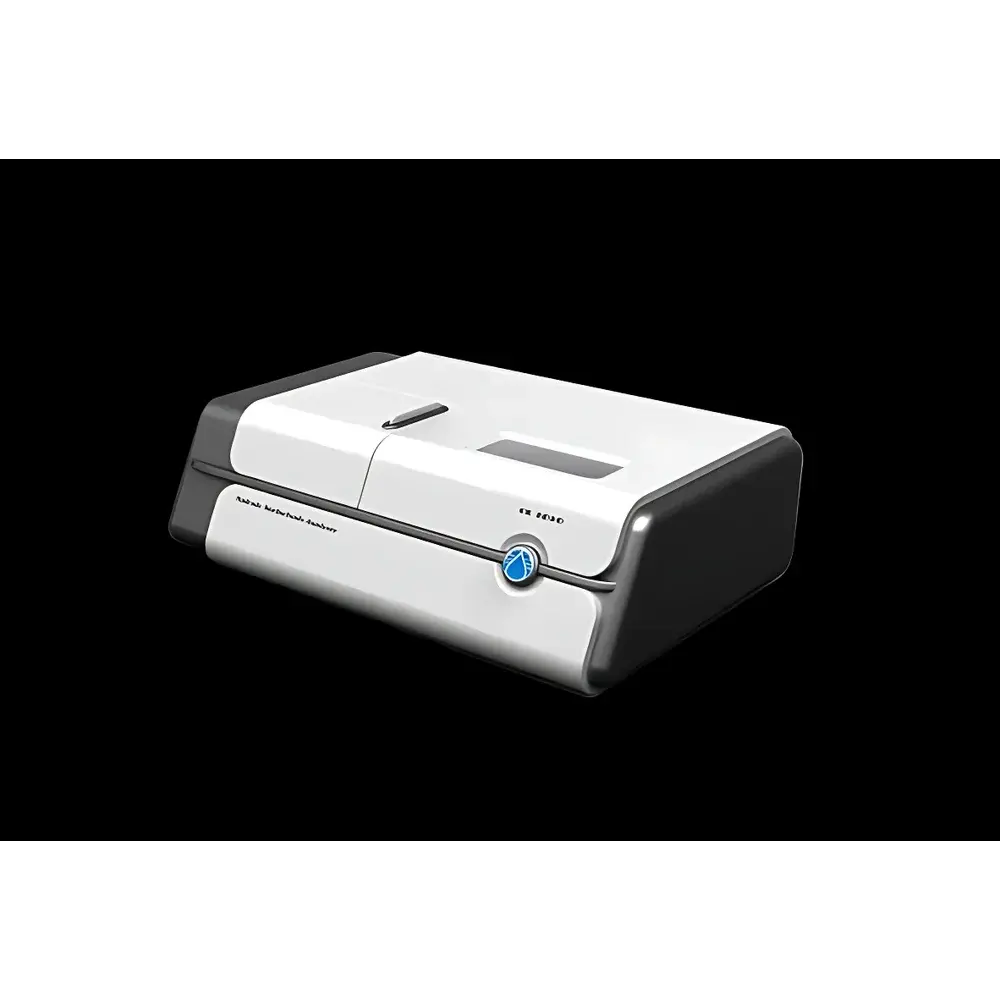
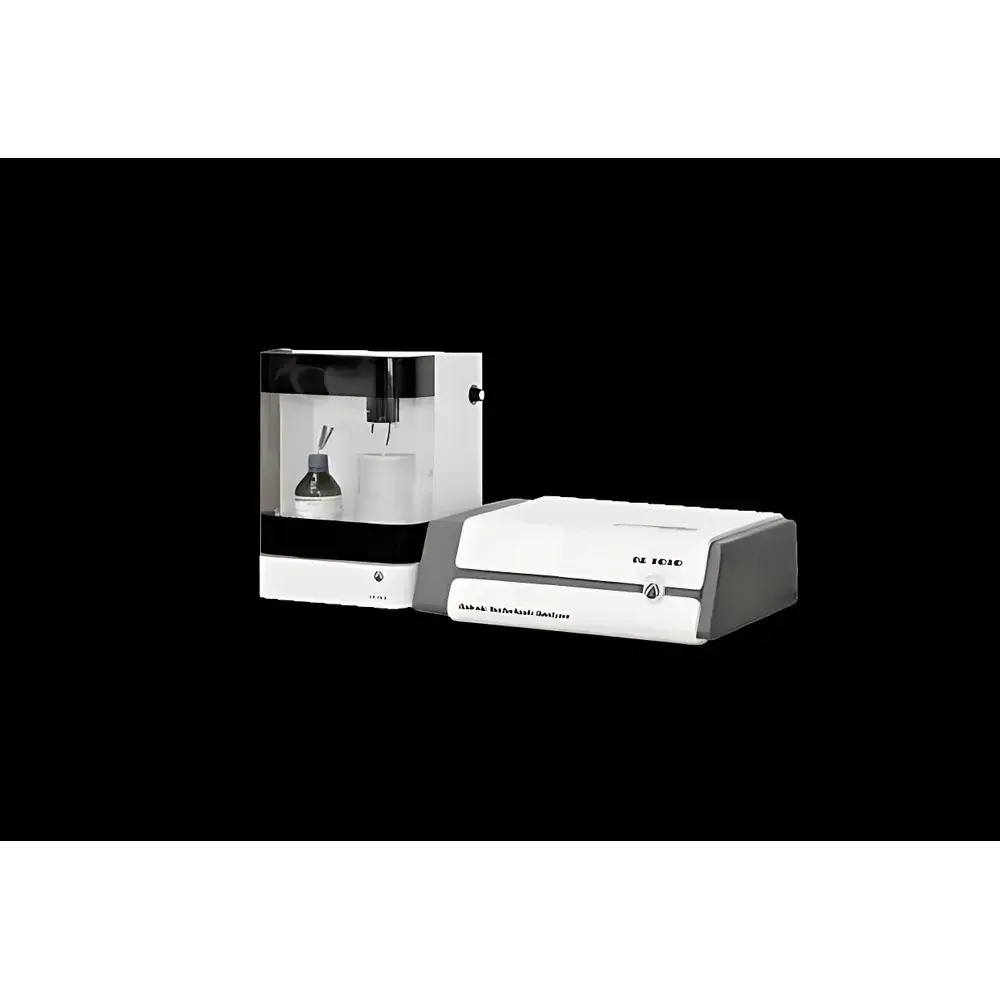
OL1010 Infrared Spectrophotometric Oil Content Analyzer
| Origin | Shanghai, China |
|---|---|
| Manufacturer Type | Authorized Distributor |
| Origin Category | Domestic (China) |
| Model | OL1010 |
| Instrument Type | Laboratory Benchtop Analyzer |
| Measurement Principle | Infrared Absorption Spectrophotometry (Based on ASTM D7066 & HJ 637–2012) |
| Measurement Range | 0–50,000 mg/L |
| Detection Limit | 0.005 mg/L |
| Accuracy | ±2% |
| Resolution | 0.001 mg/L |
| Wavenumber Range | 3400–6000 cm⁻¹ |
| Absorbance Range | 0.0000–2.0000 AU |
| Sample Volume | 20–1000 mL (with OL-101 Auto-Sampler) |
| Extraction Ratio | Adjustable (0.01–100) |
| Analysis Time | <5 min (with OL-101 Auto-Sampler) |
| Repeatability | RSD <2% |
| Compliance | HJ 637–2012, HJ/T 91–2002, ASTM D7066, ISO 9377-2 |
Overview
The OL1010 Infrared Spectrophotometric Oil Content Analyzer is a laboratory-grade benchtop instrument engineered for precise quantification of total oil, petroleum hydrocarbons, and non-petroleum (animal/vegetable) oils in aqueous matrices. It operates on the fundamental principle of infrared absorption spectrophotometry—measuring characteristic C–H bond vibrational absorbances at three critical wavenumbers: 2960 cm⁻¹ (asymmetric CH₃ stretch), 2930 cm⁻¹ (asymmetric CH₂ stretch), and 3030 cm⁻¹ (aromatic =C–H stretch), as defined in the Chinese national standard HJ 637–2012 and aligned with ASTM D7066 and ISO 9377-2. The system supports both manual and fully automated workflows, with optional integration of the OL-101 Auto-Sampler for unattended sample processing. Its optical architecture employs a high-stability IR source, precision interference filters, and a thermoelectrically cooled PbSe detector to ensure long-term photometric stability and low-noise signal acquisition across the 3400–6000 cm⁻¹ spectral window.
Key Features
- Patented phase-separation module: Enables robust, pressure-driven separation of organic extractant (e.g., tetrachloroethylene or carbon tetrachloride) from aqueous and particulate phases—eliminating emulsion carryover and minimizing cross-contamination.
- Integrated silica-magnesium adsorption column: Automatically isolates non-petroleum oils (e.g., triglycerides, fatty acids) via polar adsorption; software monitors column depletion in real time and alerts users prior to breakthrough.
- Dedicated field sampling interface: Includes calibrated, direct-read sampling bottles and portable field case compliant with HJ/T 91–2002—enabling volume-accurate transfer without secondary measurement or pipetting loss.
- Hermetically sealed fluidic path: All reagent handling, extraction, and measurement occur within a closed-loop PTFE-lined manifold; volatile organic vapors are continuously scavenged via activated carbon filtration, ensuring operator safety and regulatory compliance with OSHA 29 CFR 1910.1200.
- Flexible extraction control: OL-101 Auto-Sampler permits user-defined reagent volume (0.01–100 mL), magnetic stirring intensity, extraction duration, and enrichment/dilution cycles—adapting to heterogeneous or low-concentration wastewater matrices.
Sample Compatibility & Compliance
The OL1010 is validated for use with surface water, groundwater, industrial effluent, municipal wastewater, and leachate samples per HJ 637–2012 methodology. It accommodates a broad range of extractants—including tetrachloroethylene (non-ozone-depleting alternative), carbon tetrachloride (for legacy method alignment), and other IR-transparent chlorinated solvents—with full compatibility verified under ISO 9377-2 Annex B. All hardware materials—including flow paths, valves, and sample cells—are constructed from chemically inert polytetrafluoroethylene (PTFE) and perfluoroalkoxy (PFA), preventing analyte adsorption or leaching. The system meets GLP documentation requirements through built-in audit trails, electronic signature support, and data integrity features aligned with FDA 21 CFR Part 11 when operated with compliant LIMS or standalone software.
Software & Data Management
The embedded firmware and optional PC-based analysis suite provide dual-mode operation: standalone touchscreen mode (no PC required) and networked PC-controlled mode with full method storage, calibration curve management, and QC flagging. Spectral data are stored in vendor-neutral .csv and .jdx formats. Software enforces calibration verification checks before each batch, logs all parameter changes with timestamps and operator IDs, and generates PDF reports containing raw absorbance values at 2930, 2960, and 3030 cm⁻¹, calculated concentrations (total oil, petroleum hydrocarbons, animal/vegetable oil), RSD%, and compliance status against method-defined acceptance criteria. Audit logs retain ≥18 months of operational history and are exportable for internal QA review or regulatory inspection.
Applications
The OL1010 delivers trace-level oil quantification in environmental monitoring laboratories performing routine compliance testing under national discharge permits (e.g., China’s GB 8978–1996, U.S. EPA NPDES), landfill leachate characterization, refinery process water screening, and soil eluate analysis. Its sub-ppb detection limit (0.005 mg/L) and wide dynamic range (0–50,000 mg/L) make it suitable for both ultra-clean influent verification and highly contaminated industrial outfalls. The ability to resolve petroleum vs. biogenic oil fractions supports forensic source identification—particularly valuable in spill response, brownfield assessment, and bioremediation performance tracking. Method flexibility also enables adaptation to emerging contaminants such as bio-lubricants and synthetic ester-based hydraulic fluids when referenced against compound-specific IR libraries.
FAQ
Does the OL1010 comply with international standards beyond HJ 637–2012?
Yes—it is functionally equivalent to ASTM D7066 and ISO 9377-2 for petroleum hydrocarbon quantification in water, with spectral band assignments and calculation algorithms fully traceable to these standards.
Can the instrument operate without the OL-101 Auto-Sampler?
Yes—manual mode supports traditional solvent extraction using separatory funnels, followed by direct cell loading and measurement; all spectral processing and reporting remain identical.
Is calibration verification required before each analysis batch?
Per HJ 637–2012 Section 8.3, a mid-range calibration standard must be analyzed every 10 samples or at start/end of batch; the software enforces this via configurable QC prompts and automatic flagging of drift >±5%.
What maintenance is required for the silica-magnesium column?
Column lifetime is tracked in real time based on cumulative sample volume and oil load; replacement is recommended after 200–300 extractions or upon software alert—columns are field-replaceable with no tools required.
How is data integrity ensured during regulatory audits?
All measurements include immutable metadata (date/time, operator ID, method version, instrument serial number); audit logs record every user action, calibration event, and error condition—exportable as encrypted .zip archives meeting GLP/GMP retention mandates.
Related Products







