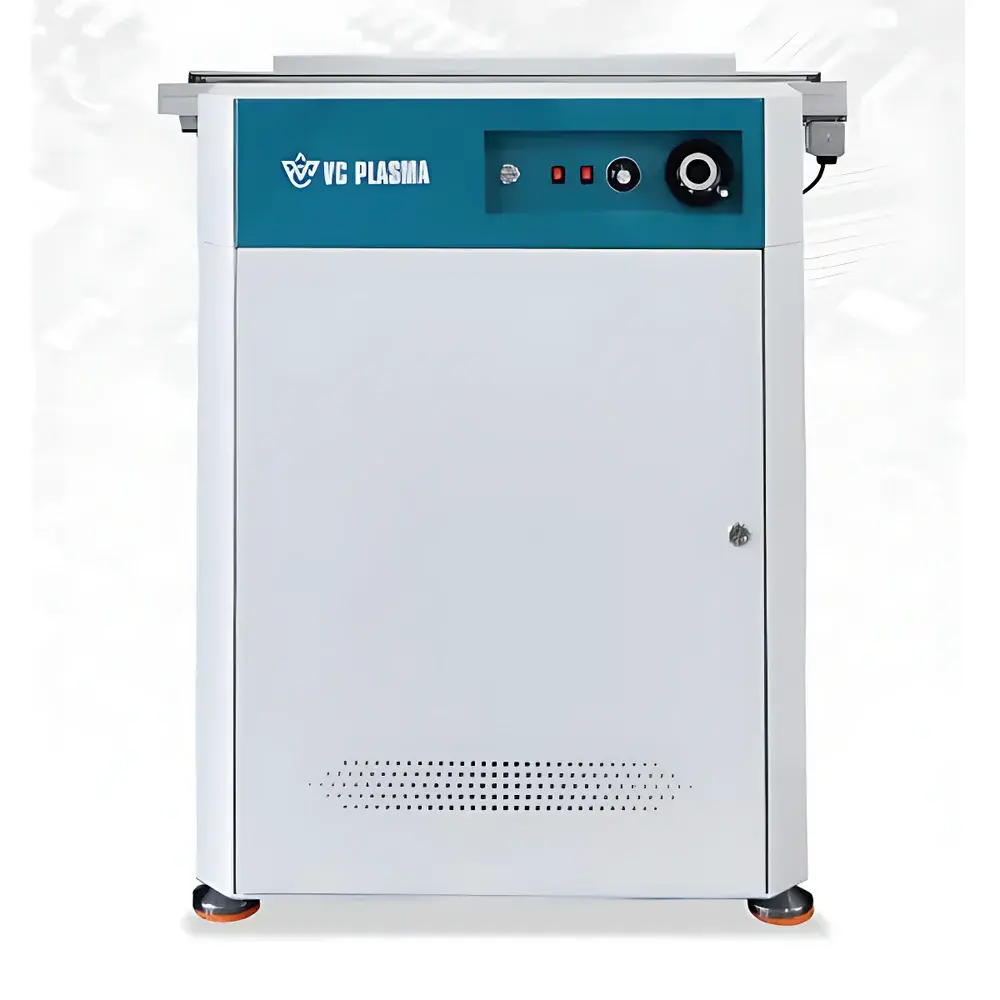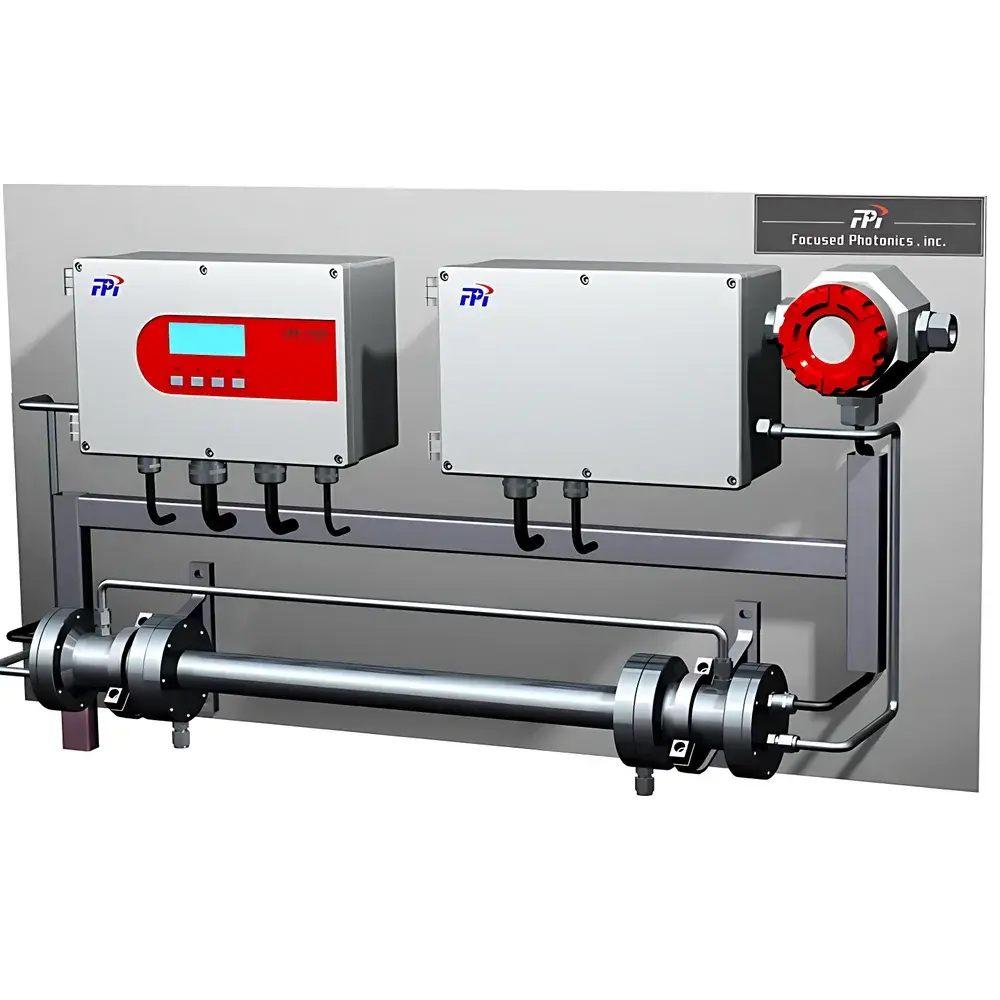
FPI LGA-4500 Laser Gas Analyzer
| Brand | FPI |
|---|---|
| Origin | Zhejiang, China |
| Manufacturer Type | Original Equipment Manufacturer (OEM) |
| Country of Origin | China |
| Model | LGA-4500 |
| Pricing | Available upon Request |
Overview
The FPI LGA-4500 Laser Gas Analyzer is an industrial-grade, extractive online gas analyzer engineered for continuous, real-time measurement of target gas species—including O₂, CO, CO₂, CH₄, NH₃, HCl, HF, SO₂, and H₂S—in demanding process environments. It employs Tunable Diode Laser Absorption Spectroscopy (TDLAS), a well-established optical absorption technique operating in the near-infrared (NIR) or mid-infrared (MIR) spectral region, where specific molecular absorption lines exhibit high selectivity and minimal interference from background gases. Unlike conventional NDIR or electrochemical sensors, TDLAS enables direct, calibration-free quantification based on Beer–Lambert law principles, delivering inherently stable baseline performance and low long-term drift. The LGA-4500 operates in extractive (bypass) mode: process gas is continuously drawn through a heated sampling line into a temperature- and pressure-controlled measurement cell, where optical path length, laser wavelength modulation, and photodetector signal processing are optimized for high signal-to-noise ratio (SNR) under variable particulate load and moisture conditions.
Key Features
- Robust TDLAS architecture with wavelength-modulated spectroscopy (WMS) for enhanced sensitivity and immunity to optical fouling and intensity fluctuations
- Integrated high-temperature sample conditioning system: heated sampling probe, filter housing, and thermostatically controlled measurement cell (up to 200 °C operating temperature)
- Real-time, automatic temperature and pressure compensation using embedded Pt100 RTD and piezoresistive pressure transducer—ensuring traceable concentration output per ISO 14687 and ASTM D6299 guidelines
- Explosion-proof design compliant with China GB3836.1/GB3836.2 (equivalent to IEC 60079-0/IEC 60079-1) for Class II Ex d IIB T4 Gb hazardous area installation
- Response time (T₉₀) < 15 seconds for most target gases under standard extractive flow conditions (1–2 L/min)
- Modular hardware architecture supporting dual-gas or multi-gas configurations via optional parallel optical channels or sequential wavelength scanning
Sample Compatibility & Compliance
The LGA-4500 is validated for use with high-dust, high-moisture, and chemically aggressive process streams typical of sintering exhaust, coke oven gas, syngas, flue gas desulfurization (FGD) bypass ducts, and fluid catalytic cracking (FCC) regenerator off-gas. Its heated sample transport system prevents condensation and ammonium salt deposition; ceramic and Hastelloy C-276 wetted materials resist corrosion from HCl, HF, and SOₓ at elevated temperatures. The analyzer meets functional safety requirements per IEC 61508 SIL2 for critical control loops and supports audit-ready data integrity protocols aligned with GLP and GMP principles. While not pre-certified for FDA 21 CFR Part 11, its firmware architecture allows integration with third-party electronic lab notebooks (ELN) and LIMS systems featuring electronic signatures and change control logs.
Software & Data Management
The embedded Linux-based firmware provides local web interface access (HTTPS) for configuration, diagnostics, and real-time trend visualization. Data output includes analog 4–20 mA outputs (HART-enabled), Modbus TCP/RTU, and optional Profibus DP-V1 for PLC integration. All concentration values are timestamped with UTC synchronization via NTP. Raw spectral scans and processed absorbance profiles are stored internally for ≥30 days and exportable via USB or FTP. Remote firmware updates and diagnostic telemetry are supported through secure SSH tunneling, enabling predictive maintenance alerts based on laser diode aging metrics and detector SNR degradation trends.
Applications
- Combustion optimization and excess air control in blast furnace stoves and reheating furnaces (steel industry)
- Ammonia slip monitoring downstream of SCR reactors in coal-fired power plants
- HCl and HF concentration tracking in waste incineration flue gas prior to wet scrubber inlet
- CO and CH₄ monitoring in coke oven gas recovery and purification units
- Process safety interlocks for H₂S detection in sour gas handling systems (oil & gas midstream)
- Real-time feedstock composition verification in gasification and methanol synthesis loops
FAQ
What gas species can the LGA-4500 measure simultaneously?
The base configuration measures one gas species per optical channel. Dual-channel variants support two independent analytes (e.g., CO + CO₂); multi-species capability requires wavelength multiplexing or sequential scanning—consult technical specifications for supported combinations.
Is calibration required during routine operation?
Zero calibration is recommended every 3–6 months using certified zero gas (N₂ or synthetic air); span calibration frequency depends on application severity but typically ranges from quarterly to annually—fully documented in the user manual per ISO/IEC 17025 traceability requirements.
Can the LGA-4500 be installed directly in Zone 1 hazardous areas?
Yes—the enclosure is certified for Zone 1 (Group IIB, T4) per GB3836.1–2010 / GB3836.2–2010, permitting direct wall-mount installation without additional purging or pressurization systems.
Does the system include data validation tools for regulatory reporting?
It provides raw absorbance spectra, concentration confidence intervals, and diagnostic flags (e.g., “low SNR”, “cell contamination warning”)—enabling users to implement data validation workflows compliant with EN 15267-3 and EPA PS-11 for continuous emission monitoring systems (CEMS).