
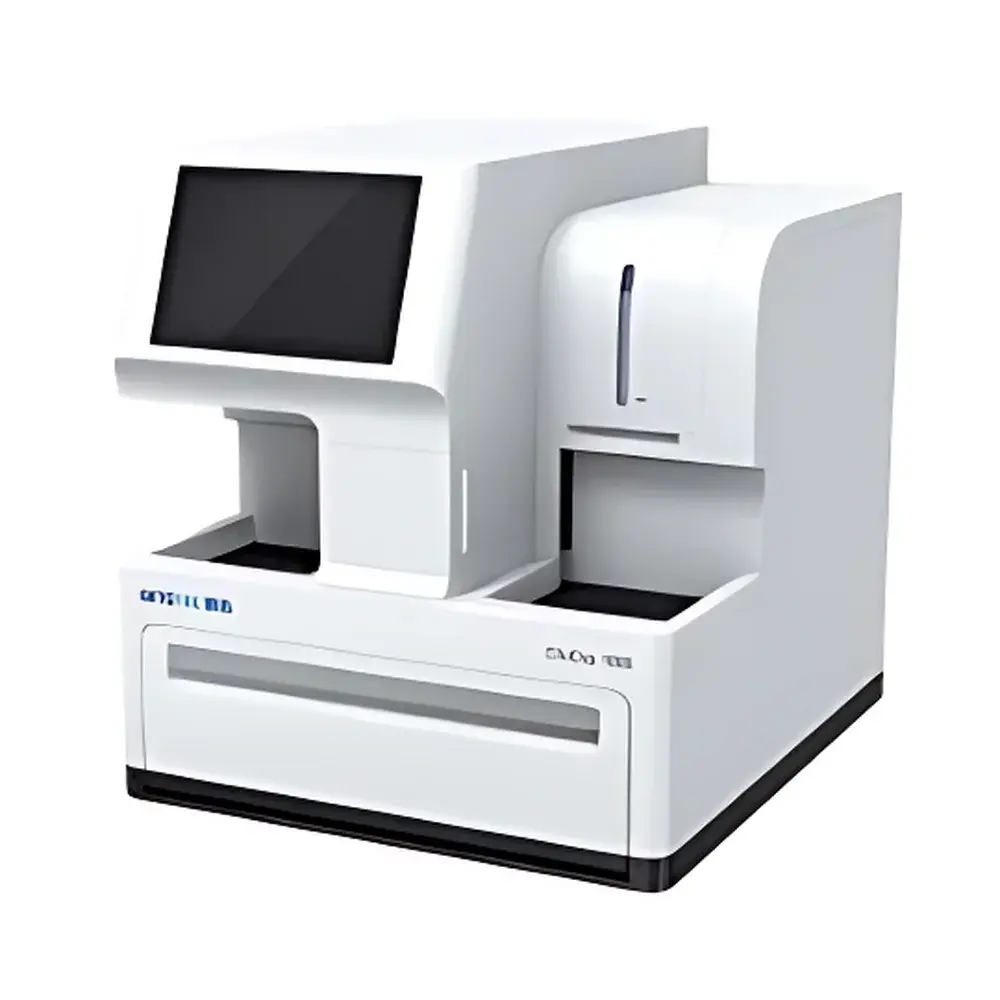
Getotec ClinCap 1000 Automated Capillary Electrophoresis System
| Brand | Getotec |
|---|---|
| Origin | Zhejiang, China |
| Model | ClinCap 1000 |
| Instrument Type | Clinical Protein Capillary Electrophoresis Analyzer |
| Regulatory Status | Filed Medical Device (Zhejiang Hangzhou Medical Device Filing No. Zhe Hang Yi Bei 20211180) |
| Application Scope | Serum Protein Electrophoresis, Serum Immunofixation Electrophoresis (IFE), Hemoglobin Electrophoresis, HbA1c Quantification |
| Automation Level | Fully Automated Sample Loading from Primary Tubes |
| Detection Mode | UV Absorbance at 200–214 nm |
| Software Compliance | Audit Trail, User Access Control, Data Integrity Features per GLP/GMP Principles |
Overview
The Getotec ClinCap 1000 Automated Capillary Electrophoresis System is a CE-marked (for non-IVD use in EU; registered as Class I medical device in China) clinical analyzer engineered for high-resolution, reproducible separation of proteins and hemoglobin variants using capillary zone electrophoresis (CZE) principles. Unlike slab-gel or traditional agarose-based electrophoresis, the ClinCap 1000 employs fused-silica capillaries (50–75 µm ID) with controlled electroosmotic flow and programmable voltage gradients to achieve rapid, quantitative migration of analytes under standardized buffer conditions. The system integrates on-capillary UV detection at 200–214 nm—optimized for peptide bond absorbance—enabling direct quantification of albumin, α1-, α2-, β-, and γ-globulins in serum, monoclonal immunoglobulin bands in immunofixation, and hemoglobin A, A2, F, S, C, and E isoforms. Its compact benchtop architecture (W × D × H: 420 × 510 × 430 mm) and low reagent consumption (<10 µL per run) align with modern clinical laboratory requirements for space efficiency, cost control, and environmental stewardship.
Key Features
- Fully automated primary-tube sampling: Direct aspiration from standard 13-mm serum tubes without decapping or transfer—reducing pre-analytical error and biohazard exposure.
- Integrated capillary conditioning and rinsing protocol: Programmable multi-step flush cycles (NaOH, water, running buffer) ensure capillary longevity (>500 runs per capillary) and inter-run reproducibility (CV < 2.5% for migration time, < 3.0% for peak area).
- Intelligent result interpretation engine: Rule-based pattern recognition algorithms flag abnormal band distributions—including oligoclonal bands, M-protein spikes, HbS/HbC co-elution artifacts—and cross-reference against WHO/ICSH interpretive guidelines.
- Dual operational modes: Standalone touchscreen interface (Android-based OS with offline data storage) and PC-connected mode via USB/Ethernet for LIS/HIS integration (HL7 v2.5.1 compliant).
- Modular expansion capability: Optional robotic autosampler (up to 96-position capacity) and external barcode reader support high-throughput workflows in central laboratories.
Sample Compatibility & Compliance
The ClinCap 1000 accepts native, unprocessed human serum (0.5–2.0 µL), EDTA-anticoagulated whole blood lysates (for Hb analysis), and glycated hemoglobin-enriched fractions. All assays are validated per CLSI EP12-A2 and ISO 15197:2013 principles for analytical performance. The instrument’s software architecture supports ALCOA+ data integrity standards—including electronic signatures, immutable audit trails, and role-based access control—facilitating compliance with FDA 21 CFR Part 11, EU Annex 11, and China NMPA GMP Annex for in vitro diagnostic devices. The system has received Zhejiang Provincial Medical Device Filing Certificate No. Zhe Hang Yi Bei 20211180, confirming conformity with YY/T 1709–2020 (Clinical Capillary Electrophoresis Analyzers).
Software & Data Management
ClinCap Studio v3.2 software provides comprehensive electropherogram visualization, baseline correction, mobility calibration, and integrated reporting templates aligned with CAP and COLA accreditation checklists. Raw data (.cef binary format) and processed reports (.pdf/.xlsx) are stored locally with optional encrypted cloud backup (AWS S3-compliant). Version-controlled method files include predefined protocols for serum protein profiling (SPR), immunofixation (IFE), hemoglobinopathy screening (HbE), and HbA1c quantification—each with embedded QC checkpoints (e.g., buffer conductivity verification, capillary current stability monitoring). All user actions—including method edits, result overrides, and calibration events—are timestamped and attributable in the audit log.
Applications
- Multiple Myeloma Screening: Detects monoclonal gammopathies via serum protein electrophoresis and confirms clonality through immunofixation—meeting IMWG diagnostic criteria for CRAB symptoms assessment.
- Thalassemia Diagnosis: Resolves HbA2 elevation (>3.5%) and HbF persistence in β-thalassemia carriers; distinguishes δβ-thalassemia from hereditary persistence of fetal hemoglobin (HPFH) based on relative peak ratios.
- Diabetes Monitoring: Quantifies HbA1c without interference from carbamylated hemoglobin, HbE, or HbD—validated against IFCC reference measurement procedure (RMP) with mean bias < ±0.1% HbA1c.
- Liver & Inflammatory Disorders: Identifies characteristic patterns such as β-γ fusion in cirrhosis or polyclonal hypergammaglobulinemia in chronic hepatitis.
FAQ
Is the ClinCap 1000 approved for in vitro diagnostic use in the United States?
The system is not currently 510(k)-cleared or PMA-approved by the U.S. FDA. It is marketed globally for research use only (RUO) outside China; within China, it operates under Class I medical device registration for clinical diagnostics.
What capillary types and lengths are supported?
Standard configuration uses 57 cm total length (50 cm effective) fused-silica capillaries with polyimide coating; custom lengths (40–65 cm) and internal diameters (30–100 µm) are available upon request for method development.
Can the system be integrated into a laboratory information system (LIS)?
Yes—via HL7 v2.5.1 ADT and ORU messages over TCP/IP or serial RS-232; middleware configuration support is provided by Getotec’s Field Application Specialists.
How is method validation documented for regulatory audits?
Each instrument shipment includes a Factory Acceptance Test (FAT) report, IQ/OQ documentation package, and pre-validated assay kits with certificate of analysis (CoA); full PQ support is available through certified third-party service partners.
What maintenance intervals are recommended for routine operation?
Daily capillary rinse, weekly optical path cleaning, and quarterly PM (including high-voltage power supply calibration and detector lamp intensity verification) per the manufacturer’s Maintenance Schedule (Rev. 4.1).





