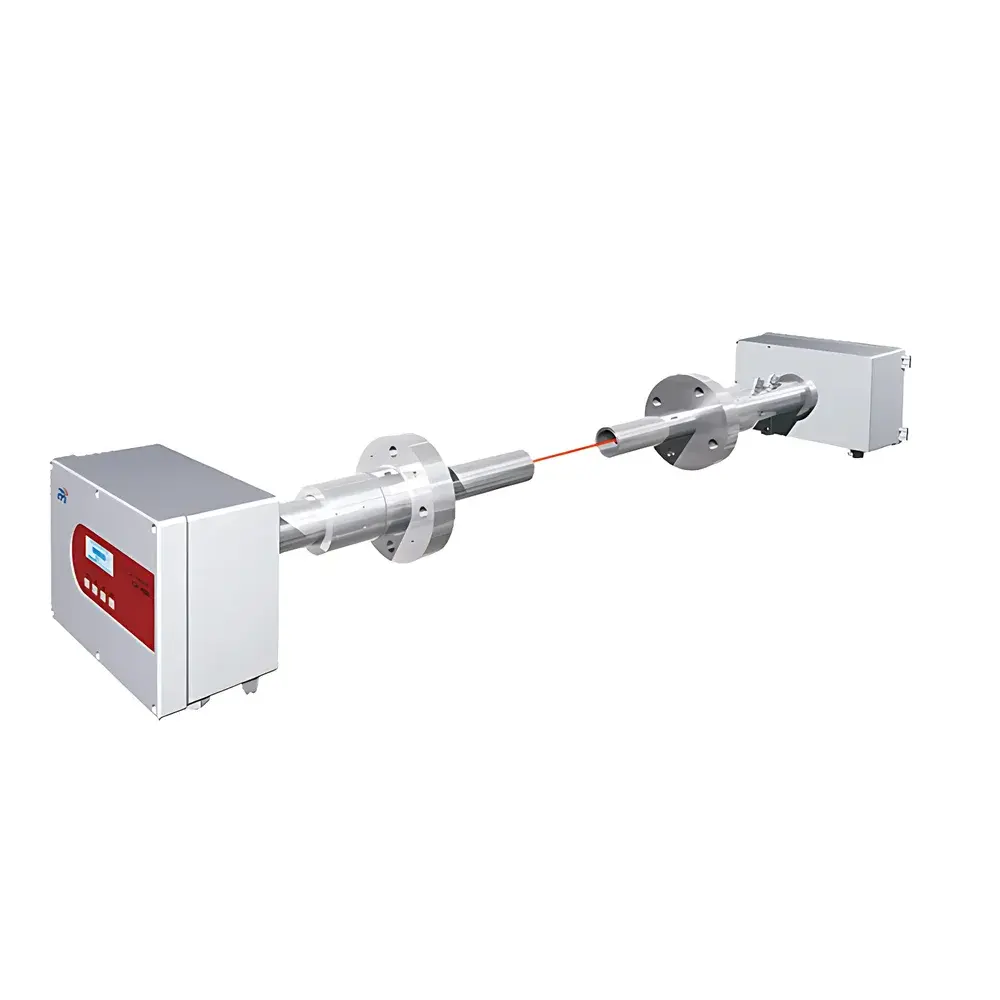
FPI LGA-4100 HCl/HF Online Laser Gas Analyzer
| Brand | FPI |
|---|---|
| Origin | Zhejiang, China |
| Manufacturer Type | Original Equipment Manufacturer (OEM) |
| Country of Origin | China |
| Model | LGA-4100 HCl/HF |
| Pricing | Available Upon Request |
Overview
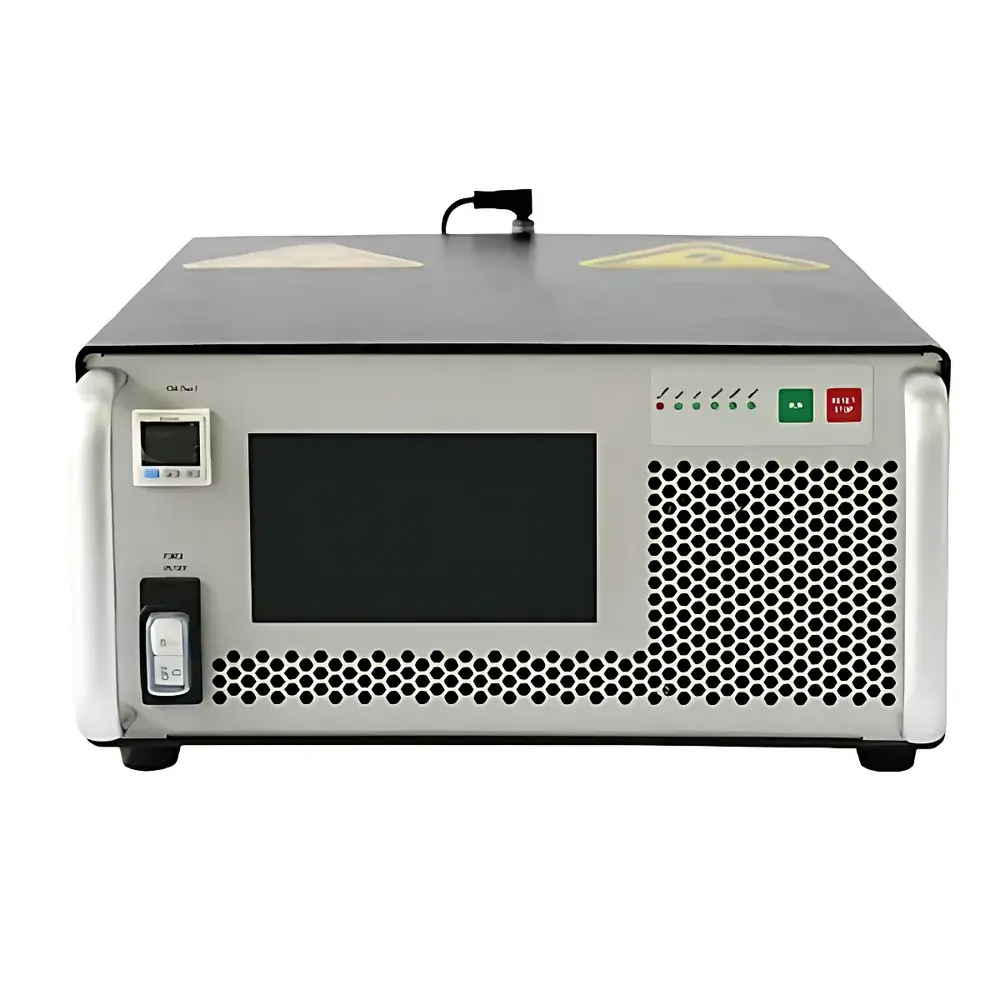
The FPI LGA-4100 HCl/HF Online Laser Gas Analyzer is an in-situ, probe-type tunable diode laser absorption spectroscopy (TDLAS) system engineered for continuous, real-time monitoring of hydrogen chloride (HCl) and hydrogen fluoride (HF) concentrations in industrial process streams. Unlike extractive gas analyzers requiring sample conditioning, the LGA-4100 mounts directly onto ducts or pipelines—enabling true in-line measurement without gas sampling, transport lines, or conditioning systems. Its optical path traverses the process gas volume between integrated transmitter and receiver modules, leveraging fundamental molecular absorption lines in the near-infrared region (typically 1.3–2.0 µm) where HCl and HF exhibit strong, spectrally isolated rotational-vibrational transitions. This first-principle measurement approach ensures high specificity, minimal cross-sensitivity to background gases (e.g., CO₂, H₂O, SO₂, NOₓ), and immunity to drift caused by matrix composition changes. Designed for harsh industrial environments—including high-temperature, high-dust, and corrosive atmospheres—the system operates with no moving parts, zero consumables, and no external calibration gas requirements during routine operation.
Key Features
- In-situ TDLAS architecture: Dual-module probe design installed directly on process pipe—eliminates sampling lag, condensation risk, and adsorption losses.
- Sub-second response time: Full spectral scan and concentration calculation completed in <1 second—enabling closed-loop control integration.
- Auto-compensated optical path correction: Real-time compensation for particulate scattering, window fouling, and thermal lensing via dual-wavelength referencing and intensity normalization algorithms.
- Integrated positive-pressure explosion-proof enclosure: Certified to Ex d IIB T4 Gb (IEC 60079-1) for Zone 1 hazardous areas; no purge gas required.
- Modular hardware architecture: All functional units—including laser driver, photodetector amplifier, signal processing board, and wireless communication module—are field-replaceable without system shutdown.
- Bluetooth 5.0 + optional industrial Ethernet (Modbus TCP / OPC UA): Enables secure, low-latency local commissioning and scalable plant-wide network integration.
Sample Compatibility & Compliance
The LGA-4100 is validated for direct measurement in flue gases, off-gases from acid regeneration units, metallurgical roasting exhausts, and semiconductor etch effluents containing HCl or HF at concentrations ranging from 1 ppmv to 10,000 ppmv. It maintains accuracy across gas temperatures from 50 °C to 250 °C and dust loadings up to 10 g/Nm³. The analyzer complies with ISO 14001 environmental management framework requirements for continuous emission monitoring systems (CEMS), supports audit-ready data logging per GLP/GMP principles, and meets electromagnetic compatibility (EMC) standards per IEC 61326-1. While not pre-certified to US EPA Method 30B or EN 15267, its measurement traceability aligns with NIST-traceable calibration protocols using certified reference gas mixtures.
Software & Data Management
The embedded firmware runs a deterministic real-time OS optimized for spectral acquisition and least-squares fitting of Beer–Lambert absorption profiles. Configuration, diagnostics, and trend visualization are managed via FPI’s web-based HMI (accessible over local network or Bluetooth). All raw spectra, processed concentration values, diagnostic flags (e.g., signal-to-noise ratio, window transmittance, laser temperature stability), and event logs are timestamped and stored internally (32 GB eMMC) with configurable retention policies. Data export supports CSV and XML formats; historical records can be synchronized to enterprise SCADA or DCS platforms via Modbus TCP or OPC UA. Audit trail functionality includes user login history, parameter change logs, and calibration event timestamps—supporting FDA 21 CFR Part 11 compliance when deployed with external identity management infrastructure.
Applications
- Petrochemical refining: Monitoring HCl slip in FCC regenerator off-gas and alkylation unit effluents.
- Steel pickling lines: Real-time HF concentration control in spent acid regeneration systems.
- Waste incineration & co-processing: CEMS-grade HCl tracking in municipal solid waste and hazardous waste combustion stacks.
- Electronics manufacturing: Endpoint detection and chamber cleaning verification in plasma etching tools using HF-based chemistries.
- Chemical synthesis: In-process monitoring of chlorination/fluorination reactors to optimize stoichiometric feed ratios and minimize byproduct formation.
FAQ
Does the LGA-4100 require periodic calibration with certified gas standards?
Yes—initial factory calibration uses NIST-traceable HCl/HF reference mixtures. Field verification is recommended every 6–12 months depending on operating conditions; zero/span checks can be performed in-situ using certified span gases introduced via a dedicated test port.
Can the system operate reliably in high-humidity or wet-gas environments?
The probe’s optical windows are heated to >120 °C to prevent condensation; however, sustained liquid water ingress into the optical path will impair measurement. Installation must follow ASME B31.1 guidelines for probe orientation to avoid droplet accumulation.
Is remote firmware update supported?
Yes—secure OTA (over-the-air) updates are available via encrypted HTTPS connection through the onboard web interface, with rollback capability and version-controlled release notes.
What safety certifications does the enclosure hold?
The standard housing carries IECEx and CNEx certification for Ex d IIB T4 Gb; ATEX marking (II 2G Ex d IIB T4 Gb) is available upon request with EU-type examination certificate.
How is interference from vibration or mechanical shock mitigated?
The optical alignment is stabilized via monolithic aluminum housing with kinematic mounting; internal accelerometers trigger automatic re-alignment routines if displacement exceeds ±0.1 mrad—verified during ISO 10816-3 vibration testing.
Related Products