
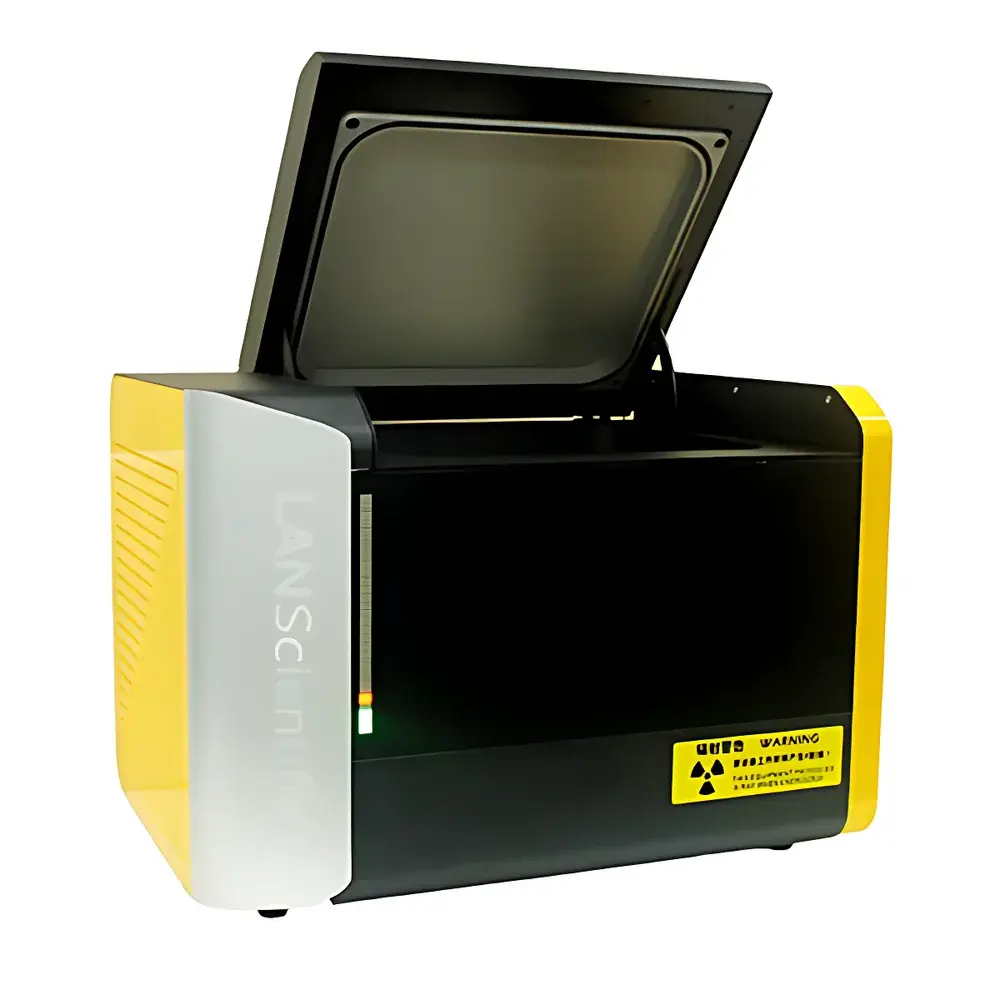
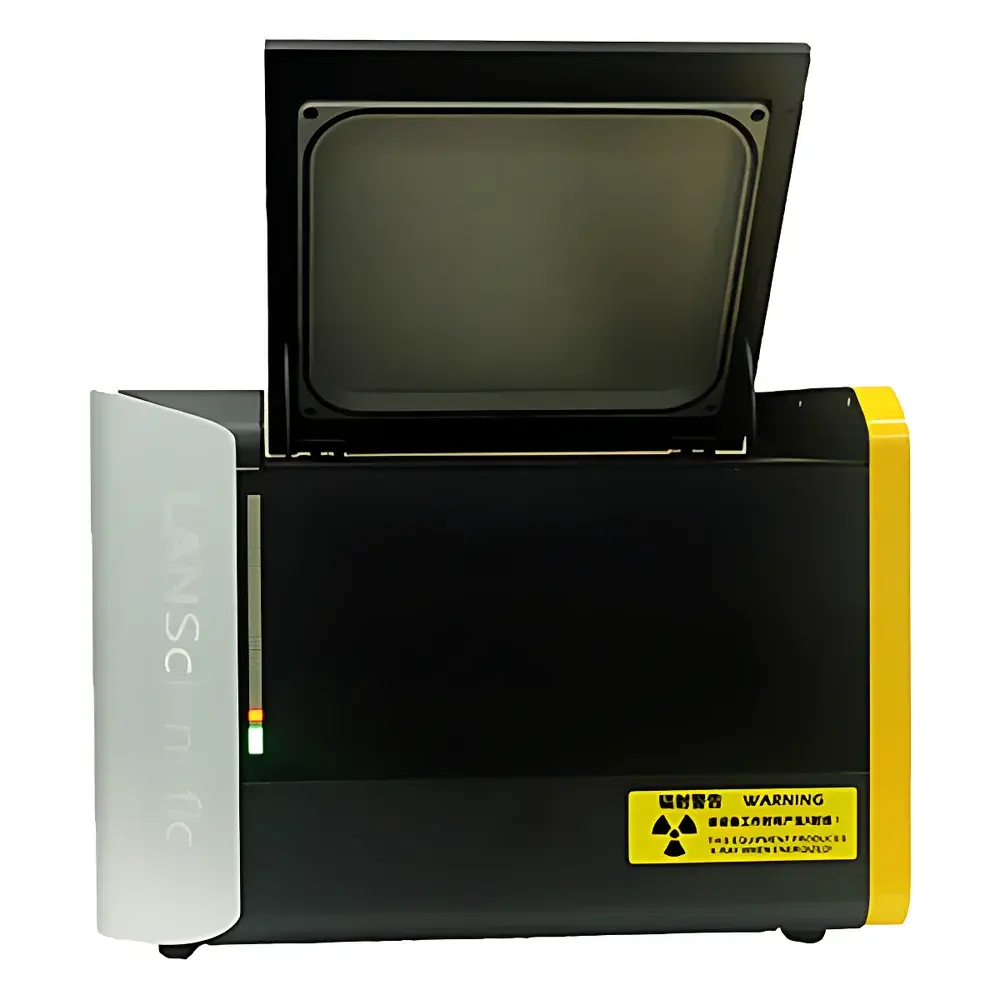
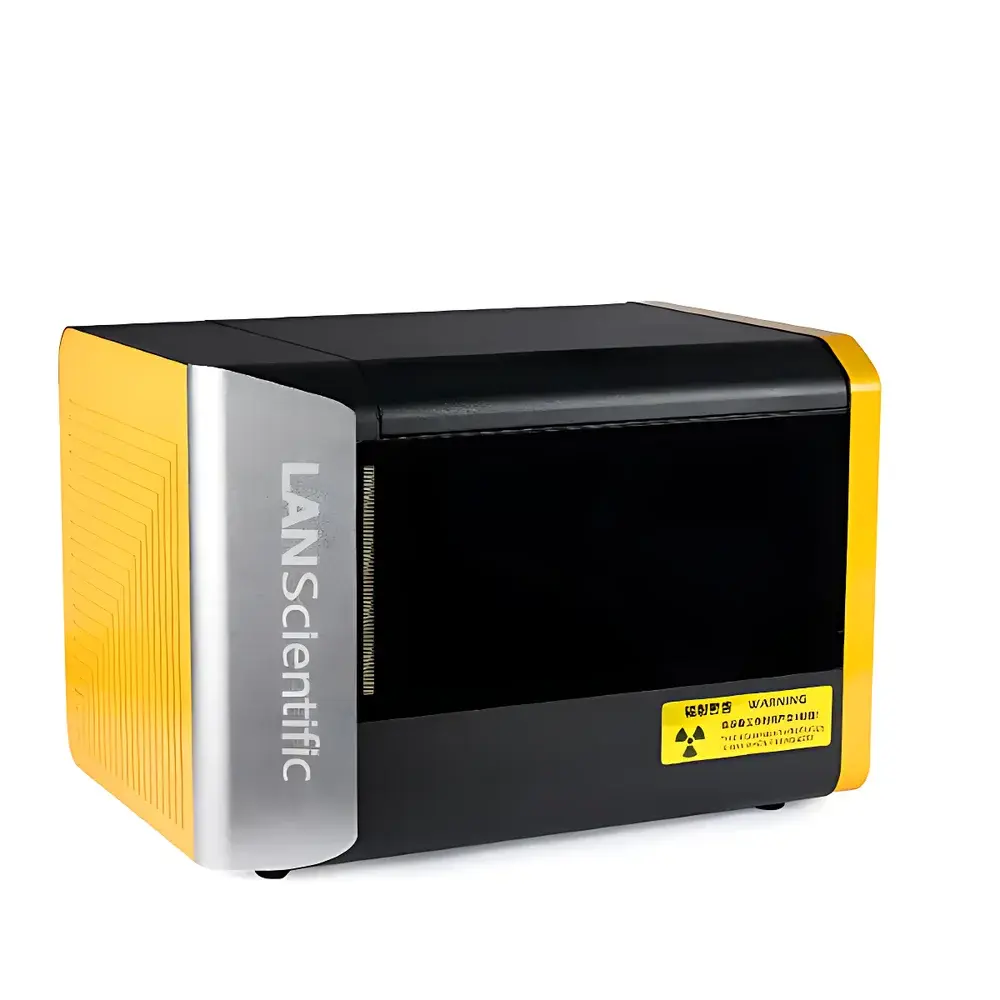
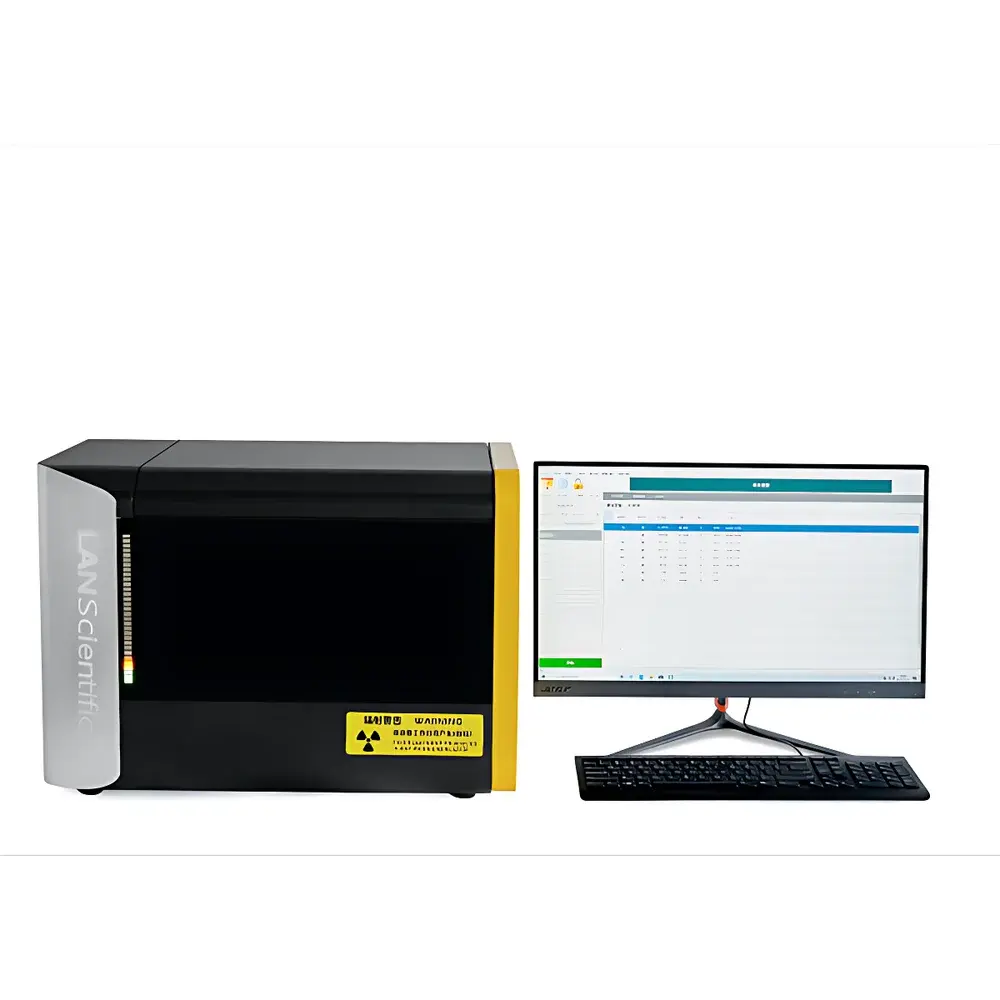
LANScientific ScopeX Desktop Energy Dispersive X-Ray Fluorescence Spectrometer
| Brand | LANScientific |
|---|---|
| Origin | Jiangsu, China |
| Manufacturer Type | Manufacturer |
| Regional Classification | Domestic |
| Model | ScopeX |
| Form Factor | Benchtop |
| Instrument Type | Conventional ED-XRF |
| Application Scope | General-Purpose |
| Elemental Range | Na (11) to U (92) |
| Detection Limit | 1 ppm |
| Energy Resolution | <125 eV (Mn Kα) |
| Repeatability | ≤0.1% RSD |
| Detector | Peltier-cooled Silicon Drift Detector (SDD) |
Overview
The LANScientific ScopeX is a benchtop energy dispersive X-ray fluorescence (ED-XRF) spectrometer engineered for precise, non-destructive elemental analysis of glass compositions and other inorganic materials. Based on the fundamental principle of X-ray fluorescence—where primary X-rays eject inner-shell electrons from sample atoms, inducing characteristic secondary X-ray emission during electron relaxation—the ScopeX delivers quantitative and qualitative multi-element data across the full range from sodium (Na, Z=11) to uranium (U, Z=92). Its optimized excitation geometry, combined with a high-efficiency Peltier-cooled silicon drift detector (SDD), ensures high spectral resolution (<125 eV at Mn Kα) and excellent peak-to-background ratios. Designed for laboratory and production environments, the ScopeX supports routine compositional verification, batch consistency monitoring, raw material screening, and regulatory compliance testing—particularly critical in glass manufacturing, where control over alkali, alkaline earth, and network-forming elements (e.g., Si, Al, Ca, Mg, Na, K) directly impacts thermal expansion, chemical durability, and optical properties.
Key Features
- Non-destructive analysis: No sample digestion, coating, or vacuum preparation required—preserves sample integrity and enables repeat measurement.
- Peltier-cooled SDD detector: Eliminates dependence on liquid nitrogen; ensures stable long-term performance with minimal maintenance and operational overhead.
- Intelligent vacuum system: Automatically engages for light-element analysis (Na–P), enhancing sensitivity for critical glass constituents including Si, Al, Mg, Ca, and S.
- Motorized collimator & filter changer: Supports four fixed collimators (5 mm, 3 mm, 1 mm, 0.5 mm) and multiple filter options—all software-selectable to optimize excitation conditions per sample matrix and target element.
- Large-capacity sample chamber: Accommodates irregular geometries—including bulk solids, powders, fused beads, thin films, and liquids—without manual repositioning.
- Integrated radiation safety architecture: Fully shielded metal enclosure with interlocked door switch and real-time dose monitoring; compliant with GB18871-2002 and GBZ115-2002 for occupational and public exposure limits.
Sample Compatibility & Compliance
The ScopeX accepts heterogeneous samples in solid, powdered, liquid, and coated forms—including float glass, borosilicate, container glass, optical glass, and recycled cullet. Sample preparation follows standard ASTM E1621 (Standard Guide for XRF Analysis of Glass) and ISO 21043 (XRF—General principles and guidelines). For regulatory reporting, the instrument supports audit-ready data logging aligned with GLP and GMP frameworks. While not FDA 21 CFR Part 11–certified out-of-the-box, its software architecture permits configuration of user authentication, electronic signatures, and immutable audit trails—enabling validation for quality-controlled environments under ISO/IEC 17025 or ICH Q2(R2).
Software & Data Management
The proprietary ScopeX Control Suite provides intuitive method development, calibration management (including empirical and fundamental parameter algorithms), and automated quantification. Data export is natively supported in CSV, Excel (.xlsx), and PDF formats—with customizable report templates incorporating company logos, spectral overlays, sample metadata, and statistical summaries (mean, SD, RSD). Connectivity options include USB 3.0, Wi-Fi (802.11ac), and Bluetooth 5.0 for seamless integration into LIMS or MES platforms. All spectral acquisitions are timestamped and stored with full instrument parameter logs, ensuring traceability for internal QA reviews or external audits.
Applications
- Glass composition verification: Quantitative determination of SiO₂, Al₂O₃, CaO, MgO, Na₂O, K₂O, Fe₂O₃, and minor additives (e.g., As, Sb, Sn).
- Raw material QC: Screening of sand, feldspar, dolomite, and cullet for contaminant metals (Pb, Cd, Cr⁶⁺ precursors) and compositional drift.
- Coating & surface layer analysis: Thickness and stoichiometry assessment of anti-reflective, conductive, or decorative coatings on glass substrates.
- Recycling stream characterization: Rapid sorting and impurity profiling in post-consumer glass recycling operations.
- Research & development: High-throughput screening of novel glass formulations during formulation optimization and thermal property correlation studies.
FAQ
Does the ScopeX require liquid nitrogen cooling?
No—the instrument uses a thermoelectrically cooled silicon drift detector, eliminating cryogenic handling and associated infrastructure costs.
Can it analyze light elements such as sodium and magnesium in soda-lime glass?
Yes, when operated under vacuum mode, the ScopeX achieves reliable detection and quantification of Na, Mg, Al, and Si with sub-ppm detection limits and ≤0.1% repeatability.
Is method transfer possible between different ScopeX units?
Yes—calibration models and measurement protocols are fully portable via encrypted USB drive or network sync, supporting multi-site consistency in global manufacturing networks.
What standards are recommended for glass calibration?
Certified reference materials (CRMs) such as NIST SRM 610–617 (glass matrices), BAM glasses, and in-house fused-bead standards prepared from high-purity oxides are recommended for robust calibration.
How is data security maintained during remote connectivity?
Wi-Fi and Bluetooth connections use WPA3 encryption; local data storage employs AES-256 encryption, and optional role-based access control can be enabled via software configuration.






