
3nh CR8 Portable Spectrophotometric Colorimeter
| Brand | 3nh |
|---|---|
| Origin | Guangdong, China |
| Manufacturer Type | Direct Manufacturer |
| Product Category | Domestic |
| Model | CR8 |
| Product Type | Spectrophotometric Colorimeter |
| Instrument Form Factor | Portable |
| Optical Geometry | d/8° integrating sphere |
| Illuminants | D65, A, F2 (CWF) |
| Spectral Range | 400–700 nm |
| Repeatability | ΔE*ab ≤ 0.04 (MAV/SCI, after warm-up and calibration, avg. of 30 measurements on white tile at 5 s intervals) |
Overview
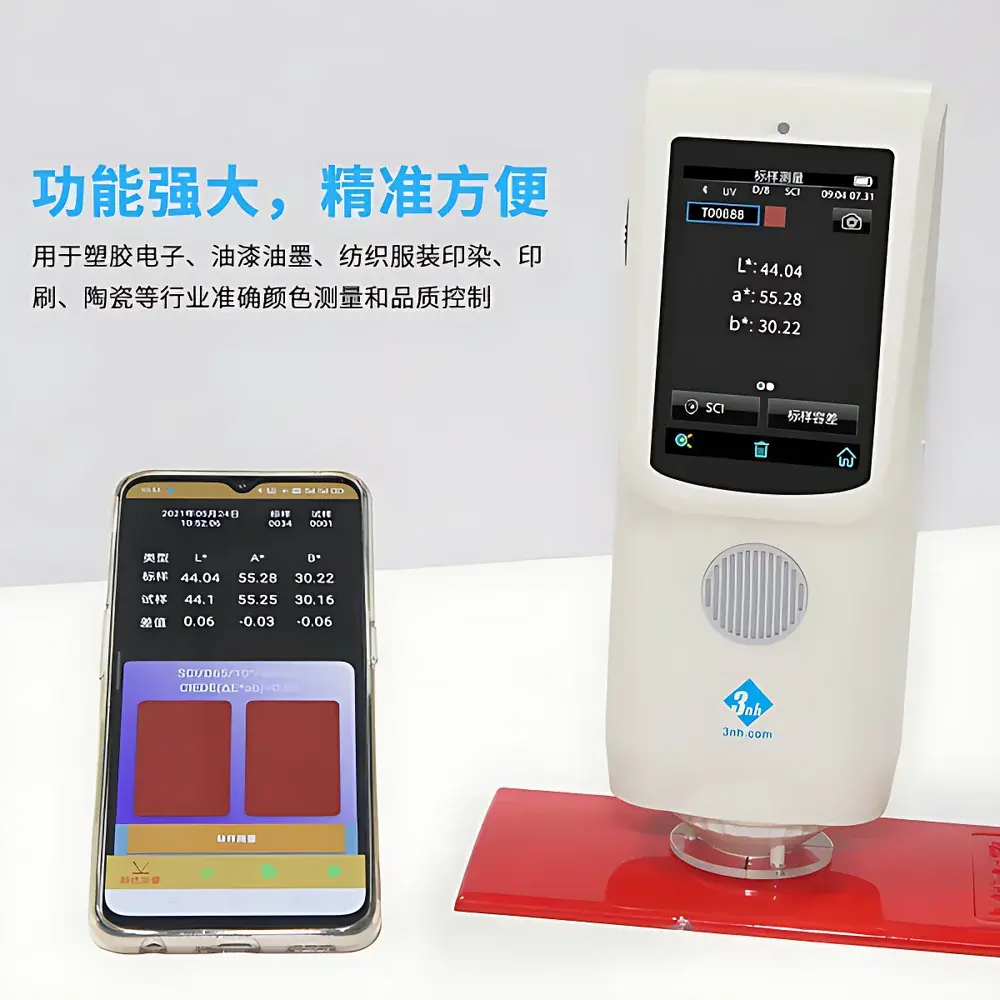
The 3nh CR8 Portable Spectrophotometric Colorimeter is an engineering-integrated solution for high-accuracy color measurement in industrial quality control environments. Designed around CIE-compliant d/8° geometry with a 40 mm diameter integrating sphere, the CR8 employs plane grating spectrophotometry to resolve spectral reflectance at 10 nm intervals across the visible spectrum (400–700 nm). Its dual-array silicon photodiode sensor (32-element × 2) delivers enhanced signal-to-noise ratio, wide dynamic range, and immunity to saturation under high-irradiance conditions—critical for consistent performance across diverse substrates including plastics, coatings, textiles, ceramics, and printed materials. The instrument adheres to ISO 7724-1, ASTM E1164, DIN 5033 Teil 7, GB/T 3978, and CIE Publication No. 15, ensuring metrological traceability and inter-laboratory comparability. Unlike filter-based tristimulus meters, the CR8 captures full spectral data, enabling post-acquisition computation of multiple color spaces, indices, and custom illuminant/observer combinations without hardware modification.
Key Features
- Full-spectrum LED illumination system engineered for uniform radiant power distribution across 400–700 nm—eliminating spectral gaps common in conventional white LEDs and improving both measurement speed and spectral fidelity.
- Dual 32-channel silicon photodiode array with extended spectral response and optimized quantum efficiency—ensuring stable sensitivity from low-reflectance dark samples to high-gloss surfaces.
- Plane grating monochromator delivering 10 nm spectral bandwidth and <±0.5 nm wavelength accuracy—supporting precise identification of metamerism and spectral shape anomalies.
- Single fixed-aperture configuration: standard Φ8 mm (optional Φ4 mm), optimized for industry-specific sample geometries and minimizing edge effects in small-area measurement.
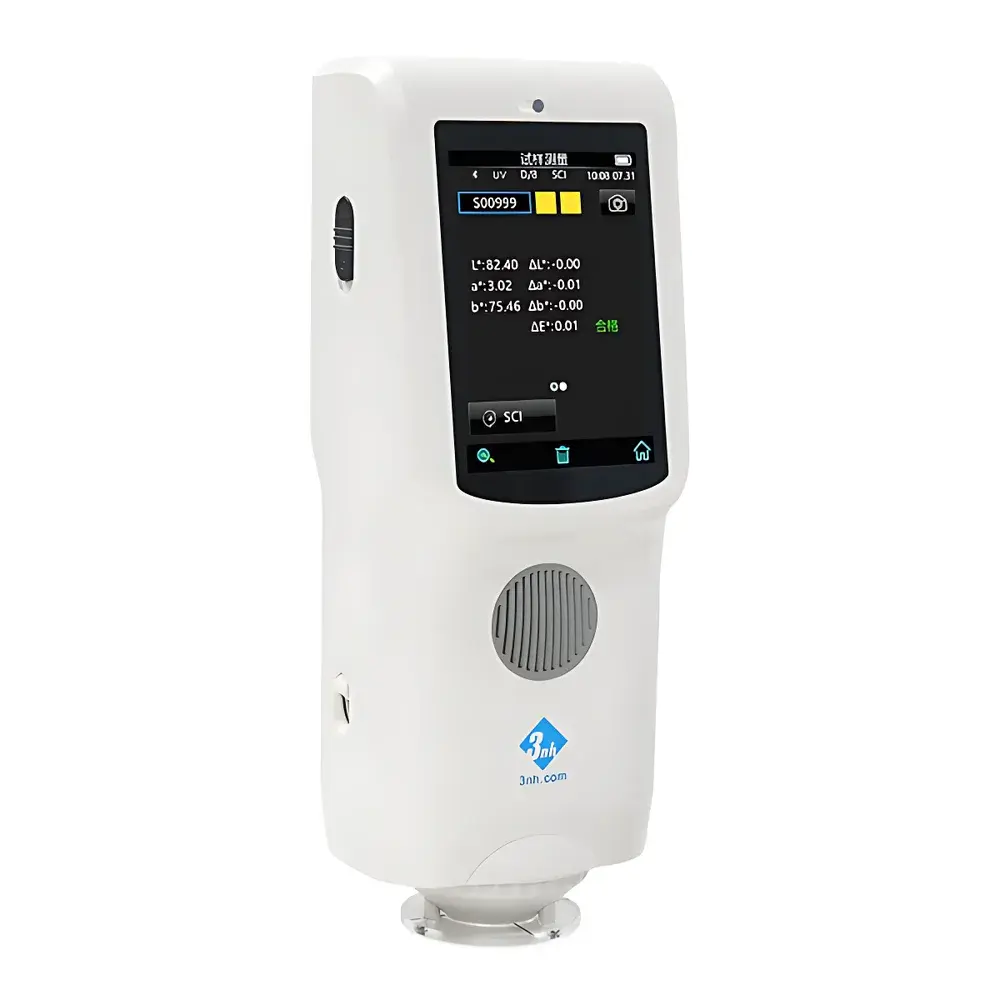
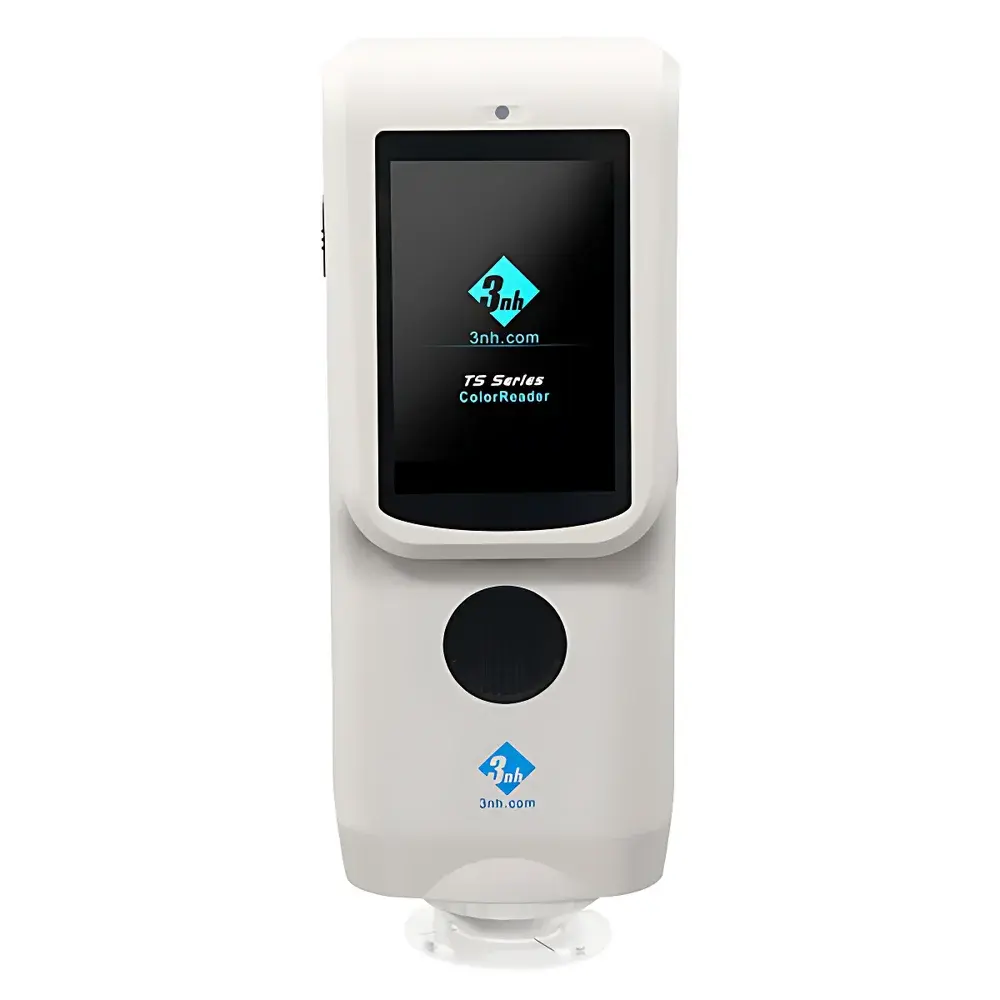
- Ergonomic handheld form factor (81 × 71 × 214 mm, 460 g) with capacitive 3.5-inch TFT display, tactile measurement trigger, and anti-slip surface finish—designed for prolonged operator use and one-handed operation.
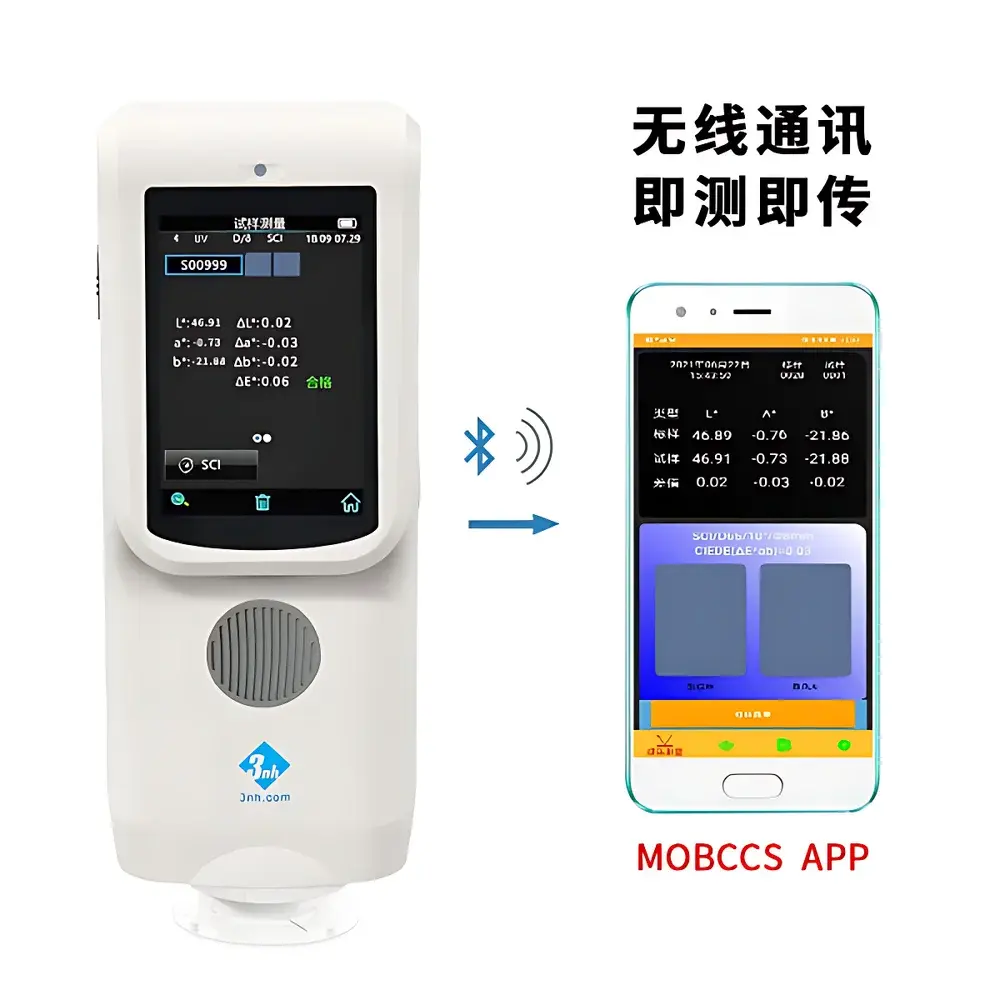
- Integrated Bluetooth 5.0 and USB-C connectivity—enabling real-time synchronization with MOBCCS mobile application and SQCX desktop quality management software for audit-ready data logging.
- Onboard storage for 500 standard references and 10,000 sample records; cloud-enabled private color database via MOBCCS—replacing physical color standards with searchable digital equivalents.
- Rechargeable lithium-ion battery supporting >6,000 measurements per charge (8 h typical runtime); smart low-voltage warning and optimized charging protocol to extend cycle life beyond 500 cycles.
Sample Compatibility & Compliance
The CR8 accommodates flat, curved, textured, and matte-to-glossy surfaces across rigid and flexible media—including injection-molded polymers, solvent- and water-based coatings, woven and knitted fabrics, ceramic glazes, and flexographic prints. Its d/8° SCI (Specular Component Included) mode ensures measurement consistency regardless of surface topography or specular reflectance contribution. Calibration is performed using NIST-traceable white and black tiles included in the standard kit; optional accessories include powder test kits and dedicated sample holders for irregular geometries. Regulatory alignment includes compliance with GLP documentation requirements (via SQCX audit trail export), FDA 21 CFR Part 11 readiness (electronic signature support in SQCX), and ISO/IEC 17025-relevant uncertainty estimation protocols embedded in firmware.
Software & Data Management
SQCX Quality Management Software provides full traceability for production color validation workflows: users define tolerance ellipsoids (ΔE*ab, ΔE00), set pass/fail thresholds per batch, generate PDF reports with embedded spectral curves, and export CSV/Excel files for statistical process control (SPC) integration. MOBCCS mobile app enables field verification, remote calibration status monitoring, and cross-device color matching against proprietary or industry-standard libraries (Pantone®, RAL, Munsell®). All spectral data is stored with metadata tags (timestamp, operator ID, instrument serial number, environmental RH/temp), satisfying internal QA documentation and external auditor requirements. Firmware updates are delivered over-the-air via app notification, preserving long-term platform compatibility.
Applications
The CR8 serves as a primary color verification tool in QC labs and production lines for automotive interiors (trim, dashboards), consumer electronics (housing finishes, display bezels), packaging (flexo/gravure print consistency), textile dye lots (batch-to-batch repeatability), and architectural coatings (weathering stability assessment). Its portability supports in-line measurements at extrusion dies, spray booths, and finishing stations—reducing reliance on lab-bound instrumentation. In R&D settings, its spectral output enables pigment formulation analysis, substrate-dependent color shift modeling, and development of custom color difference metrics aligned with perceptual uniformity principles.
FAQ
What is the maximum allowable inter-instrument agreement (inter-instrument agreement, IIa) for CR8 units?
The CR8 achieves ΔE*ab ≤ 0.35 (MAV/SCI) when measuring BCRA Series II 12-color reference tiles—meeting ISO 13655 and ASTM D2244 specifications for multi-unit deployment in distributed manufacturing networks.
Can the CR8 measure transparent or translucent samples?
No—the CR8 is configured for reflective measurement only. Transmittance-capable variants require separate optical path design and are not supported by this model.
Is spectral data export available in raw ASCII format?
Yes: SQCX software exports full 31-point spectral reflectance (400–700 nm @ 10 nm steps) as tab-delimited text, compatible with MATLAB, Python (NumPy/Pandas), and third-party spectral analysis platforms.
Does the CR8 support user-defined illuminants or observers?
Illuminant and observer selection is limited to CIE standard sets (D65/10°, A/10°, F2/10°) in standalone mode; extended configurations (e.g., D50/2°, custom spectra) are accessible exclusively via MOBCCS or SQCX.
How often should calibration be performed?
Daily zero calibration (black trap) and white calibration (provided tile) are recommended before first use and after ambient temperature shifts >5°C. Full recalibration by authorized service center is advised every 12 months or after 100,000 measurements.





