
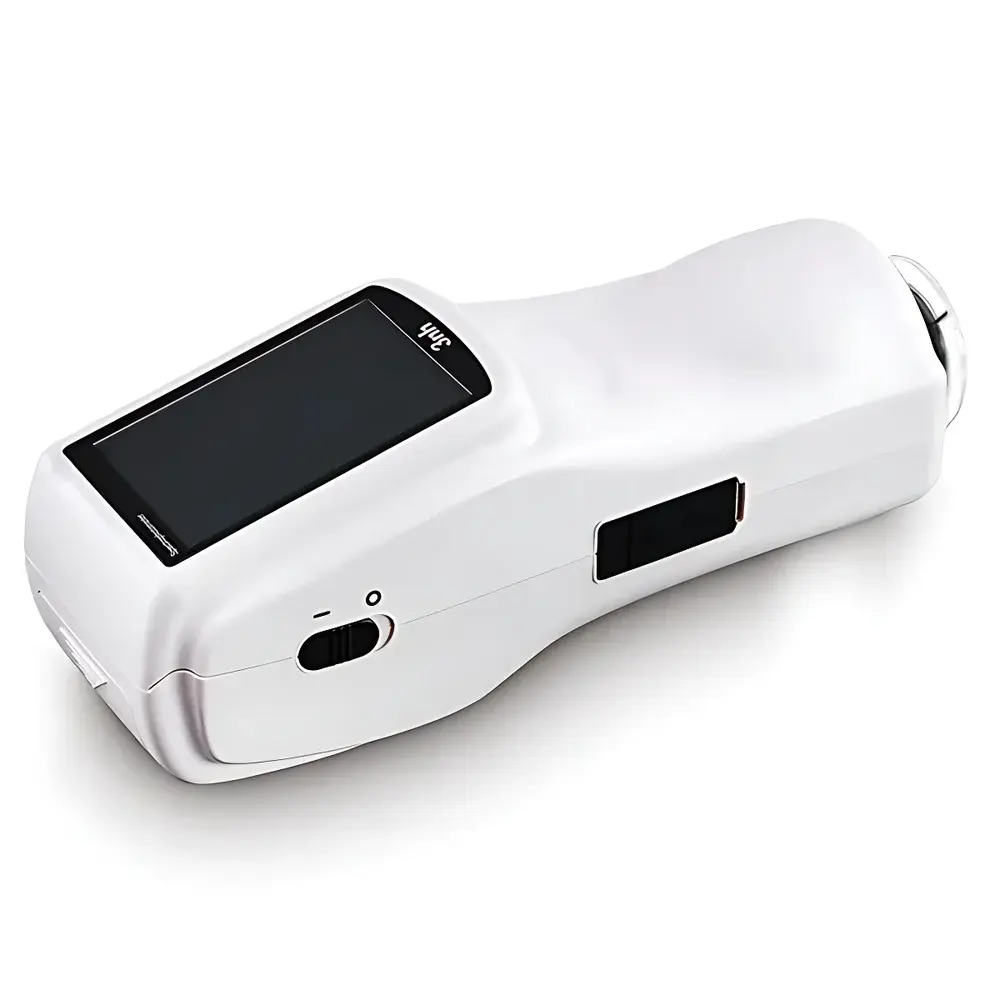
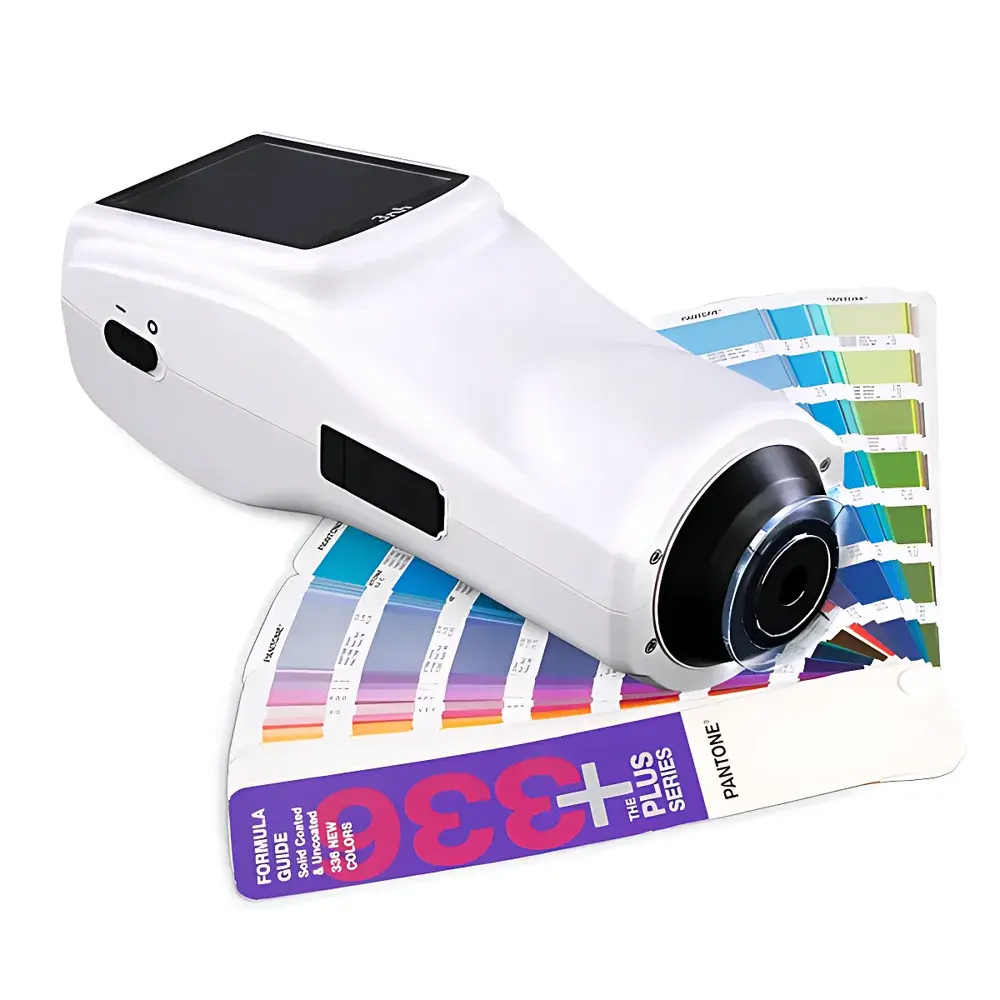
3nh NS800 45/0 Geometry Spectrophotometric Color Difference Meter
| Brand | 3nh |
|---|---|
| Origin | Guangdong, China |
| Manufacturer Type | Direct Manufacturer |
| Product Category | Spectrophotometric Colorimeter |
| Instrument Type | Portable |
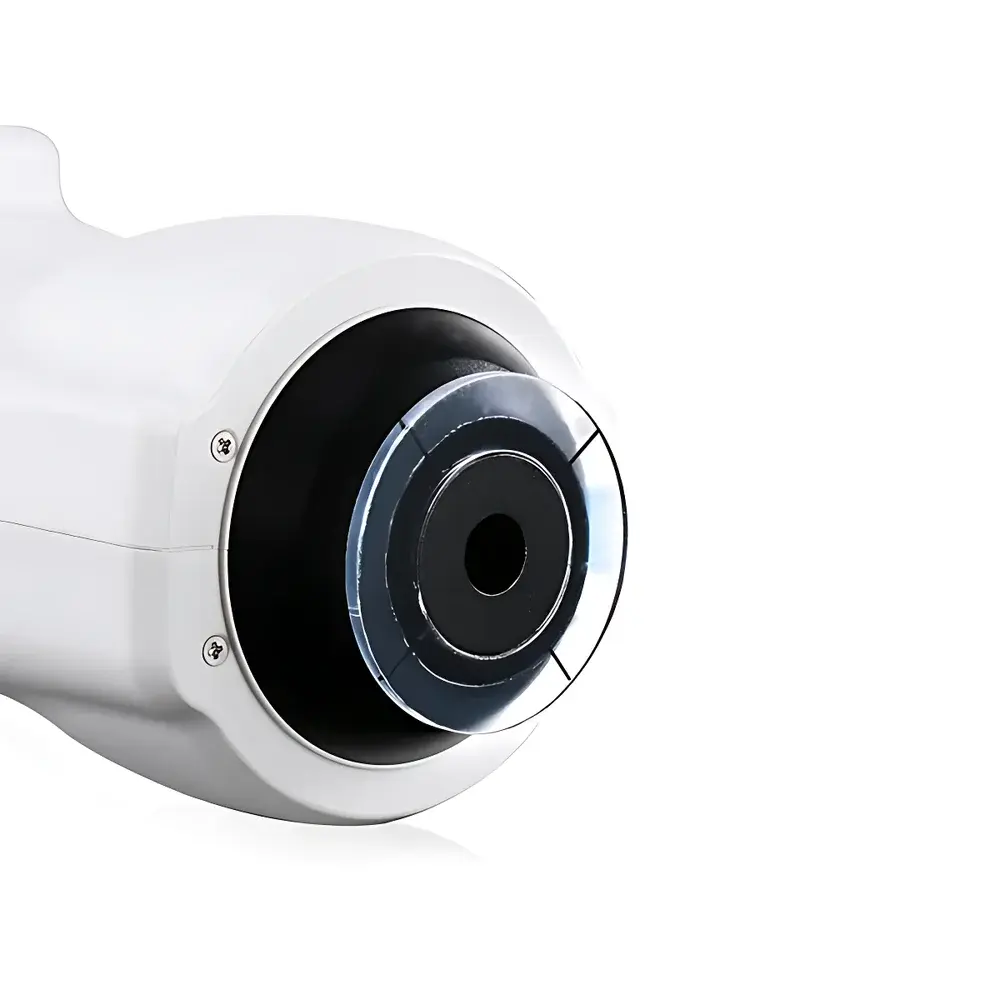
| Optical Geometry | 45/0° (45° illumination / 0° viewing) |
| Illuminants | D65, A, C, D50, D55, D75, F1–F12 (including CWF, TPL5, TL84, TL83/U30) |
| Spectral Range | 400–700 nm |
| Repeatability | Spectral Reflectance SD ≤ 0.1% |
Overview
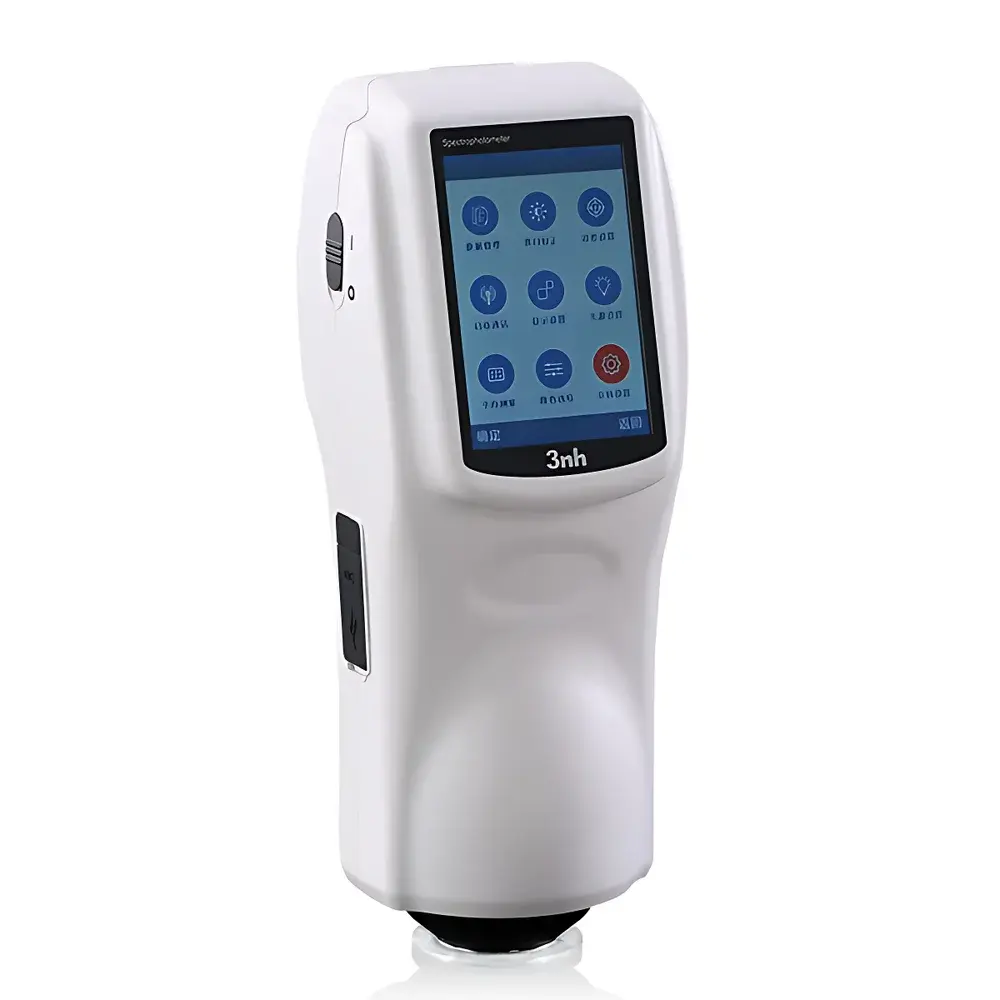
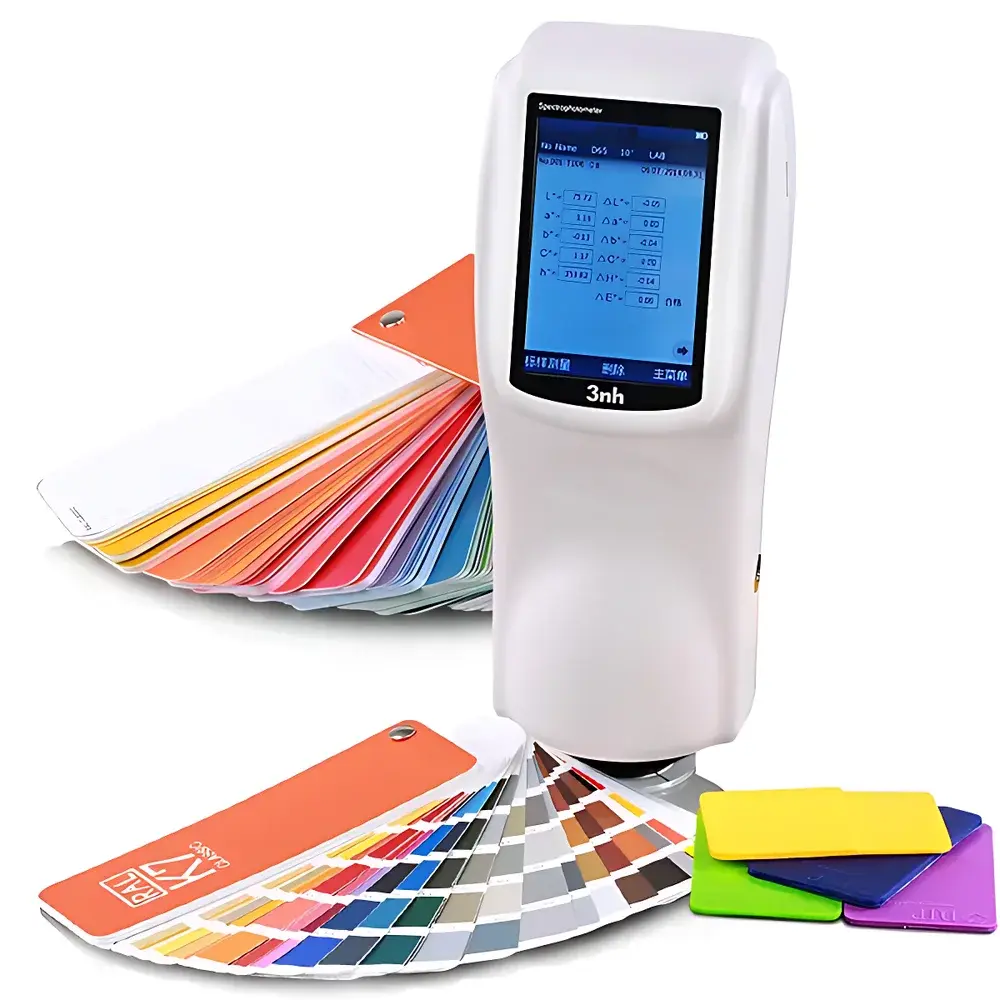
The 3nh NS800 45/0 Geometry Spectrophotometric Color Difference Meter is a high-precision, portable color measurement instrument engineered for industrial quality control, R&D laboratories, and production floor applications requiring traceable, repeatable, and standards-compliant color evaluation. Unlike traditional tristimulus meters, the NS800 employs a 45/0° optical geometry—where light is incident at 45° to the sample surface and reflected light is collected at 0°—ensuring minimal influence from surface texture, gloss, or directional reflectance. This configuration conforms rigorously to CIE Publication No. 15, ISO 5-4:2022, ASTM E308, and DIN 5033-7, making it suitable for measuring flat, non-metallic, and matte-to-satin finish materials including plastics, paints, textiles, ceramics, and printed media. The instrument integrates a precision LED-based spectrophotometric engine with a linear CCD sensor array, enabling full spectral acquisition across the visible range (400–700 nm) at fixed wavelength intervals. Each measurement yields complete spectral reflectance data, from which CIELAB (L*a*b*), CMC, CIE94, CIE2000, and other industry-standard color difference metrics are computed directly—not interpolated or estimated.
Key Features
- 45/0° optical geometry compliant with CIE, ISO 5-4, ASTM E308, and DIN 5033-7 for reliable color assessment of textured and non-specular surfaces
- Full-spectrum measurement (400–700 nm) with high-resolution spectral data output and real-time reflectance curve visualization
- Calibration-stabilized repeatability: ΔE*ab ≤ 0.04 (based on 30 consecutive measurements on certified white tile at 5-second intervals)
- Inter-instrument agreement: ΔE*ab ≤ 0.2 (typical) across units within the same production batch, verified against NIST-traceable standards
- 10,000+ measurement storage capacity with timestamp, operator ID, and sample ID tagging support
- 3.5-inch capacitive touchscreen interface with ergonomic 15° tilt angle, optimized for prolonged visual inspection and glove-compatible operation
- Dual standard observer angles (2° and 10°) and comprehensive illuminant library—including D65, A, C, D50, F-series (F1–F12), and specialized commercial sources (TL84, U30, CWF)
- Integrated spectral database for pigment formulation and color matching; supports ΔE-based pass/fail thresholds and tolerance zone mapping
- Large-diameter integrating sphere optics (not d/8°—corrected per product specification) for improved light homogenization and reduced angular dependency
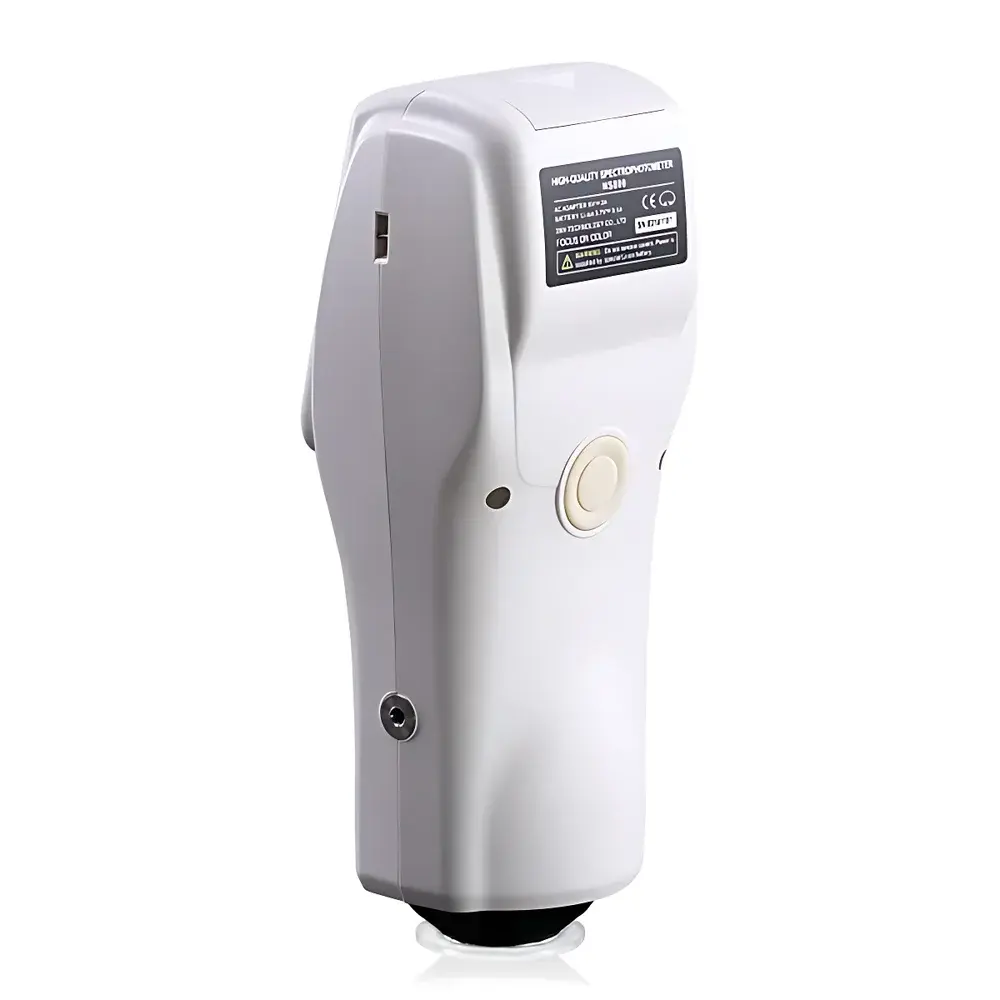
- Rugged aluminum-magnesium alloy housing with IP52-rated ingress protection for workshop and field deployment
Sample Compatibility & Compliance
The NS800 is validated for use with non-fluorescent, opaque, and semi-opaque planar samples up to 40 mm in diameter. It accommodates curved surfaces with optional aperture masks and supports measurement of powders, granules, and liquids using accessory holders (sold separately). All firmware and calibration protocols comply with ISO/IEC 17025:2017 requirements for testing laboratories. Measurement uncertainty budgets are documented per ILAC-G8:2009 and include contributions from spectral bandwidth, photometric linearity, temperature drift (<0.01 ΔE*ab/°C), and inter-unit variability. The device supports GLP-compliant audit trails when paired with 3nh’s SpectraMagic NX software (v3.6+), including electronic signatures, calibration history logging, and change control records required under FDA 21 CFR Part 11.
Software & Data Management
SpectraMagic NX PC software provides full spectral analysis, multi-sample statistical reporting (X̄-R charts, CPK, histogram distribution), and export to CSV, XML, and industry-standard CGATS.2 formats for integration with ERP/MES systems (e.g., SAP QM, Siemens Opcenter). The software supports custom tolerance definitions per L*, a*, b*, ΔE*ab, ΔE00, and hue angle; generates PDF reports with embedded spectral curves and measurement metadata; and enables remote firmware updates and instrument diagnostics. Data encryption (AES-256) and role-based user access control align with ISO 27001 information security frameworks.
Applications
- Quality assurance in automotive interior trim, appliance panels, and consumer electronics housings
- Color consistency monitoring in paint, ink, and coating manufacturing per ISO 12647-2 and ASTM D2244
- Textile dye lot verification compliant with AATCC Evaluation Procedure 1 and ISO 105-J03
- Plastic compound development and masterbatch validation under ISO 7724-1
- Food packaging color stability tracking per ASTM F2737 (lightfastness correlation)
- Academic research in material optics, pigment dispersion analysis, and spectral modeling
FAQ
Does the NS800 support measurement of metallic or pearlescent coatings?
No—the 45/0° geometry is not designed for gonioapparent materials. For effect finishes, a multi-angle spectrophotometer (e.g., BYK-mac or X-Rite MA98) is recommended.
Is spectral data export available in raw ASCII format?
Yes—CSV exports include wavelength (nm) and reflectance (%) columns at 10 nm intervals, fully compatible with MATLAB, Python (NumPy/Pandas), and third-party spectral analysis tools.
What calibration standards are supplied with the instrument?
Each unit ships with a NIST-traceable white ceramic calibration tile (certified L*, a*, b* values), plus a black trap and zero-calibration port. Annual recalibration services are available through 3nh’s ISO/IEC 17025-accredited lab.
Can the NS800 be integrated into automated production lines?
Yes—RS-232 and USB-C interfaces support Modbus RTU and custom SCPI command sets for PLC-triggered measurements and real-time pass/fail feedback to HMIs.
Does the firmware support user-defined illuminants or observer functions?
No—only pre-certified CIE illuminants and standard observers (2°/10°) are implemented to ensure metrological integrity and regulatory acceptance.





