
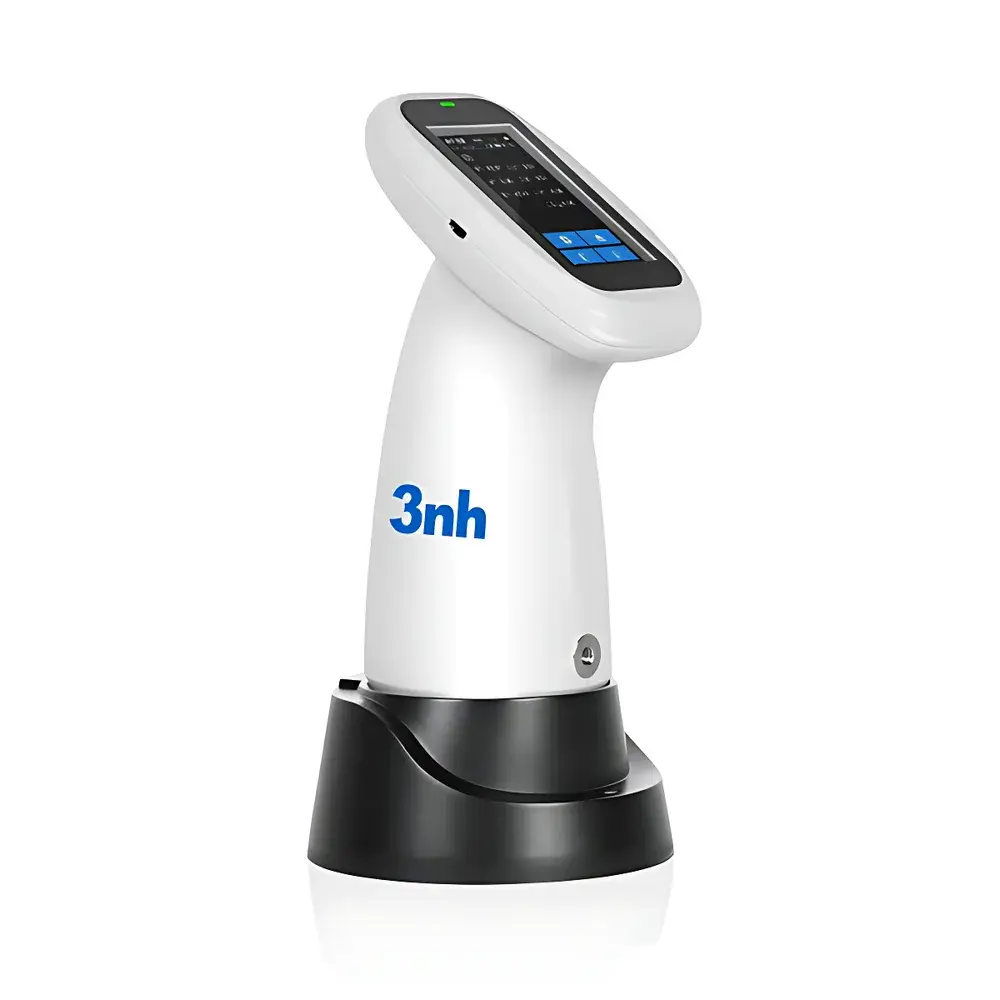
3nh PS2030 Dual-Aperture Portable High-Precision Spectrophotometric Colorimeter
| Brand | 3nh |
|---|---|
| Origin | Guangdong, China |
| Manufacturer Type | Manufacturer |
| Product Type | Color Difference Meter |
| Instrument Type | Portable |
| Optical Geometry | d/8° integrating sphere |
| Light Source | Full-spectrum LED array |
| Spectral Range | 400–700 nm |
| Repeatability | ΔE*ab ≤ 0.035 (MAV/SCI, after warm-up and calibration, n=30, 5s interval) |
Overview
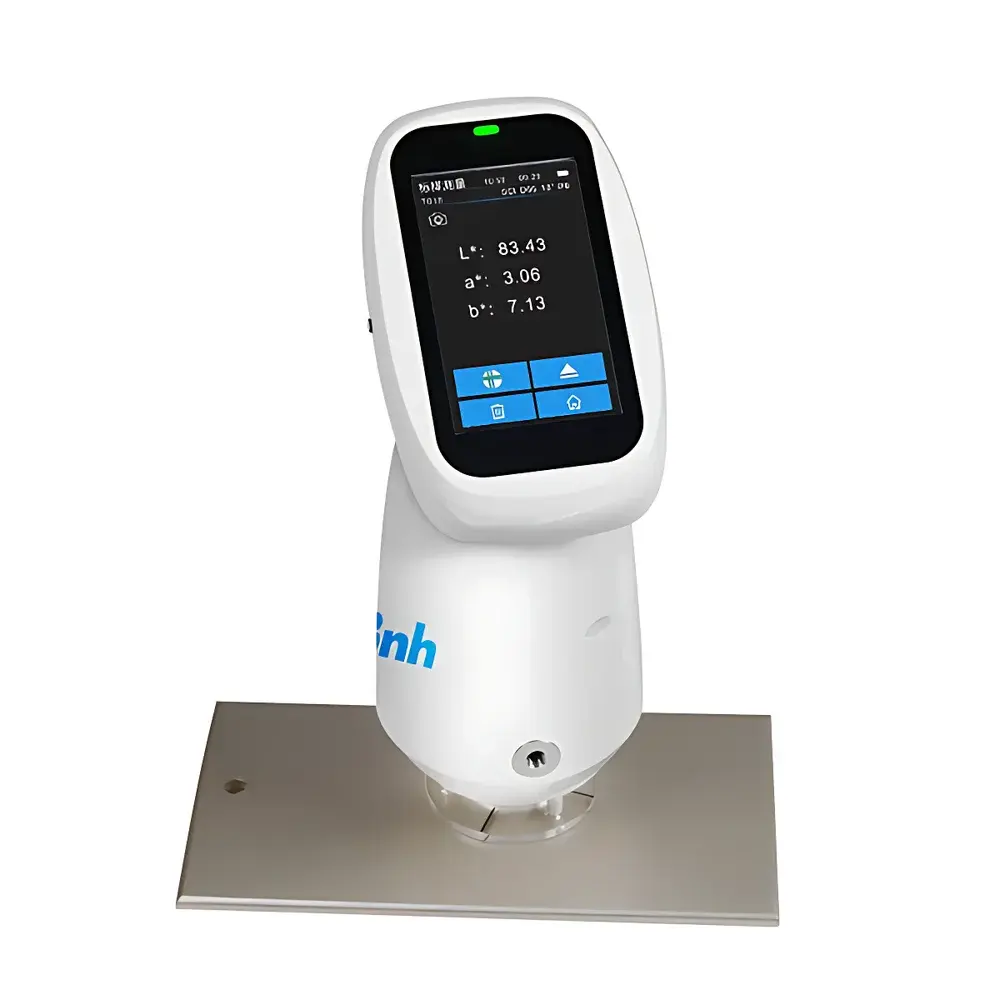
The 3nh PS2030 Dual-Aperture Portable High-Precision Spectrophotometric Colorimeter is an industrial-grade, handheld spectrophotometer engineered for rigorous color quality control across manufacturing and R&D environments. It operates on the CIE-compliant d/8° illumination geometry with simultaneous SCI (Specular Component Included) and SCE (Specular Component Excluded) measurement modes—enabling accurate assessment of both diffuse and specular reflectance characteristics. This dual-mode capability ensures consistent evaluation of textured, glossy, matte, and metallic surfaces without manual mode switching. The instrument employs a CMOS-based dual-channel spectral sensor paired with a full-spectrum LED light source spanning 400–700 nm, delivering uniform irradiance across the visible spectrum and eliminating spectral gaps common in narrow-band white LEDs. As a result, it maintains high photometric fidelity for fluorescent, pearlescent, and optically brightened materials—critical for compliance with ISO 7724-1, ASTM E1164, DIN 5033-7, GB/T 3978, and CIE Publication No. 15.
Key Features
- Dual-aperture optical design: MAV (Medium Area View) with interchangeable Φ8 mm and Φ10 mm measurement ports—including flat-stage and pointed-tip configurations—for flexible sampling of curved, recessed, or small-area surfaces.
- Simultaneous SCI/SCE acquisition: Captures both surface reflectance components in a single 1-second measurement cycle, reducing operator variability and improving throughput in QC labs and production lines.
- Full-spectrum LED illumination: Engineered to replicate daylight and standard illuminants across CIE-defined spectral bands; supports reliable measurement of fluorescent pigments and UV-brightened substrates without auxiliary UV sources.
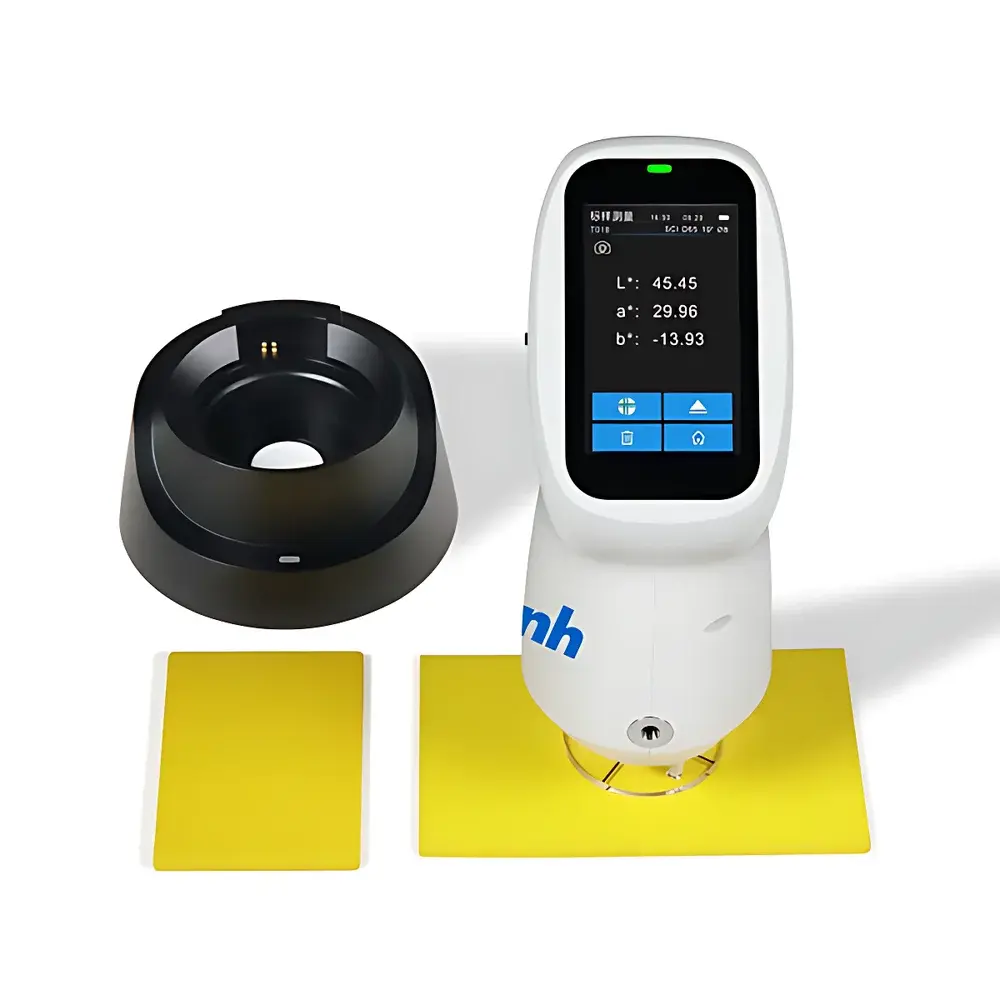
- Integrated auto-calibration base: Contact-type automated white calibration using a certified reference tile (R ≥ 95% ± 0.2%, spatial uniformity < 0.1% SD), traceable to NIM (National Institute of Metrology, China).
- Ergonomic handheld architecture: Weight-optimized (270 g), palm-contoured chassis with capacitive 2.8″ TFT touchscreen and tactile trigger—designed for extended use in factory-floor or field applications.
- High-stability spectral engine: CMOS dual-path spectrometer with thermal drift compensation, enabling repeatable ΔE*ab ≤ 0.035 (MAV/SCI) and spectral reflectance repeatability ≤ 0.1% (400–700 nm).
Sample Compatibility & Compliance
The PS2030 accommodates diverse sample types including injection-molded plastics, painted automotive panels, textile swatches, printed packaging, ceramic glazes, and coated metals. Its dual-aperture configuration allows precise targeting of heterogeneous surfaces—such as brushed aluminum or embroidered fabric—without edge effects. All optical and electronic subsystems comply with IEC 61000-4 electromagnetic compatibility standards. Measurement traceability follows ISO/IEC 17025 requirements, with individual unit calibration certificates issued per NIM-verified procedures. The device meets GLP-relevant data integrity criteria through timestamped, non-editable measurement logs and audit-ready firmware architecture—supporting regulatory readiness for FDA-regulated industries (e.g., medical device packaging, cosmetic labeling) under 21 CFR Part 11 when used with validated software workflows.
Software & Data Management
The PS2030 interfaces with 3nh’s SQCX Quality Control Software (Windows-compatible), providing comprehensive color data governance: statistical process control (SPC) charting, pass/fail threshold mapping, multi-instrument fleet synchronization, and export to CSV, PDF, or XML formats. The software enforces role-based access control, electronic signature capture, and immutable audit trails—including user ID, timestamp, instrument serial number, calibration history, and raw spectral data. Optional mobile integration via Bluetooth-enabled Android/iOS apps extends functionality to Munsell C/2 notation, 555 hue classification, and fastness rating calculation (ISO 105-A02, A03, A04). All firmware updates are digitally signed and delivered through HTTPS-secured channels to ensure supply-chain integrity.
Applications
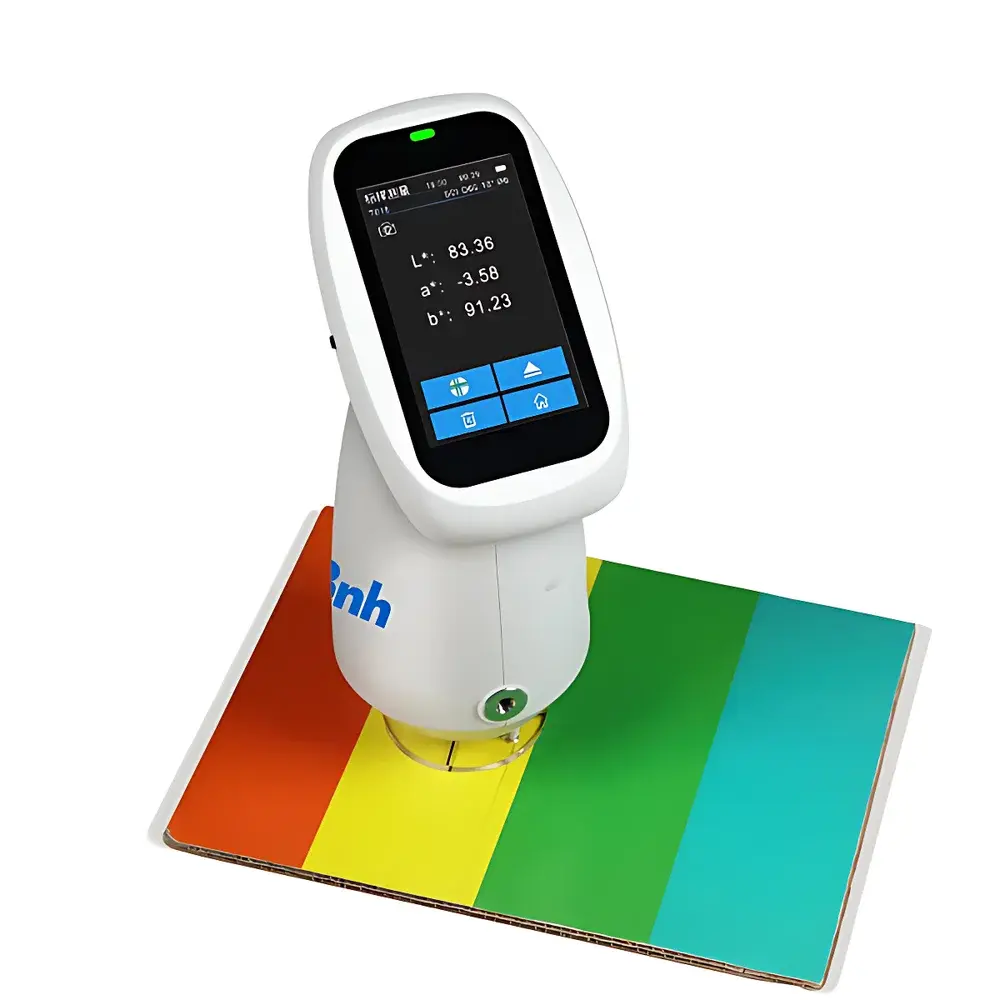
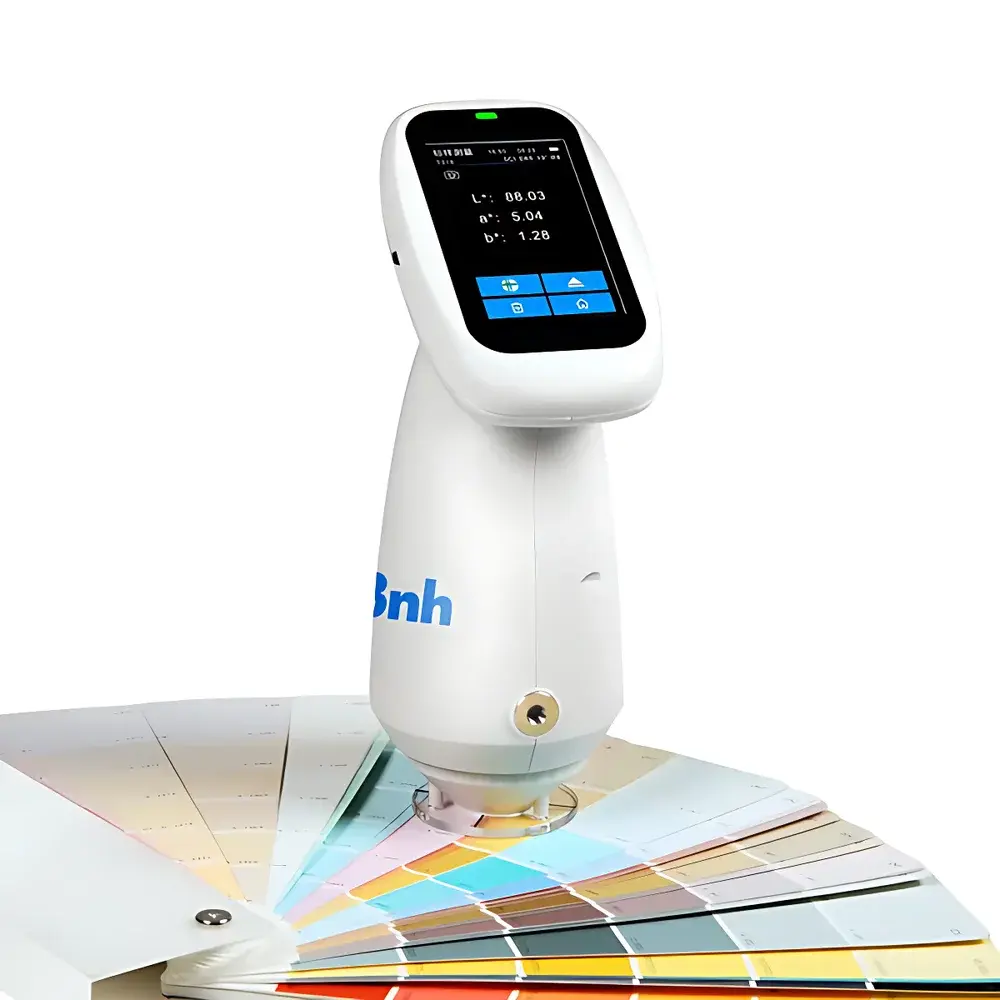
This instrument serves as a primary color verification tool in Tier-1 automotive suppliers for interior trim matching; in paint formulation labs for batch-to-batch consistency validation; in textile dye houses for shade approval against master standards; in printing facilities for spot-color deviation monitoring (Pantone®-aligned); and in ceramic tile manufacturing for glaze homogeneity assessment. Its portability enables on-site audits at vendor facilities, while its dual-aperture flexibility supports R&D tasks such as pigment dispersion analysis, coating thickness correlation studies, and substrate-dependent color shift quantification (e.g., cotton vs. polyester dye uptake).
FAQ
What standards does the PS2030 comply with for color measurement?
It conforms to CIE No. 15, ISO 7724-1, ASTM E1164, DIN 5033-7, GB/T 3978, and GB/T 18833 for geometric, photometric, and colorimetric performance.
Can the PS2030 measure fluorescent or optically brightened samples accurately?
Yes—the full-spectrum LED source provides continuous irradiance from 400–700 nm, eliminating spectral voids that compromise fluorescence excitation and emission detection.
Is inter-instrument agreement guaranteed across multiple PS2030 units?
Yes—typical inter-instrument agreement is ΔE*ab ≤ 0.35 (MAV/SCI, BCRA Series II 12-tile average), verified during final QA prior to shipment.
How is calibration traceability maintained?
Each unit ships with a NIM-traceable calibration certificate; the included white reference tile is certified to R ≥ 95% with documented spatial uniformity and long-term stability metrics.
Does the device support regulatory-compliant data handling?
When paired with validated SQCX software configurations, it supports ALCOA+ principles (Attributable, Legible, Contemporaneous, Original, Accurate) and satisfies 21 CFR Part 11 requirements for electronic records and signatures.





