
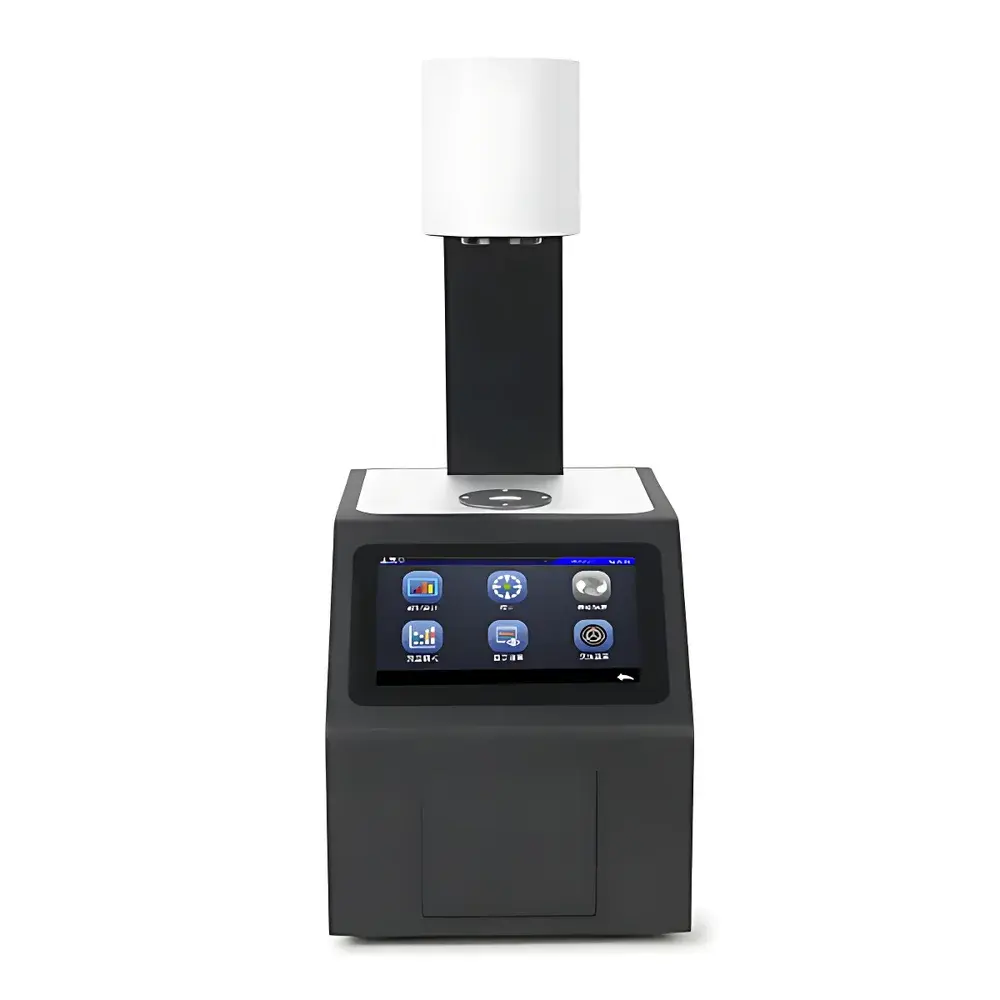
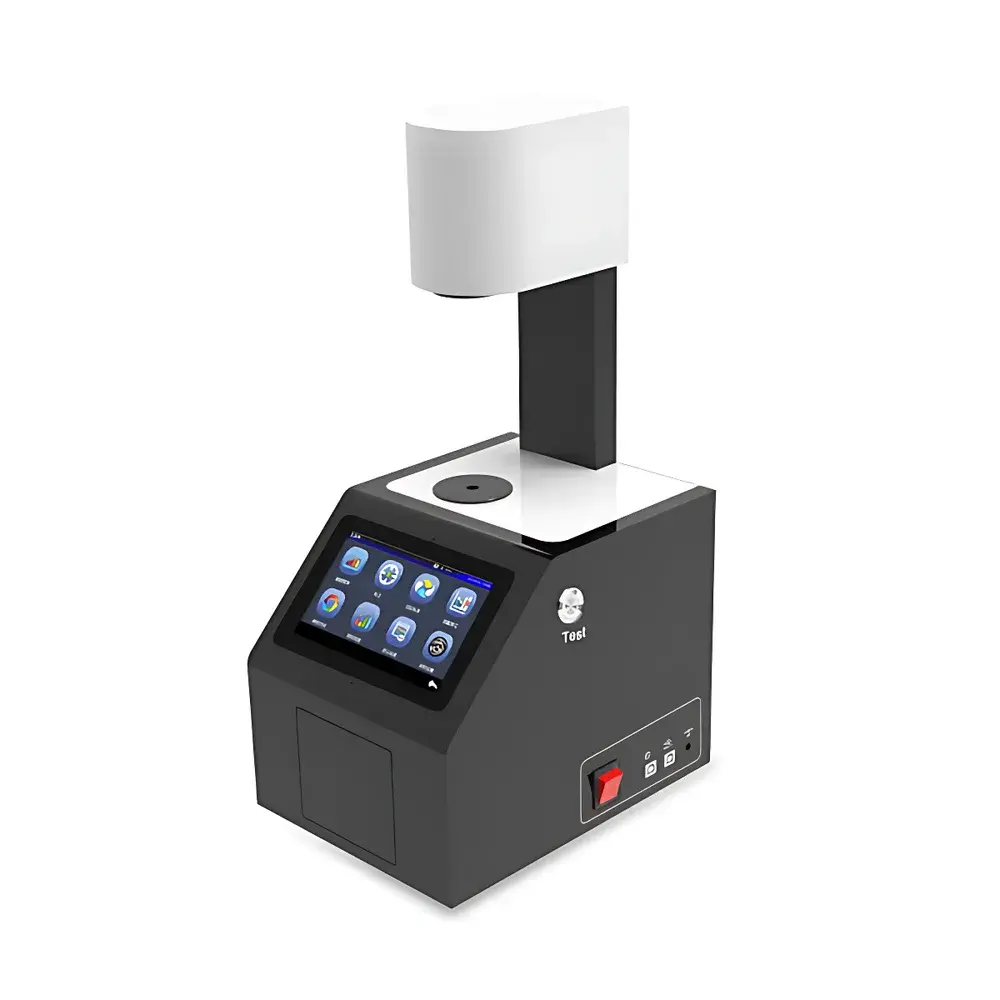
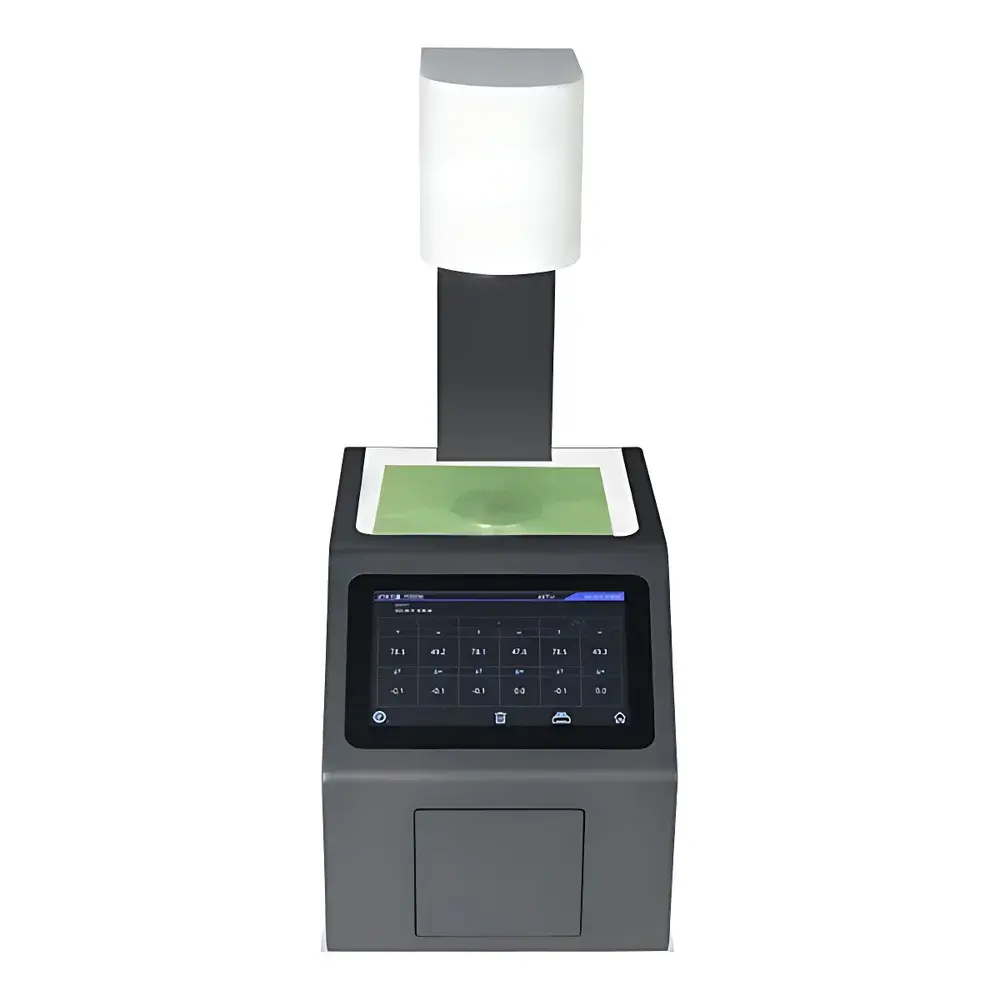
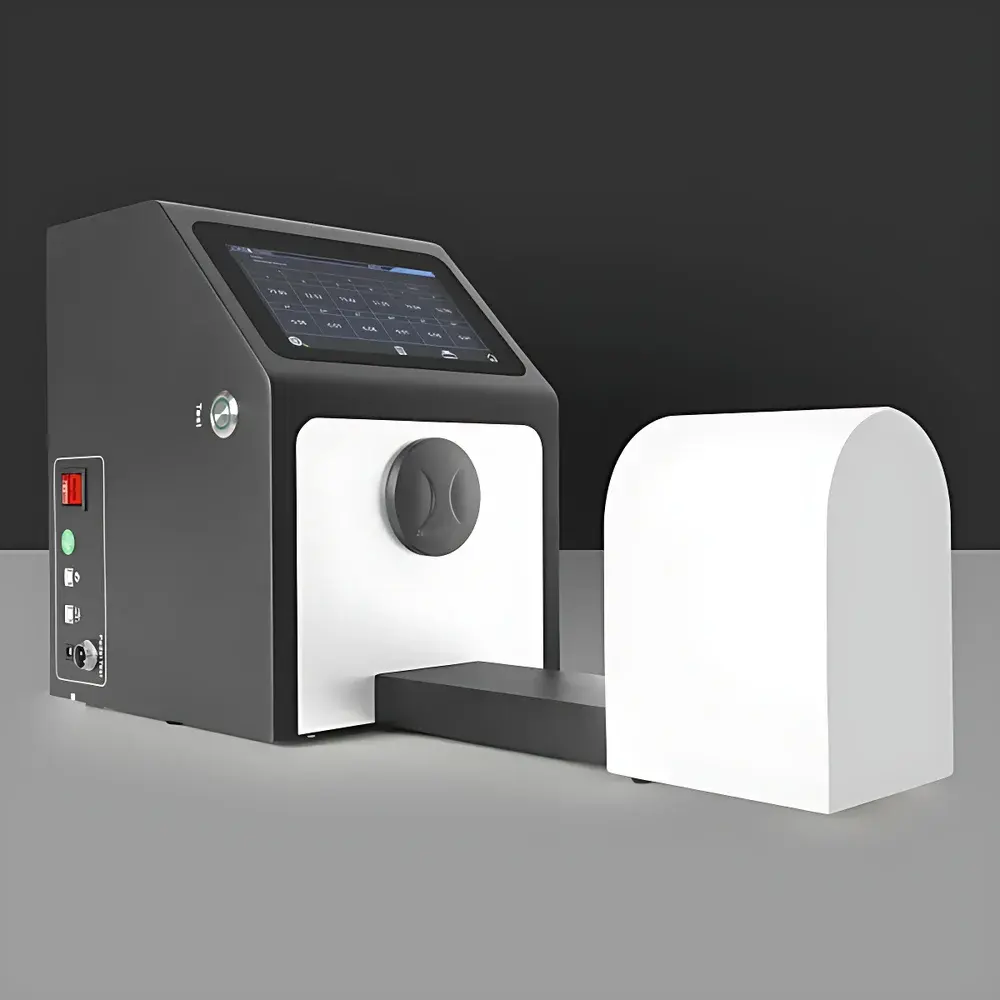
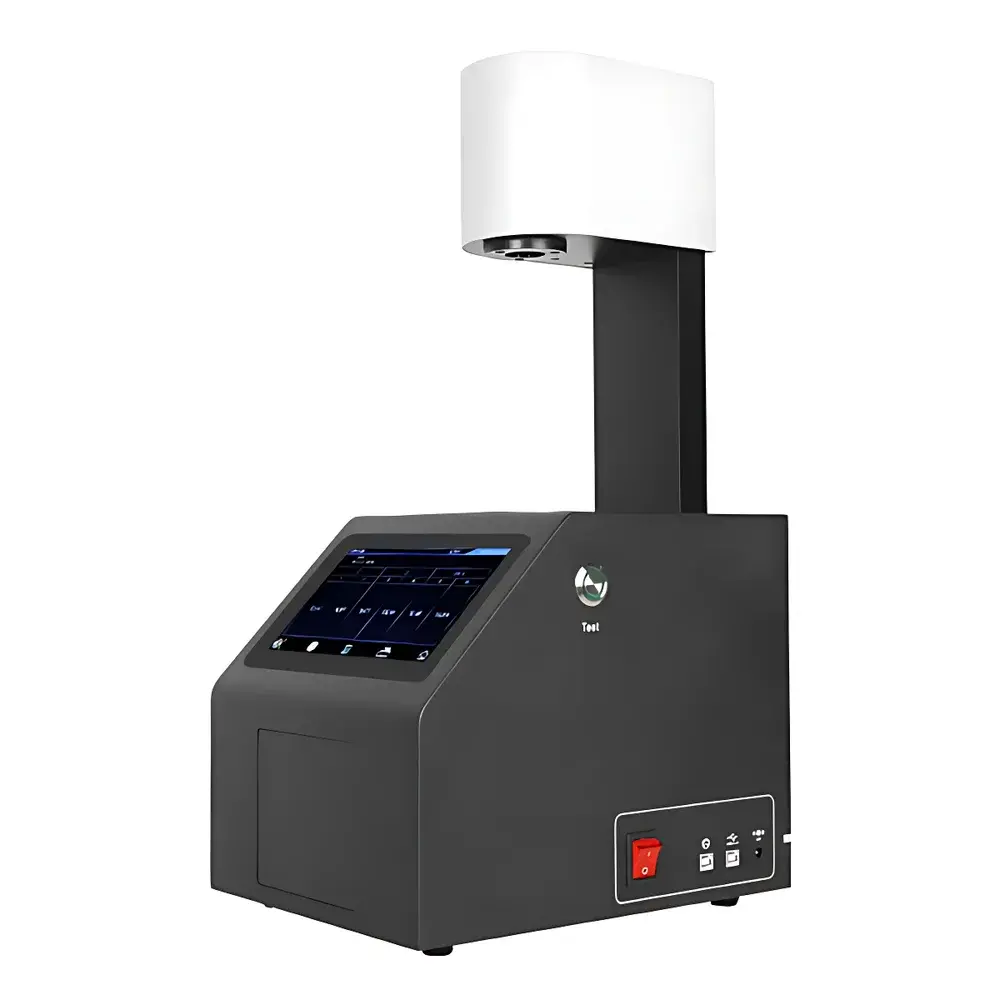
3nh YH1102 Dual-Aperture Transmittance and Haze Meter
| Brand | 3nh |
|---|---|
| Origin | Guangdong, China |
| Manufacturer Type | Direct Manufacturer |
| Product Type | Manual Benchtop Instrument |
| Model | YH1102 |
| Haze Range | 0–100% |
| Transmittance Range | 0–200% |
| Haze Repeatability (Φ20 mm aperture) | < 0.05 |
| Transmittance Repeatability | ±0.5% |
| Apertures | Φ20 mm & Φ8 mm |
| Illumination | 400–700 nm LED Array |
| Detector | PD Array Compliant with CIE V(λ) 2° Observer |
| Geometry | 0/D (Normal Incidence Illumination / Diffuse Reception) |
| Integrating Sphere Diameter | Φ154 mm |
| Measurement Time | ~1.5 s |
| Haze Resolution | 0.01% |
| Operating Temperature | 0–40 °C |
| Power Supply | DC 24 V, 3 A |
Overview
The 3nh YH1102 Dual-Aperture Transmittance and Haze Meter is a precision optical instrument engineered for quantitative assessment of light transmission and scattering characteristics in transparent and translucent materials. It operates on the principle of collimated beam transmittance combined with diffuse light integration—conforming to the 0/D (zero-degree illumination / diffuse reception) geometry defined in ASTM D1003 and ISO 14782. This configuration enables simultaneous measurement of total transmittance (Tt) and haze—the percentage of transmitted light deviating from the incident beam by more than 2.5°—using a calibrated integrating sphere (Φ154 mm) and a photodiode (PD) array detector spectrally matched to the CIE 1931 2° photopic luminosity function V(λ). The dual-aperture design (Φ20 mm and Φ8 mm) supports standardized testing across diverse sample geometries—from thin polymer films and display cover glasses to thick molded lenses and pharmaceutical vials—without mechanical reconfiguration.
Key Features
- Dual-standard compliance: Fully supports both ASTM D1003 (non-compensated method) and ISO 14782 protocols, with additional alignment to GB/T 2410, JIS K7105, JIS K7361, JIS K7136, and CIE 15.2 for global regulatory traceability.
- Optimized optical architecture: Features a stable 400–700 nm LED light source with >3 million measurement cycles lifespan and integrated temperature monitoring to compensate for thermal drift in real time.
- High-fidelity detection: PD array sensor ensures spectral responsivity matching CIE V(λ) within ±1.5%, minimizing metamerism-related errors in transmittance and haze quantification.
- Ergonomic open-sample chamber: Accommodates vertical or horizontal placement of specimens up to 170 mm in thickness; eliminates constraints imposed by fixed-stage enclosures.
- Intuitive human-machine interface: 7-inch capacitive TFT touchscreen with multilingual support (English, Simplified/Traditional Chinese), enabling rapid parameter selection, real-time pass/fail evaluation, and on-device data review.
- Robust metrological stability: Achieves haze repeatability <0.05% (Φ20 mm aperture, after warm-up and calibration) and inter-instrument agreement <0.4% (based on NIST-traceable haze standards), meeting GLP-aligned internal QA requirements.
Sample Compatibility & Compliance
The YH1102 accommodates flat, curved, rigid, and flexible specimens—including float glass, acrylic sheets, PET/PVC films, OLED encapsulation layers, medical IV bags, and liquid-filled ampoules—provided optical path length and surface flatness fall within geometric acceptance criteria. Its open-access design permits direct insertion of oversized or irregularly shaped samples that exceed conventional benchtop fixture limits. All measurements adhere to internationally recognized optical testing frameworks: ASTM D1003 (Method A, non-compensated), ISO 14782 (transmittance and haze of transparent plastics), and JJF 1303–2011 (Chinese national verification regulation for haze meters). Instrument validation includes documented traceability to reference standards certified per ISO/IEC 17025-accredited laboratories, supporting audit readiness under FDA 21 CFR Part 11 (when paired with validated software workflows) and ICH Q5C photostability guidelines.
Software & Data Management
The included Quality Management Software (QMS) provides desktop-based analysis, statistical process control (SPC), and report generation compatible with Windows OS. It supports import/export of transmittance and haze datasets in CSV, XLSX, and PDF formats; enables comparative trending across batches, shifts, or suppliers; and maintains full audit trails—including operator ID, timestamp, calibration status, and environmental metadata (ambient temperature/humidity if externally logged). Data storage capacity includes 1,000 standard references and 20,000 sample records locally on device, with USB 2.0 interface facilitating secure transfer to LIMS or ELN systems. Optional serial printer output supports GMP-compliant hardcopy documentation with embedded instrument ID and calibration due date.
Applications
This instrument serves as a primary metrology tool in quality assurance laboratories across regulated and industrial sectors. In flat-panel display manufacturing, it verifies anti-reflective coating uniformity and cover glass clarity prior to lamination. In medical packaging, it quantifies haze increase in sterilized polyolefin pouches as an indicator of polymer degradation. Automotive lighting suppliers use it to validate lens diffusion homogeneity; pharmaceutical firms apply it to assess container-closure integrity via solution turbidity screening. Additional use cases include R&D evaluation of nanocomposite transparency, recycling-grade plastic sorting by optical degradation index, and validation of UV-filtering architectural glazing performance.
FAQ
What international standards does the YH1102 directly support?
ASTM D1003 (Method A), ISO 14782, GB/T 2410, JIS K7105, JIS K7361, JIS K7136, and CIE 15.2.
Can the YH1102 measure liquids?
Yes—when contained in cuvettes or vials with parallel, optically flat walls and minimal meniscus distortion; recommended path length ≤10 mm for optimal signal-to-noise ratio.
Is the instrument suitable for ISO/IEC 17025 accredited labs?
It meets core metrological requirements for haze and transmittance; full accreditation requires documented uncertainty budgets, periodic inter-laboratory comparisons, and controlled environmental monitoring per ISO/IEC 17025 Clause 6.4.
How often must the YH1102 be recalibrated?
Annual calibration against traceable haze and transmittance standards is recommended; daily zero/full-scale verification using supplied 0% and 100% calibration tiles is required before critical measurements.
Does the software comply with FDA 21 CFR Part 11?
The base QMS supports electronic signatures and audit trails; formal Part 11 compliance requires site-specific validation protocol execution, including role-based access control and encrypted data storage configuration.



