
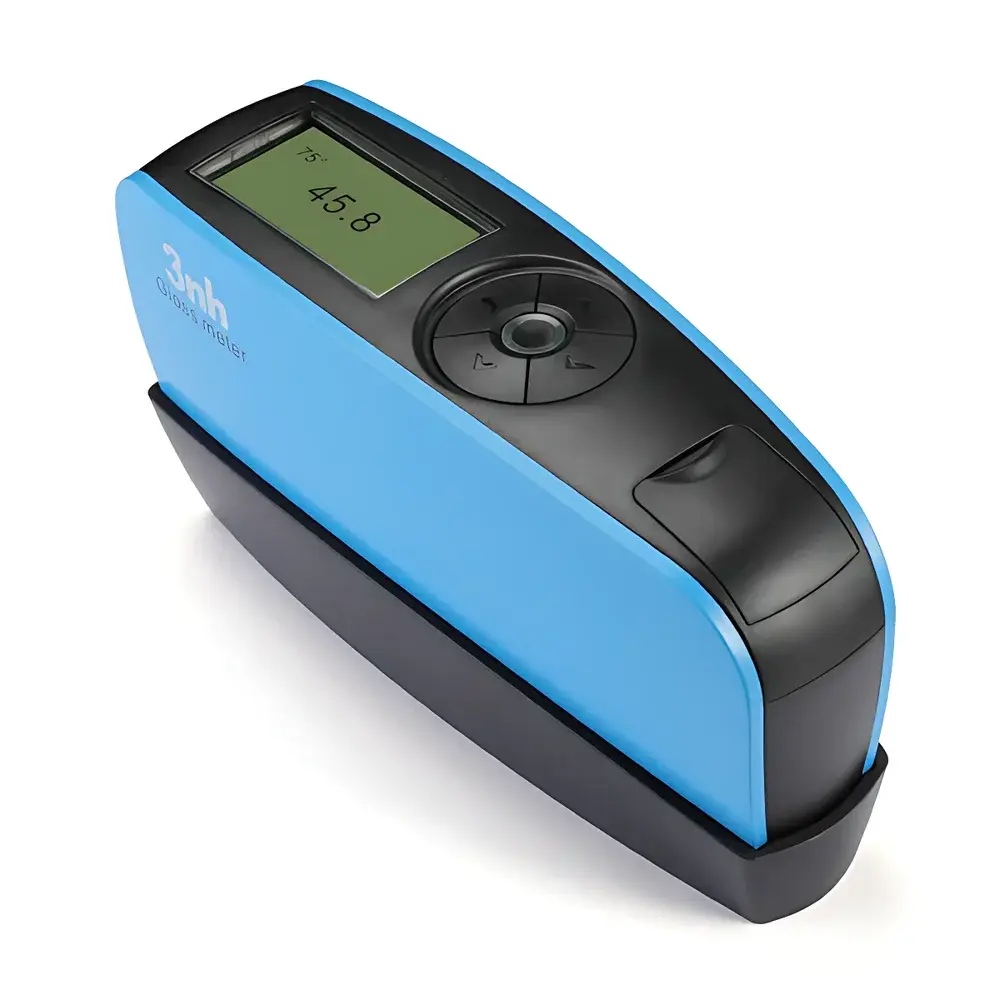
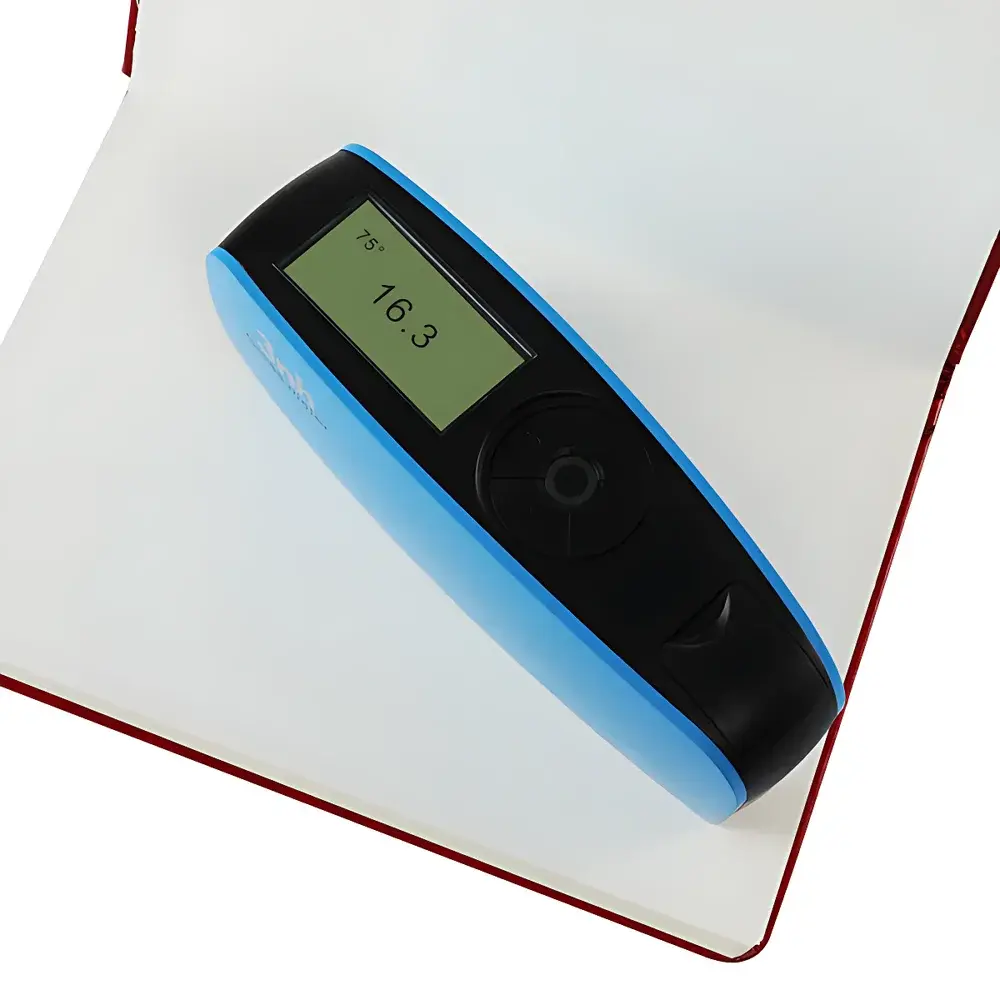
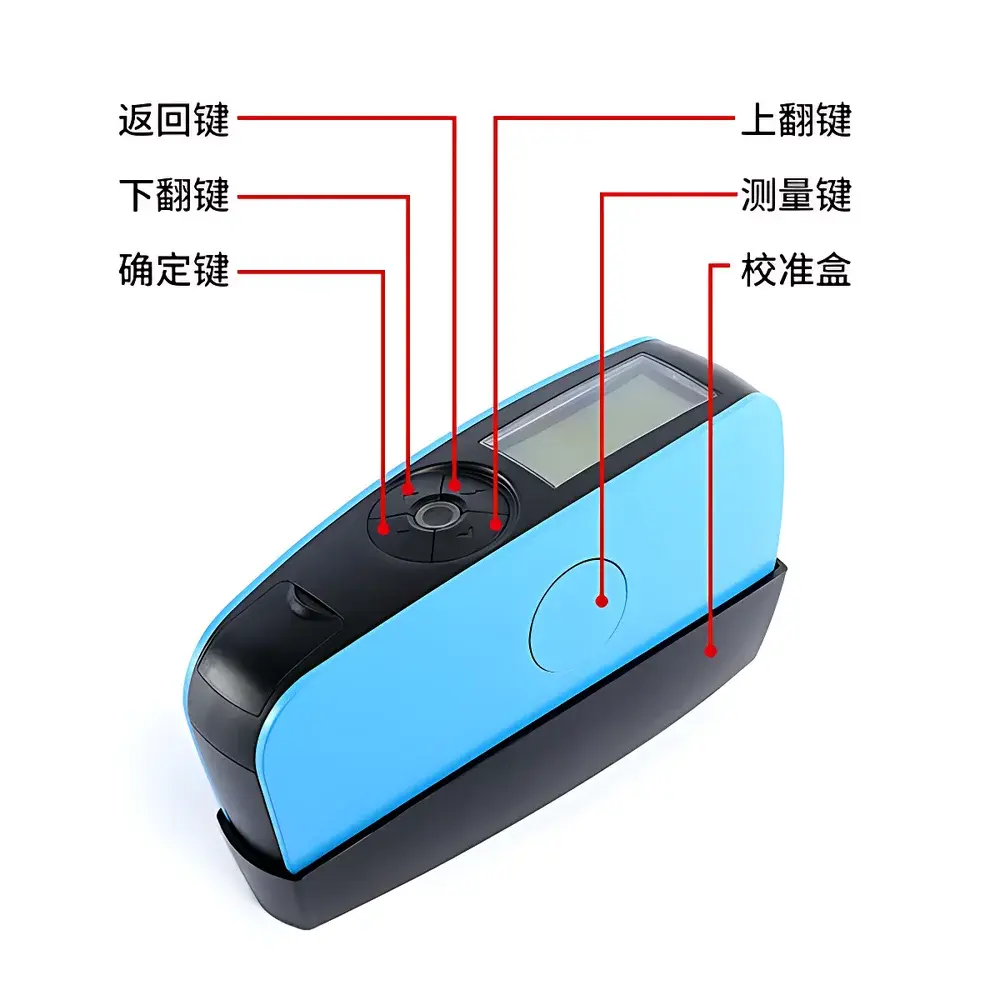
3nh YG75 High-Precision 75° Gloss Meter
| Brand | 3nh |
|---|---|
| Origin | Guangdong, China |
| Manufacturer Type | Manufacturer |
| Product Category | Domestic |
| Model | YG75 |
| Type | Manual Gloss Meter |
| Measurement Angle | 75° |
| Measurement Spot Size | 4 × 6 mm |
| Measurement Range | 0–150 GU |
| Resolution | 0.1 GU (0–100 GU), 1 GU (100–150 GU) |
| Repeatability | ±0.2 GU (0–100 GU), ±0.2% GU (100–150 GU) |
| Measurement Time | 0.5 s |
| Display | 2.3-inch monochrome LCD |
| Dimensions | 160 × 52 × 84 mm |
| Weight | ~300 g (including calibration tile and battery) |
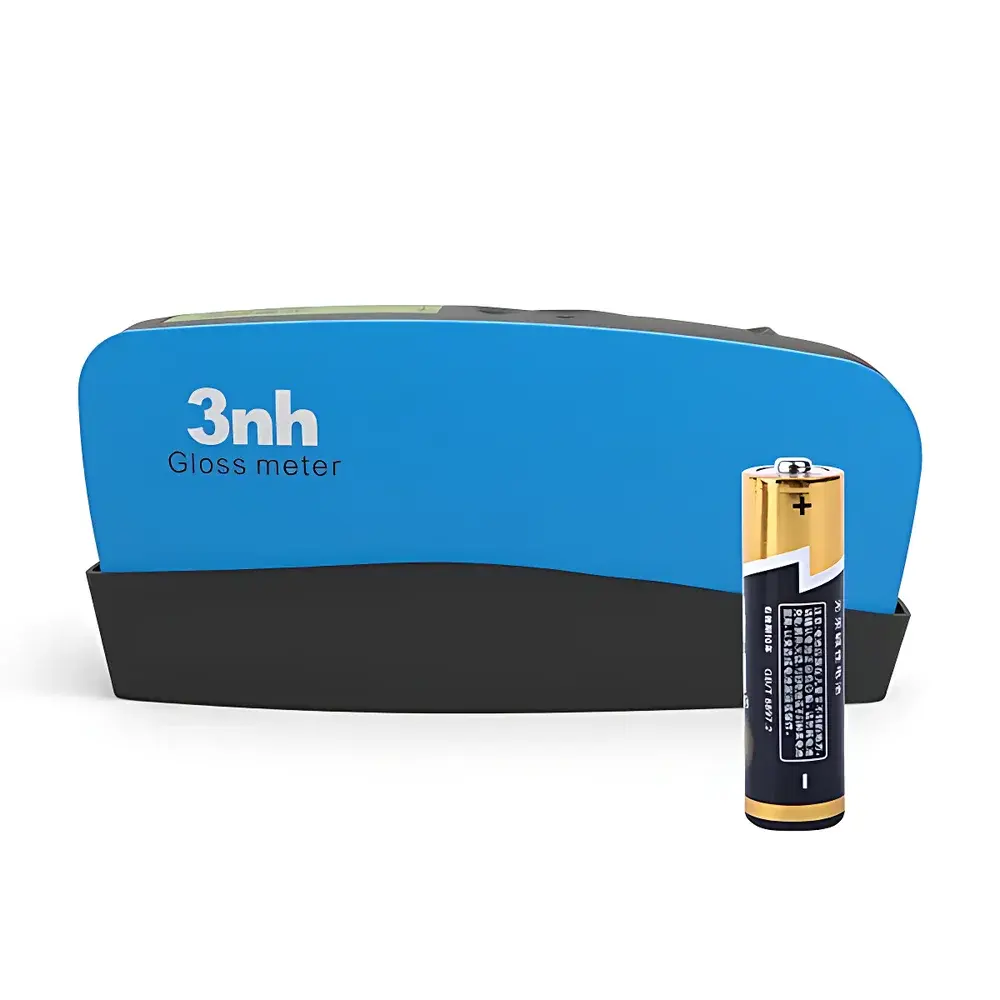
| Power Supply | 1 × AA alkaline or Ni-MH rechargeable battery (≥10,000 measurements per charge) or USB bus power |
| Auto-off Delay | 30–120 s adjustable |
| Operating Temperature | 0–40 °C |
| Storage Temperature | −20–50 °C |
| Relative Humidity | <85% RH, non-condensing |
| Data Storage Capacity | 35,000 readings (Basic/Continuous: 15,000 |
| QC Mode | 10,000 |
| Statistical Mode | 10,000) |
| Language Support | Simplified Chinese, English, Traditional Chinese |
| Compliance | JJG 696 (Chinese National Verification Regulation for Working Gloss Meters) |
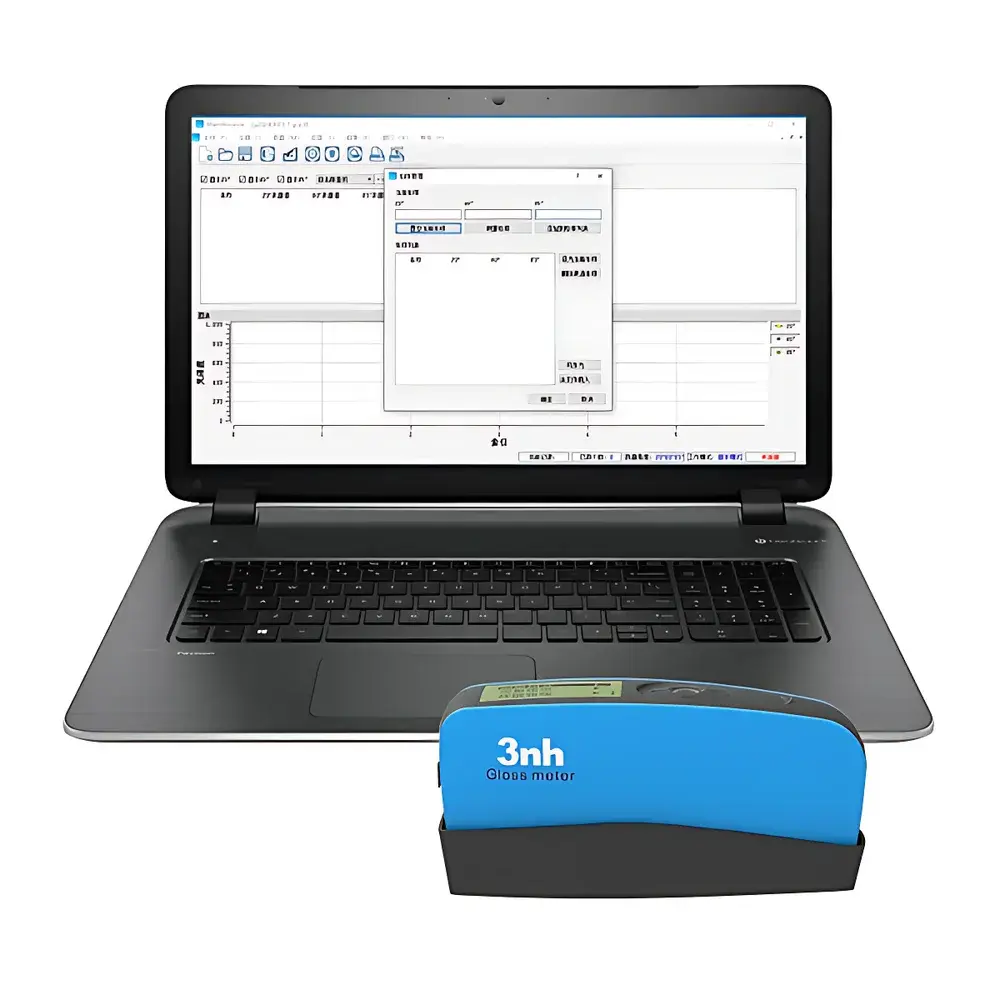
| Software | GQC6 Quality Control Software (PC-based, supports report generation, data export, audit trail, and GLP-compliant recordkeeping) |
Overview
The 3nh YG75 High-Precision 75° Gloss Meter is a manually operated optical instrument engineered for reliable, traceable surface gloss measurement in industrial quality control and R&D environments. It operates on the principle of specular reflectance at a fixed 75° incident angle—optimized for low-to-medium gloss surfaces where higher angles (e.g., 85°) may yield insufficient signal intensity and lower angles (e.g., 20° or 60°) risk saturation or reduced sensitivity. The device conforms to the geometric and photometric requirements defined in JJG 696, the People’s Republic of China national verification regulation for working gloss meters, ensuring metrological validity for routine inspection and inter-laboratory data exchange. Its compact form factor, calibrated optical path, and temperature-stable detector system enable consistent performance across variable ambient conditions typical of production floors and testing labs.
Key Features
- Ergonomic handheld design with contoured grip geometry—reduces operator fatigue during extended use in high-volume inspection workflows.
- Four operational modes: Basic (single-shot instant readout), Statistical (mean, SD, min/max over user-defined sample sets), Continuous (real-time streaming for process monitoring), and QC Mode (user-configurable upper/lower limits with pass/fail visual feedback).
- Low-power architecture: Delivers ≥10,000 measurements per AA battery charge—compatible with both alkaline and Ni-MH rechargeables—minimizing downtime and consumable cost.
- Integrated calibration verification: Automatically detects and validates the status of the included ceramic reference standard (calibrated to NIST-traceable standards), flagging drift before it impacts measurement integrity.
- High metrological stability: Achieves repeatability of ±0.2 GU (0–100 GU range) and ±0.2% GU (100–150 GU range), meeting the precision expectations for incoming material inspection and finished-product release testing.
- USB interface enables direct connection to Windows PCs for firmware updates, data synchronization, and remote configuration via GQC6 software.
Sample Compatibility & Compliance
The YG75 is validated for use on non-metallic, opaque, or semi-opaque planar surfaces—including coated paper, polymer films, painted metal substrates, molded plastics, lacquered wood, glazed ceramics, and anodized aluminum. Its 4 × 6 mm measurement aperture accommodates fine-textured or patterned surfaces without spatial averaging artifacts common in larger-spot instruments. While not intended for metallic mirrors or highly reflective bare metals (where 20° or 60° geometries are preferred), the 75° angle provides enhanced discrimination for matte and semi-gloss finishes prevalent in packaging, graphic arts, and consumer electronics housings. The instrument satisfies JJG 696 verification criteria and supports compliance with broader quality management frameworks including ISO 9001, IATF 16949, and GLP-aligned documentation practices when used with GQC6 software’s audit-trail-enabled reporting.
Software & Data Management
GQC6 Quality Control Software is a Windows-native application supporting bidirectional communication with the YG75. It enables automated test sequence definition, batch-level statistical analysis (Cp/Cpk, X-bar/R charts), customizable PDF report generation with embedded calibration history and operator ID, and CSV/Excel export for integration into LIMS or MES platforms. All measurement records include timestamp, mode context, environmental metadata (if logged externally), and instrument serial number—facilitating 21 CFR Part 11–compliant electronic records when deployed with appropriate organizational controls (e.g., user authentication, electronic signatures, and change logs). Firmware updates and language pack installation are managed through the same interface.
Applications
- Print & Packaging: Monitoring gloss uniformity across printed corrugated board, laminated labels, and metallized films to ensure visual consistency and brand fidelity.
- Automotive Interiors: Verifying surface finish of injection-molded dashboards, door trims, and center consoles against OEM specifications.
- Coatings & Inks: Validating batch-to-batch gloss stability in solvent-based, UV-curable, and waterborne formulations during formulation development and QC release.
- Electronics Manufacturing: Assessing anti-glare treatment efficacy on display bezels, touch panels, and housing components.
- Building Materials: Quantifying gloss retention of architectural coatings after accelerated weathering or cleaning validation studies.
FAQ
What standards does the YG75 comply with?
It complies with JJG 696, the national verification regulation for working gloss meters in China. While not certified to ISO 2813 or ASTM D523, its optical geometry and performance characteristics align with the 75° measurement condition specified in ISO 2813 Annex A for low-gloss materials.
Can the YG75 measure curved or textured surfaces?
It is designed for flat or gently curved surfaces with radius >50 mm. Highly textured, rough, or deeply contoured samples may introduce scatter-related uncertainty; contact measurement with firm, perpendicular placement is required for reproducibility.
Is calibration traceable to international standards?
The included ceramic calibration tile is factory-calibrated against NIST-traceable reference standards. Full calibration certificates with uncertainty budgets are available upon request for GLP/GMP applications.
Does the device support multi-language export in reports?
Yes—GQC6 allows report templates to be localized in Simplified Chinese, English, or Traditional Chinese, with all metadata (including units, titles, and footers) rendered consistently per selected language.
How is data security ensured during PC transfer?
All USB communications use encrypted command protocols. GQC6 supports role-based access control, password-protected report archives, and optional Windows credential integration for enterprise deployment.




