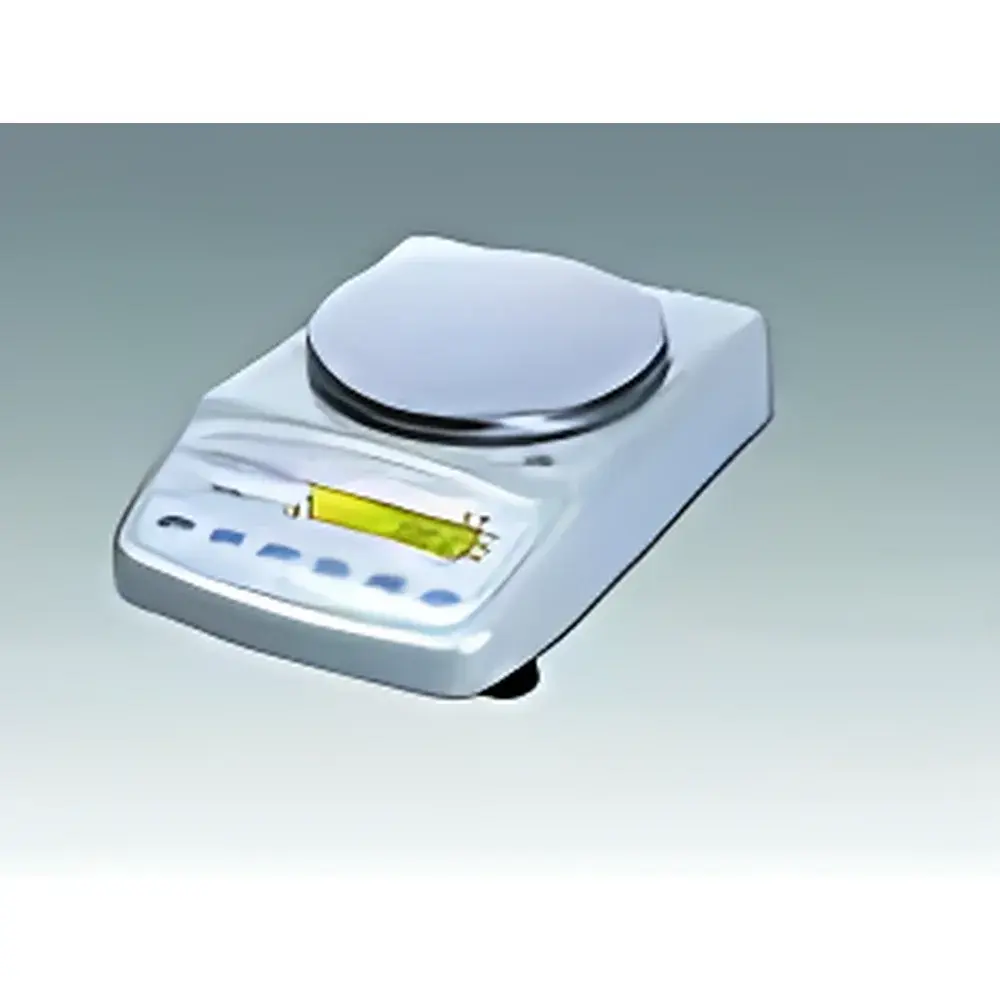
AccuWeigh MP1002 Precision Analytical Balance (0.01 g Readability)
| Origin | Shanghai, China |
|---|---|
| Manufacturer Type | Authorized Distributor |
| Country of Origin | China |
| Model | MP1002 |
| Capacity | 100 g |
| Readability | 0.01 g |
| Repeatability | ≤0.01 g |
| Linearity | ±0.02 g |
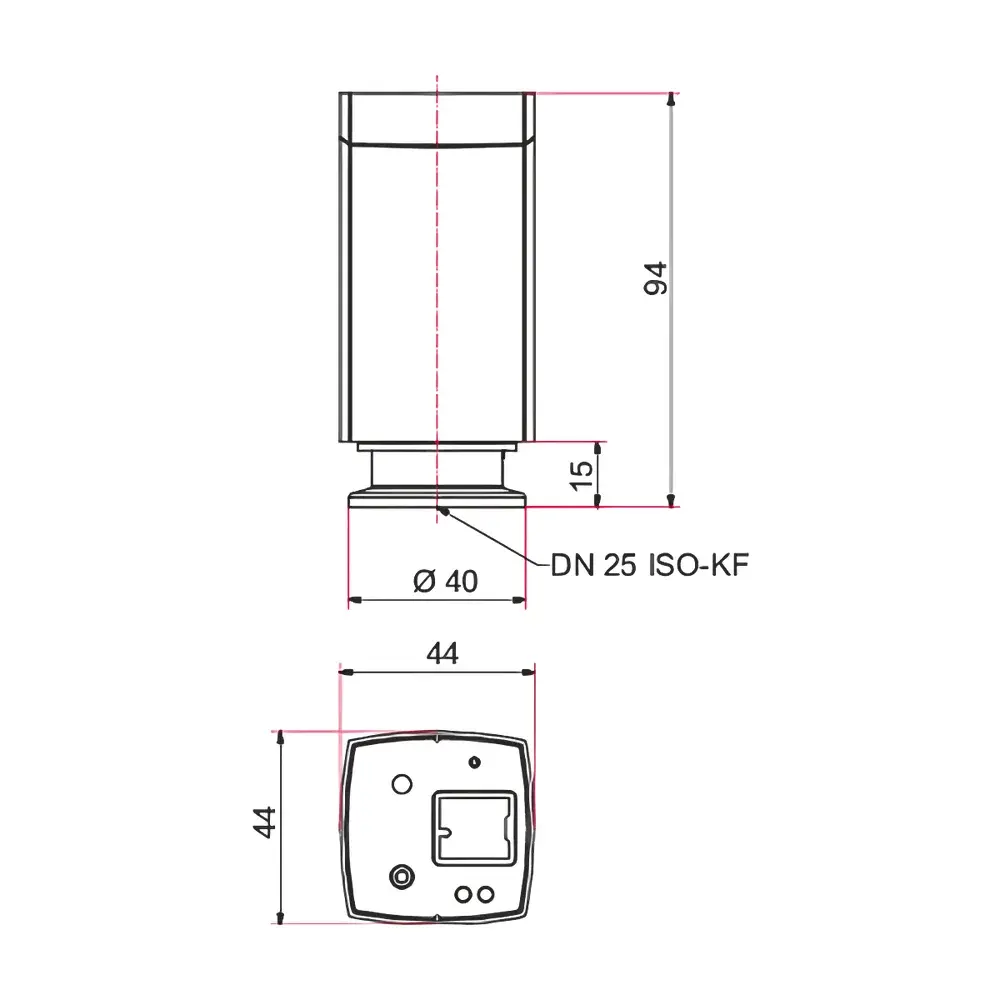
| Dimensions (W×D×H) | 190 × 250 × 75 mm |
| Pan Diameter | Φ125 mm |
| Power Options | AC adapter or 9 V battery |
Overview
The AccuWeigh MP1002 Precision Analytical Balance is an entry-level analytical balance engineered for reliable mass measurement in laboratory, educational, and light industrial environments. It employs a high-stability electromagnetic force compensation sensor architecture—distinct from traditional strain-gauge load cells—to eliminate common drift sources such as creep, temperature-induced hysteresis, and long-term linearity degradation. With a 100 g maximum capacity and 0.01 g readability, the MP1002 delivers consistent performance across routine weighing tasks requiring centigram-level resolution. Its compact footprint (190 × 250 × 75 mm) and stainless-steel weighing pan (Φ125 mm) support ergonomic operation on standard lab benches while maintaining structural integrity under repeated use. Designed to meet fundamental metrological requirements for non-regulated applications, the MP1002 operates without external calibration weights under normal ambient conditions thanks to its internal auto-calibration function.
Key Features
- Electromagnetic force restoration sensing technology ensures superior repeatability (≤0.01 g) and linearity (±0.02 g) across the full 100 g range
- Backlit LCD display with clear digit height and contrast for rapid visual verification under varied lighting conditions
- Dual power mode: supports continuous operation via included AC adapter or portable use with a standard 9 V alkaline battery
- Four-stage shock absorption system minimizes vibration-induced instability during rapid placement or environmental fluctuations
- Adjustable weighing speed setting allows optimization for either fast preliminary readings or high-stability final measurements
- Integrated auto-zero tracking and automatic internal calibration reduce operator dependency and improve workflow consistency
- Comprehensive overload protection safeguards the sensor mechanism against accidental overloading beyond 120% of rated capacity
- Multi-unit conversion (g, oz, ct, %, PCS) enables direct reporting in context-specific units without manual calculation
Sample Compatibility & Compliance
The MP1002 accommodates a broad range of solid and granular samples within its 100 g limit—including powders, reagents, small hardware components, biological specimens, and educational kits. Its stainless-steel pan resists corrosion from mild solvents and cleaning agents, supporting routine decontamination protocols. While not certified for ISO/IEC 17025 accredited testing or FDA 21 CFR Part 11–compliant data capture, the balance conforms to general-purpose laboratory instrumentation standards referenced in ASTM E1223 (Standard Guide for Use of Analytical Balances) and GB/T 26497–2011 (Chinese national standard for electronic balances). It is suitable for GLP-aligned environments where traceability is maintained through documented calibration logs and user-defined operational procedures.
Software & Data Management
The MP1002 includes an optional RS232 serial interface for basic data export to PCs, LIMS, or spreadsheet applications. When enabled, it transmits stable weight values in ASCII format upon command or at user-defined intervals. No proprietary software is required; terminal emulation tools (e.g., Tera Term, PuTTY) or custom Python scripts can parse output streams. The balance does not feature built-in audit trail, electronic signature, or encrypted storage—functions reserved for higher-tier models compliant with regulated quality systems. However, its self-diagnostic routines (displayed via error codes) assist in troubleshooting common issues such as unstable zero, sensor saturation, or power supply anomalies—supporting preventive maintenance planning.
Applications
- Academic laboratories: Quantitative chemistry experiments, stoichiometric calculations, and student training in mass measurement fundamentals
- Quality control labs: Incoming raw material checks, batch sampling, and packaging weight verification for non-pharmaceutical products
- Vocational education: Hands-on instruction in metrology principles, calibration methodology, and uncertainty estimation basics
- Small-scale manufacturing: Component counting (piece counting mode), formulation pre-weighing, and process documentation support
- Agricultural extension services: Soil sample analysis preparation, seed viability testing, and fertilizer dosage calibration
FAQ
What is the recommended calibration frequency for the MP1002?
For routine use under stable environmental conditions (20–25°C, <60% RH, minimal air currents), internal auto-calibration should be performed daily before first use. External verification with Class M2 or better weights is advised weekly or per institutional SOP.
Can the MP1002 be used in a fume hood?
Yes—provided airflow is minimized and the unit is mounted on a vibration-isolated surface. Avoid direct exposure to corrosive vapors; stainless-steel construction offers limited resistance but is not chemically inert.
Does the balance support GLP-compliant record keeping?
No. It lacks timestamped audit trails, user authentication, or electronic signature capability. For GLP/GMP workflows, pairing with external logging software and manual calibration records is necessary.
Is the RS232 interface standard or optional?
The RS232 port is factory-installed but disabled by default. Activation requires firmware configuration via service mode—contact technical support for setup guidance.
How does the MP1002 handle temperature drift?
Its electromagnetic sensor exhibits low thermal coefficient (<2 ppm/°C), and the auto-zero tracking algorithm continuously compensates for minor baseline shifts during warm-up and ambient fluctuations.