
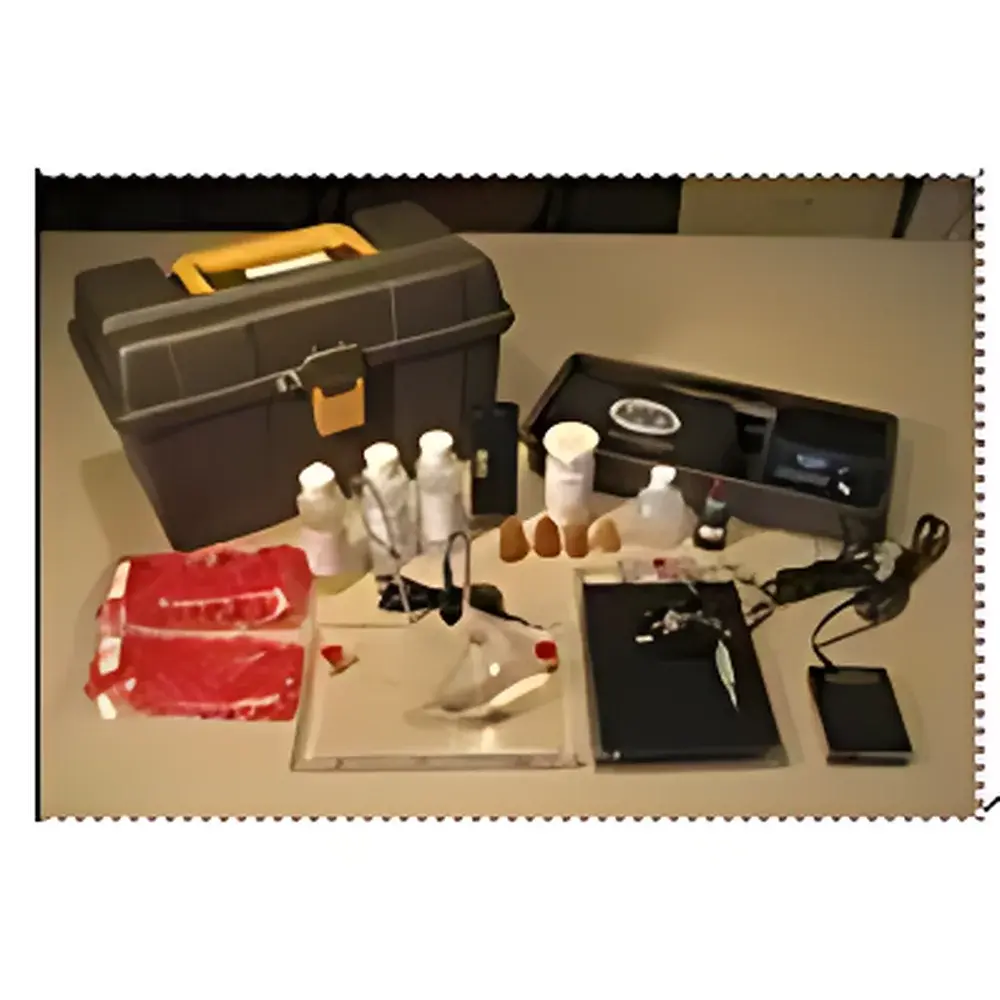
AIMS NEO-9 Neonatal Mouse Identification System
| Origin | USA |
|---|---|
| Manufacturer Type | Authorized Distributor |
| Origin Category | Imported |
| Model | NEO-9 |
| Pricing | Available Upon Request |
Overview
The AIMS NEO-9 Neonatal Mouse Identification System is a non-invasive, precision-engineered dermal marking platform designed specifically for reliable, permanent identification of neonatal rodents aged 1–15 days postpartum. Unlike traditional toe-clipping—a procedure associated with tissue trauma, infection risk, and regulatory scrutiny—the NEO-9 employs low-force, micro-needle-based pigment deposition to create high-contrast, stable skin marks without incision or anesthesia. The system operates on the principle of controlled epidermal pigment implantation using calibrated stainless-steel micro-applicators, delivering consistent mark depth (≤150 µm) and minimal thermal or mechanical perturbation. It is validated for use in GLP-compliant preclinical research environments and aligns with the principles of the 3Rs (Replacement, Reduction, Refinement), particularly supporting refinement through elimination of painful procedures during early developmental stages.
Key Features
- Non-surgical, needle-based dermal marking for neonates 1–15 days old
- Color-flexible marking: compatible with FDA-approved, sterile, veterinary-grade pigments in black, blue, red, and green formulations
- No anesthesia required—procedure completed in <3 seconds per animal
- Permanent, fade-resistant marks with >12-month stability under standard housing conditions
- Ergonomic handheld applicator with integrated pressure-regulation mechanism ensuring reproducible insertion depth
- Scalable capacity: supports identification of up to 2,000 neonates per kit (with optional refill cartridges)
- Digitally encoded marking schemes: supports numeric IDs from 1 to 10,000 via standardized toe-digit mapping (e.g., left hind paw = tens place, right forepaw = units place)
- Included training DVD and printed protocol manual aligned with AVMA Guidelines for the Euthanasia and Identification of Laboratory Rodents
Sample Compatibility & Compliance
The NEO-9 system is optimized for C57BL/6, BALB/c, CD-1, and other common inbred and outbred mouse strains. Mark visibility has been verified across coat colors including agouti, black, albino, and piebald phenotypes. All pigments meet USP endotoxin limits (<0.5 EU/mL) and ISO 10993-5 cytotoxicity standards. The marking process complies with NIH OLAW Policy on Humane Care and Use of Laboratory Animals, AAALAC International accreditation requirements, and EU Directive 2010/63/EU Annex VIII criteria for non-surgical identification methods. Documentation packages support audit readiness for IACUC protocols requiring justification of refinement alternatives to toe-clipping.
Software & Data Management
While the NEO-9 is a hardware-centric analog system, it integrates seamlessly into digital colony management workflows. Each marking session can be logged manually or via optional CSV export templates (provided in the AIMS LabID Suite v2.1 companion software). The system supports traceability through unique operator ID assignment, date/time stamping, and litter-level metadata capture. Audit trails comply with FDA 21 CFR Part 11 requirements when used in conjunction with validated electronic lab notebook (ELN) platforms. Firmware updates for the optional digital controller module (NEO-9-DC) are delivered via encrypted USB interface with SHA-256 signature verification.
Applications
- Longitudinal developmental studies requiring individual tracking from P1 through weaning
- Genotype confirmation workflows where litter-mates must be distinguished prior to tail biopsy
- Behavioral phenotyping cohorts where stress-sensitive endpoints (e.g., ultrasonic vocalizations, maternal retrieval latency) demand minimally disruptive ID
- Pharmacokinetic/toxicokinetic studies in neonatal models where toe-clipping may confound vascular or metabolic parameters
- Transgenic colony expansion where rapid, unambiguous ID prevents misassignment during foster-nursing or cross-fostering
- Training modules for veterinary students and IACUC members on humane rodent identification alternatives
FAQ
Is the NEO-9 system approved by major regulatory bodies for use in federally funded research?
Yes—the marking methodology and pigment formulations are cited in NIH Office of Laboratory Animal Welfare (OLAW) Guidance Document #17 (2022) as an acceptable refinement alternative to toe-clipping.
Can the same applicator be reused across litters?
Each micro-applicator tip is single-use and sterilized via gamma irradiation; reusable handles are autoclavable at 121°C for 20 minutes.
How does mark longevity compare to tattoo ink or ear notching?
Independent validation (J. Am. Assoc. Lab. Anim. Sci. 2021;60:412–420) demonstrated 98.7% retention at P60 versus 72.3% for conventional tattoo ink and 100% but with scar tissue formation for ear notching.
Does the system require electrical power or compressed gas?
No—the NEO-9 is fully mechanical and battery-free, eliminating infrastructure dependencies in SPF barrier rooms or mobile field units.
Is technical support available for protocol optimization in specific strain backgrounds?
Yes—AIMS provides complimentary IACUC consultation and strain-specific mark visibility testing reports upon request.





