
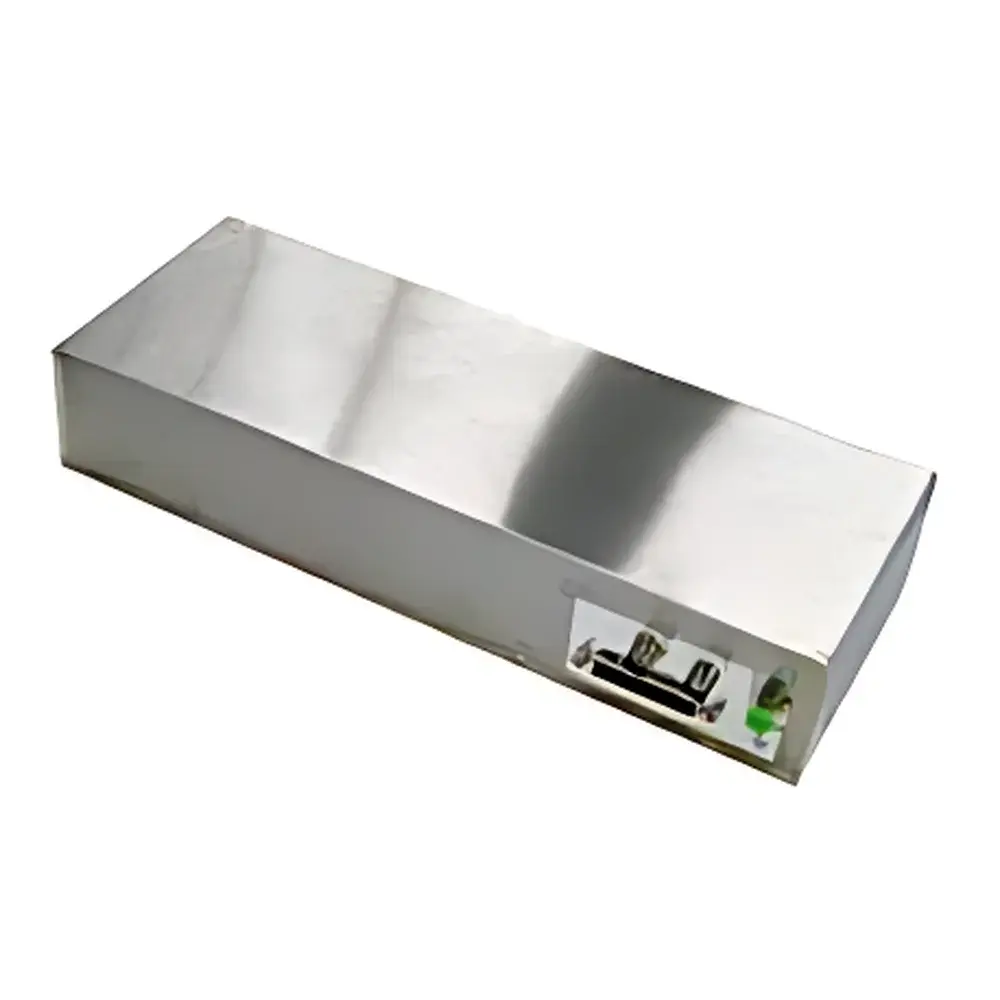
ALPS ORIGAMI Series Femtosecond & GENKI/PiLas Series Picosecond Laser Systems
| Origin | USA |
|---|---|
| Manufacturer Type | Authorized Distributor |
| Origin Category | Imported |
| Model | ORIGAMI-15 / ORIGAMI-10 / ORIGAMI-8 / GENKI-10 / GENKI-15 / GENKI-10-HPNd / GENKI-10-HPYb / SUMO-10 / SUMO-15 / PiLas PILxxx / PILxxxF |
| Output Wavelength | 375–1550 nm (model-dependent) |
| Pulse Width | <12 ps (PiLas) to <170 fs (ORIGAMI) |
| Repetition Rate | 1 Hz–100 MHz (configurable) |
| Average Power | 10 mW–1.5 W |
| RMS Amplitude Noise | <0.1% (ORIGAMI), <0.5% (GENKI/SUMO/PiLas) |
| RMS Timing Jitter | <35 fs (synchronized), <100 fs (free-running) |
| Beam Quality (M²) | <1.1 |
| Polarization Extinction Ratio | >23 dB (ORIGAMI), >13 dB (SUMO), linear polarization standard |
| Cooling | Passive air-cooled, no TEC or forced-air required |
| Warm-up Time | <10 min |
| Operating Temperature | 10 °C–40 °C |
| Dimensions (L×W×H) | 250–300 × 112–260 × 48–54 mm³ |
| Power Supply | 90–264 VAC, 47–63 Hz or 5–24 VDC (model-specific) |
Overview
The ALPS ORIGAMI, GENKI, SUMO, and PiLas laser systems represent a family of turnkey ultrafast and narrow-linewidth laser sources engineered for demanding scientific, industrial, and metrological applications. These instruments are built upon monolithic semiconductor or fiber-based oscillator architectures—eliminating complex alignment, active cooling, or external synchronization hardware. The ORIGAMI series delivers sub-200-fs pulses with exceptional amplitude and timing stability, operating at 765–785 nm, 1025–1070 nm, or 1530–1570 nm. GENKI lasers provide picosecond pulses (≤10 ps) with high average power and low noise, optimized as seed sources for amplifiers or direct use in material processing and sensing. SUMO is a single-frequency, narrow-linewidth (<10 kHz), widely tunable source ideal for coherent detection, interferometry, and long-haul distributed fiber sensing. PiLas semiconductor lasers offer wavelength coverage from 375 nm to 1550 nm with pulse widths down to 12 ps and timing jitter below 3 ps—enabling time-resolved diagnostics in photonic device testing and pump-probe spectroscopy. All systems comply with IEC 60825-1:2014 Class 4 laser safety requirements and are CE-marked for operation in laboratory and industrial environments.
Key Features
- Zero-maintenance, push-button operation: No PC, no hidden adjustment knobs, no warm-up delays—designed for unattended 24/7 deployment.
- Passive thermal management: Entirely fanless and thermoelectric-cooler (TEC)-free architecture ensures silent, vibration-free operation and eliminates condensation or airflow-induced beam path disturbances.
- Ultra-low noise performance: RMS amplitude noise <0.1% (ORIGAMI) and <0.5% (GENKI/SUMO/PiLas) over 1 hour; RMS timing jitter <35 fs (with external sync) enables sub-10-fs precision in pump-probe or optical sampling setups.
- ASE-free output: No internal optical amplifiers—ensuring clean spectral profiles, high contrast ratios (>60 dB SMSR for SUMO), and absence of amplified spontaneous emission background.
- Modular form factor: Compact benchtop footprint (as small as 250 × 230 × 54 mm³) with standardized electrical interfaces and optional PM fiber pigtailing (FC/APC or free-space collimated output).
- Robust environmental tolerance: Operational within 10–40 °C ambient range; storage rating from −15 °C to +65 °C supports field-deployable and mobile lab integration.
Sample Compatibility & Compliance
These laser systems are compatible with standard optical components including dielectric mirrors, waveplates, polarizers, nonlinear crystals (e.g., BBO, PPLN), and single-mode or polarization-maintaining fibers. ORIGAMI’s M² <1.1 beam enables diffraction-limited focusing for multiphoton microscopy or THz generation. GENKI’s high peak power supports efficient supercontinuum generation in soft-glass or photonic crystal fibers. SUMO’s narrow linewidth and FM modulation capability meet stringent requirements for coherent LIDAR, atomic vapor spectroscopy (e.g., Rb/D2 line locking), and fiber-optic gyroscopes. All models conform to ISO 11146-1:2005 (laser beam parameters), IEC 61228 (optical fiber communication safety), and support GLP/GMP-aligned audit trails when integrated with compliant data acquisition platforms. Optional 21 CFR Part 11–ready software modules are available for regulated pharmaceutical or aerospace R&D workflows.
Software & Data Management
While fully functional in stand-alone mode, each system supports optional USB- or Ethernet-connected control via ALPS LaserControl Suite—a cross-platform application enabling remote parameter configuration (repetition rate, pulse picking, modulation depth), real-time noise monitoring, and timestamped log export in CSV or HDF5 format. For PiLas systems, the EIG1000D/EIG1000AF controllers provide precise trigger delay tuning (±100 ps resolution), pre-trigger output synchronization, and jitter-compensated external triggering (TTL/NIM compatible). All firmware versions are digitally signed and traceable; configuration files include embedded metadata (serial number, calibration date, firmware hash) to satisfy ISO/IEC 17025 documentation requirements.
Applications
- Ultrafast science: Pump-probe spectroscopy, carrier dynamics in 2D materials, photoinduced phase transitions.
- Biophotonics: Multiphoton excitation microscopy (MPEM), optical coherence tomography (OCT), fluorescence lifetime imaging (FLIM).
- Frequency metrology: Optical frequency comb seeding, heterodyne detection, cavity ring-down spectroscopy (CRDS).
- Industrial sensing: Distributed acoustic sensing (DAS), Brillouin optical time-domain analysis (BOTDA), fiber Bragg grating interrogation.
- THz generation & detection: Photoconductive antenna excitation, electro-optic sampling in time-domain spectroscopy (THz-TDS).
- Quantum technologies: Single-photon source pumping, Rydberg atom excitation, cold atom interferometry.
FAQ
Do these lasers require water cooling or external chillers?
No. All models use passive air cooling only—no liquid cooling, TECs, or forced-air fans are employed. This eliminates maintenance points and mechanical vibration.
Can ORIGAMI or GENKI be synchronized to an external RF reference?
Yes. Both series support low-jitter (<35 fs RMS) optical synchronization via optional RF input (10 MHz or 100 MHz sine/TTL), enabling phase-locked operation with femtosecond timing accuracy.
Are fiber-coupled versions available with polarization-maintaining output?
Yes. ORIGAMI and SUMO offer Panda PM fiber pigtails (FC/APC) with extinction ratio >23 dB; GENKI-10-HPNd and PiLas models support custom PM fiber integration upon request.
What is the typical lifetime of the laser diodes in PiLas systems?
Rated for >20,000 hours MTBF under continuous operation at rated current and temperature—validated per Telcordia GR-468-CORE reliability standards.
Is remote monitoring supported for regulatory compliance (e.g., FDA 21 CFR Part 11)?
Yes. When paired with ALPS-certified acquisition hardware and LaserControl Suite v3.2+, full electronic signature, audit trail, and user access control are enabled per 21 CFR Part 11 Annex 11 requirements.





