
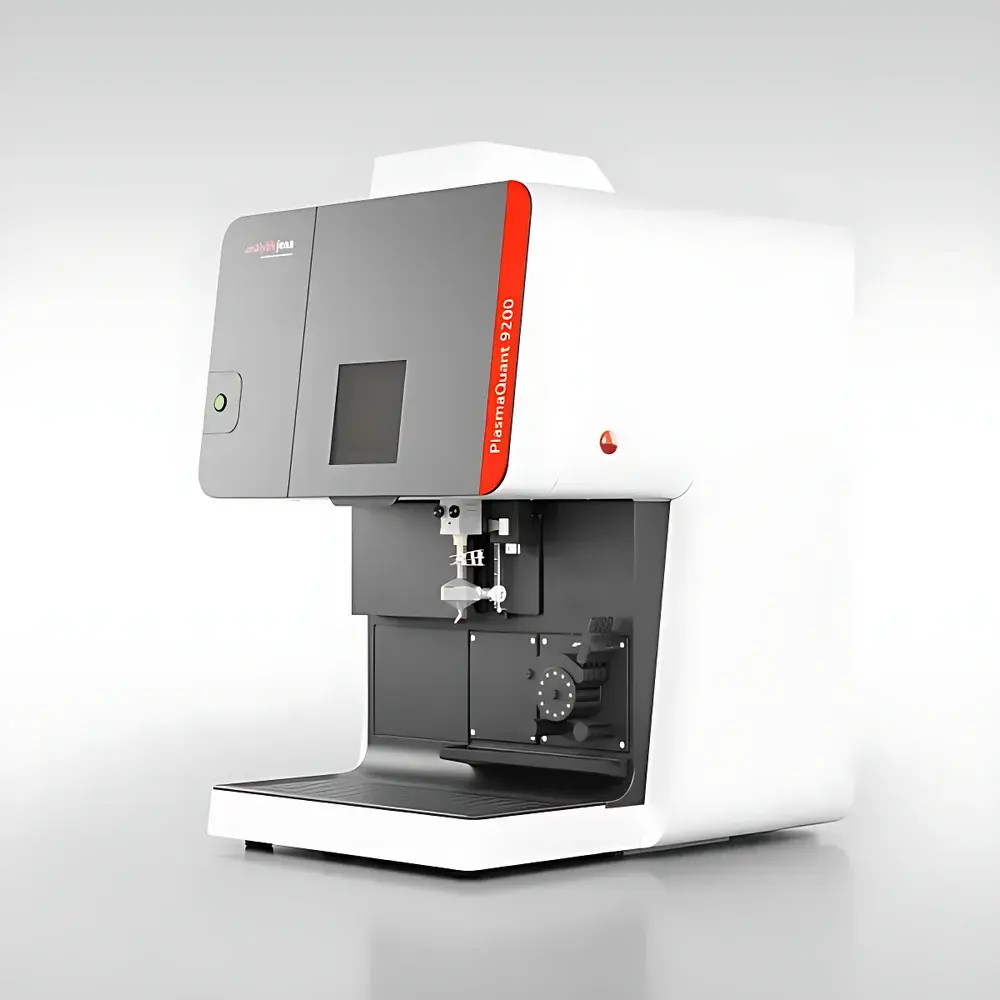
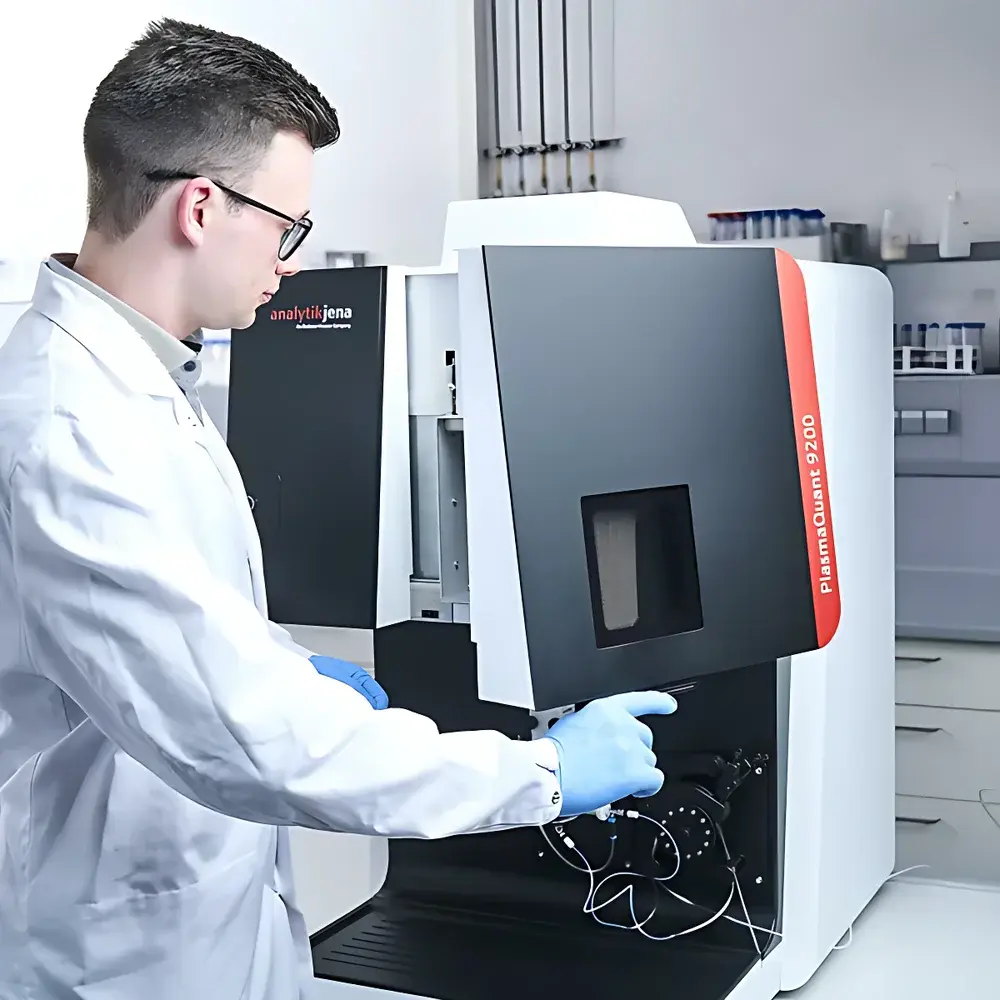
Analytik Jena PlasmaQuant 9200 High-Resolution Inductively Coupled Plasma Optical Emission Spectrometer
| Brand | Analytik Jena |
|---|---|
| Origin | Germany |
| Manufacturer | Analytik Jena AG |
| Product Type | Imported |
| Model | PlasmaQuant 9200 |
| Instrument Category | Full-Spectrum Simultaneous ICP-OES |
| Wavelength Range | 160–900 nm |
| Optical Resolution | 0.002 nm (at 200 nm) |
Overview
The Analytik Jena PlasmaQuant 9200 is a high-resolution, full-spectrum simultaneous inductively coupled plasma optical emission spectrometer (ICP-OES) engineered for trace elemental analysis with exceptional spectral fidelity and analytical robustness. Operating on the fundamental principle of atomic emission spectroscopy, the instrument atomizes and excites sample aerosols in a high-temperature argon plasma (≥6,000 K), enabling quantitative detection of metal and selected non-metal elements via their characteristic line emissions across the UV–VIS–NIR spectrum (160–900 nm). Its defining capability—0.002 nm optical resolution at 200 nm—represents the highest spectral resolving power commercially available in benchtop ICP-OES systems. This resolution directly enhances signal-to-background ratio (S/B) and lowers background equivalent concentration (BEC), critical for accurate quantification of trace analytes in complex matrices such as high-salt digests, organic solvents, or environmental waters.
Key Features
- Ultra-high-resolution optical system featuring a monolithic, aberration-corrected Czerny–Turner spectrometer with original Carl Zeiss optics, ensuring continuous wavelength coverage from 160 to 900 nm and wavelength accuracy better than ±0.0004 nm.
- Next-generation back-illuminated CCD detector with quantum efficiency >90% in UV range, pixel resolution matching optical resolution (≤0.002 nm/pixel), and dynamic range exceeding six orders of magnitude (10⁶).
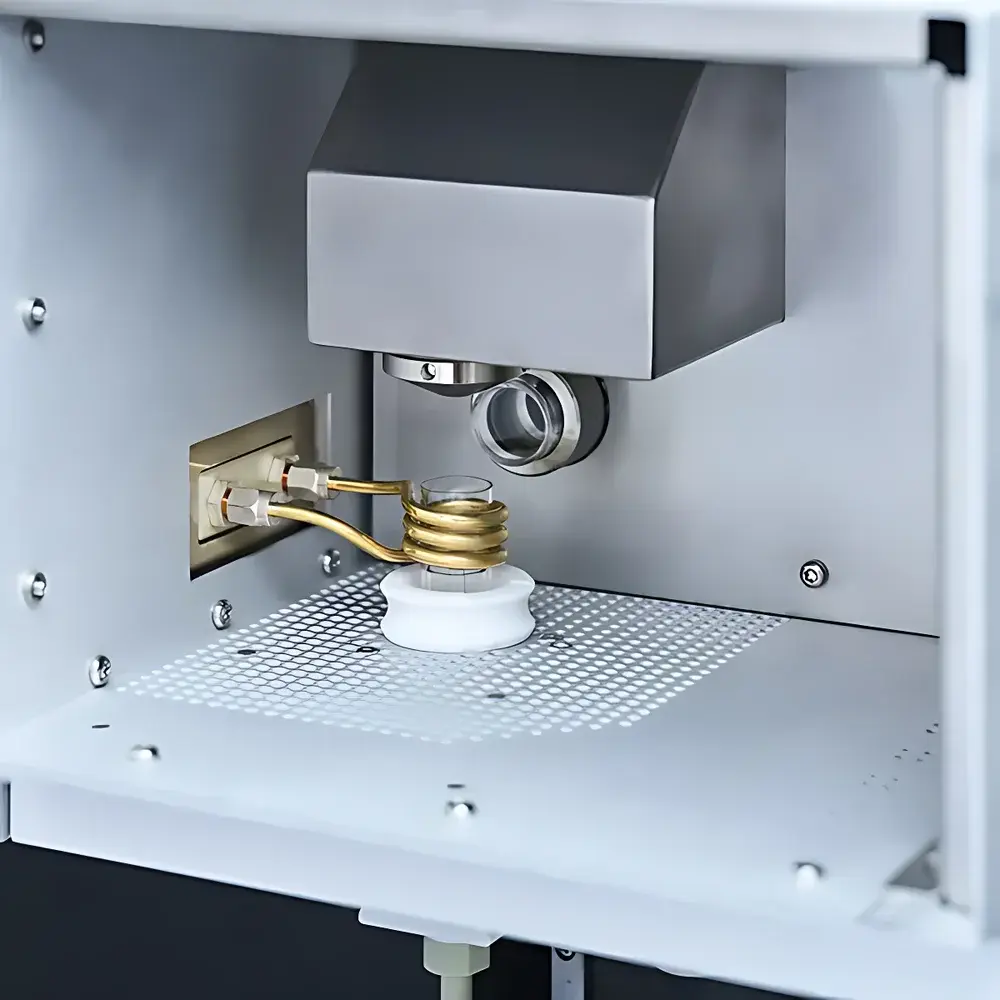
- Vertical torch configuration combined with dual-view observation (axial + radial), enabling simultaneous acquisition of both high-sensitivity axial signals and robust radial signals—eliminating manual reconfiguration and supporting true multi-concentration analysis in a single run.
- Optimized plasma generation using a 27 MHz solid-state RF generator delivering up to 1700 W output, capable of stable plasma operation with undiluted high-matrix samples (e.g., seawater, brines, crude oil digests) and reducing sample preparation burden.
- Integrated cold cone interface with argon reverse-flow purge to suppress tail-flame emission and minimize UV absorption by atmospheric O₂/H₂O; continuous argon purging of optical chamber and detector ensures long-term photometric stability.
- Self-diagnostic system (SCS) with real-time monitoring of plasma impedance, gas flow integrity, detector temperature, and optical alignment—providing actionable diagnostics compliant with GLP audit requirements.
Sample Compatibility & Compliance
The PlasmaQuant 9200 accommodates liquid samples introduced via standard nebulizers (e.g., Meinhard, Burgener) and specialized systems for organic solvents or high-solids content. Its vertical torch design minimizes salt deposition and carbon buildup, enabling direct analysis of saline matrices (up to 25% w/v NaCl) and organics (e.g., kerosene, diesel) without torch clogging or signal drift. The system meets ISO/IEC 17025 method validation requirements and supports compliance with ASTM D1944, EPA Methods 200.7 and 6010D, USP , and EN ISO 11885 for environmental and regulatory testing. Full audit trail functionality—including user action logging, parameter change history, and raw spectral data retention—is implemented in accordance with FDA 21 CFR Part 11 for regulated laboratories.
Software & Data Management
Controlled by the QuantStudio™ software platform, the PlasmaQuant 9200 delivers integrated method development, automated background correction (including multi-point polynomial and iterative interference correction), and intelligent line selection algorithms that identify optimal emission lines and detect spectral overlaps in real time. All spectra are stored in vendor-neutral HDF5 format with embedded metadata (wavelength calibration, integration time, RF power, gas flows). Software supports batch processing, statistical reporting (RSD, recovery, LOD/LOQ calculation per element), and export to LIMS via ASTM E1384-compliant interfaces. Method templates adhere to ISO 8466-1 for calibration curve evaluation and include uncertainty propagation per GUM guidelines.
Applications
The instrument is routinely deployed in high-throughput QA/QC environments requiring sub-pptr detection limits and matrix tolerance: geological survey labs analyzing rock digests for REEs; pharmaceutical manufacturers verifying catalyst residues (Pd, Pt, Ni) in APIs per ICH Q2(R2); environmental labs quantifying As, Cd, Pb, and Hg in drinking water per EU Directive 2020/2184; metallurgical facilities monitoring alloy composition and impurity profiles; and food safety labs screening for toxic elements in infant formula and dietary supplements. Its ability to measure major (e.g., Ca, Mg), minor (e.g., Mn, Zn), and trace (e.g., U, Th) elements simultaneously—without dilution or re-measurement—reduces turnaround time by ≥40% versus sequential instruments.
FAQ
What is the minimum detection limit achievable with the PlasmaQuant 9200 for common elements like Cd and Pb in aqueous standards?
Typical 3σ MDLs are 0.008 µg/L for Cd II 228.802 nm and 0.012 µg/L for Pb II 220.353 nm under optimized axial viewing and standard pneumatic nebulization.
Does the system support automated calibration verification and drift correction during sequence runs?
Yes—QuantStudio includes scheduled QC checks using internal standardization (e.g., Y or Sc) and optional bracketing standards; drift compensation is applied dynamically to all analyte intensities.
Is the optical chamber sealed and purged continuously during operation?
Yes—the entire optical path (grating, mirrors, detector) is continuously purged with high-purity argon at controlled flow rates to maintain UV transmission stability below 190 nm.
Can the PlasmaQuant 9200 be integrated into an automated sample introduction system?
It supports RS-232, Ethernet, and OPC UA protocols for seamless interfacing with autosamplers (e.g., AS-91, CETAC ASX-520) and robotic liquid handlers.
What maintenance intervals are recommended for the RF generator and torch assembly?
RF generator requires no routine maintenance beyond annual firmware updates; quartz torch lifetime exceeds 1,000 hours under typical use, with automated torch centering and alignment verification performed at startup.
Related Products






