Anko FLB2.0 Automatic Autoignition Temperature Tester
| Origin | Poland |
|---|---|
| Manufacturer Type | Authorized Distributor |
| Origin Category | Imported Instrument |
| Model | FLB2.0 |
| Price Range | USD 27,000 – 68,000 |
Overview
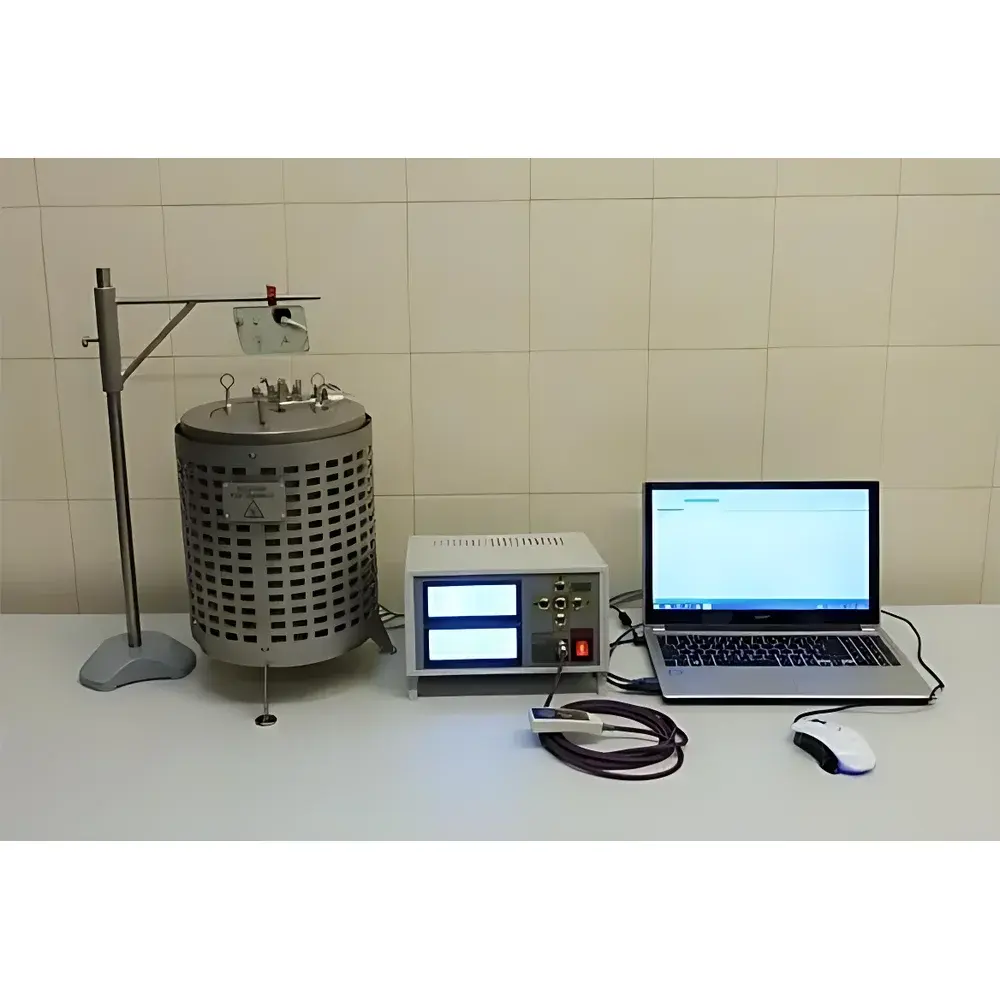
The Anko FLB2.0 Automatic Autoignition Temperature Tester is a precision-engineered laboratory instrument designed for the standardized determination of the autoignition temperature (AIT) of solid and liquid hazardous chemicals under controlled atmospheric conditions. It operates on the principle of thermal induction in a heated spherical glass flask—where a representative sample is introduced into a pre-heated chamber, and the lowest temperature at which spontaneous ignition occurs without an external ignition source is recorded. This method aligns with fundamental combustion thermodynamics and kinetic threshold modeling, ensuring traceable, repeatable results essential for hazard classification, safety data sheet (SDS) authoring, and regulatory compliance in chemical manufacturing, storage, and transport.
Key Features
- Compliant with globally recognized test standards including ASTM E659 (Standard Test Method for Autoignition Temperature of Liquid Chemicals), DIN 51794 (Determination of Ignition Temperature of Flammable Liquids), IEC 60079-4 (Explosive Atmospheres – Part 4: Method of Test for Ignition Temperature), EC Test A.15 (Auto-Ignition Temperature), GB/T 21791 (Chinese national standard for autoignition temperature of flammable liquids), and SH/T 0642 (Petroleum products – Determination of autoignition temperature).
- Programmable temperature range from 200 °C to 1200 °C, enabling evaluation across low-volatility organics, metal powders, polymers, and high-thermal-stability industrial intermediates.
- Digital solid-state temperature controller with PID algorithm ensures stable thermal equilibrium; furnace temperature control accuracy: ±0.3% of full scale or ±1 °C, whichever is greater.
- Four independent temperature monitoring channels—including flask wall, ambient gas, sample zone, and reference thermocouple—with simultaneous real-time display on integrated LCD interface (4-digit resolution, 0–1200 °C).
- Integrated USB-enabled data acquisition module supporting 1-second sampling intervals, delivering time-synchronized temperature profiles with event-tagged ignition timestamps.
- Rugged stainless-steel furnace architecture with ceramic insulation and inert-gas compatible porting (optional N₂ or air purge configurations) for reproducible oxidative environments.
Sample Compatibility & Compliance
The FLB2.0 accommodates both volatile liquids and finely divided solids—including organic peroxides, nitrocellulose derivatives, sulfur-based compounds, and metal hydrides—within standardized 10–20 µL (liquid) or 20–50 mg (solid) dosing ranges. Sample introduction is performed via pneumatically actuated quartz syringe or powder dispersion probe to minimize operator exposure and thermal disturbance. All operational protocols support GLP (Good Laboratory Practice) documentation requirements, with audit-ready calibration logs, user access controls, and electronic signature capability in optional software packages compliant with FDA 21 CFR Part 11. The system meets CE marking requirements for electrical safety (EN 61010-1) and electromagnetic compatibility (EN 61326-1), and its design facilitates third-party verification against ISO/IEC 17025 accreditation criteria for testing laboratories.
Software & Data Management
The included Windows-based acquisition and analysis software provides real-time graphical visualization of multi-channel temperature trends, automatic ignition detection using first-derivative threshold algorithms, and configurable pass/fail logic based on standard-defined stabilization windows (e.g., ≤2 °C drift over 5 minutes prior to injection). Raw datasets are exported in CSV and XML formats for integration into LIMS platforms or statistical process control (SPC) workflows. Version-controlled firmware updates, secure user role management (administrator/operator/auditor), and encrypted local database storage ensure long-term data integrity and regulatory readiness.
Applications
- Hazard classification under UN GHS and CLP Regulation (EC No. 1272/2008) for transportation and labeling.
- Process safety management (PSM) studies, including relief system design and thermal runaway analysis.
- Quality assurance of raw materials in pharmaceutical excipient, agrochemical, and battery electrolyte production.
- Research into pyrophoric behavior of nanomaterials and reactive metal powders (e.g., aluminum, magnesium, titanium).
- Validation of flame-retardant additive efficacy in polymer formulations.
FAQ
What standards does the FLB2.0 explicitly support for autoignition temperature testing?
ASTM E659, DIN 51794, IEC 60079-4, EC Test A.15, GB/T 21791, and SH/T 0642 — all implemented via hardware configuration and software protocol templates.
Is the instrument suitable for testing powdered metals or nanomaterials?
Yes — with optional powder dispersion accessories and inert-atmosphere purging, it supports safe evaluation of pyrophoric solids per ASTM E2021 guidelines.
Can test data be exported for regulatory submission?
Yes — CSV, XML, and PDF report exports include metadata (operator ID, calibration status, environmental conditions) required for OECD Test Guideline 134 and REACH dossier preparation.
Does the system support remote monitoring or networked operation?
Local USB connection is standard; Ethernet-enabled remote control and data streaming are available via optional OEM-integrated gateway modules.
What maintenance is required to sustain measurement accuracy?
Annual thermocouple calibration traceable to NIST standards, quarterly verification of furnace homogeneity (±2 °C across flask volume), and routine optical inspection of quartz components are recommended per Anko’s Maintenance Schedule M-FLB2.0 Rev.3.