
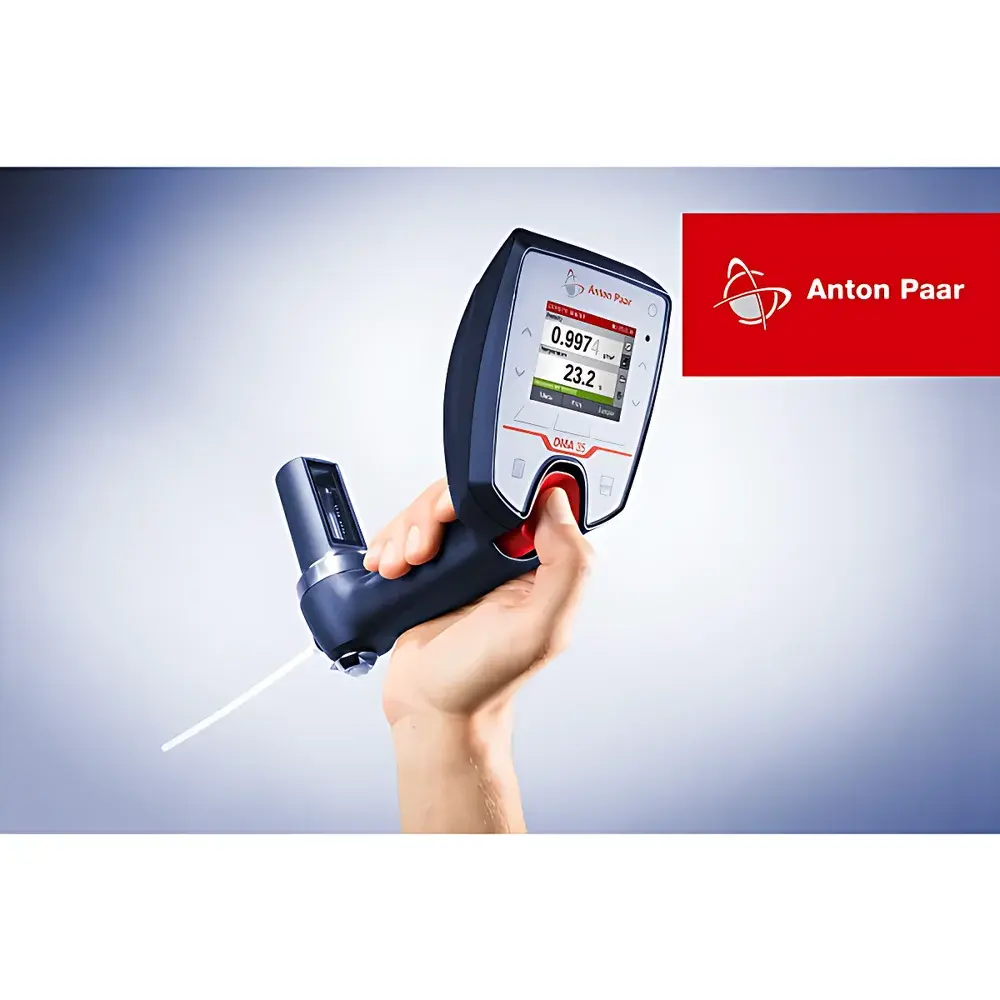
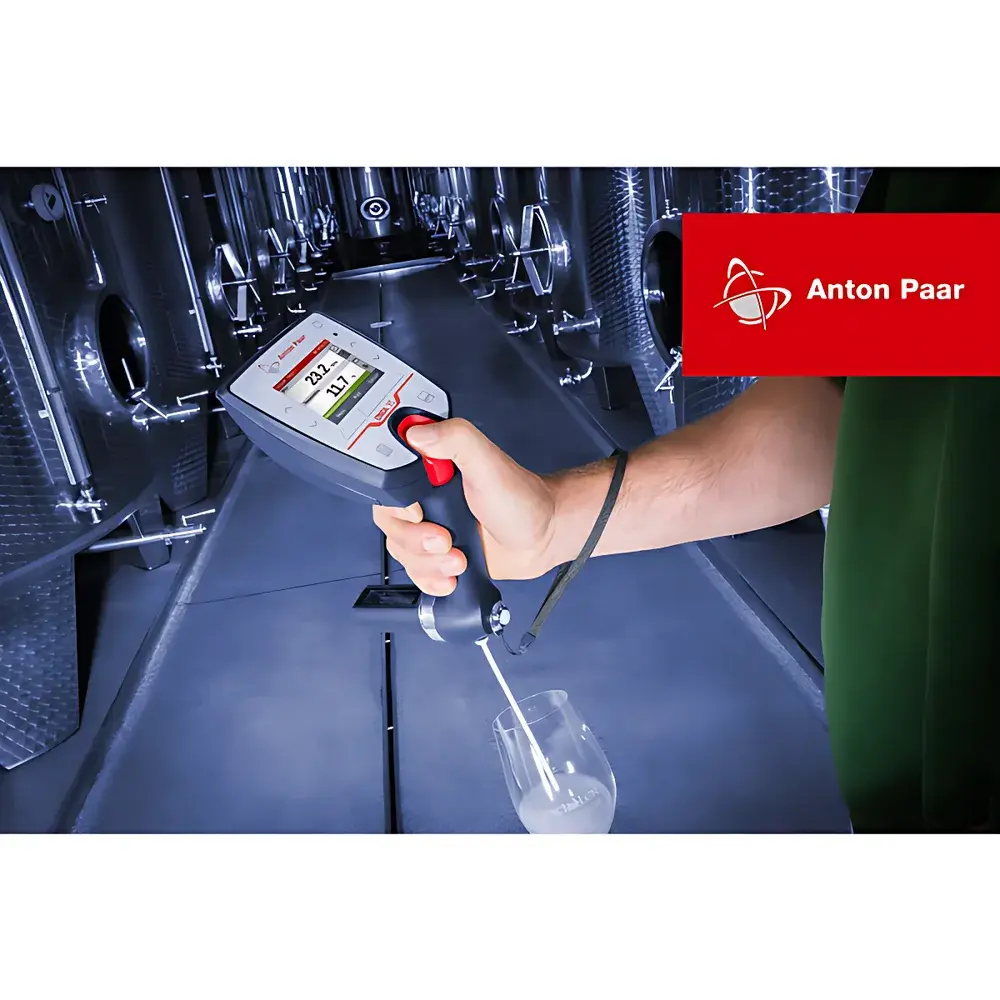
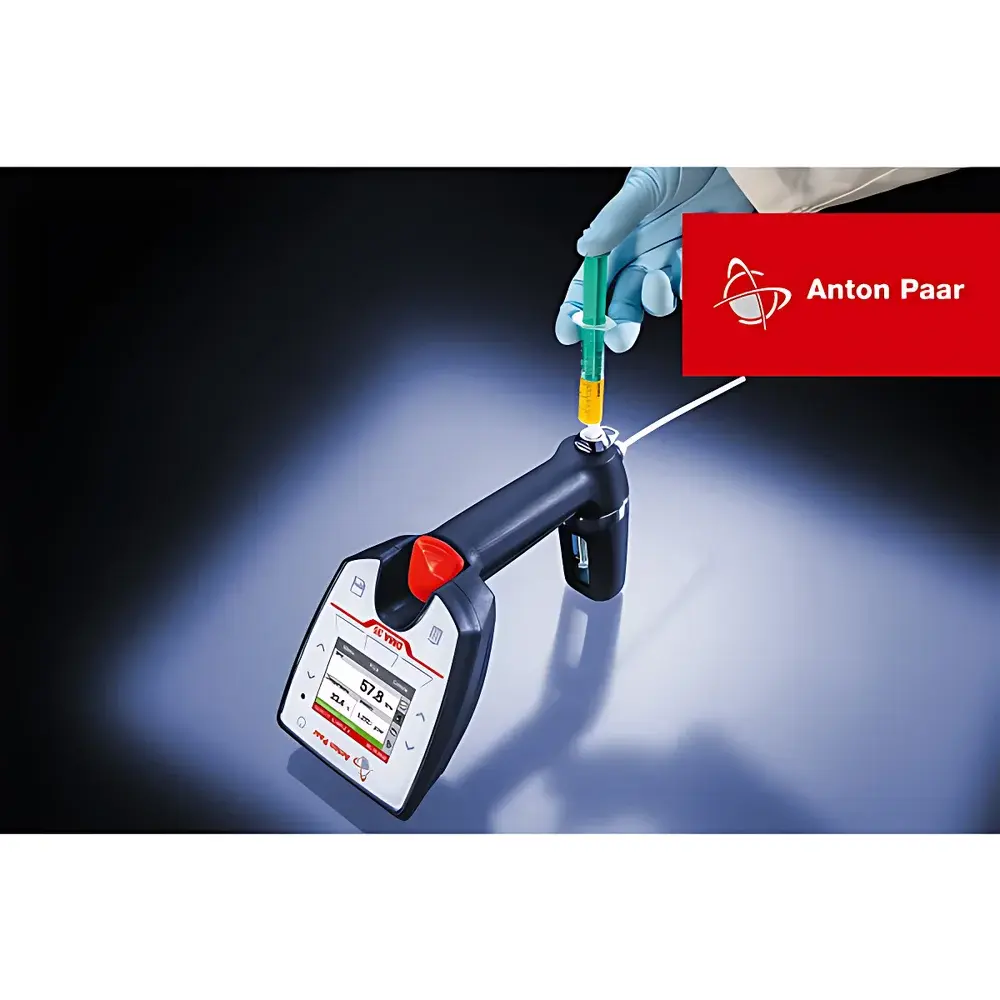
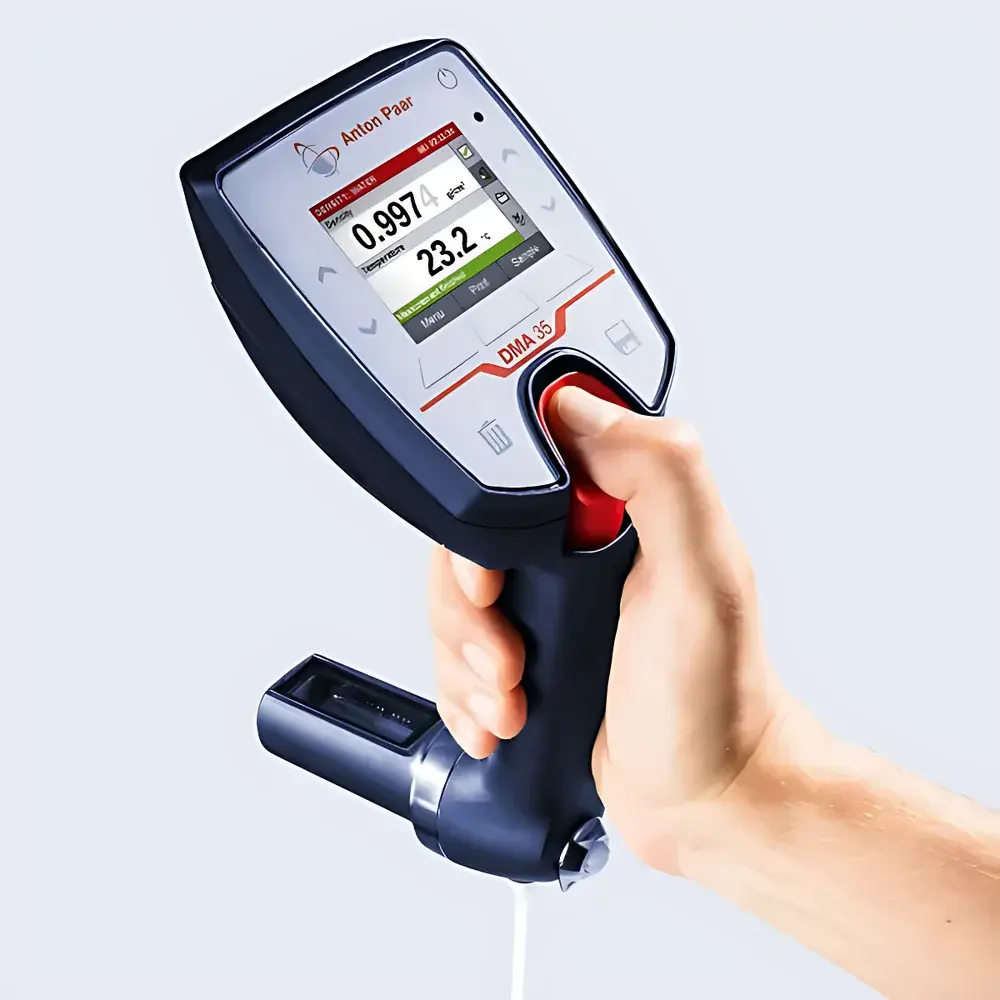
Anton Paar DMA 35 Advanced Portable Oscillating U-Tube Density Meter
| Brand | Anton Paar |
|---|---|
| Origin | Austria |
| Manufacturer Type | Original Equipment Manufacturer (OEM) |
| Product Category | Imported Instrument |
| Model | DMA 35 |
| Instrument Type | Oscillating U-tube Densimeter |
| Form Factor | Portable |
| Sample State | Liquid |
| Density Range | 0 g/cm³ to 3 g/cm³ |
| Density Accuracy | ±0.001 g/cm³ (for samples with viscosity < 300 mPa·s and density < 2 g/cm³) |
| Temperature Range | 0 °C to 40 °C (32 °F to 104 °F) |
| Repeatability (std. dev.) | ±0.0005 g/cm³ |
| Resolution | 0.0001 g/cm³ |
| Minimum Sample Volume | 2 mL |
| Environmental Rating | IP54 |
| ATEX/IECEx Certification | II 2G Ex ib IIB T4 Gb (DMA 35 Ex & DMA 35 Ex Petrol variants) |
| Compliance | ASTM D7777, IP 559 |
| Connectivity | Bluetooth® 4.2, RFID reader (integrated) |
| Data Storage | Up to 1,200 measurements, 250 sample IDs, 30 user-defined methods |
| Power | 3 × 1.5 V LR06 AA alkaline batteries |
| Weight | 660 g |
| Dimensions (L×W×H) | 245 mm × 103 mm × 126 mm |
Overview
The Anton Paar DMA 35 is an advanced portable oscillating U-tube density meter engineered for high-precision, on-site density and concentration determination of liquid samples. Based on the fundamental physical principle of oscillating U-tube metrology—where the resonant frequency of a precisely machined glass U-tube filled with sample correlates directly with its density—the DMA 35 delivers laboratory-grade accuracy in a rugged, handheld format. Unlike traditional hydrometers or pycnometers, it eliminates operator-dependent reading errors and temperature correction dependencies through integrated Peltier-assisted temperature control and real-time viscosity compensation algorithms. Its core architecture adheres to ISO 5725 principles for reproducibility assessment and supports traceable measurement chains compliant with GLP and ISO/IEC 17025 requirements. Designed for field deployment across chemical, petrochemical, food & beverage, pharmaceutical, and battery manufacturing sectors, the DMA 35 operates reliably under ambient conditions ranging from −10 °C to +50 °C (standard version), with explosion-proof variants certified for Zone 1 hazardous areas per ATEX and IECEx directives.
Key Features
- True portable density metrology: Measures density from 0 to 3 g/cm³ with ±0.001 g/cm³ accuracy and 0.0001 g/cm³ digital resolution
- Intelligent oscillating tube design (Austrian Patent AT516421 B1; EP3015847 B1): Optimized sensor geometry enables automatic bubble displacement from the measurement cell, ensuring unambiguous signal acquisition
- Viscosity-compensated algorithm: Corrects density output for samples up to 300 mPa·s, eliminating systematic bias in viscous media such as syrups, crude oil fractions, or battery electrolytes
- Ruggedized industrial enclosure: IP54-rated housing with overmolded rubber bumper, chemical-resistant surface finish, and shock-absorbing measurement cell protection sleeve
- One-handed operation: Capacitive touch interface functional with gloves; gesture-based start/stop control; auto-rotating display for optimal readability in any orientation
- Hazardous area capability: DMA 35 Ex and DMA 35 Ex Petrol models certified to ATEX II 2G Ex ib IIB T4 Gb and IECEx Ex ib IIB T4 Gb for safe use in flammable atmospheres
- Integrated connectivity: Onboard Bluetooth® 4.2 for wireless data export (CSV/TXT), direct printing, and remote configuration; embedded RFID reader for rapid method recall via tagged sample containers
Sample Compatibility & Compliance
The DMA 35 is validated for routine analysis of aqueous solutions, hydrocarbons, alcohols, acids (including H₂SO₄ up to 30 wt%), fermentation broths, wort, wine must, and petroleum distillates. Its measurement cell—fabricated from borosilicate glass with sapphire windows and LED backlighting—enables visual verification of fill level and bubble presence. The instrument conforms to ASTM D7777 (standard test method for density of petroleum products by digital density meter) and IP 559 (Institute of Petroleum standard for density determination of liquid hydrocarbons). All Ex-certified versions undergo rigorous type testing per EN 60079-0 and EN 60079-11. Calibration traceability follows NIST- or PTB-traceable reference standards, and internal audit logs comply with FDA 21 CFR Part 11 requirements for electronic records and signatures when used in regulated environments.
Software & Data Management
Data integrity is maintained through a secure, timestamped local database storing up to 1,200 measurements—including density, temperature, sample ID, operator tag, and method parameters. Each entry is associated with a unique sample identifier (250 preloaded or user-defined IDs) and linked to one of 30 programmable measurement methods. Bluetooth-enabled synchronization exports structured CSV or TXT files directly to Windows/macOS PCs or mobile devices without proprietary software. Measurement reports include full metadata (e.g., ambient temperature, battery status, firmware revision) to support root-cause analysis during QA/QC investigations. Firmware updates are delivered via USB or Bluetooth, and audit trails record all configuration changes, calibration events, and user logins—essential for GLP/GMP compliance and internal quality audits.
Applications
- Battery maintenance: Rapid determination of sulfuric acid concentration in lead-acid battery electrolytes to assess state-of-charge and predict service life
- Brewing & winemaking: Real-time monitoring of wort density (°Plato), fermenting beer (apparent attenuation), and finished wine (alcohol content via alcohol-concentration tables)
- Petrochemical field testing: On-the-spot density screening of crude oil cuts, diesel blends, and gasoline formulations per ASTM D1298 and D4052 protocols
- Chemical manufacturing: In-process verification of solvent purity, acid/base titration endpoints, and polymer solution concentrations
- Food quality assurance: Brix measurement of fruit juices, sugar syrups, and dairy concentrates without sample dilution or thermal equilibration delays
- Hazardous site inspection: Safe density profiling of flammable solvents (e.g., acetone, toluene, ethanol) in refineries, tank farms, and loading docks
FAQ
What is the maximum sample temperature the DMA 35 can handle during measurement?
The instrument’s internal temperature control maintains the measurement cell between 0 °C and 40 °C. However, it accepts samples at temperatures up to 100 °C—critical for hot wort analysis in breweries—while automatically compensating for thermal expansion effects.
Does the DMA 35 require external power or PC connection for basic operation?
No. It operates autonomously on three standard AA alkaline batteries (runtime > 10 hours continuous use) and stores all data internally. PC connectivity is optional and used solely for data export or firmware updates.
How does the instrument ensure measurement repeatability in dusty or humid outdoor environments?
Its IP54-rated enclosure prevents dust ingress and resists water splashes from any direction. The capacitive keypad remains responsive with wet or gloved hands, and the sealed optical path protects the oscillation sensor from environmental contamination.
Can the DMA 35 measure highly viscous or particulate-laden samples?
It is optimized for homogeneous liquids. Samples exceeding 300 mPa·s require manual viscosity input for compensation; suspended solids or undissolved particles may obstruct the 2 mL capillary fill path and are not recommended.
Is calibration verification possible in the field without sending the unit to a service center?
Yes. Users can perform two-point verification using certified density standards (e.g., air and water or air and reference fluid) and generate calibration reports with uncertainty budgets aligned with ISO/IEC 17025 Annex A.3 guidelines.



