
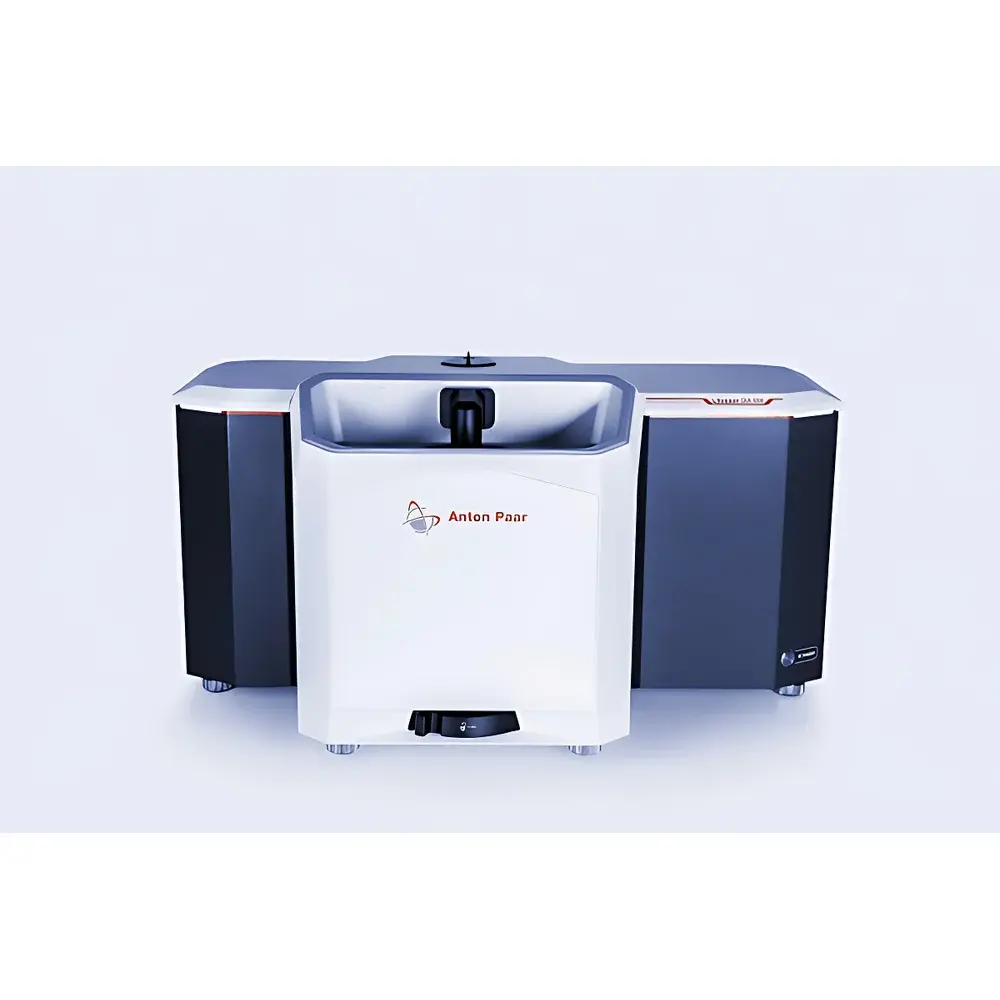
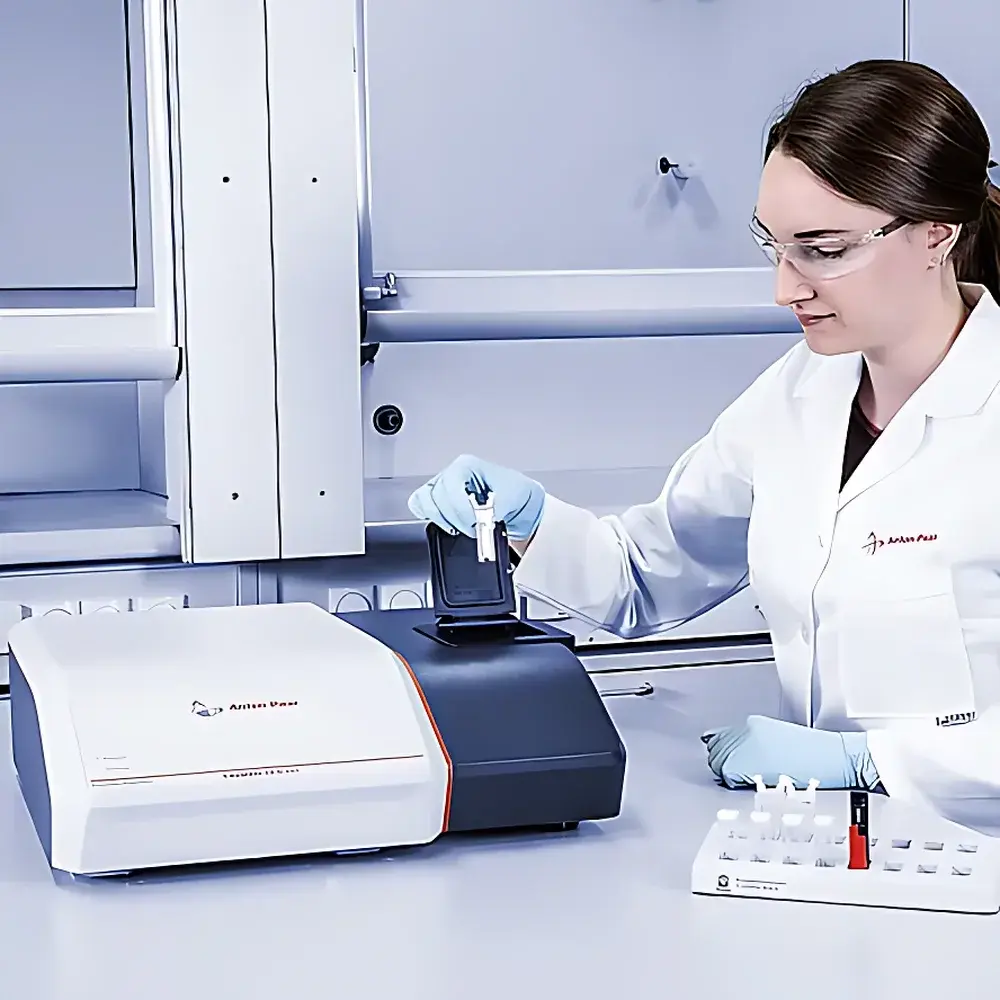
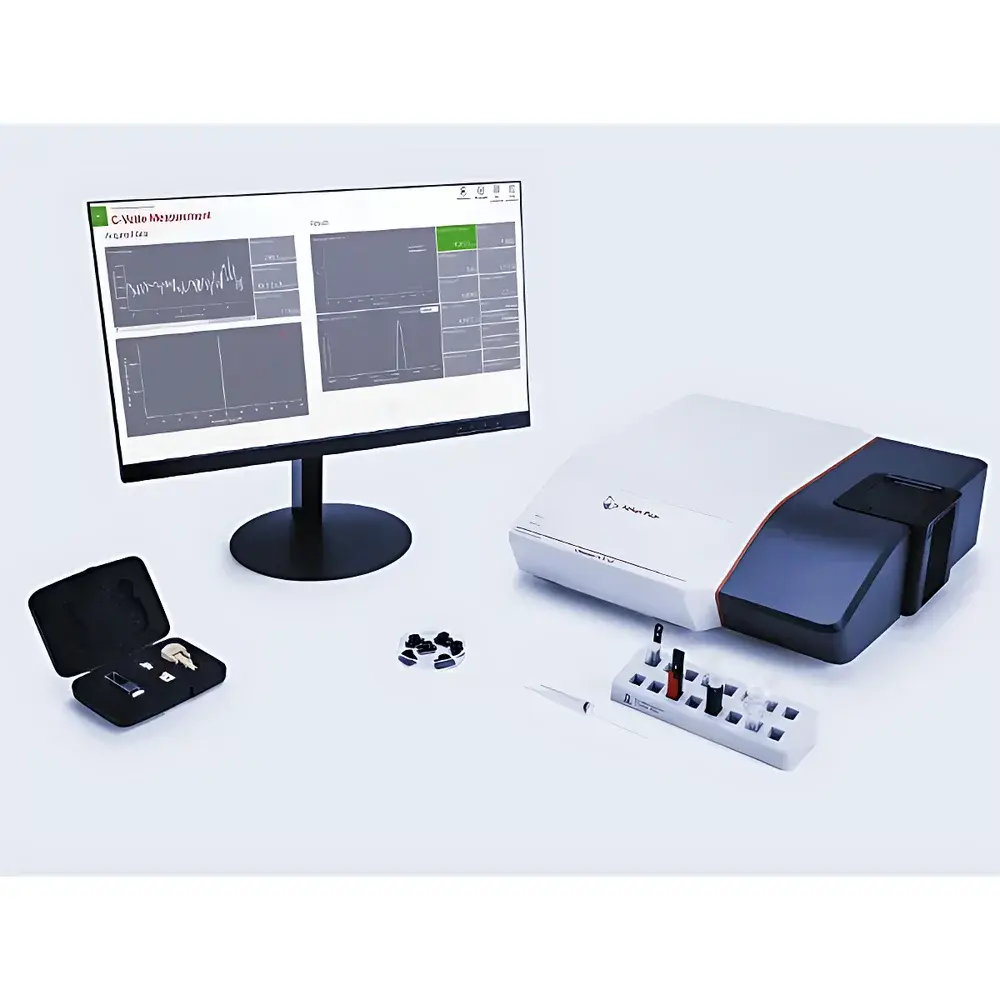
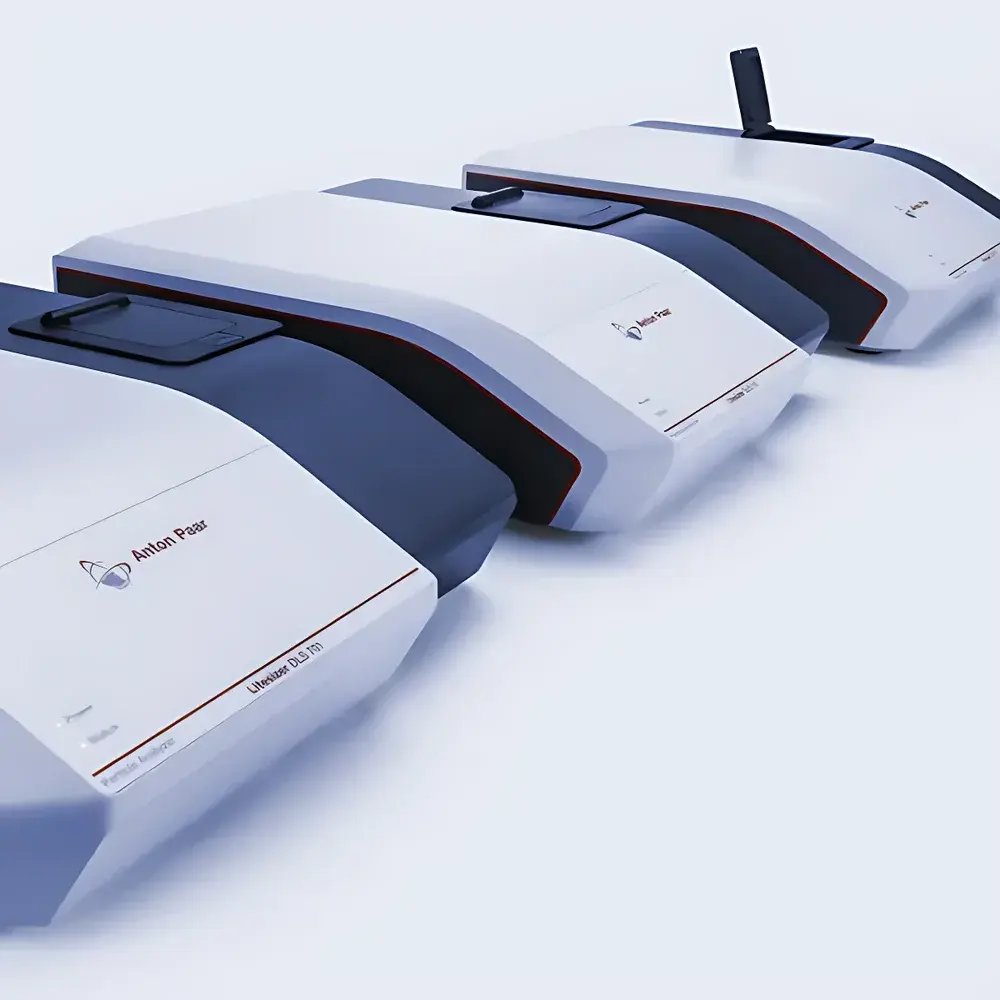
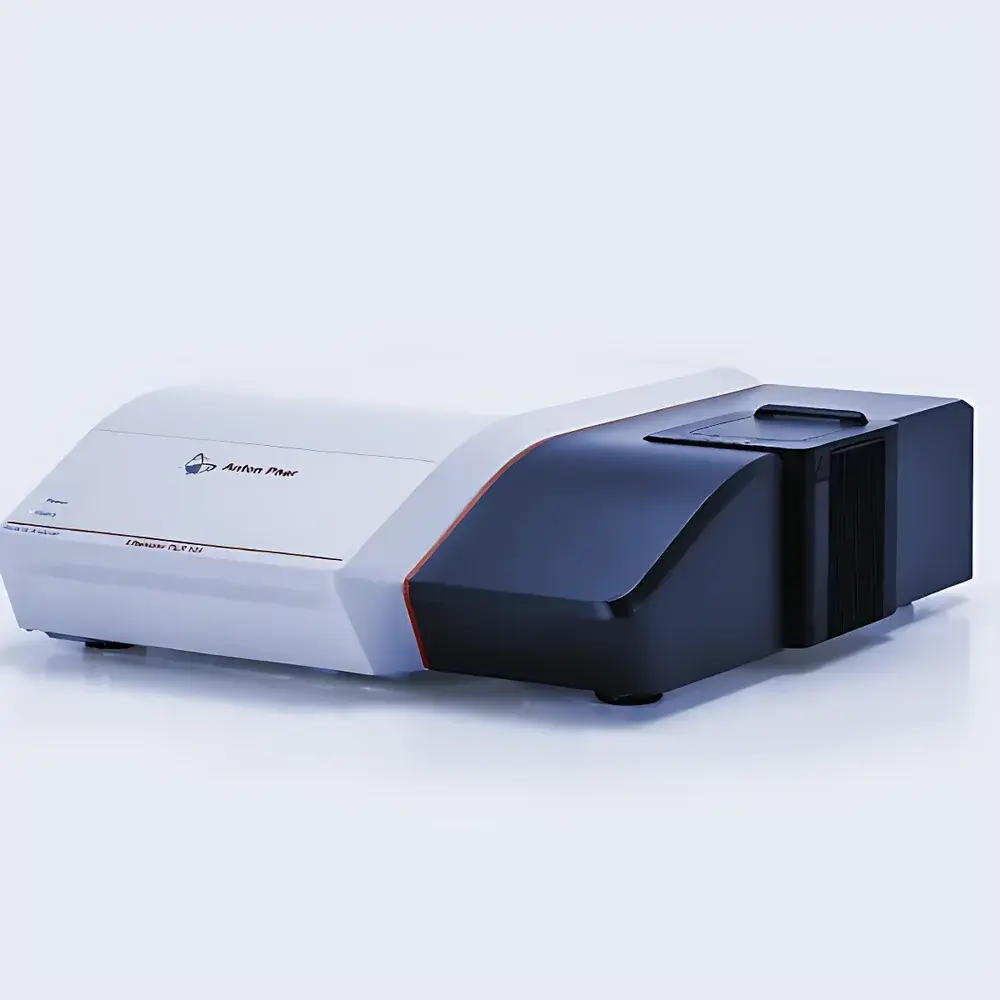
Anton Paar Litesizer DLS Series Nanoparticle Size and Zeta Potential Analyzer
| Brand | Anton Paar |
|---|---|
| Origin | Austria |
| Manufacturer Type | Original Equipment Manufacturer (OEM) |
| Import Status | Imported |
| Model | Litesizer DLS 101 / 501 / 701 |
| Dispersion Method | Dry & Wet Dispersion |
| Instrument Type | Laboratory Laser-Based Particle Sizing System |
| Measurement Range | 0.3 nm – 12 μm (particle diameter) |
| Repeatability | ±2% |
| Measurement Time | < 60 s |
Overview
The Anton Paar Litesizer DLS Series is a high-precision, benchtop dynamic light scattering (DLS) and electrophoretic light scattering (ELS) instrument engineered for comprehensive nanoparticle characterization in research and quality control laboratories. It simultaneously delivers particle size distribution (PSD), zeta potential, molecular weight (via static light scattering, SLS), refractive index, and particle concentration — all within a single platform. The system operates on the fundamental principles of Brownian motion analysis (for DLS), phase-analysis light scattering (PALS) enhanced by Anton Paar’s proprietary cmPALS (combined multi-angle PALS) technology, and Mie theory-based optical modeling for concentration quantification. Designed for regulatory-compliant environments, the Litesizer DLS series supports traceable, reproducible measurements across a broad dynamic range — from sub-nanometer macromolecules (e.g., proteins, peptides) to colloidal dispersions up to 12 μm — with minimal sample consumption and no calibration requirements for routine operation.
Key Features
- Multi-Angle Particle Sizing (MAPS) technology with automatic angle selection at 15°, 90°, and 175° — enabling optimized resolution for polydisperse, aggregated, or anisotropic samples while minimizing angular bias and optical artifacts.
- Continuous real-time transmittance monitoring throughout measurement — detecting sedimentation, aggregation, or instability events as they occur, thereby ensuring data integrity and enabling adaptive measurement termination.
- cmPALS (combined multi-angle PALS) zeta potential measurement — mitigating electrode aging effects and electric field gradient distortions through patented Omega Cuvette geometry, delivering ±3% repeatability and extended operational stability over time.
- Integrated refractive index measurement (1.28–1.50, ±0.5%) and temperature-controlled solvent characterization — critical for accurate DLS and ELS calculations under variable formulation conditions (EP 3 023 770).
- Fluorescence and polarization filter options (available on DLS 501/701) — supporting advanced applications such as quantum dot concentration analysis, anisotropy studies, and background-subtracted sizing in complex matrices.
- Ultra-low sample volume requirements: as little as 1.5 µL for size/zeta measurements (DLS 701), enabling analysis of precious or synthetically limited biomaterials.
Sample Compatibility & Compliance
The Litesizer DLS series accommodates aqueous and organic dispersions, protein solutions, liposomes, polymer nanoparticles, metal colloids, and emulsions — across conductivity ranges up to 200 mS/cm and concentrations from 0.1 mg/mL (lysozyme) to 70% w/v (high-viscosity suspensions). All models comply with ISO 22412:2017 (DLS), ISO 13099-2:2012 (zeta potential), and ASTM E2490-15 (nanoparticle size standards). Kalliope software is validated for 21 CFR Part 11 compliance, including electronic signatures, audit trails, role-based access control, and immutable data archiving — fulfilling GLP, GMP, and pharmaceutical development requirements. Instrument qualification documentation (IQ/OQ/PQ) templates are provided to support laboratory validation workflows.
Software & Data Management
Kalliope — the purpose-built, single-page interface software — eliminates workflow fragmentation by unifying parameter input, raw correlation function visualization, real-time transmittance feedback, and result interpretation in one view. Measurement initiation requires only three mouse clicks; standard reports (PDF/Excel) are auto-generated with customizable templates, batch processing, and metadata tagging. Advanced features include deconvolution algorithms for multimodal distributions, SLS-based molecular weight calculation (300 Da – 20 MDa), and concentration analysis via Mie theory (10⁸–10¹³ particles/mL). All data files are stored in vendor-neutral, timestamped .kdp format with embedded instrument configuration, environmental logs, and raw photon count traces — ensuring full traceability and reprocessing capability.
Applications
- Biopharmaceutical development: monitoring monoclonal antibody aggregation, PEGylation efficiency, and liposomal encapsulation stability.
- Nanomedicine QC: verifying batch-to-batch consistency of iron oxide nanoparticles, dendrimers, and siRNA complexes.
- Materials science: characterizing quantum dots, carbon nanotubes, and catalytic nanoparticles under varying pH/ionic strength conditions.
- Food & cosmetics R&D: assessing emulsion droplet size evolution during storage, surfactant efficacy, and pigment dispersion homogeneity.
- Academic research: correlating hydrodynamic diameter with conformational changes in intrinsically disordered proteins or stimuli-responsive polymers.
FAQ
What is the smallest detectable particle size with the Litesizer DLS series?
The system achieves reliable detection down to 0.3 nm (hydrodynamic diameter) using high-sensitivity avalanche photodiode detection and optimized 658 nm laser optics.
Does the instrument require external calibration standards for routine use?
No — the Litesizer DLS series employs absolute intensity referencing and built-in refractive index correction, eliminating the need for polystyrene latex standards in daily operation.
Can the same cuvette be used for both DLS and zeta potential measurements?
Yes — the Omega Cuvette is designed for dual-mode operation, integrating gold electrodes and low-gradient geometry for stable electrophoretic mobility assessment without hardware switching.
How does MAPS improve resolution compared to single-angle DLS?
By acquiring independent autocorrelation functions at 15°, 90°, and 175°, MAPS decouples contributions from large aggregates, primary particles, and dust — resolving populations differing by less than 1.5× in diameter.
Is Kalliope software compatible with networked laboratory information management systems (LIMS)?
Yes — Kalliope supports automated data export via secure FTP, REST API integration, and direct SQL database write capabilities for enterprise-scale data ingestion and reporting.



