
AquapHOx-LX Underwater Dissolved Oxygen, pH, and Temperature Multiparameter Logger
| Origin | Germany |
|---|---|
| Manufacturer Type | Authorized Distributor |
| Origin Category | Imported |
| Model | AquapHOx-LX |
| Pricing | Upon Request |
Overview
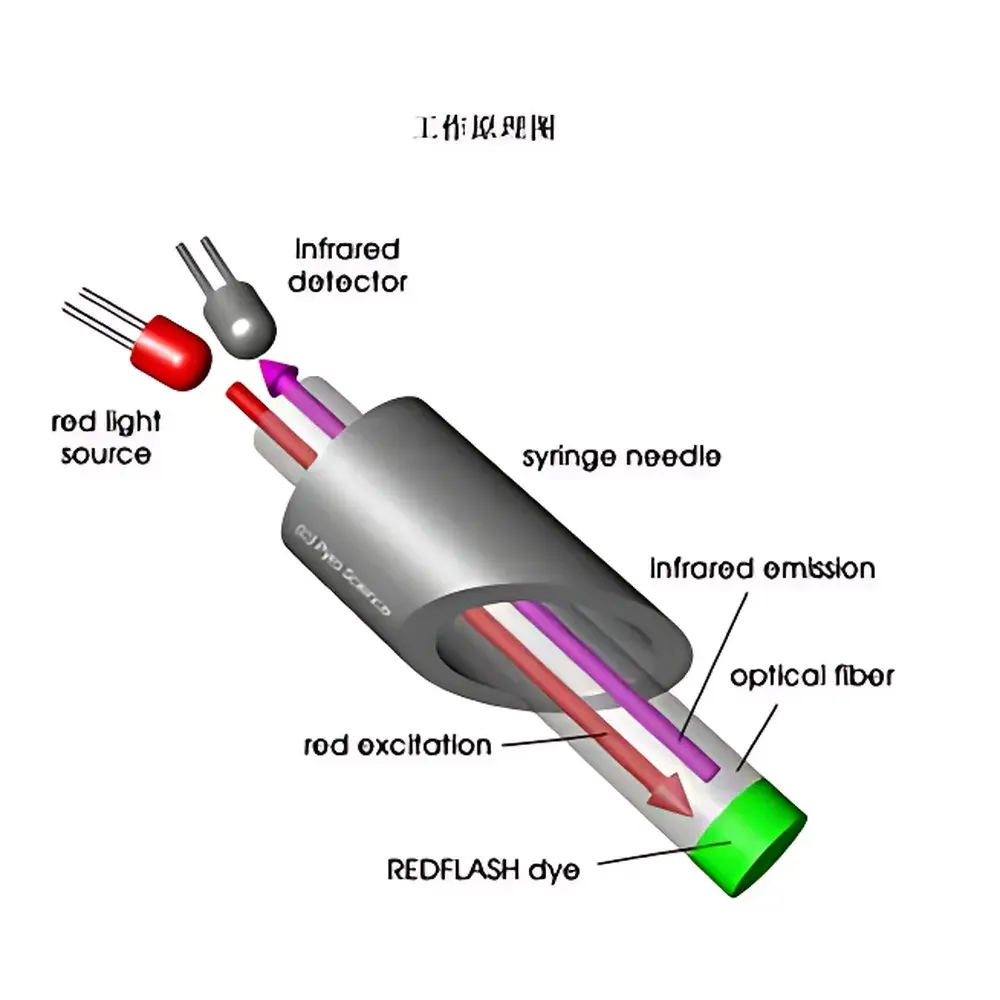
The AquapHOx-LX is a high-precision, submersible multiparameter logger engineered for long-term, autonomous monitoring of dissolved oxygen (DO), pH, and temperature in marine and coastal environments. It employs RedFlash (RF) optical sensing technology—a robust, ratiometric fluorescence-based method that eliminates electrochemical drift and minimizes cross-sensitivity between parameters. The system integrates a compact, pressure-rated host unit with interchangeable optical sensor cartridges, enabling simultaneous, non-invasive measurement of DO, pH, and temperature via a single excitation–emission optical pathway. RF technology utilizes red-orange LED excitation (610–630 nm) to activate oxygen- and proton-sensitive dye layers immobilized on optical sensor tips; the resulting near-infrared fluorescence (760–790 nm) is quantified by an integrated photodiode. Intensity and lifetime decay characteristics of the emitted signal are independently correlated to partial pressure of O₂, H⁺ activity (pH), and thermal quenching—enabling decoupled, high-fidelity parameter resolution. Designed for deployment from shallow coastal reefs to abyssal zones, the AquapHOx-LX meets stringent requirements for oceanographic time-series studies, hypoxia mapping, carbonate system monitoring, and benthic chamber experiments.
Key Features
- Autonomous operation with industrial-grade 4 GB flash memory—capable of storing up to 40 million data points without external power or PC connectivity
- Depth-rated variants: deep-sea model certified to 4000 m (400 bar static pressure); shallow-water variant rated to 100 m (10 bar)
- Titanium (deep-sea) or POM (shallow-water) housing—corrosion-resistant, low-biofouling, and optimized for hydrodynamic stability
- Modular optical sensor interface (SUB underwater connector) supporting rapid field-swappable DO, pH, and temperature sensor cartridges
- Three specialized O₂ sensor options: full-range (0–23 mg/L, <3 s t₉₀), ultra-trace (0–0.09 mg/L, detection limit 0.05 µg/L, <10 s t₉₀), and ultra-fast (0–23 mg/L, <0.3 s t₉₀)
- pH sensors available in three calibrated ranges (6.0–8.0, 7.0–9.0, or full seawater range), with resolution ≤0.003 pH units at pH 7–8 and salt tolerance 10–40 PSU
- Integrated optical temperature sensor + optional external NTC thermistor (0.005 °C resolution, ±0.05 °C accuracy, 0.5 s response)
- Rechargeable Li-polymer battery (1250 mAh); full charge in ≤2 hours; operational endurance up to 12 months at 10-minute sampling intervals
Sample Compatibility & Compliance
The AquapHOx-LX is validated for continuous in situ use across diverse aquatic matrices—including open-ocean water columns, mesopelagic and bathypelagic zones, coral reef lagoons, estuarine gradients, sediment–water interfaces, and enclosed respirometry chambers. Its optical sensors exhibit negligible salinity dependence (O₂ sensors: 0–50 PSU; pH sensors: 10–40 PSU), eliminating need for real-time salinity compensation during data reduction. All sensor calibrations adhere to traceable protocols aligned with ISO 5814 (DO), ISO 10523 (pH), and ASTM D1293 (pH of water). The device architecture supports GLP-compliant data integrity: timestamped records include sensor ID, calibration epoch, battery voltage, pressure, and diagnostic flags. Firmware and software comply with EU RoHS and REACH directives; mechanical design conforms to EN 61000-6-2/6-4 for electromagnetic compatibility in marine instrumentation environments.
Software & Data Management
The AquapHOx Control Suite (v3.x) is a Windows-based desktop application providing full configuration, calibration, and post-processing functionality. Users can define custom sampling schedules (1 s to 24 h intervals), configure alarm thresholds, perform two-point pH and multi-point O₂ calibrations using certified standards (e.g., Winkler titration reference for DO; NIST-traceable buffer solutions for pH), and export time-stamped datasets in CSV, MATLAB (.mat), or netCDF-4 format—ensuring interoperability with Ocean Data View, ERDDAP, and Python-based analysis pipelines (e.g., xarray, pandas). The software enforces audit-trail logging per FDA 21 CFR Part 11 requirements when enabled, recording all user actions, parameter changes, and calibration events with digital signature support. Raw fluorescence decay curves and spectral diagnostics are accessible for advanced validation and uncertainty quantification.
Applications
- Long-term hypoxia monitoring in continental shelf dead zones and upwelling systems
- High-resolution O₂ profiling across sediment–water boundaries (mm-scale vertical resolution achievable with microsensor integration)
- Seawater carbonate chemistry studies: concurrent pHT and dissolved O₂ tracking for net community production estimates
- In situ validation of satellite-derived ocean color algorithms for DO and pH proxies
- Non-invasive metabolic rate measurements in benthic incubation chambers and microbial fuel cells
- Time-series observatories (e.g., EMSO, OceanSITES) requiring >1-year unattended operation under extreme pressure and biofouling conditions
FAQ
What is the maximum deployment duration at 1-second sampling frequency?
At 1 Hz sampling, the AquapHOx-LX records continuously for approximately 1 week on a full charge, storing all data internally without interruption.
Can the same sensor cartridge measure both DO and pH simultaneously?
No—each optical cartridge is dedicated to a single parameter (DO, pH, or temperature). However, the host unit reads all connected sensors synchronously, enabling true concurrent multiparameter acquisition.
Is firmware update supported in the field?
Yes—firmware updates are delivered via USB 2.0 and applied without requiring sensor recalibration; version history and rollback capability are maintained in device memory.
How is sensor drift corrected during multi-month deployments?
The RF platform exhibits intrinsic long-term stability (<0.5% signal drift/year). For mission-critical applications, in situ zero-point checks using nitrogen-sparged water or certified buffer solutions are recommended every 3–6 months.
Does the system support external auxiliary sensors (e.g., conductivity, turbidity)?
Not natively—the AquapHOx-LX is optimized for its core triad of parameters. Integration with third-party CTDs or environmental loggers requires external synchronization via TTL triggers or NMEA 0183 timestamps.
Related Products







