
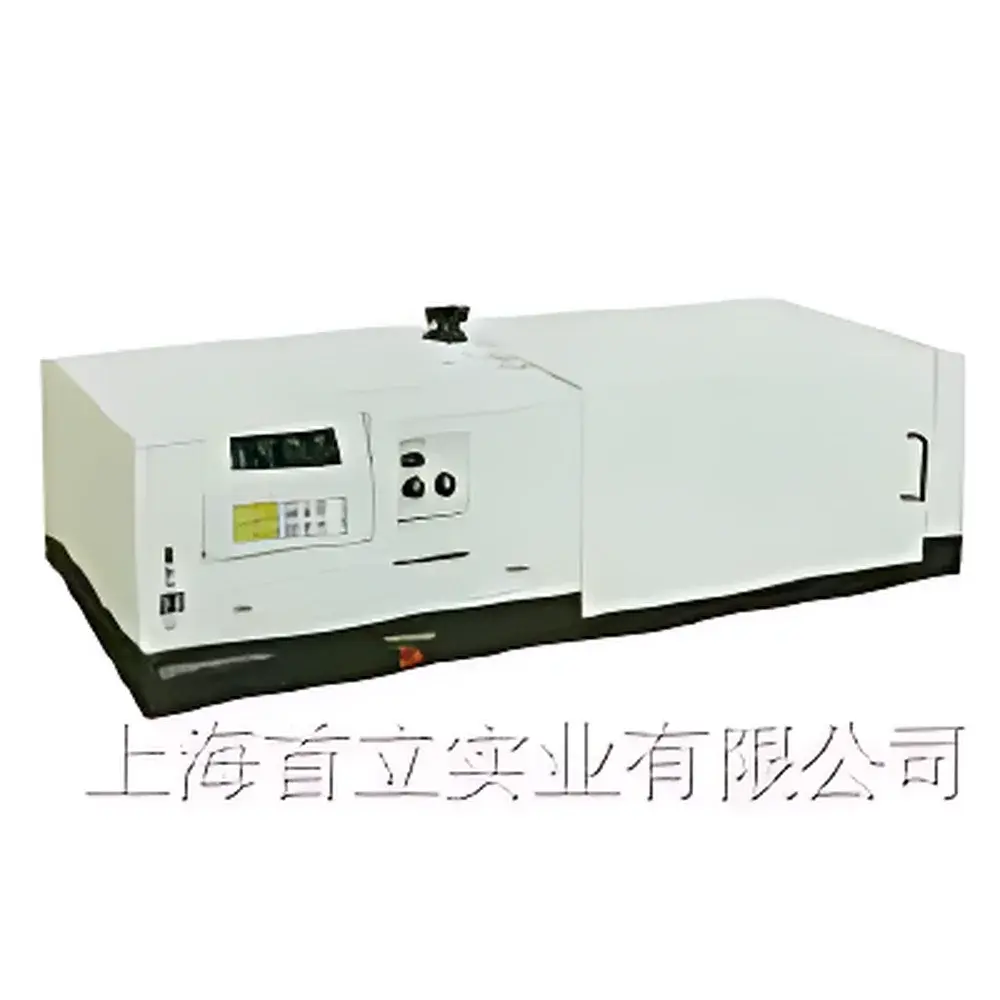
ASA-1 Colorimeter for Transparent Plastic Sheets
| Origin | Japan |
|---|---|
| Manufacturer Type | Authorized Distributor |
| Origin Category | Imported |
| Model | ASA-1 |
| Pricing | Available Upon Request |
Overview
The ASA-1 Colorimeter for Transparent Plastic Sheets is a precision optical measurement instrument engineered for objective, repeatable color evaluation of optically clear polymeric materials—including polycarbonate, acrylic (PMMA), PET, and cellulose acetate sheets. Unlike general-purpose colorimeters designed for opaque or diffusely reflecting surfaces, the ASA-1 employs a dedicated transmission-based geometry optimized for high-clarity substrates. It operates on the CIE 1931 standard observer model and utilizes calibrated LED illumination with spectral power distribution traceable to NIST standards. The instrument implements a dual-beam photometric architecture with real-time reference compensation, minimizing drift due to thermal variation or LED aging. Measurements conform to ISO 11664 (CIE colorimetry), ASTM D2244 (standard practice for calculation of color tolerances), and ISO 105-J03 (colorfastness of transparent plastics). Its design supports routine QC in extrusion lines, sheet fabrication facilities, and R&D labs where batch-to-batch color consistency—especially in applications such as automotive glazing, medical device housings, and display cover lenses—is subject to stringent visual and instrumental specifications.
Key Features
- Transmission-mode optical path specifically configured for transparent plastic sheets up to 10 mm thickness, eliminating specular reflection interference through integrated collimated beam alignment
- High-stability tristimulus LED array (CIE illuminants A, C, and D65 selectable via software) with <±0.3 nm wavelength repeatability per channel
- Integrated LCD display with intuitive menu navigation and on-device pass/fail threshold comparison against user-defined L*a*b* or ΔE₀₀ limits
- Lead-grid optical sensor system enabling precise spatial averaging across non-uniform sheet areas—critical for evaluating edge effects or gradient tints
- Rugged aluminum alloy housing rated IP52 for resistance to dust ingress and incidental moisture in production environments
- USB 2.0 interface supporting direct data export to CSV or Excel-compatible formats; no proprietary drivers required
Sample Compatibility & Compliance
The ASA-1 accommodates flat, rigid plastic sheets with dimensions ranging from 50 × 50 mm to 300 × 300 mm and thicknesses between 0.5 mm and 10 mm. Samples must exhibit transmittance ≥75% at 550 nm to ensure adequate signal-to-noise ratio. Curved, textured, or metallized substrates are outside its validated operating range. The instrument complies with IEC 61000-4 electromagnetic compatibility standards and meets RoHS Directive 2011/65/EU requirements. Calibration is performed using NIST-traceable certified transmission standards (e.g., Schott KG glass filters), and calibration certificates include uncertainty budgets per ISO/IEC 17025 guidelines. For regulated industries—including medical device manufacturing—the ASA-1 supports documented calibration intervals, audit-ready log files, and operator-access-level controls aligned with FDA 21 CFR Part 11 principles (electronic records and signatures).
Software & Data Management
While the ASA-1 operates autonomously via its onboard interface, optional PC-based software (ASA-Control Suite v3.2) extends functionality for statistical process control (SPC). The suite enables multi-sample trending, X-bar & R chart generation, automatic outlier detection using Grubbs’ test, and PDF report generation with embedded measurement metadata (date/time stamp, operator ID, instrument serial number, calibration status). All raw spectral data and derived CIELAB values are stored with full audit trail—including modification history and user authentication logs. Data exports comply with ASTM E2500-22 (standard guide for specification, design, and verification of pharmaceutical and biopharmaceutical manufacturing systems), facilitating integration into enterprise quality management systems (QMS) such as TrackWise or MasterControl.
Applications
- Verification of color consistency across extruded acrylic sheet batches prior to CNC machining or thermoforming
- Monitoring yellowing index (YI) development during accelerated UV aging tests per ISO 4892-3
- Qualification of anti-reflective or tinted coatings applied to polycarbonate safety lenses
- Release testing of transparent polymer films used in optical film stacks for OLED displays
- Supplier qualification audits requiring objective color deviation reporting against master standards
FAQ
Does the ASA-1 support reflectance measurements?
No. The ASA-1 is exclusively configured for transmission-mode colorimetry and lacks a reflectance port or integrating sphere. For opaque or coated plastic parts, a separate spectrophotometer with d/8° geometry is recommended.
Can it measure colored liquids or gels?
Not without modification. The sample stage is mechanically fixed for flat sheet geometry and does not accommodate cuvettes or liquid cells. Liquid-phase color analysis requires instruments with standardized cell holders and path-length calibration.
Is factory recalibration required annually?
Yes. Annual recalibration against primary transmission standards is recommended to maintain traceability and measurement confidence. On-site recalibration services are available through authorized service centers in North America, EMEA, and APAC regions.
What is the minimum detectable ΔE₀₀ under typical lab conditions?
Under controlled temperature (23 ± 1°C) and humidity (50 ± 5% RH), the instrument achieves a repeatability of ≤0.15 ΔE₀₀ (k = 2) for homogeneous samples measured over ten consecutive cycles.
Does the device meet GLP or GMP documentation requirements?
When used with ASA-Control Suite and configured with user access controls, electronic signatures, and audit trail logging, the system satisfies core GLP (OECD Principles) and GMP (ICH Q7) data integrity expectations for color-critical release testing.




