

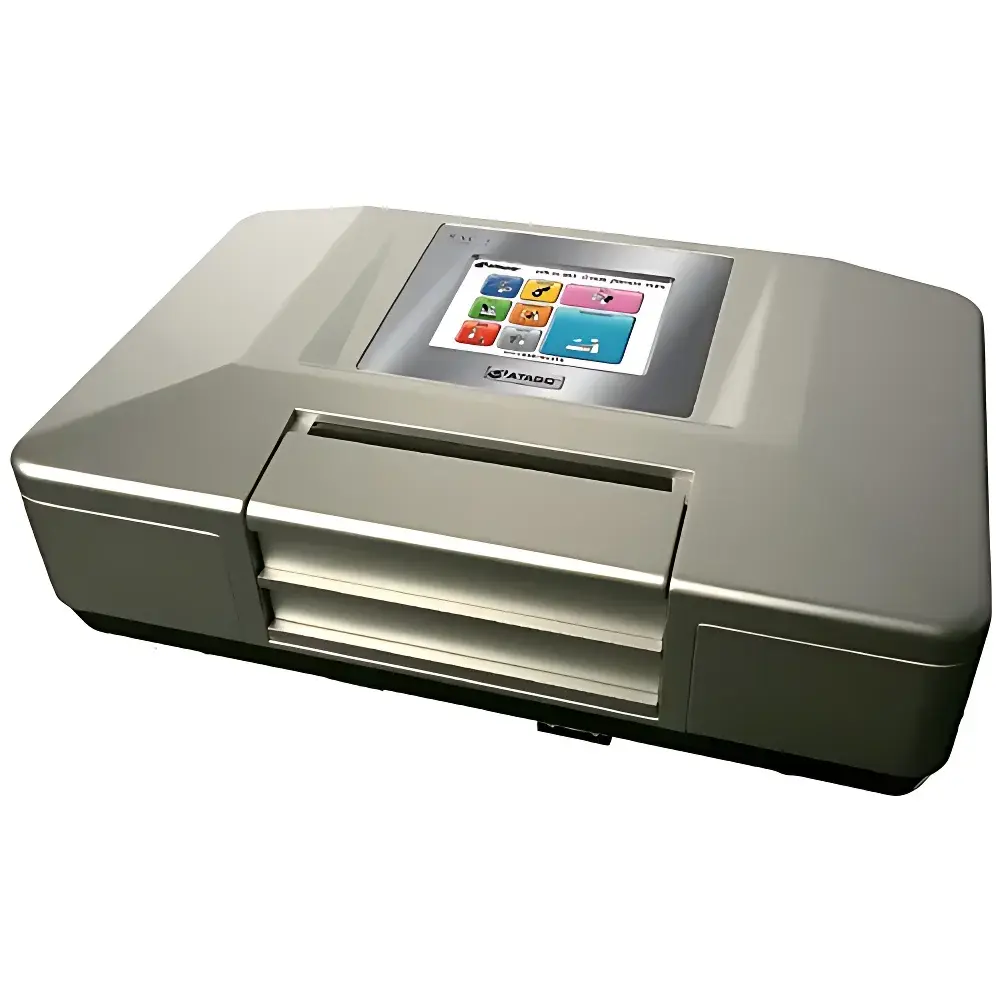
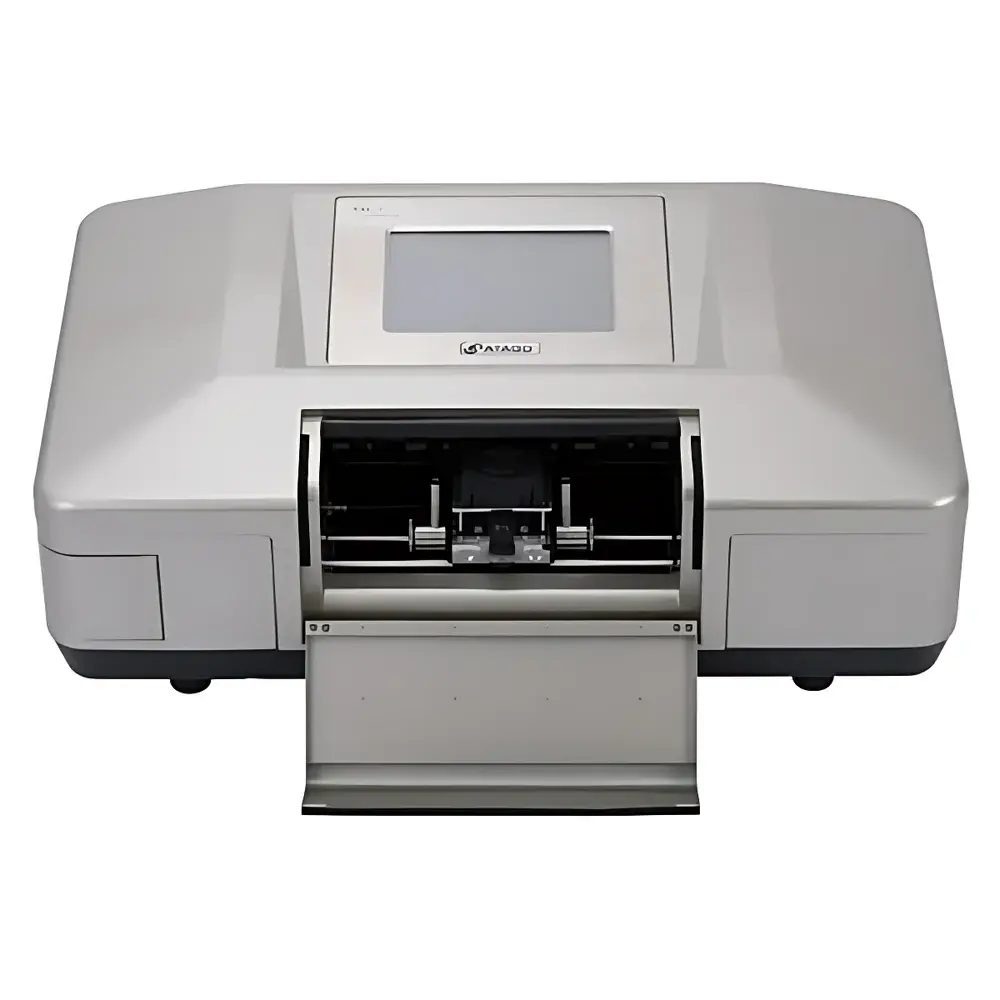
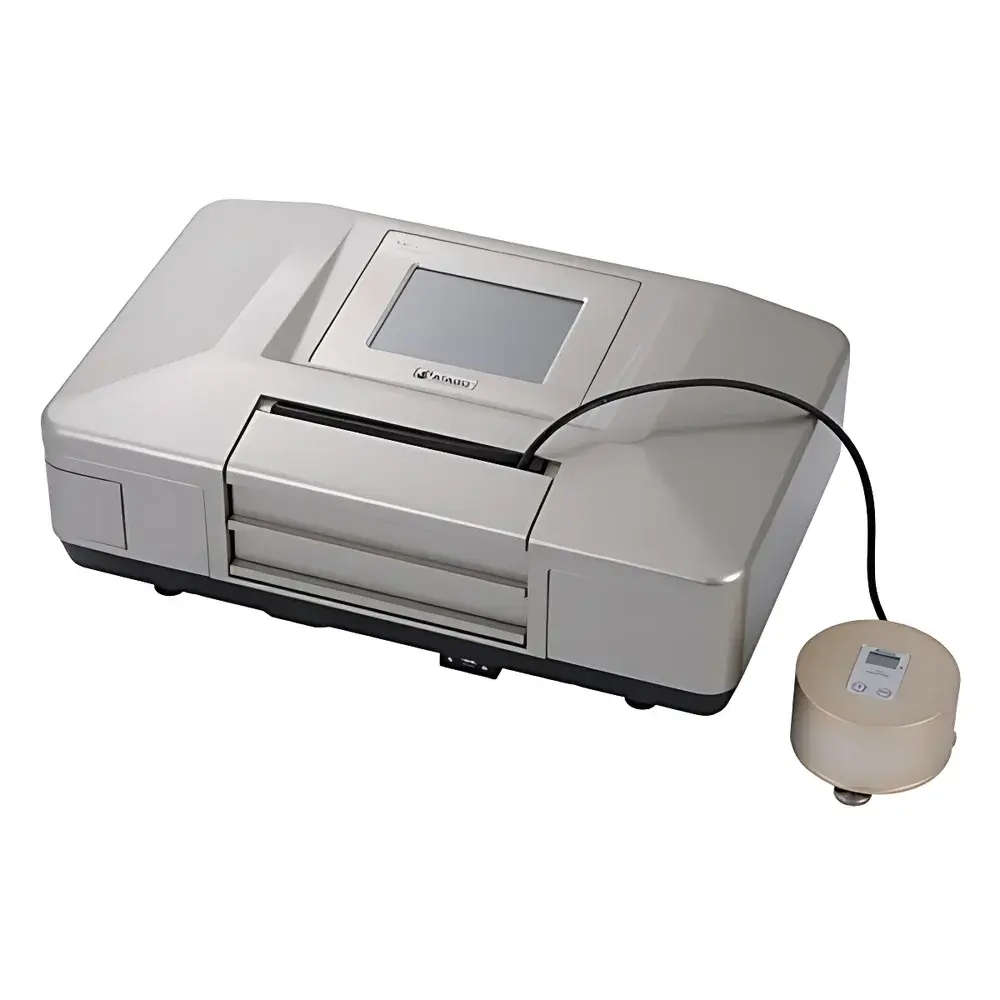
ATAGO AP-300 Automated Polarimeter
| Brand | ATAGO |
|---|---|
| Origin | Japan |
| Manufacturer Type | Authorized Distributor |
| Origin Category | Imported |
| Model | AP-300 |
| Price | USD 17,200 (FOB Yokohama) |
| Measurement Range | Optical Rotation (AR): −89.999° to +89.999° |
| International Sugar Scale (ISS) | −99.99 to +99.99° |
| Resolution | AR: 0.0001° |
| ISS | 0.001° |
| Accuracy | ±0.002° (optical rotation), equivalent to ±0.2% of full scale for ISS |
Overview
The ATAGO AP-300 Automated Polarimeter is a high-precision, temperature-controlled optical instrument engineered for the quantitative determination of optical rotation — a fundamental chiroptical property arising from the interaction of plane-polarized light with optically active substances. Based on the classical principle of polarimetry — where the angular deviation of polarized light passing through a chiral sample is measured using a half-shade or photoelectric null-detection system — the AP-300 delivers traceable, repeatable results under ISO 8549 and ASTM E1254-compliant measurement conditions. Designed specifically for routine quality control and R&D environments, it integrates Peltier-based thermal regulation (±0.1 °C stability), automatic sample cell recognition, and motorized analyzer rotation with closed-loop feedback control. Its application scope spans pharmaceutical enantiomeric purity verification, sucrose concentration quantification in cane/beet processing, essential oil authenticity screening, and synthetic intermediate characterization in fine chemical manufacturing.
Key Features
- High-resolution optical rotation detection with 0.0001° angular resolution and certified accuracy of ±0.002° (traceable to NIST-traceable quartz standards)
- Integrated Peltier temperature control system (10–40 °C range, ±0.1 °C stability) enabling compliance with pharmacopoeial methods requiring strict thermal conditioning (e.g., USP <781>, EP 2.2.7)
- Automatic zero-point calibration and real-time drift compensation via dual-wavelength LED source (589.3 nm sodium D-line equivalent)
- Dedicated International Sugar Scale (ISS) mode with direct %w/w sucrose output, aligned with ICUMSA Method GS2/3-11 and AOAC 952.06
- Robust stainless-steel sample chamber with quick-release cell holder accommodating standard 100 mm, 200 mm, and custom-length cells (including jacketed thermostatted variants)
- CE-marked, RoHS-compliant architecture with reinforced optical path shielding against ambient light interference and vibration-induced noise
Sample Compatibility & Compliance
The AP-300 accepts liquid, solution-phase, and low-viscosity semi-solid samples in standard polarimetric cells (path lengths: 50 mm to 200 mm). It supports aqueous, alcoholic, and organic solvent systems (e.g., chloroform, ethyl acetate) provided they exhibit optical clarity at 589 nm and do not degrade cell windows. For regulated environments, the instrument meets GLP/GMP documentation requirements: audit trail logging (user ID, timestamp, parameter changes), electronic signature support, and data integrity features compliant with FDA 21 CFR Part 11 when paired with ATAGO’s optional Polarimeter Data Management Software (PDMS v3.2+). All measurement protocols align with ISO/IEC 17025 calibration traceability chains and are validated per ICH Q2(R2) guidelines for analytical instrument qualification.
Software & Data Management
The AP-300 operates standalone or interfaces via USB/RS-232 with ATAGO PDMS software — a Windows-based platform supporting method templates, multi-sample batch processing, statistical process control (SPC) charting, and export to CSV, PDF, or LIMS-compatible XML formats. PDMS implements role-based access control (RBAC), mandatory electronic signatures for critical actions (e.g., calibration reset), and immutable raw-data archiving with SHA-256 hash verification. Instrument firmware supports SCPI command set for integration into automated lab workflows (e.g., robotic sample handling, PLC-triggered measurements). Raw angular data, temperature logs, and cell identification metadata are embedded in each result file to satisfy ALCOA+ data integrity principles.
Applications
- Pharmaceuticals: Enantiomeric excess (ee%) determination of chiral APIs; identity testing per USP monographs for levodopa, ibuprofen, and chloramphenicol
- Sugar Industry: Brix-corrected sucrose assay in raw juice, syrup, and refined sugar solutions per ICUMSA standards; molasses purity estimation
- Food & Beverage: Honey adulteration screening (glucose/fructose ratio inference), citrus oil authenticity verification (limonene enantiomer ratio)
- Chemicals & Fragrances: Batch release testing of menthol, camphor, and citronellal; reaction monitoring in asymmetric synthesis
- Academic Research: Teaching polarimetric theory in physical chemistry labs; kinetic studies of racemization and epimerization
FAQ
What temperature control options are available on the AP-300?
The instrument features an integrated Peltier thermoregulation system covering 10–40 °C with ±0.1 °C stability and programmable ramp rates. External water bath coupling is supported via optional adapter.
Can the AP-300 measure samples with turbidity or particulates?
No — optical rotation measurement requires optically clear samples. Suspensions, emulsions, or highly scattering media must be filtered (≤0.45 µm) or centrifuged prior to analysis.
Is calibration traceable to national standards?
Yes — factory calibration uses NIST-traceable quartz rotatory standards (SRM 8500 series), and users may perform in-house verification with ATAGO-certified sucrose reference solutions.
Does the AP-300 comply with FDA 21 CFR Part 11?
Full compliance requires use of PDMS v3.2+ with enabled audit trail, electronic signatures, and secure user authentication — all configurable per site-specific validation protocols.
What cell path lengths are supported?
Standard configurations include 100 mm and 200 mm cells; optional 50 mm microcells and 50–200 mm thermostatted jackets are available for specialized applications.



