
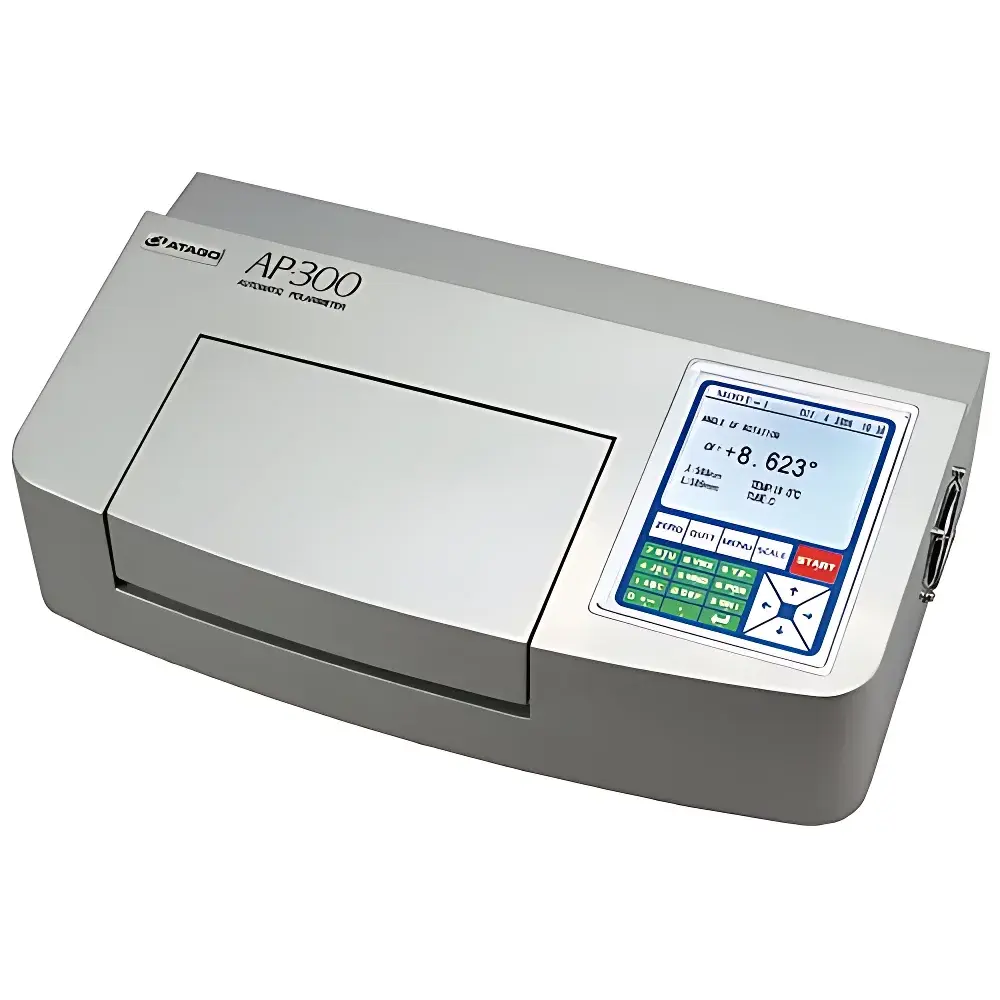
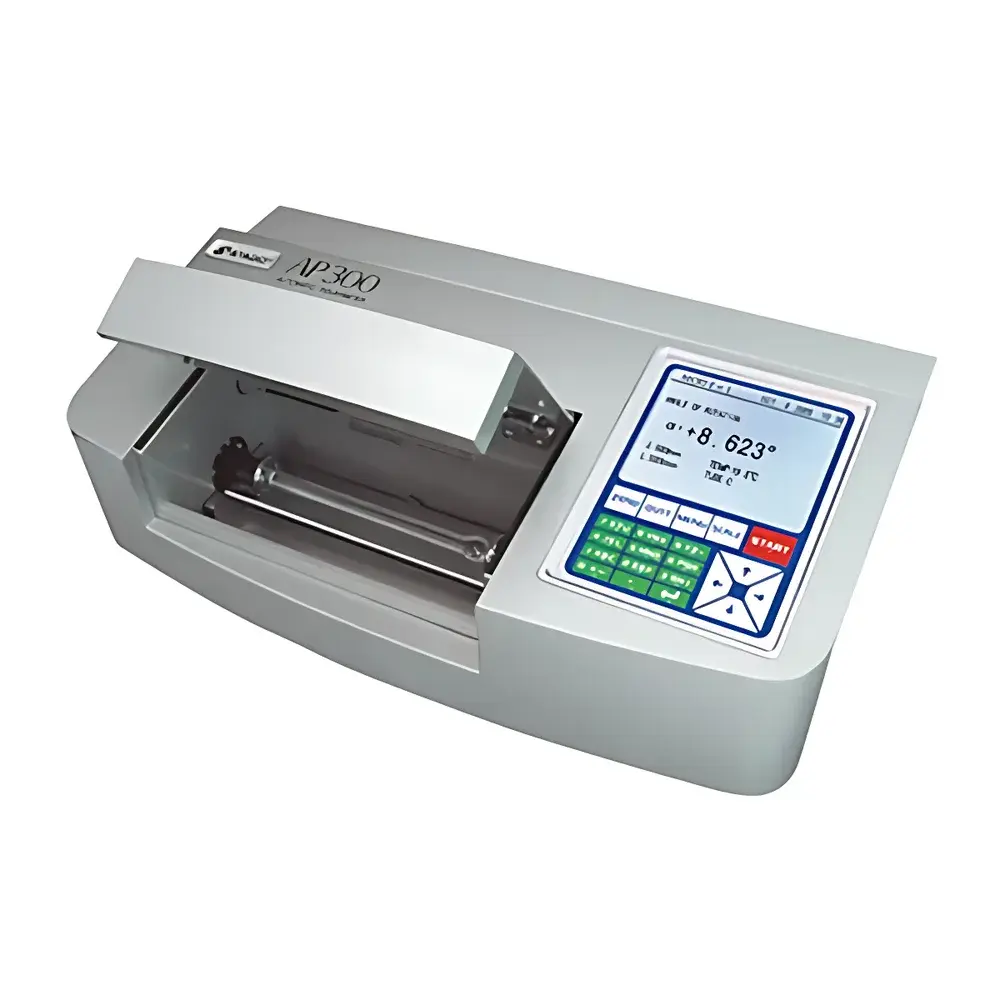
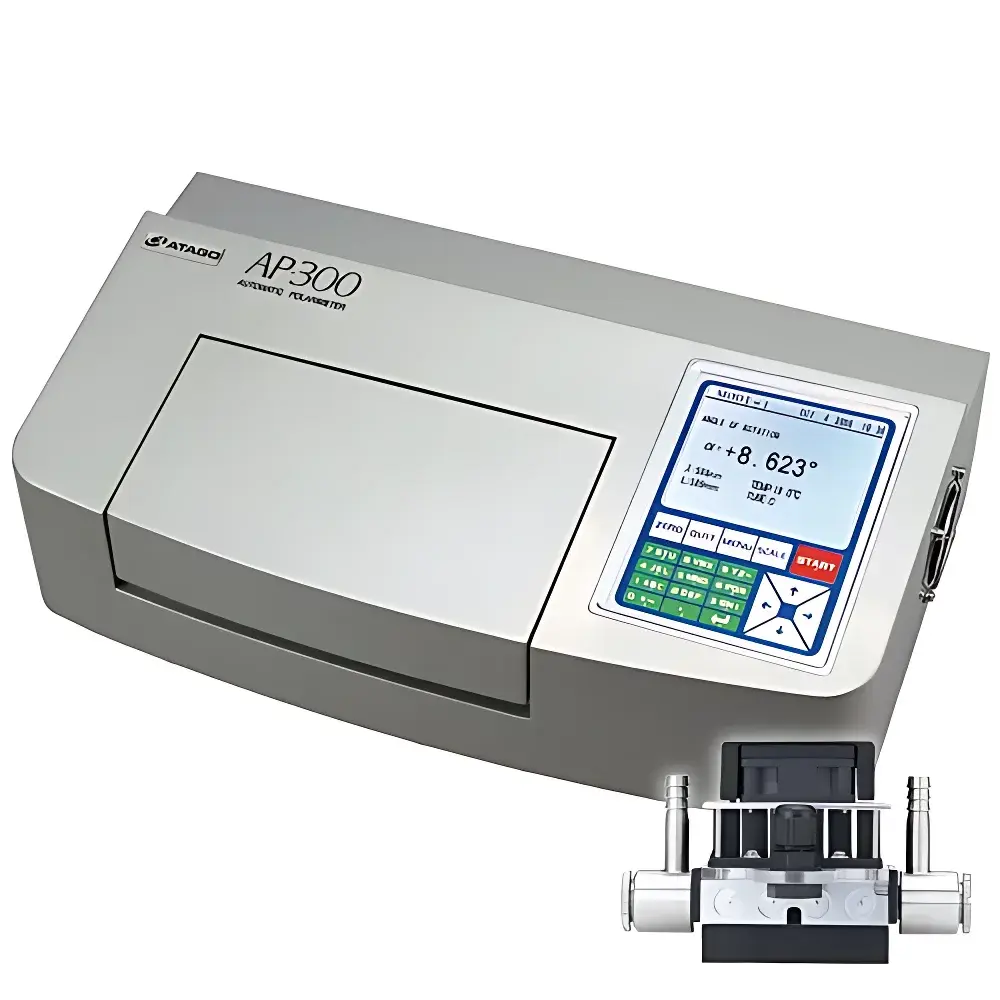
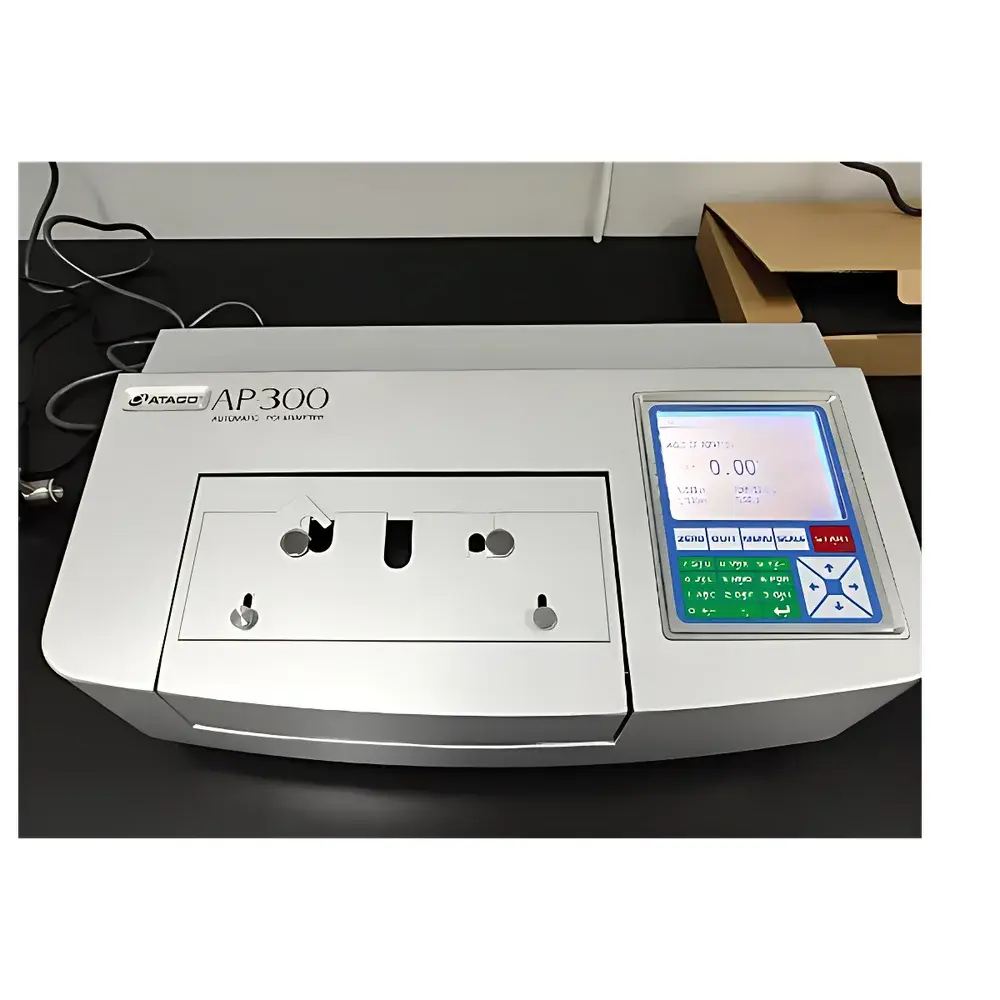
ATAGO AP-300 Automated Temperature-Controlled Polarimeter for Sucrose Analysis
| Brand | ATAGO |
|---|---|
| Origin | Japan |
| Model | AP-300 (Sugar Industry) |
| Product Type | Automatic Polarimeter |
| Temperature Control | Integrated Peltier-based Thermostatic Sample Chamber |
| Display | High-Contrast Color LCD with Backlight |
| Light Source | Stable 589 nm LED (D-line Equivalent) |
| Measurement Range | Optical Rotation (AR): –89.999 to +89.999° |
| Accuracy (AR) | ±0.01° (within –35.00 to +35.00°), ±0.2% (outside range) |
| Resolution (AR) | Selectable 0.001° / 0.01° / 0.1° |
| International Standard Sugar Scale (ISS) | –130.000 to +130.000°Z |
| ISS Accuracy | ±0.03°Z (–101.00 to +101.00°Z), ±0.2% (full range) |
| Temperature Range | 10.0–30.0°C (compensation enabled 18.0–30.0°C) |
| Temp. Resolution/Accuracy | 0.1°C / ±0.5°C |
| Wavelength | 589 nm (Na D-line equivalent) |
| Data Output | RS-232C for printer & PC |
| Compliance | FDA 21 CFR Part 11 (audit trail, user authentication, electronic signature support), ICUMSA Method GS4/3-11 (2019), ISO 5725 (accuracy validation), GLP/GMP-ready architecture |
Overview
The ATAGO AP-300 is a fully automated, temperature-controlled polarimeter engineered for high-precision optical rotation and International Standard Sugar (ISS) measurements in regulated industrial and quality control environments. Based on the fundamental principle of optical activity—where chiral molecules rotate the plane of linearly polarized light—the AP-300 employs a stable 589 nm LED light source approximating the sodium D-line, ensuring spectral consistency critical for traceable sucrose quantification. Its integrated Peltier-driven thermostatic sample chamber maintains temperature stability within ±0.5°C across 10.0–30.0°C, enabling rigorous adherence to ICUMSA-defined measurement conditions (18.0–30.0°C for ISS). Unlike basic manual polarimeters, the AP-300 implements dual-path calibration logic: primary verification via certified quartz control plates and secondary validation through built-in reference checks prior to each measurement cycle. Designed specifically for sugar refineries, pharmaceutical QC labs, and flavor/fragrance manufacturers, it delivers traceable, repeatable results compliant with international standards governing sucrose purity assessment and enantiomeric composition analysis.
Key Features
- Automated temperature control with real-time monitoring and programmable setpoints (10.0–30.0°C), supporting both fixed-point and ISS-compensated measurements
- Selectable angular resolution down to 0.001° for AR and 0.001°Z for ISS—critical for detecting subtle batch-to-batch variations in high-purity sucrose or active pharmaceutical ingredients
- FDA 21 CFR Part 11–compliant firmware architecture, including role-based user access, password-protected method storage (up to 30 profiles), electronic signature capability, and immutable audit trails for all measurements and configuration changes
- Color backlit LCD interface with intuitive icon-driven navigation—no external PC required for routine operation
- Integrated averaging function allowing configurable repetition (2–9 cycles) with automatic calculation and display of mean value and standard deviation
- RS-232C serial interface supporting direct data export to LIMS, Excel, or validated laboratory software; optional USB-to-RS232 adapters available for modern PC integration
- Compact benchtop footprint (48.5 × 28.5 × 17.5 cm) and low power consumption (140 VA), suitable for space-constrained QC laboratories operating under ISO/IEC 17025 accreditation requirements
Sample Compatibility & Compliance
The AP-300 accommodates standard 100 mm (5 mL) and 200 mm (10 mL) glass polarimetric cells, with dedicated internal fixtures (RE-76015 chamber cover and RE-76016 inner lid) ensuring thermal uniformity and mechanical alignment during temperature-controlled runs. It meets ICUMSA Method GS4/3-11 (2019) for raw sugar purity determination and supports ASTM D1005–22 (Standard Test Method for Optical Rotation of Organic Liquids) for pharmaceutical intermediates. All measurement algorithms are validated per ISO 5725-2:2019 (accuracy and precision of measurement methods), and temperature calibration is traceable to NIST-certified thermistors. The system’s mechanical design conforms to IEC 61010-1 safety standards for electrical equipment used in laboratory environments.
Software & Data Management
While the AP-300 operates autonomously via its embedded OS, its RS-232C port enables seamless integration into enterprise-level data ecosystems. Raw measurement logs—including timestamp, operator ID, sample ID, temperature, AR/ISS values, resolution setting, and statistical deviation—are transmitted in ASCII format with configurable delimiters. When paired with ATAGO’s optional data acquisition software (or third-party tools compliant with Modbus RTU over RS-232), users can generate PDF reports with embedded digital signatures, perform trend analysis across production lots, and auto-populate ELN entries. Audit trail records retain full metadata: who initiated the measurement, when, under which method profile, and whether calibration was performed—fulfilling GLP and GMP documentation requirements.
Applications
- Sugar refining: Quantification of International Standard Sugar (ISS) in raw cane and beet sugar solutions per ICUMSA specifications, directly supporting purity grading and crystallization process control
- Pharmaceutical QC: Enantiomeric excess (ee) verification of chiral APIs such as levodopa, ibuprofen, or antibiotics using specific rotation calculations (α = [α] × c × l)
- Flavor & fragrance industry: Authentication of natural essential oils (e.g., limonene, menthol) by comparing measured optical rotation against pharmacopoeial monographs (USP/NF, EP)
- Food ingredient testing: Detection of adulteration in honey, maple syrup, or corn syrup via deviation from expected rotation–concentration relationships
- Academic research: Kinetic studies of enzymatic hydrolysis (e.g., invertase action on sucrose) where real-time rotation decay correlates with reaction progress
FAQ
Does the AP-300 support automatic temperature compensation for ISS measurements?
Yes—when configured for International Standard Sugar mode, the instrument applies real-time temperature compensation between 18.0°C and 30.0°C per ICUMSA GS4/3-11, correcting raw rotation values to the standardized 20°C reference condition.
Can the AP-300 be validated for use in a GMP-regulated environment?
Yes—the device includes built-in IQ/OQ support tools (test protocols, calibration check routines, and parameter lockout functions), and its 21 CFR Part 11 compliance package provides documented evidence for regulatory audits.
What is the minimum detectable change in optical rotation?
At the highest resolution setting (0.001°), the AP-300 resolves angular differences equivalent to ~0.002°Z in ISS scale—a sensitivity sufficient to distinguish 0.005% w/w sucrose concentration shifts in 100 mm pathlength cells.
Is external calibration required before daily use?
No—routine verification uses ATAGO-certified quartz control plates (included); however, annual recalibration by an ISO/IEC 17025-accredited service lab is recommended for continued traceability.
How does the AP-300 handle viscous or particulate-containing samples?
It requires filtered, particle-free solutions; turbidity >0.1 NTU may scatter the 589 nm beam and compromise accuracy—users should centrifuge or membrane-filter samples prior to loading into standard polarimetric cells.





