
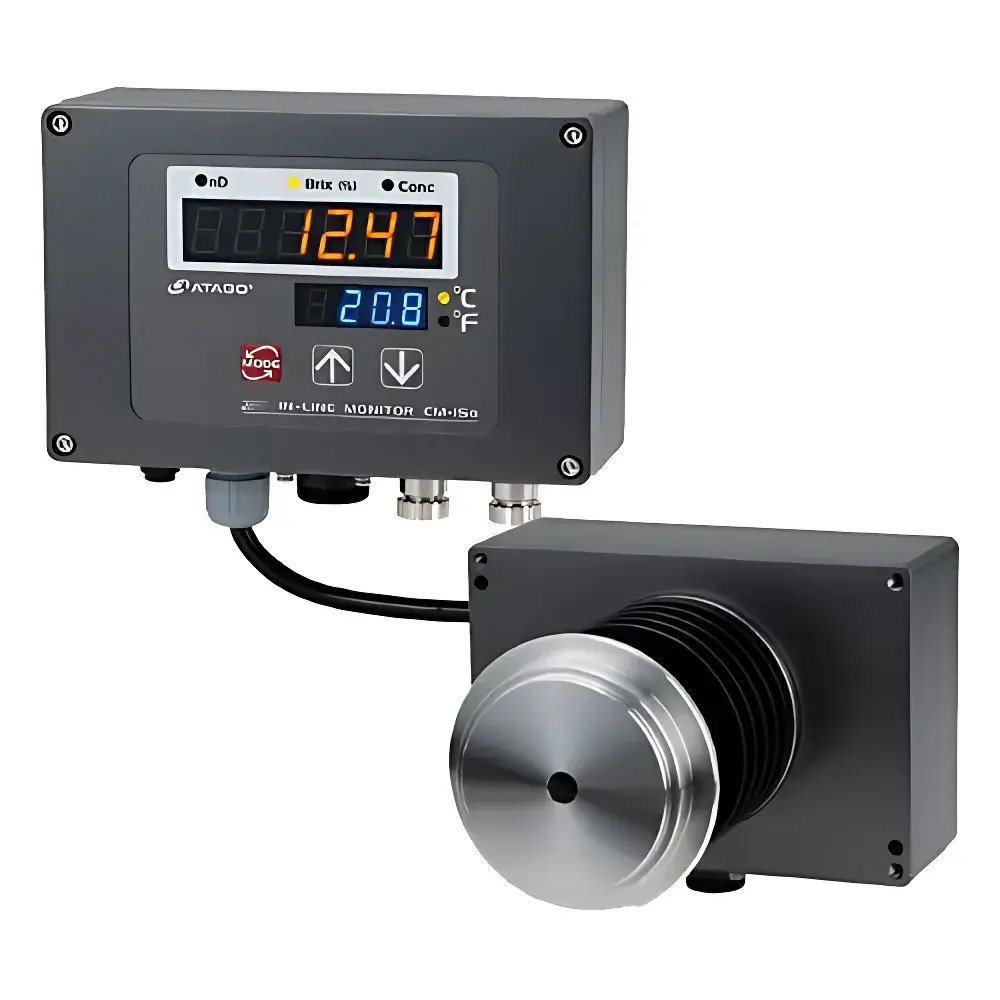
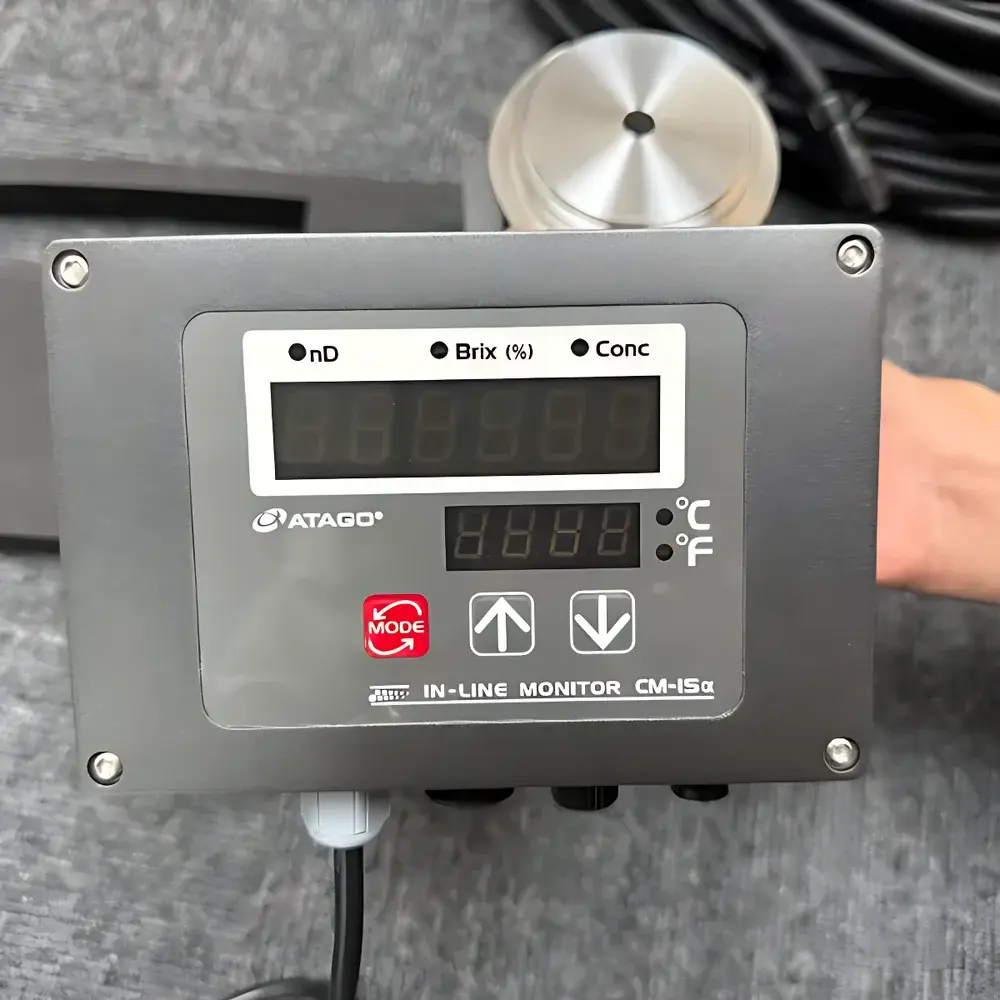
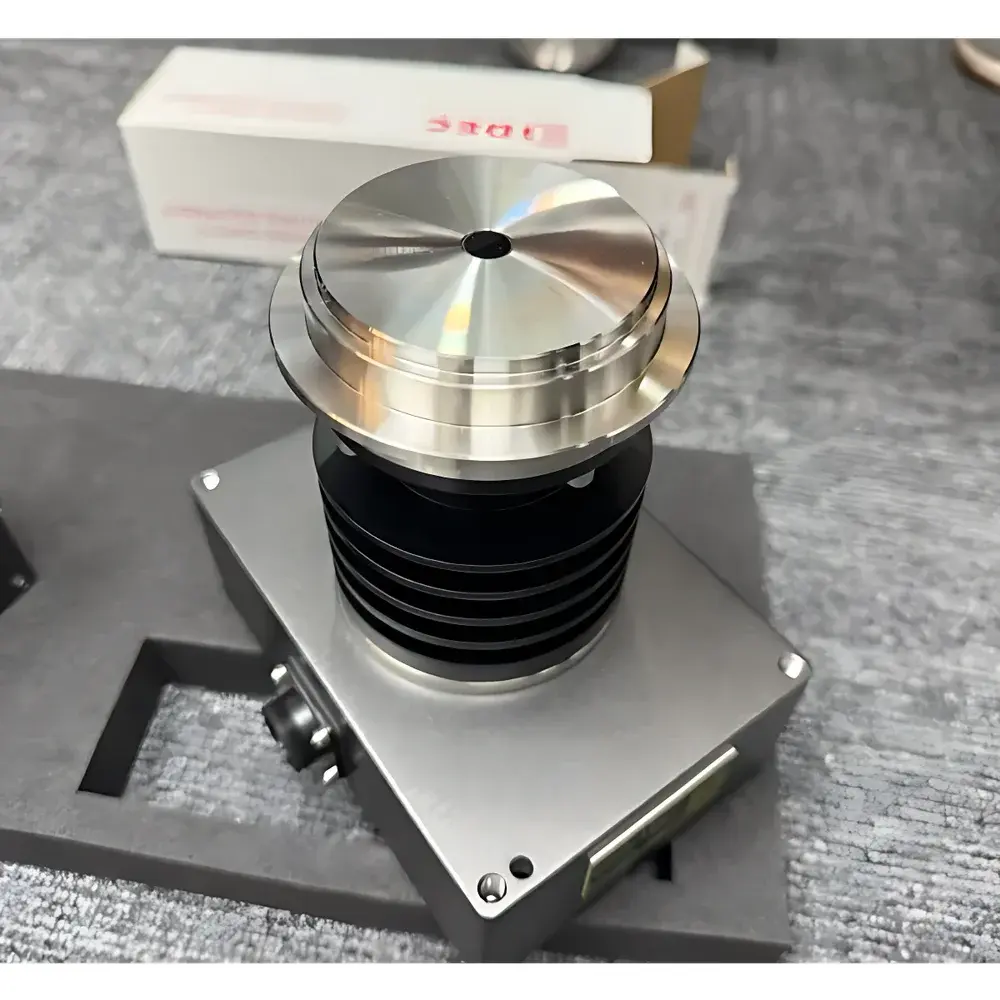
ATAGO CM-1Sα Intrinsically Safe Online Refractometer
| Brand | ATAGO |
|---|---|
| Origin | Japan |
| Model | CM-1Sα |
| Product Type | Online Refractometer |
| Measurement Range | Refractive Index (nD): 1.32000–1.49100, Brix: 0.0–80.0% |
| Accuracy | ±0.0002 (nD), ±0.1% (Brix) |
| Display | Digital |
| Temperature Control | None |
| Explosion Protection Rating | Ex ia IIB T3 Ga TA |
| Compliance | ATEX, IECEx, UL/cUL Class I, Div 1, Groups A, B, C, D |
Overview
The ATAGO CM-1Sα Intrinsically Safe Online Refractometer is an industrial-grade process analytical instrument engineered for continuous, real-time measurement of refractive index (nD), Brix, and concentration in hazardous environments. Based on the principle of total internal reflection at a solid–liquid interface, the CM-1Sα employs a high-stability LED light source and precision sapphire prism assembly to deliver repeatable optical measurements under dynamic flow conditions. Its intrinsic safety certification (Ex ia IIB T3 Ga TA) ensures safe operation in Zone 0/20 gas and dust hazard areas—making it suitable for installation directly onto pipelines, reactors, storage tanks, and scrubber systems without requiring additional explosion-proof enclosures. Designed for 24/7 unattended operation, the device outputs analog (4–20 mA) and digital (RS-485 Modbus RTU) signals for seamless integration into DCS, PLC, or SCADA platforms.
Key Features
- Intrinsically safe design certified to Ex ia IIB T3 Ga TA per IEC 60079-0/-11, ATEX 2014/34/EU, and UL/cUL 60079-0/-11 for Class I, Division 1, Groups A, B, C, D
- High-precision sapphire measuring prism with chemical resistance to aggressive solvents including NMP, DMSO, DMAC, IPA, strong acids (H₂SO₄, HCl, H₃PO₄), and caustics (NaOH)
- Digital display with local readout of nD, Brix, and user-defined concentration units (e.g., wt%, g/L)
- Measurement accuracy of ±0.0002 refractive index units and ±0.1% Brix across full range (nD: 1.32000–1.49100; Brix: 0.0–80.0%)
- Robust stainless steel (SS316L) wetted parts and IP67-rated housing for harsh industrial environments
- No temperature compensation circuitry—intended for applications where process temperature is stable or externally controlled
Sample Compatibility & Compliance
The CM-1Sα is validated for use with transparent to mildly turbid liquid streams exhibiting low to moderate viscosity (< 500 mPa·s). It is routinely deployed in hydrocarbon processing, lithium-ion battery manufacturing, fine chemical synthesis, and petrochemical refining. The instrument complies with ISO 21748 (repeatability of refractometric measurements), ASTM D1218 (refractive index of hydrocarbons), and USP (refractometry in pharmaceutical excipient control). Its intrinsic safety certification supports compliance with OSHA 1910.307, IEC 60079 series, and regional hazardous area zoning requirements. While not FDA 21 CFR Part 11 compliant out-of-the-box, audit trails and electronic signature support can be implemented via compatible third-party data acquisition software meeting GLP/GMP validation protocols.
Software & Data Management
The CM-1Sα operates as a standalone sensor with no embedded firmware-based configuration interface. All calibration, unit selection, and output scaling are performed via external handheld configurator (ATAGO IR-Config Tool) or through Modbus register mapping. Raw nD values are transmitted continuously via 4–20 mA (HART optional) and RS-485 (Modbus RTU) interfaces. Integration with historian systems (e.g., OSIsoft PI, Emerson DeltaV, Siemens Desigo) enables long-term trend analysis, alarm triggering (e.g., concentration drift >±0.5% Brix), and batch record generation. Calibration verification is performed using certified NIST-traceable refractive index standards (e.g., ATAGO RS-1.3330, RS-1.4400) at defined intervals per site-specific PQ/SOP documentation.
Applications
- NMP Recovery Monitoring: Installed inline in NMP absorption towers for lithium battery solvent recovery—enabling closed-loop control of bleed valve actuation based on real-time concentration feedback
- Hydrocarbon Interface Detection: Mounted at separator vessel outlets to identify oil–water phase boundaries via abrupt nD shifts, supporting automated level control and minimizing emulsion carryover
- Acid/Base Process Streams: Continuous monitoring of sulfuric acid, hydrochloric acid, and sodium hydroxide concentrations in pickling, neutralization, and regeneration circuits
- Cleaning-in-Place (CIP) Verification: Validation of detergent and rinse solution concentrations during pharmaceutical and food-grade equipment sanitation cycles
- Petroleum Product Grading: Refractive index trending for crude assay correlation, lubricant blending consistency, and biodiesel FAME content estimation
FAQ
Is temperature compensation available on the CM-1Sα?
No—the CM-1Sα does not include built-in temperature sensing or automatic compensation. It is intended for installations where process temperature remains within ±2 °C of calibration temperature or where external temperature correction is applied in the control system.
Can the CM-1Sα measure opaque or highly viscous fluids?
It is unsuitable for opaque suspensions, slurries, or fluids with viscosity exceeding 500 mPa·s due to signal attenuation and prism fouling risk. For such applications, consider ATAGO’s CM-500α with ultrasonic cleaning option.
What calibration standards are recommended?
NIST-traceable liquid standards with certified refractive indices at 20 °C (e.g., ATAGO RS-1.3330, RS-1.4400) are required for two-point calibration. Daily zero-check with deionized water is advised prior to critical measurements.
Does the device support HART communication?
HART overlay is available as an optional upgrade on the 4–20 mA output version (model suffix “-HART”), enabling device diagnostics and remote configuration via standard HART modems or asset management systems.
How often should the sapphire prism be cleaned?
Cleaning frequency depends on process fouling tendency. In clean solvent streams (e.g., NMP, IPA), quarterly inspection suffices; in acidic or particulate-laden services, weekly manual wipe with lint-free cloth and isopropanol is recommended.



