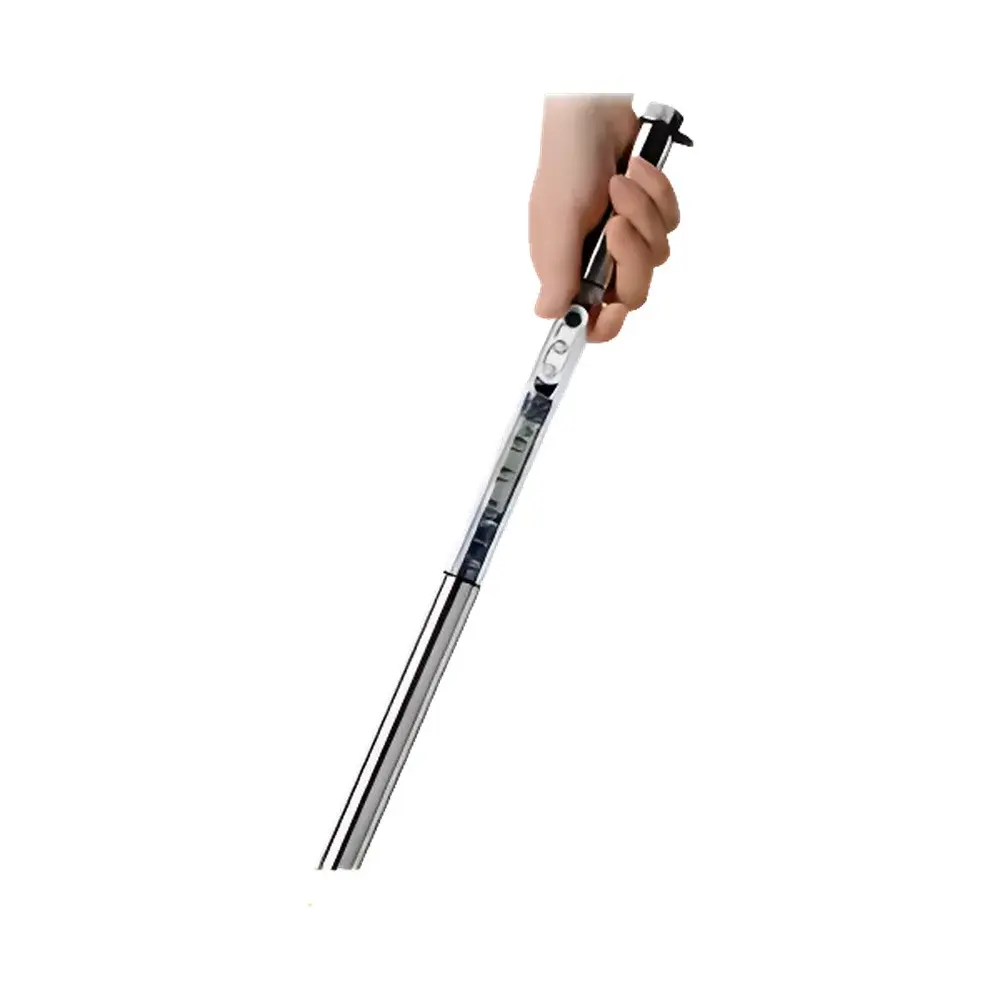
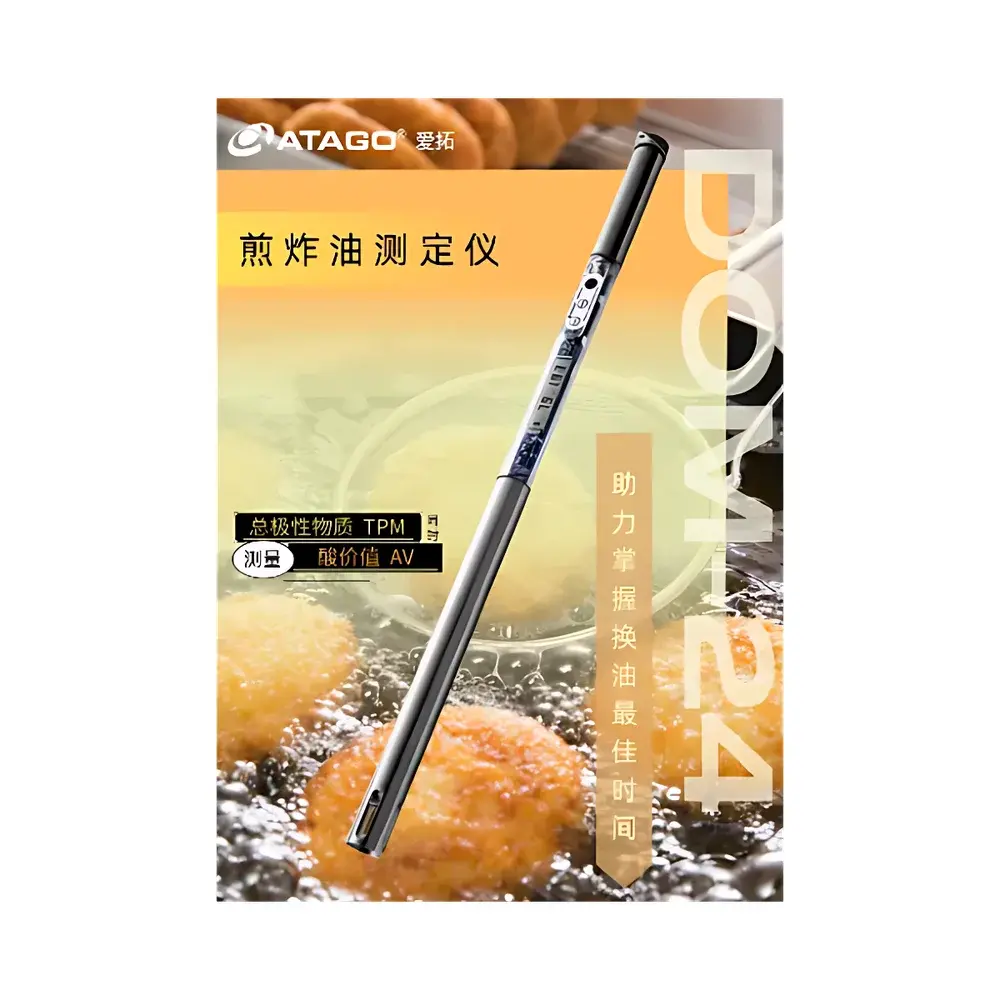
ATAGO DOM-24 Handheld TPM and Acid Value Analyzer for Frying Oil
| Brand | ATAGO |
|---|---|
| Origin | Japan |
| Model | DOM-24 |
| Measurement Parameters | Total Polar Materials (TPM) and Acid Value (AV) |
| Principle | Refractive Index–Based Correlation with TPM & Potentiometric Titration–Derived AV |
| Temperature Compensation | Automatic (ATC, 0–100°C) |
| Power Source | Rechargeable Lithium-ion Battery |
| Dimensions | 168 × 82 × 42 mm |
| Weight | Approx. 320 g |
| Compliance | Meets JIS K 2501, ISO 8534, and aligns with EU Regulation (EU) No 1881/2006 for polar compound limits in frying oils |
Overview
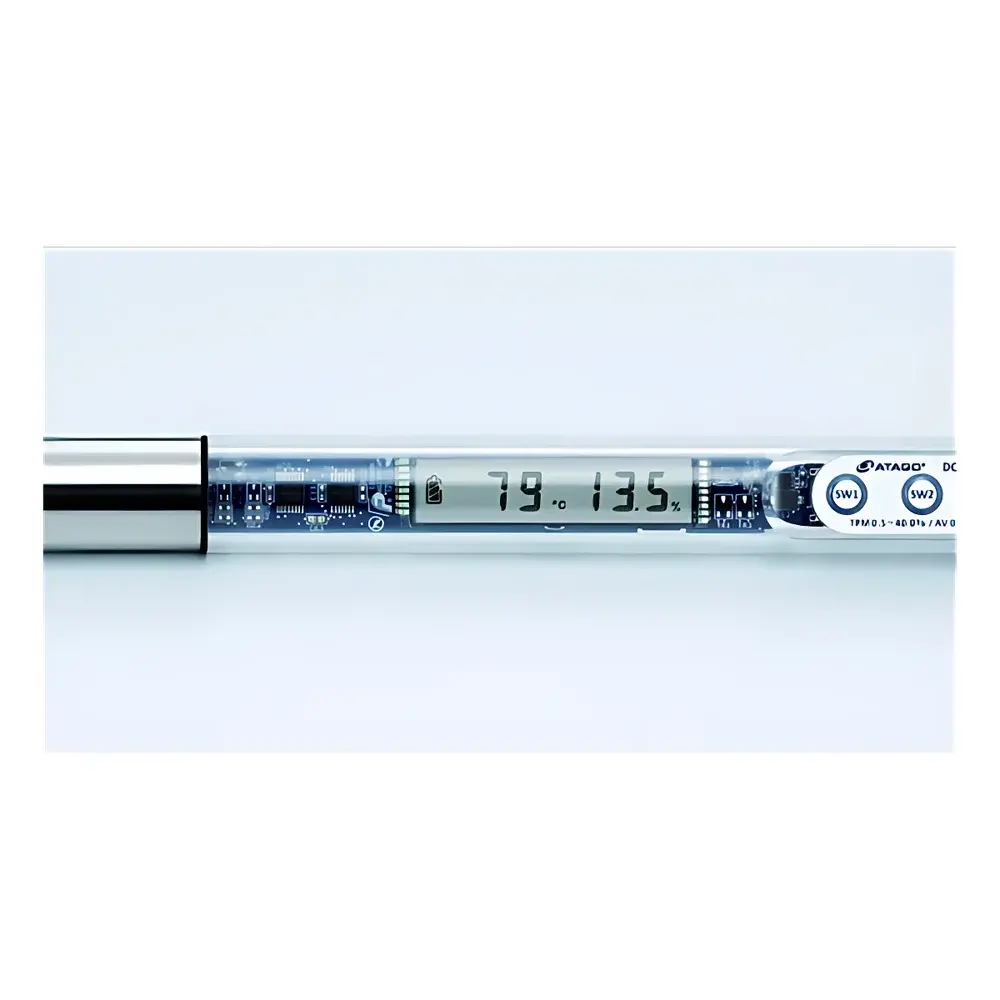
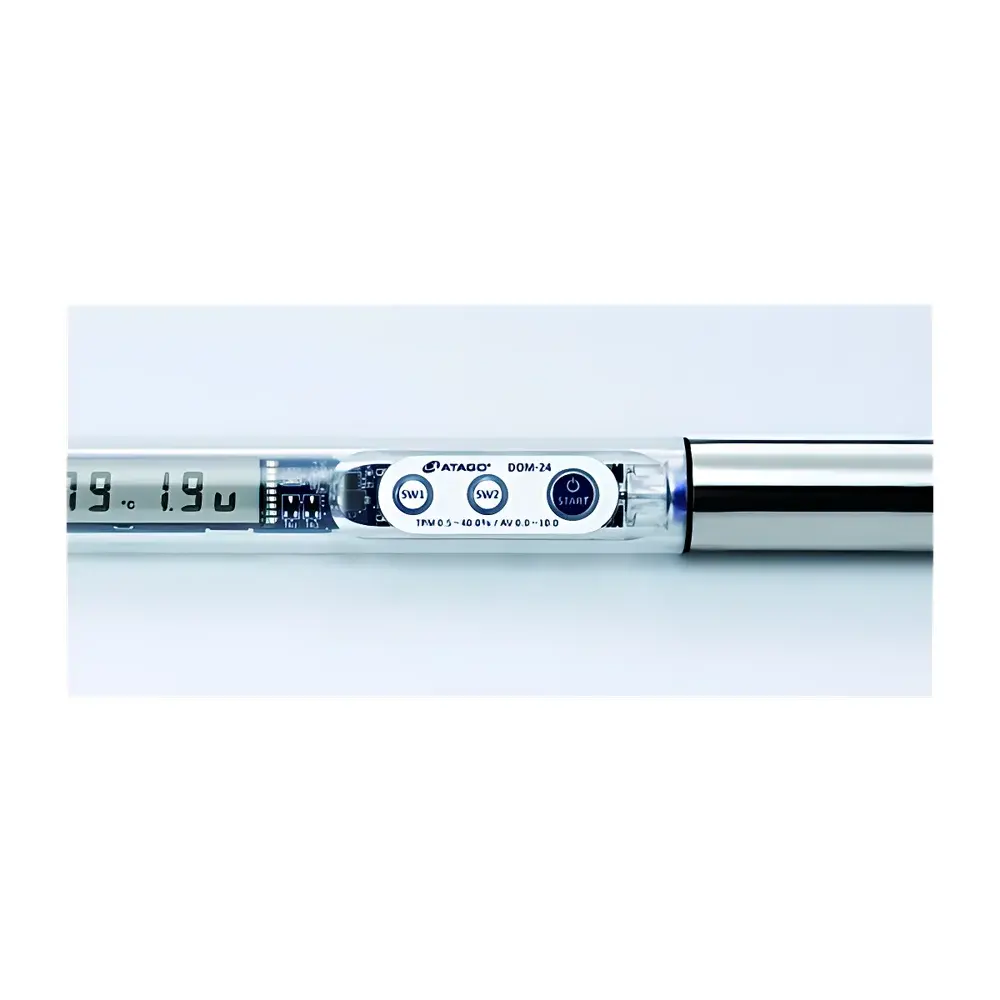
The ATAGO DOM-24 is a handheld, dual-parameter analyzer engineered for rapid, on-site assessment of frying oil degradation during commercial food preparation. It quantifies two critical quality indicators—Total Polar Materials (TPM) and Acid Value (AV)—using non-destructive, reagent-free methodologies rooted in optical and electrochemical principles. TPM measurement leverages ATAGO’s proprietary refractive index correlation algorithm, calibrated against reference ASTM D7492 and ISO 8534 standard methods, enabling traceable estimation of polar compound accumulation resulting from thermal oxidation, hydrolysis, and polymerization. AV determination employs miniaturized potentiometric titration, eliminating manual endpoint detection and minimizing operator variability. Designed for continuous operation in high-temperature kitchen environments, the DOM-24 integrates automatic temperature compensation (ATC) across 0–100°C, ensuring measurement stability regardless of oil thermal state—critical for real-time monitoring during active frying cycles.
Key Features
- Simultaneous dual-parameter output: TPM (%) and AV (mg KOH/g), both reported in accordance with internationally recognized frying oil degradation thresholds (e.g., EU limit: ≤24% TPM; USP guidance: AV >2.0 mg KOH/g indicates advanced degradation)
- Reagent-free operation: No solvents, titrants, or consumable test strips required—reducing operational cost, waste generation, and exposure to hazardous chemicals
- Direct immersion probe design: Stainless-steel sensor tip withstands repeated insertion into hot oils up to 200°C; IP65-rated housing ensures resistance to steam, splashes, and grease ingress
- Onboard ATC with NTC thermistor: Compensates for refractive index drift induced by temperature fluctuations, eliminating need for pre-cooling samples or external calibration baths
- Internal memory stores up to 1,000 measurement records with timestamp, temperature, and operator ID (via optional USB-C data export)
- Battery life: ≥8 hours of continuous use per full charge; supports hot-swap charging during operation
Sample Compatibility & Compliance
The DOM-24 is validated for use with all common edible frying media—including soybean, palm, sunflower, canola, peanut, and blended oils—as well as hydrogenated and low-trans fat formulations. It excludes interference from suspended particulates (e.g., food crumbs) via integrated signal filtering algorithms. Regulatory alignment includes conformity with Japanese Industrial Standard JIS K 2501 (Testing Methods for Crude Oil and Petroleum Products), ISO 8534 (Animal and Vegetable Fats and Oils – Determination of Polar Compounds), and technical harmonization with EU Commission Regulation (EU) No 1881/2006 setting maximum levels for polar compounds in frying oils. For GLP/GMP environments, audit trails are exportable in CSV format compatible with LIMS integration; firmware supports user-accessible calibration lockout and password-protected method settings.
Software & Data Management
Data acquisition and reporting are managed through the embedded LCD interface and optional ATAGO DataLink software (Windows/macOS compatible). The device supports USB-C direct connection for batch export of measurement logs, including TPM, AV, sample temperature, date/time stamp, and instrument serial number. Exported files comply with 21 CFR Part 11 requirements when used with signed electronic records and role-based access control enabled in DataLink. Firmware updates are delivered via encrypted .bin files, preserving calibration integrity and traceability. Calibration verification is performed using certified reference oils (traceable to NIST SRM 2779), with certificate-of-calibration available upon request.
Applications
- Restaurant and catering operations: Real-time oil change decision support based on objective TPM/AV thresholds—not subjective visual or olfactory cues
- Food service inspection agencies: Field-deployable tool for regulatory compliance audits at fast-food chains, school cafeterias, and hospital kitchens
- Industrial food manufacturing: In-line QC checks during snack production, battered product frying, and ready-meal processing lines
- Public health laboratories: Screening tool prior to confirmatory GC-MS or HPLC analysis of aldehydes, polymers, and oxidized triglycerides
- Research institutions: Longitudinal studies on oil stability under varying fryer temperatures, turnover rates, and food load profiles
FAQ
How does the DOM-24 correlate refractive index to TPM without chemical extraction?
It applies a multivariate regression model trained on >500 reference samples analyzed via AOCS Cd 20-91 (solvent extraction + gravimetry), mapping RI shifts at 589 nm to polar fraction mass percentage under controlled thermal history conditions.
Can the DOM-24 measure TPM in oils containing added antioxidants or emulsifiers?
Yes—validation testing confirms accuracy within ±0.8% TPM across oils fortified with TBHQ, BHA, citric acid, and mono/diglyceride emulsifiers at typical usage levels.
Is routine recalibration required between uses?
No—factory calibration remains stable for ≥12 months under normal use; annual verification with ATAGO-certified reference oil is recommended for ISO/IEC 17025 accredited labs.
Does the device meet FDA or EU food safety enforcement requirements for field testing?
While not a standalone legal metrology instrument, its methodology is cited in EFSA Scientific Opinion on Frying Oils (2016) and accepted by multiple EU national food authorities as a validated screening tool per Regulation (EC) No 852/2004 Annex II Chapter IX.
What maintenance is required for long-term reliability?
Daily wipe-down of the sensor tip with lint-free cloth; monthly cleaning with isopropyl alcohol; biannual inspection of O-ring integrity and battery contact corrosion.