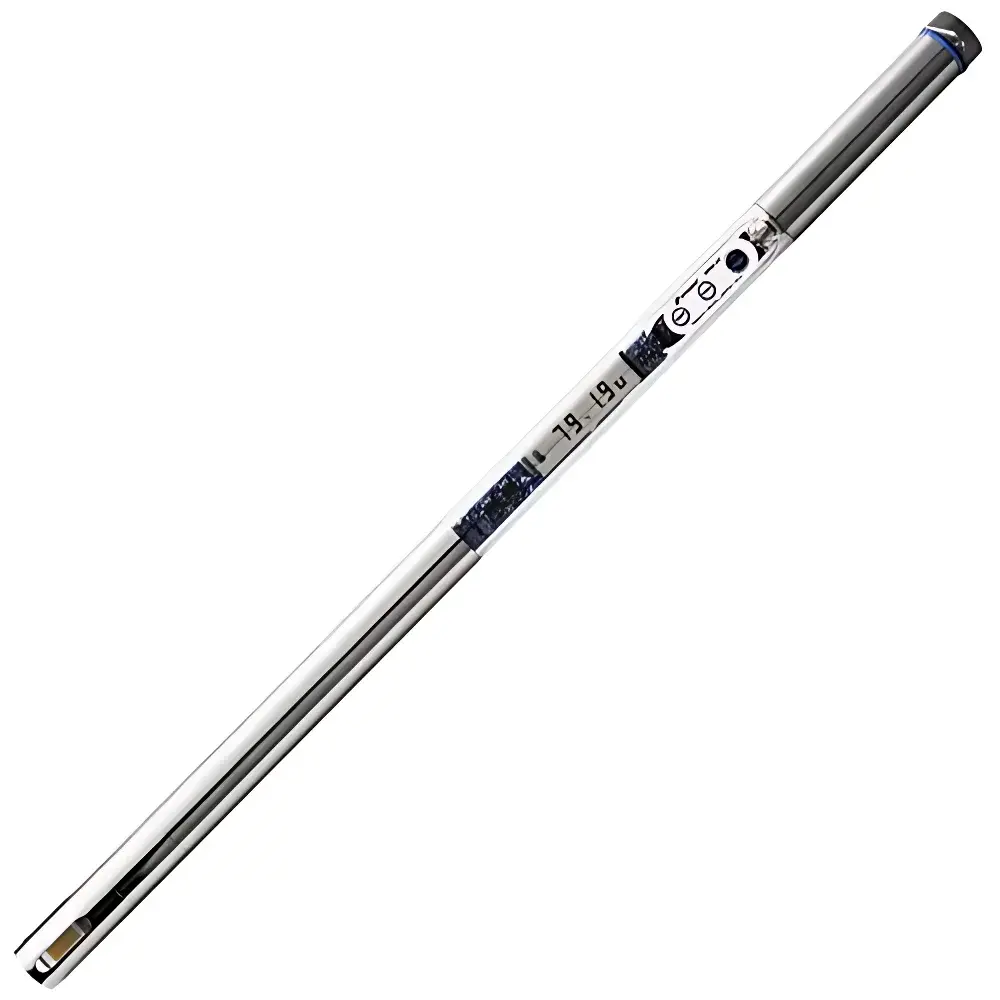
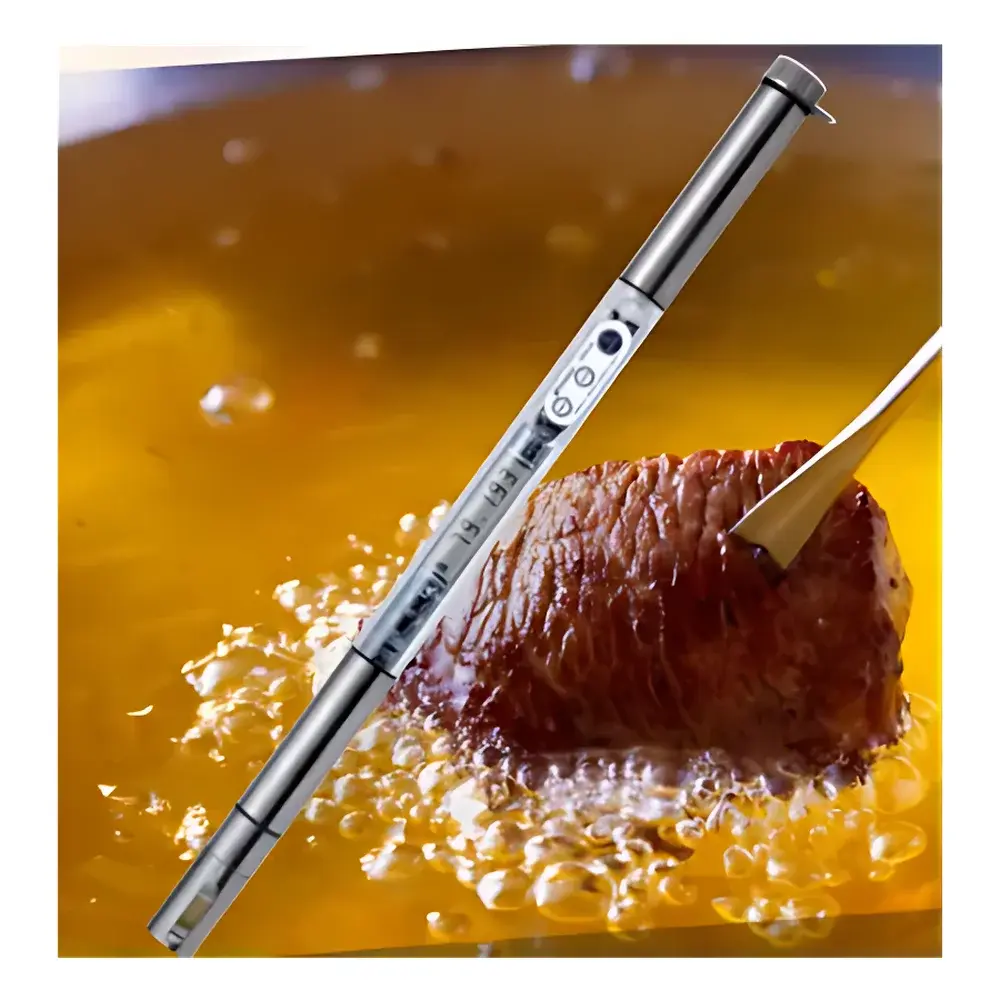
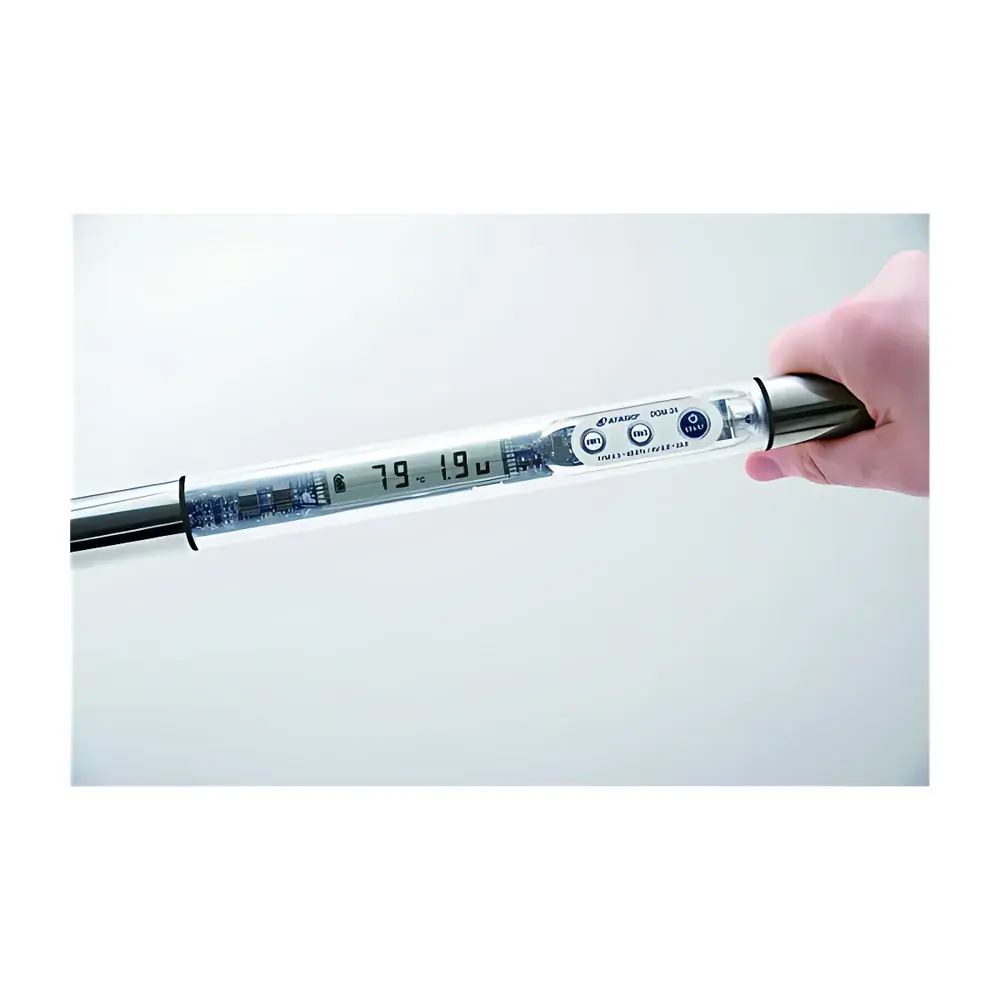
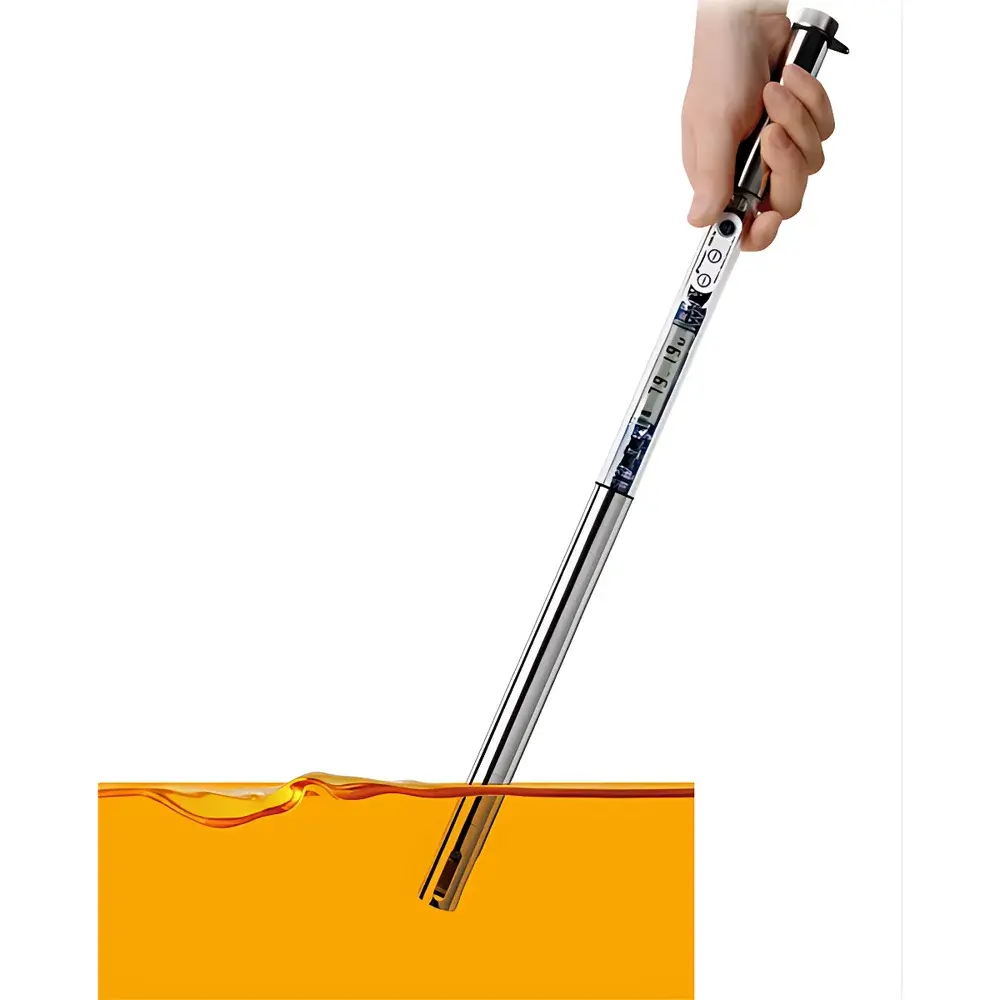
ATAGO DOM-24 Total Polar Materials (TPM) & Acid Value Analyzer for Frying Oil
| Brand | ATAGO |
|---|---|
| Origin | Japan |
| Model | DOM-24 |
| Measurement Parameters | TPM (%) and Acid Value (mg KOH/g) |
| Compliance | Designed to support verification against GB/T 7102.1–2003, EU Regulation (EC) No. 156/2013, and Codex Alimentarius standards for frying oil safety |
| Construction | Titanium alloy housing |
| Connectivity | NFC (Android-compatible), USB-C data export |
| Operating Distance | Non-contact measurement at ~30 cm |
| Weight | <250 g |
| Power | Rechargeable Li-ion battery (≥8 hours continuous use) |
Overview
The ATAGO DOM-24 is a handheld, dual-parameter analyzer engineered for rapid, non-invasive assessment of frying oil degradation in real-time operational environments. It employs dielectric constant-based sensing technology—calibrated and validated against reference methods including AOAC 982.21 and ISO 8534—to simultaneously quantify Total Polar Materials (TPM %) and Acid Value (AV, expressed as mg KOH/g). Unlike optical or titration-based systems, the DOM-24 operates on the principle that polar degradation products (e.g., free fatty acids, aldehydes, polymers, and oxidized monoglycerides) significantly increase the dielectric permittivity of heated oils, enabling direct correlation between measured capacitance shift and TPM concentration. Its fixed-distance sensor head (30 cm standoff) eliminates thermal exposure risk during field deployment and ensures consistent probe-to-oil geometry—critical for inter-laboratory reproducibility. The instrument is not a laboratory-grade reference method but a process control tool designed for compliance screening, preventive maintenance scheduling, and HACCP-aligned monitoring in food service, catering, and industrial frying operations.
Key Features
- Dual-parameter output: Simultaneous real-time readout of TPM (%) and Acid Value (mg KOH/g) on a single high-contrast LCD display
- Non-contact operation: Measures through standard stainless-steel or aluminum fryer walls at 30 cm distance—no immersion, no oil sampling, no cross-contamination
- Titanium alloy chassis: Corrosion-resistant, lightweight (<250 g), IP65-rated for splash resistance in kitchen and production line environments
- NFC-enabled data transfer: Direct wireless export to Android smartphones (via ATAGO DOM Series app); supports CSV export, timestamped logging, and batch ID tagging
- USB-C interface: Enables bulk data synchronization with Windows/macOS PCs for integration into LIMS or internal QA databases
- Battery-powered: Built-in rechargeable lithium-ion cell (≥8 h runtime; full charge in ≤2.5 h)
- Calibration traceability: Factory calibration documented per ISO/IEC 17025 requirements; user-accessible calibration verification mode using certified reference oils
Sample Compatibility & Compliance
The DOM-24 is validated for use with common edible frying media including palm olein, soybean oil, sunflower oil, canola oil, and blended frying fats operating within temperature ranges of 120–190 °C. It does not require homogenization or cooling prior to measurement. Instrument performance aligns with statutory thresholds defined in GB/T 7102.1–2003 (TPM ≤27%, AV ≤5 mg KOH/g), EU Commission Regulation (EC) No. 156/2013 (TPM limit: 24–27% depending on fat type), and Codex Alimentarius CXS 210–1999 (Guidelines for the Management of Frying Oils). While not intended for regulatory submission in isolation, its measurements serve as auditable process indicators under GMP, HACCP, and ISO 22000 frameworks. Data logs include operator ID, location tag, time stamp, and measurement mode—supporting GLP-compliant recordkeeping when exported and archived.
Software & Data Management
The companion ATAGO DOM Series mobile application (Android only, Google Play Store) provides firmware updates, measurement history visualization (trend graphs for TPM/AV over time), and customizable alert thresholds (e.g., “TPM >25%” triggers visual/audio warning). Exported CSV files contain ISO 8601 timestamps, GPS coordinates (if enabled), and metadata fields compliant with FDA 21 CFR Part 11 Annex 11 expectations for electronic records. Desktop software (Windows/macOS) enables batch comparison, statistical process control (SPC) chart generation, and PDF report templating for internal audits or third-party inspections. All data transfers are unencrypted but locally stored—no cloud upload or remote telemetry is performed by default.
Applications
- On-site quality assurance in commercial kitchens, fast-food chains, and institutional catering facilities
- Preventive maintenance scheduling for industrial fryers in snack food, potato chip, and doughnut manufacturing
- Field verification by municipal food safety inspectors conducting routine hygiene audits
- Training tool for culinary staff on oil management best practices and degradation kinetics
- Support documentation for BRCGS Food Safety Issue 9, SQF Code Edition 9.2, and IFS Food v7.1 clause 4.12.2 (oil monitoring procedures)
- Research applications in food science labs studying thermal oxidation pathways and antioxidant efficacy
FAQ
Is the DOM-24 compliant with ISO/IEC 17025 for accredited testing?
No—the DOM-24 is a screening-level instrument, not a reference method. It supports compliance verification but requires confirmatory lab analysis (e.g., solvent extraction + GC-FID) for accreditation purposes.
Can it measure TPM in oils containing water or food debris?
Accurate readings require clear line-of-sight to the oil surface. Heavy particulate load or emulsified water layers may attenuate signal integrity; operators should skim surface debris before measurement.
Does NFC pairing require internet access?
No—NFC communication is direct device-to-device; no network connection or cloud dependency is involved.
How often should calibration verification be performed?
ATAGO recommends daily verification using supplied reference oil standards before first use and after extended idle periods (>48 h).
Is the titanium housing resistant to caustic cleaning agents used in commercial kitchens?
Yes—Grade 5 titanium (Ti-6Al-4V) exhibits excellent resistance to alkaline degreasers and steam sterilization cycles typical in food equipment sanitation protocols.