
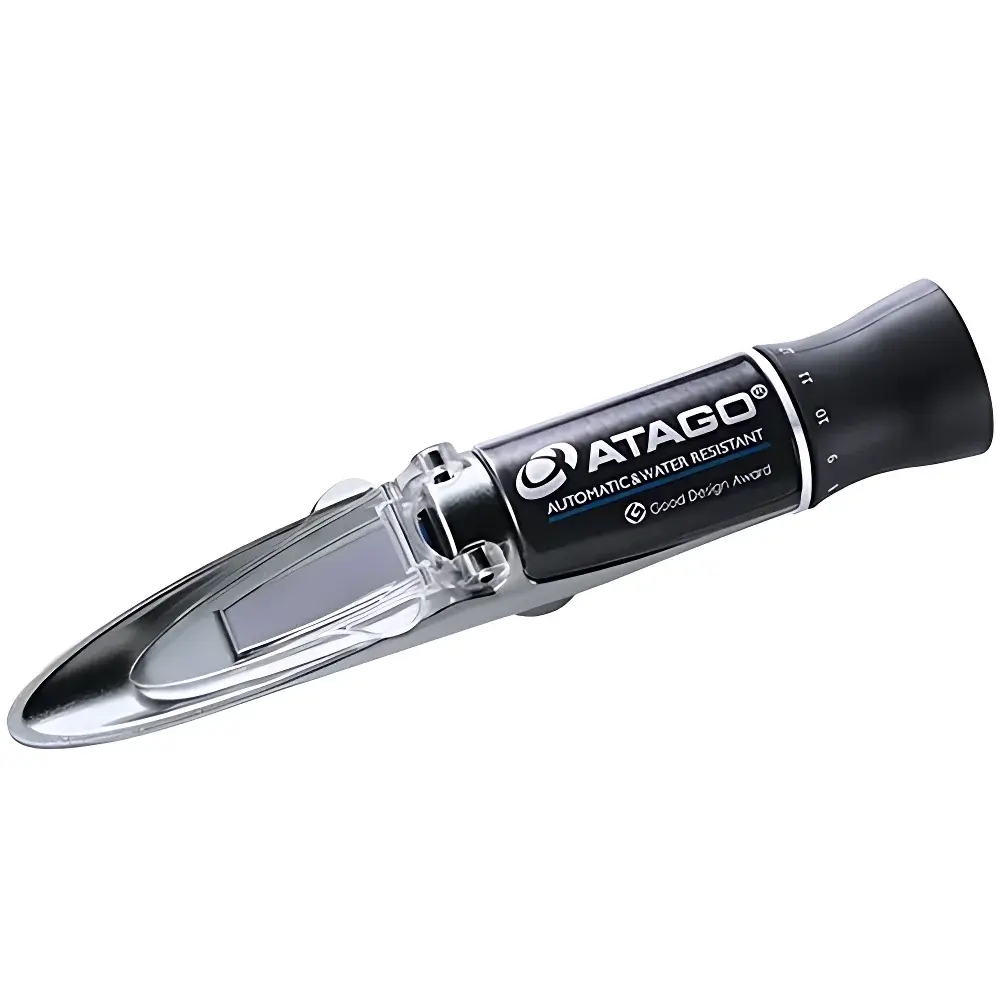
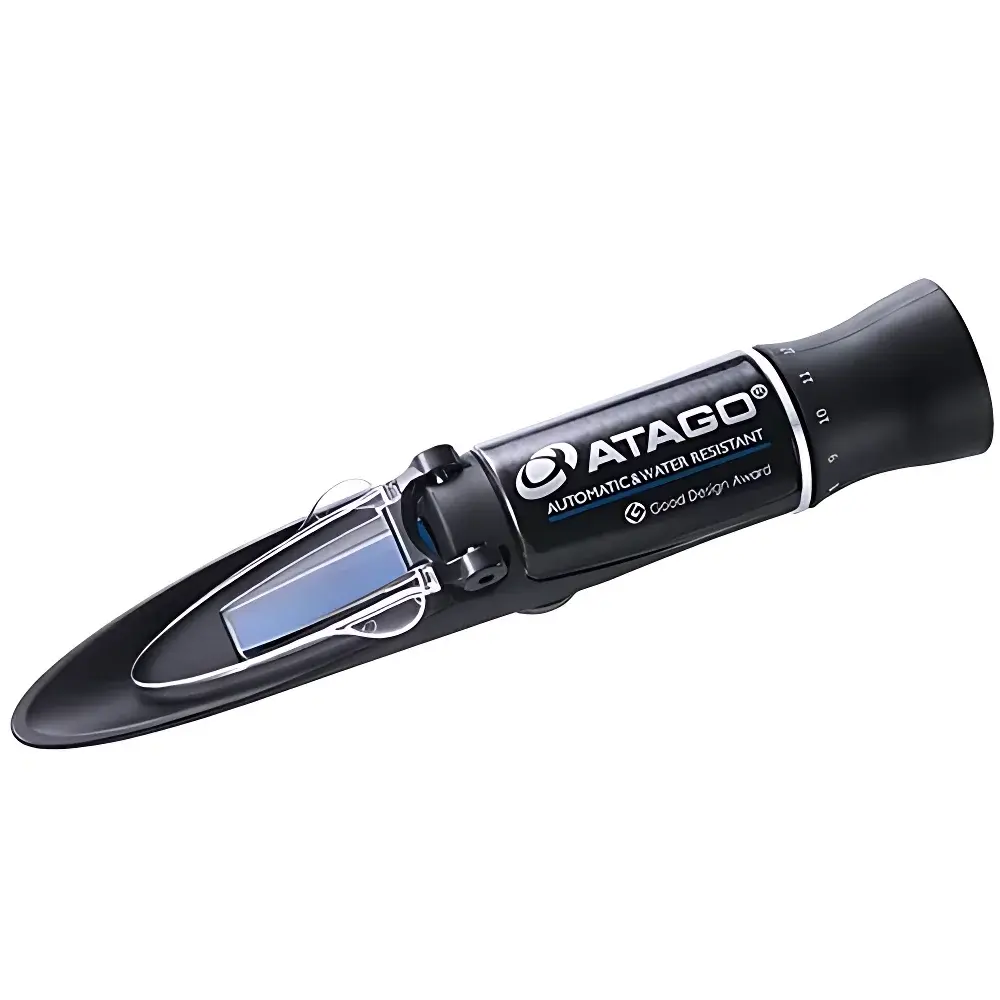
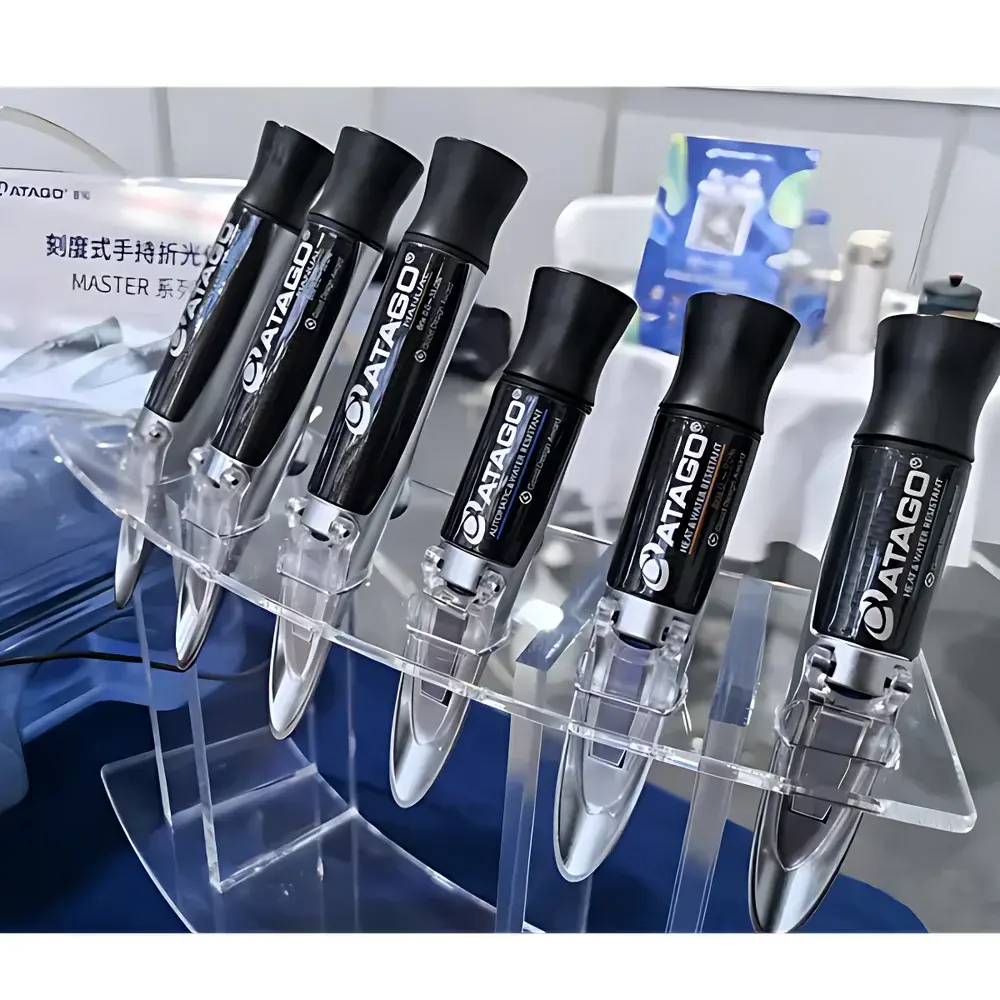
ATAGO MASTER-53α and MASTER-53Pα Analog Handheld Refractometers
| Brand | ATAGO |
|---|---|
| Origin | Japan |
| Model | MASTER-53α / MASTER-53Pα |
| Product Type | Analog Handheld Refractometer |
| Brix Range | 0.0–53.0% |
| Accuracy | ±0.2% Brix (at 20°C) |
| Resolution | 0.2% Brix |
| Repeatability | ±0.1% Brix (at 20°C) |
| Temperature Compensation | Automatic (ATC), 10–30°C ambient |
| IP Rating | IP65 (excluding eyepiece) |
| Dimensions | 3.2 × 3.4 × 16.8 cm |
| Weight | 90 g |
Overview
The ATAGO MASTER-53α and MASTER-53Pα are precision analog handheld refractometers engineered for rapid, field-ready Brix concentration measurement in liquid samples. Based on the fundamental optical principle of total internal reflection—where the critical angle of light refraction at the prism-sample interface correlates directly with solute concentration—these instruments deliver reliable, operator-independent readings without batteries or digital electronics. Designed for high-volume routine analysis in production lines, quality control labs, agricultural field stations, and R&D environments, the MASTER series integrates over eight decades of ATAGO’s refractometry expertise. Both models feature automatic temperature compensation (ATC) across a 10–30°C ambient range, eliminating manual correction and ensuring metrological consistency under typical working conditions. The optical system employs high-stability BK7 glass prisms and calibrated scale optics optimized for human visual acuity, enabling direct Brix readout to 0.2% resolution with ±0.2% accuracy (at 20°C reference temperature) and ±0.1% repeatability.
Key Features
- True Analog Reliability: No batteries, no firmware updates, no screen calibration drift—ideal for harsh, humid, or electrically sensitive environments where electronic instruments risk failure or interference.
- IP65-Rated Construction: Fully sealed main body (excluding eyepiece housing) withstands water jets and dust ingress, permitting post-measurement rinsing under running tap water—critical for food, beverage, and agricultural applications requiring rapid sample turnover and hygiene compliance.
- 180° Hinged Cover Design: Patented full-swing cover enables one-handed sample application and immediate prism cleaning; eliminates traditional pressure-dependent sealing and minimizes air bubble entrapment during droplet placement.
- Automatic Temperature Compensation (ATC): Built-in bimetallic thermal element dynamically adjusts the optical path length in real time, maintaining measurement fidelity across fluctuating ambient temperatures (10–30°C), as specified per ISO 2173:2003 Annex A for sucrose solutions.
- Dual-Housing Options: MASTER-53α features corrosion-resistant aluminum alloy housing for durability in industrial settings; MASTER-53Pα utilizes chemically inert polypropylene housing—recommended for acidic, saline, or oxidizing samples per ASTM D1218 guidelines on material compatibility.
Sample Compatibility & Compliance
These refractometers are validated for aqueous sucrose-based solutions per ISO 2173 and AOAC Official Method 932.12. They accommodate viscous, particulate-laden, or mildly turbid liquids (e.g., fruit pulp extracts, jam pre-blends, syrup concentrates) when filtered or centrifuged prior to measurement. While not suitable for non-aqueous solvents (e.g., ethanol >10%, glycerol, oils), they meet GLP documentation requirements for manual instrument records when paired with standardized SOPs for calibration (using distilled water and certified 10.00% Brix standard solution), cleaning, and environmental monitoring. The IP65 rating supports compliance with HACCP prerequisite programs and FDA Food Code §3-202.11 for equipment sanitation in food processing facilities.
Software & Data Management
As analog optical instruments, the MASTER-53α and MASTER-53Pα do not incorporate embedded software, data logging, or connectivity protocols. Measurement results are recorded manually into laboratory notebooks, LIMS-compatible paper forms, or digital spreadsheets. This architecture ensures zero cybersecurity exposure, no regulatory burden under FDA 21 CFR Part 11 (as no electronic records are generated), and full auditability of raw observational data—aligning with ISO/IEC 17025:2017 Clause 7.7.2 on manual result transcription integrity. Calibration verification logs and user training records constitute the sole required documentation for ISO 9001 or BRCGS audits.
Applications
- Food & Beverage: Quick-check Brix of fresh juice, soft drinks, jams, honey, dairy whey, and tomato paste during harvest, blending, and pasteurization.
- Agriculture & Horticulture: Field-side assessment of fruit ripeness (e.g., grapes, mangoes, citrus) and sap sugar content in nursery stock.
- Chemical Manufacturing: Monitoring concentration of glycol-based coolants, caustic soda solutions, and surfactant dilutions.
- Pharmaceutical Excipients: Verifying sucrose or dextrose concentration in oral rehydration salts and syrups per USP .
- Academic Teaching Labs: Demonstrating refractive index principles, Beer-Lambert law limitations, and temperature dependence of optical properties in physical chemistry courses.
FAQ
Do these models require battery power or charging?
No. The MASTER-53α and MASTER-53Pα are purely optical-mechanical devices with no electronic components.
Can I measure hot or cold samples directly on the prism?
Samples should be within 10–30°C ambient range for optimal ATC performance. Samples outside this range require equilibration or correction using ATAGO’s published temperature deviation charts.
How often must I calibrate the instrument?
Calibrate before each shift or daily use with distilled water (0.0% Brix) and a traceable 10.00% Brix standard; recalibrate immediately after cleaning or if dropped.
Is the eyepiece waterproof?
No—the IP65 rating applies only to the main body. The eyepiece assembly is not sealed and must be protected from direct water contact during rinsing.
What is the difference between MASTER-53α and MASTER-53Pα beyond housing material?
Optical performance, scale calibration, ATC response, and dimensional specifications are identical; only mechanical housing composition and corrosion resistance profiles differ per application environment.





