
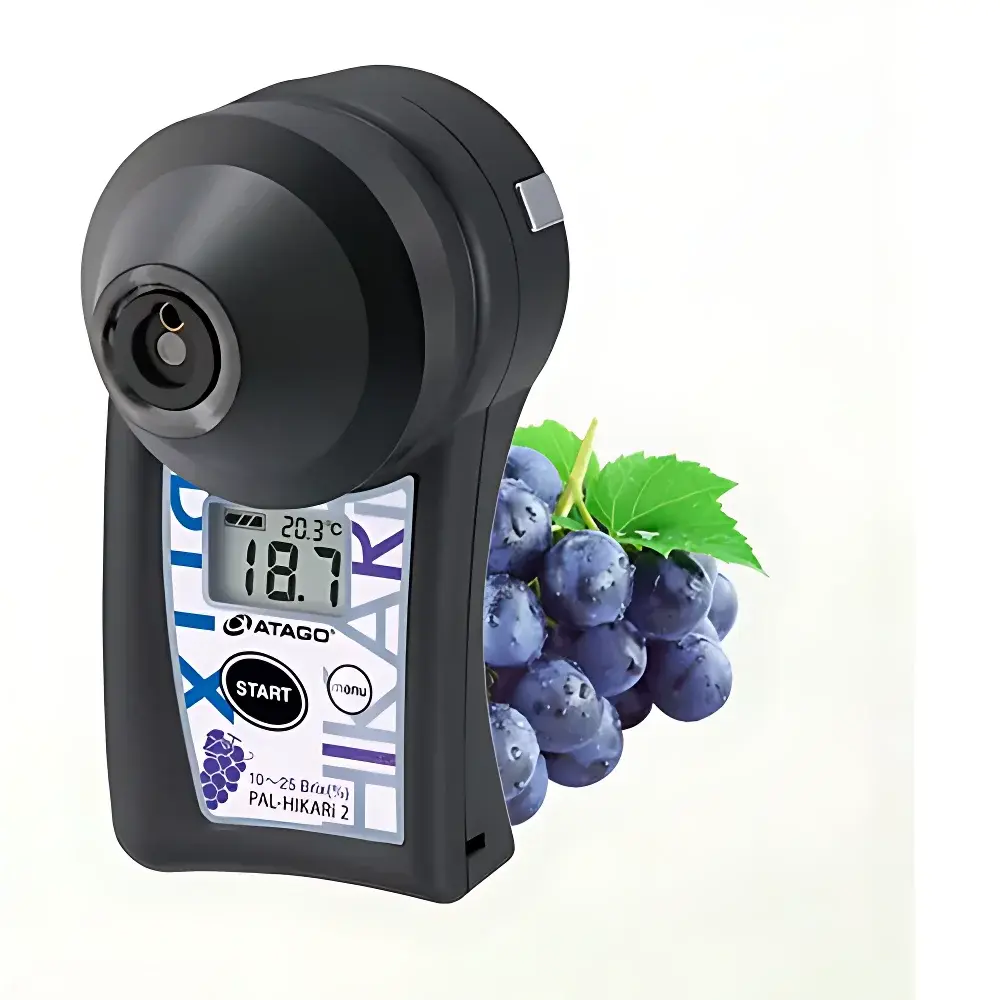
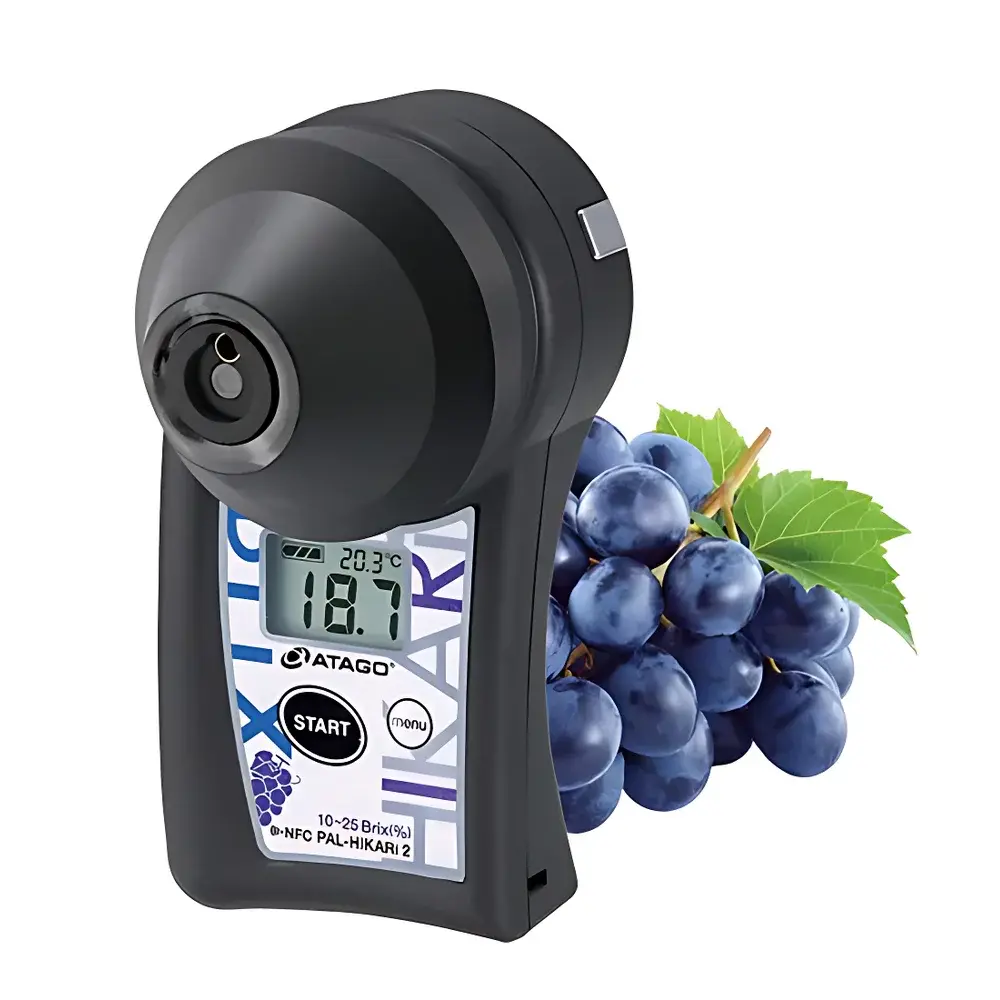
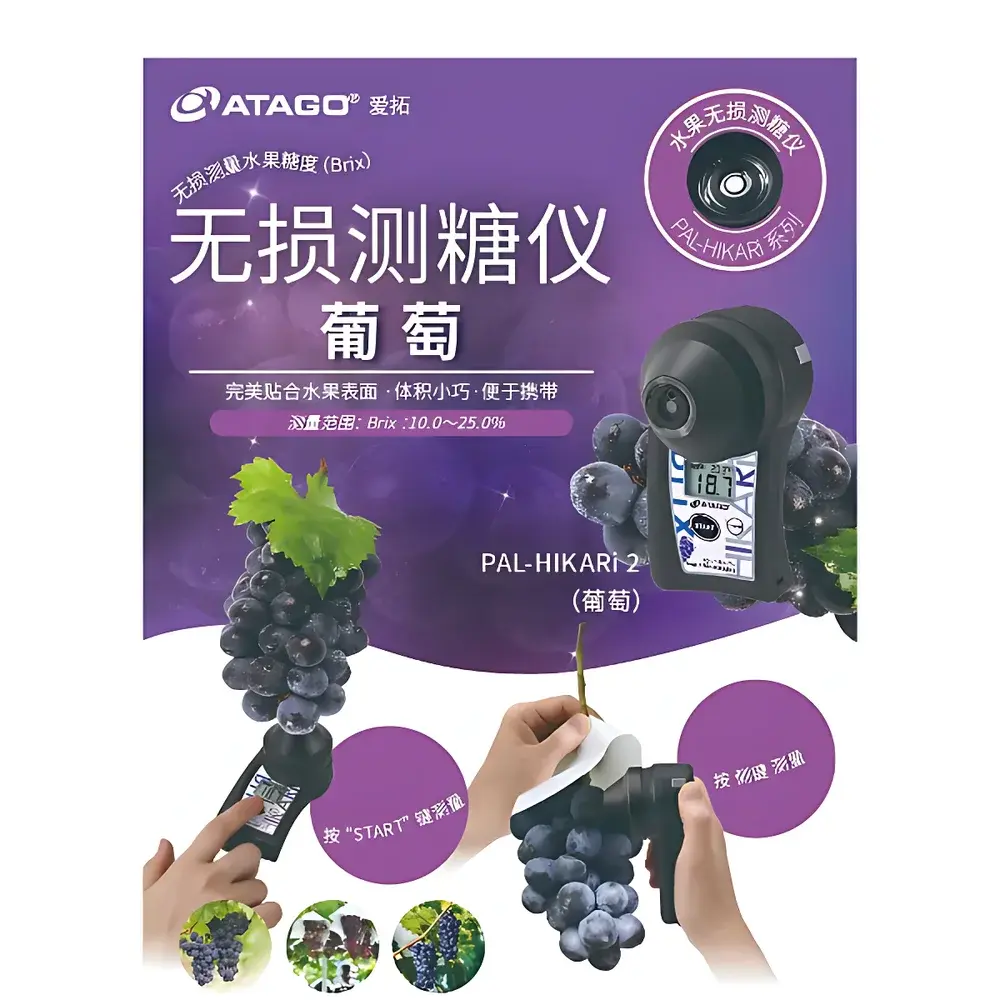
ATAGO PAL-HIKARi 2 Non-Destructive Grape Refractometer
| Brand | ATAGO |
|---|---|
| Origin | Japan |
| Model | PAL-HIKARi 2 |
| Instrument Type | Non-Destructive |
| Measurement Principle | Near-Infrared (NIR) Absorption |
| Brix Range | 10.0–25.0% |
| Temperature Range | 15.0–35.0°C |
| Brix Resolution | 0.1% |
| Temperature Resolution | 0.1°C |
| Brix Accuracy | ±1.5% (varies by grape cultivar and ambient conditions) |
| Temperature Accuracy | ±0.1°C |
| Automatic Temperature Compensation Range | 15.0–35.0°C |
| Battery | Two AAA alkaline cells |
| Battery Life | Approx. 4,000 measurements |
| IP Rating | IP64 |
| Dimensions | 6.1 × 5.2 × 11.5 cm |
| Weight | 142 g (main unit only) |
| Offset Correction Function | Yes |
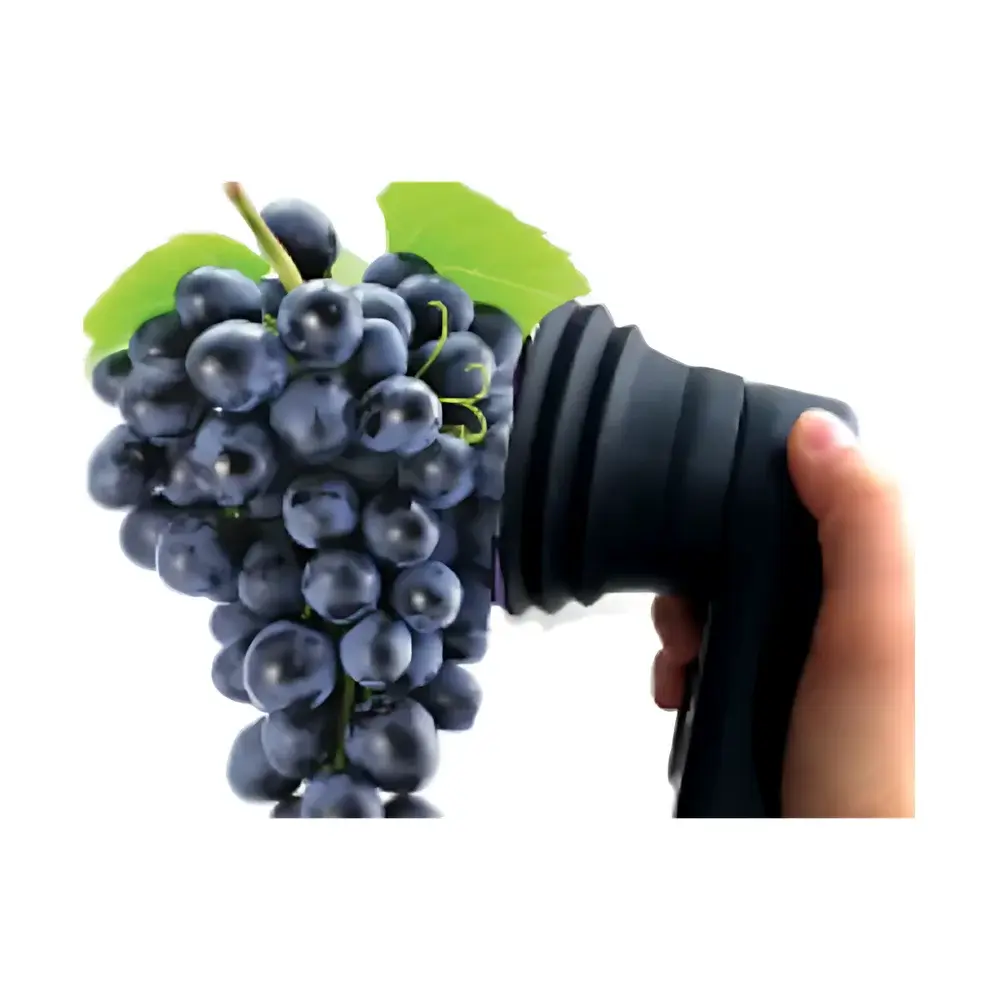
| Sample Interface | Contact-type NIR probe for intact grape surface measurement |
Overview
The ATAGO PAL-HIKARi 2 is a handheld, non-destructive refractometer engineered specifically for in-situ Brix measurement of intact table grapes—without piercing, cutting, or juice extraction. Unlike conventional refractometers requiring destructive sampling, the PAL-HIKARi 2 employs near-infrared (NIR) absorption spectroscopy at wavelengths sensitive to C–H and O–H vibrational overtones in sucrose, glucose, and fructose. The device delivers quantitative soluble solids content (SSC) readings directly from the grape skin surface via optical contact, leveraging built-in temperature compensation and cultivar-optimized calibration algorithms. Designed for field-deployable precision, it operates within the physiologically relevant temperature range of harvested grapes (15.0–35.0°C), ensuring stable performance across orchards, packing houses, and cold-chain logistics environments. Its compact form factor (142 g) and IP64-rated enclosure meet rigorous demands for outdoor durability, dust resistance, and incidental water exposure during routine agricultural use.
Key Features
- Truly non-invasive measurement: No fruit damage, no juice loss—preserves sample integrity for post-harvest quality tracking and traceability.
- Three-second measurement cycle with real-time digital display: Enables rapid throughput during harvest scouting, bin-level grading, or pre-shipment audits.
- Integrated automatic temperature compensation (ATC): Dynamically corrects for thermal drift across 15.0–35.0°C, eliminating manual correction tables and reducing operator dependency.
- Offset correction function: Allows field recalibration against reference samples or laboratory-grade benchtop refractometers to maintain long-term metrological consistency.
- Robust ergonomic design: Sealed housing compliant with IP64 standards ensures reliable operation in high-humidity vineyard microclimates and dusty sorting facilities.
- Energy-efficient architecture: Delivers ~4,000 measurements per set of standard AAA alkaline batteries—minimizing downtime and logistical overhead in remote locations.
Sample Compatibility & Compliance
The PAL-HIKARi 2 is validated exclusively for intact, mature table grape varieties—including Thompson Seedless, Red Globe, Crimson Seedless, and Autumn Royal—under ambient equilibration conditions. Users must allow fruit to thermally stabilize to ambient temperature (≥15°C) for ≥15 minutes prior to measurement to ensure accurate NIR signal interpretation. While not intended for berries with excessive surface wax, powdery mildew, or mechanical bruising, the instrument complies with ISO 2173:2003 (fruit juice Brix determination) as a supplementary field tool when used in conjunction with laboratory validation protocols. It supports Good Agricultural Practice (GAP) documentation workflows and aligns with USDA AMS Grade Standards for grape maturity assessment, though final certification requires confirmatory lab analysis per ASTM D8079-21 (Standard Guide for NIR Spectroscopy in Agricultural Applications).
Software & Data Management
The PAL-HIKARi 2 operates as a standalone instrument with no embedded Bluetooth, Wi-Fi, or cloud connectivity. All measurements are displayed locally on a high-contrast LCD screen; no internal memory or data logging is provided. This design prioritizes reliability, battery longevity, and regulatory simplicity—particularly where electromagnetic interference or cybersecurity constraints apply (e.g., certified organic farms, GMP-aligned processing facilities). For traceable recordkeeping, users integrate results manually into farm management systems (FMS), ERP platforms (e.g., SAP S/4HANA Agri), or Excel-based QC dashboards. Offset values may be documented alongside lot IDs and harvest timestamps to support internal audit trails compliant with ISO 9001:2015 Clause 8.5.2 (Identification and Traceability).
Applications
- Vineyard precision harvesting: Real-time Brix mapping across vine rows informs selective picking decisions, optimizing sugar-acid balance and minimizing under/over-ripeness.
- Post-harvest quality assurance: Enables 100% inline screening of export-grade grapes at packing lines without disrupting workflow or introducing microbial entry points.
- Research & breeding programs: Supports longitudinal maturity profiling of new cultivars under controlled irrigation or canopy management trials—reducing destructive sampling frequency by >70%.
- Import/export inspection: Facilitates rapid pre-clearance checks at border control points or cold storage terminals, accelerating customs release while maintaining statistical confidence.
- Culinary R&D: Assists pastry chefs and beverage developers in verifying raw material consistency—critical for batch-to-batch flavor reproducibility in premium fruit-based products.
FAQ
Does the PAL-HIKARi 2 require calibration with standard sucrose solutions?
No—factory calibration is fixed and non-user-adjustable. Only the offset correction function permits minor deviation correction relative to a trusted reference method.
Can it measure other fruits besides grapes?
It is optimized and validated solely for table grapes. Performance on cherries, apples, or kiwifruit is not characterized and not supported under warranty.
Is the measurement affected by grape skin thickness or color?
Yes—calibration accounts for typical Vitis vinifera epidermal morphology. Significant deviations (e.g., thick-waxed cultivars or red/black pigment saturation) may introduce systematic bias beyond ±1.5% Brix.
How should the probe window be cleaned between measurements?
Wipe gently with a lint-free cloth dampened with distilled water; avoid alcohol or abrasive cleaners that may degrade the NIR-transmissive optical coating.
Does it comply with FDA 21 CFR Part 11 for electronic records?
No—it generates no electronic records. All data capture is manual and falls outside Part 11 scope; however, its use is compatible with paper-based GLP/GMP documentation practices.



