
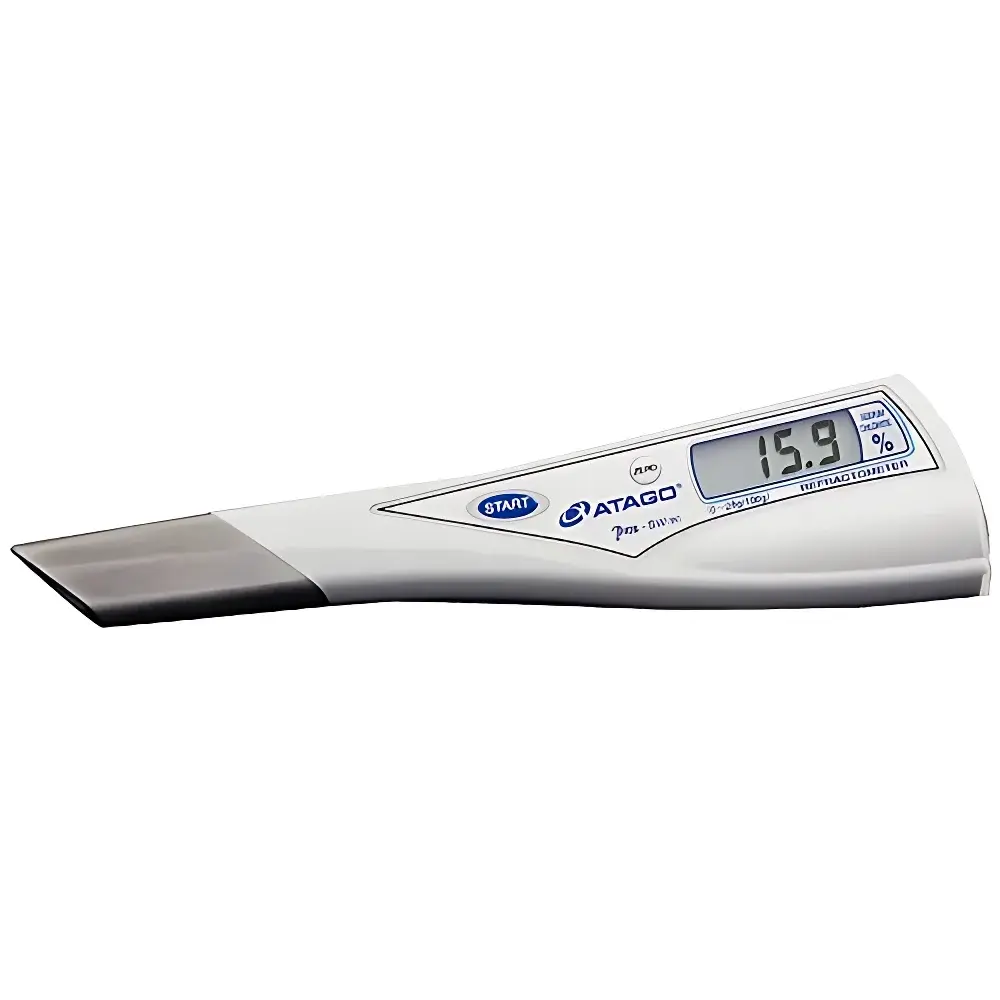
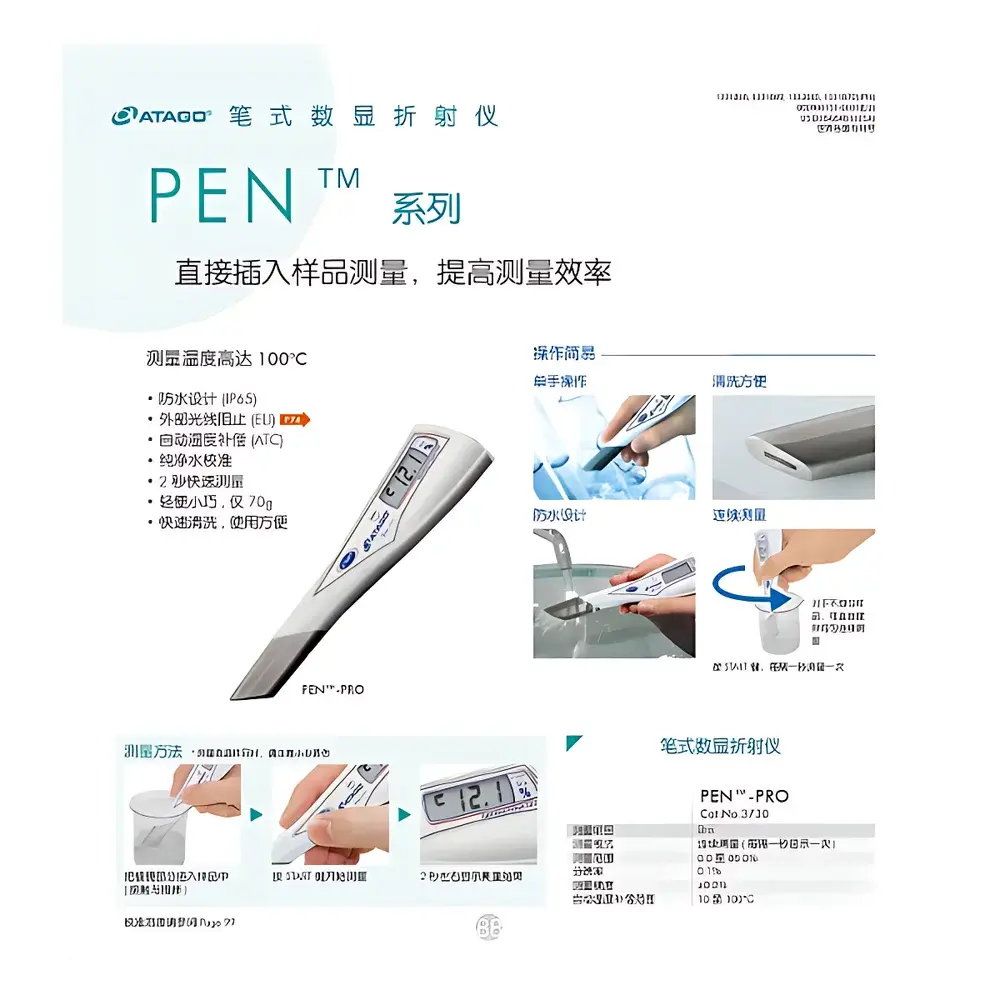
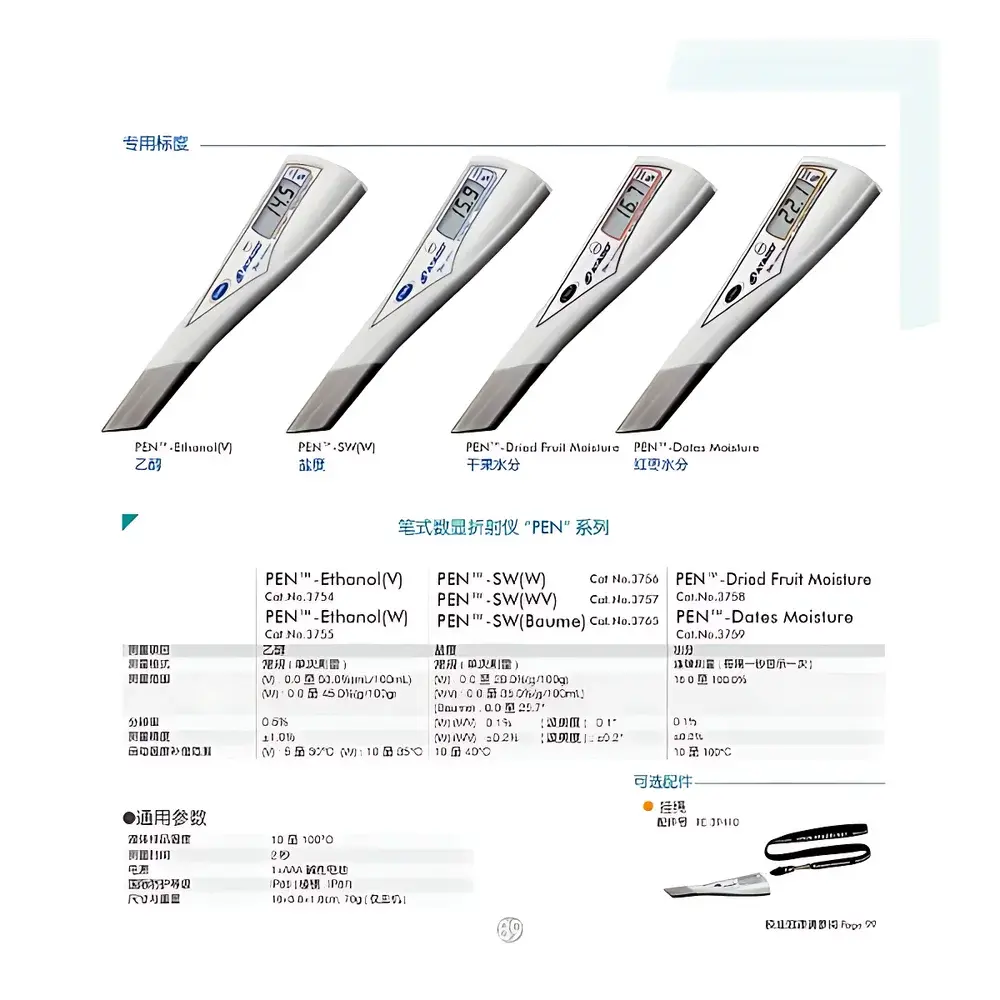
ATAGO PEN-SW(W) Digital Pocket Salinometer
| Brand | ATAGO |
|---|---|
| Origin | Japan |
| Model | PEN-SW(W) |
| Measurement Range | 0.0–28.0% (g/100g) |
| Accuracy | ±0.2% |
| Temperature Compensation | Automatic (ATC), 10–40°C |
| Resolution | 0.1% |
| IP Rating | IP65 (prism: IP67) |
| Power | 1× AAA alkaline battery |
| Dimensions | 160 × 38 × 18 mm |
| Weight | 70 g (instrument only) |
Overview
The ATAGO PEN-SW(W) Digital Pocket Salinometer is a compact, handheld optical instrument engineered for rapid, field-deployable measurement of sodium chloride (NaCl) concentration in aqueous solutions. It operates on the principle of refractometry—specifically, measuring the refractive index of a sample and converting it to NaCl mass concentration (g/100g) using a factory-calibrated, temperature-compensated algorithm. Unlike conductivity-based salinity meters, this device delivers direct NaCl quantification without interference from other dissolved ions (e.g., K⁺, Ca²⁺, Mg²⁺), making it especially suitable for food-grade, aquaculture, and process control applications where chloride-specific accuracy is required. Its optical architecture features a high-stability LED light source, precision-ground prism surface, and thermistor-integrated temperature sensor enabling real-time automatic temperature compensation (ATC) across 10–40°C. Designed for operational robustness in non-laboratory environments, the PEN-SW(W) meets stringent industrial ingress protection standards while maintaining metrological traceability to ATAGO’s ISO/IEC 17025-accredited calibration protocols.
Key Features
- Direct NaCl concentration readout in % (g/100g), eliminating ambiguity associated with PPT or PSU units
- Automatic temperature compensation (ATC) with integrated thermistor ensures consistent accuracy across ambient operating conditions (10–40°C)
- IP65-rated main body and IP67-rated optical prism enable reliable use in humid, splash-prone, or outdoor settings—including fish markets, processing lines, and marine fieldwork
- High-resolution 0.1% display with large LCD and backlight for legibility under variable lighting conditions
- Single AAA alkaline battery provides >5,000 measurements per charge; low-power circuitry extends service life and reduces maintenance intervals
- Ergonomic pen-style form factor (160 × 38 × 18 mm, 70 g) supports one-handed operation and pocket portability without compromising optical stability
Sample Compatibility & Compliance
The PEN-SW(W) is validated for use with clear to mildly turbid aqueous NaCl solutions, including brines, marinades, seawater dilutions, aquarium water, and processed food extracts (e.g., soy sauce, pickling liquids). It is not intended for strongly colored, viscous, or particulate-laden samples without prior filtration. The instrument complies with JIS Z 8013 (Japanese Industrial Standard for refractometers) and conforms to general requirements of ISO 2173:2003 for determination of soluble solids in fruit and vegetable products—though its primary calibration is specific to NaCl. For regulated environments, the device supports GLP-compliant documentation when paired with ATAGO’s optional data logging accessories (e.g., RS-232 interface kits), and its stable optical path enables repeatable measurements meeting internal QC thresholds for batch release in food manufacturing per Codex Alimentarius guidelines.
Software & Data Management
As a standalone handheld instrument, the PEN-SW(W) does not incorporate embedded firmware for data storage or wireless transmission. However, it is compatible with ATAGO’s optional PC interface cable (Model No. 3110) and SALICON™ software suite (v3.2+), which facilitates serial data export (ASCII format), statistical analysis (mean, SD, CV%), and report generation in PDF or CSV. When used in conjunction with laboratory information management systems (LIMS), exported datasets can be mapped to audit trails satisfying FDA 21 CFR Part 11 requirements for electronic records—provided user-defined validation protocols are implemented at the system integration level. Firmware updates are not field-upgradable; calibration verification and adjustment must be performed by authorized ATAGO service centers.
Applications
- Food & Beverage QA/QC: Rapid verification of salt content in cured meats, fermented products, canned vegetables, and ready-to-eat meals
- Aquaculture & Fisheries: On-site monitoring of hatchery water salinity, transport tank brine concentration, and pond management parameters
- Hospitality & Culinary: Consistent seasoning control in commercial kitchens, sushi preparation, and charcuterie programs
- Chemical Process Support: Batch verification of NaCl stock solutions in cleaning agent formulation and electroplating pre-treatment baths
- Field Education & Environmental Screening: Student-level marine science investigations and preliminary salinity profiling in estuarine or coastal zones
FAQ
What is the difference between % (g/100g) and parts per thousand (ppt) for salinity reporting?
The PEN-SW(W) reports NaCl concentration as mass percent (g NaCl per 100 g solution), which differs fundamentally from seawater salinity expressed in ppt (g salt per kg seawater). This unit is standardized for food and industrial NaCl applications per ISO 5725 and avoids assumptions about total dissolved solids composition.
Can this instrument measure sea salt or mixed electrolyte solutions accurately?
No. The PEN-SW(W) is calibrated exclusively for NaCl. Seawater contains ~85% NaCl but also significant concentrations of Mg²⁺, Ca²⁺, and SO₄²⁻, which alter refractive index response. For true seawater salinity, a dedicated seawater refractometer (e.g., ATAGO MASTER-SAL) or conductivity meter is required.
How often should the prism be cleaned and recalibrated?
Wipe the prism with lens tissue and distilled water after each use. Calibration verification against a certified 0.0% and 10.0% NaCl standard is recommended before each shift in critical applications; full recalibration requires factory service.
Is the PEN-SW(W) compliant with FDA or EU food safety regulations?
The device itself is not certified as a regulatory instrument, but its measurement capability supports compliance with HACCP prerequisite programs and EU Regulation (EC) No 852/2004 when operated within defined uncertainty limits and documented calibration intervals.



