
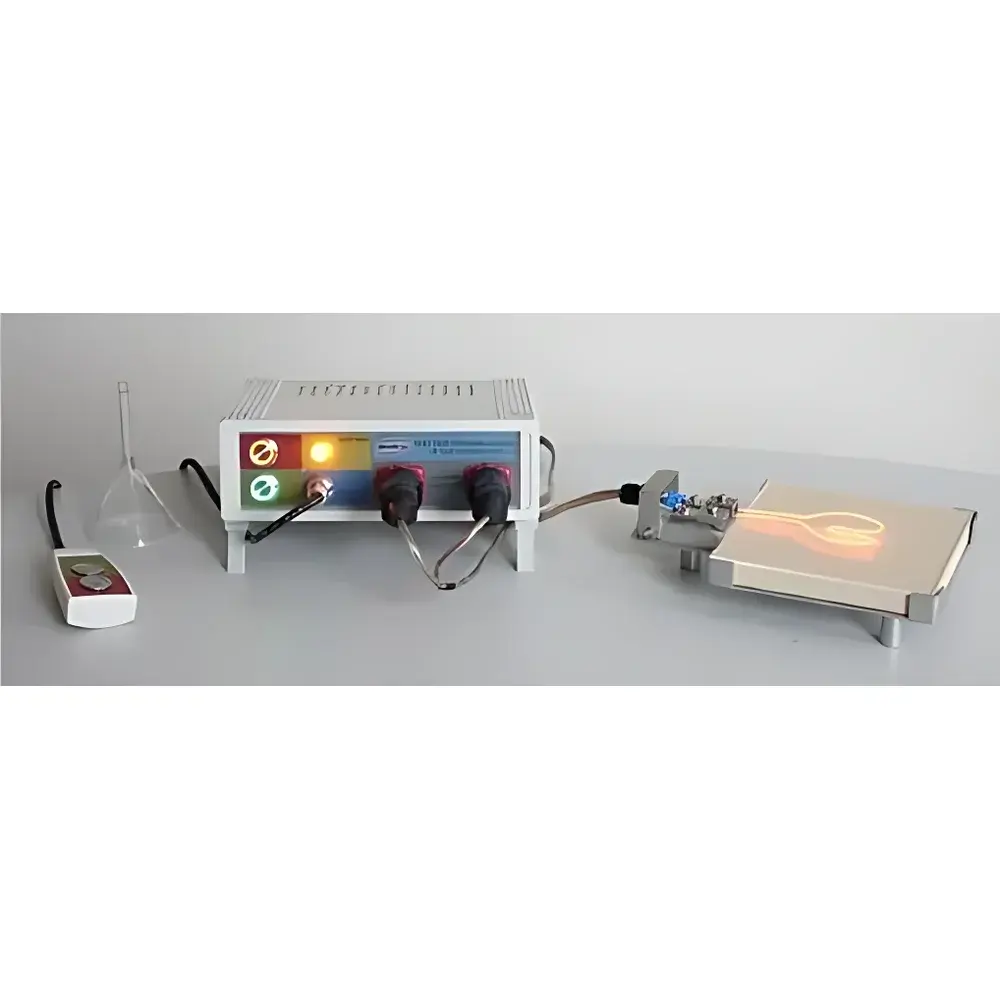
BB-12 Oxidizing Solids Test Apparatus by ANKO (Poland)
| Origin | Poland |
|---|---|
| Manufacturer Type | Authorized Distributor |
| Origin Category | Imported Instrument |
| Model | BB-12 |
| Price Range | USD 28,000 – 70,000 |
Overview
The BB-12 Oxidizing Solids Test Apparatus is a purpose-built, standardized testing system engineered in accordance with the United Nations Recommendations on the Transport of Dangerous Goods — Manual of Tests and Criteria (Rev. 7, Section 34.4.1, Test O.1). It is designed to determine whether a solid substance, when mixed with cellulose, exhibits oxidizing properties sufficient to warrant classification under UN Class 5.1. The apparatus operates on the principle of comparative burning rate measurement: a defined mixture of test sample and analytical-grade cellulose is ignited under controlled thermal insulation conditions, and the time required for flame propagation across a standardized bed is measured and compared against reference oxidizers (e.g., potassium bromate). This quantitative assessment supports regulatory compliance for transport hazard classification, safety data sheet (SDS) authoring, and GHS Category 1 or 2 assignment.
Key Features
- Calibrated glass funnel assembly with internal diameter of 70 mm and included angle of 60°, sealed at the lower outlet — ensures reproducible sample compaction and uniform bed geometry per UN Test O.1 protocol.
- Thermally insulated platform featuring a rigid, dimensionally stable绝热板 (150 mm × 150 mm × 70 mm) fabricated from low-conductivity composite material (thermal conductivity: 0.23 W/(m·K) at 0 °C), minimizing lateral heat loss and maintaining adiabatic boundary conditions during combustion.
- Integrated ignition subsystem comprising a precisely tensioned stainless-steel ignition wire (30 cm length, 0.6 mm diameter), mounted in glove-compatible configuration for operator safety and repeatable spark initiation at the sample surface center.
- Modular, benchtop-integrated design compliant with ISO/IEC 17025 laboratory infrastructure requirements — includes dedicated mounting fixtures, alignment jigs, and non-reactive support hardware to eliminate mechanical variability between test runs.
- Designed for traceable operation: all critical dimensions and material specifications conform to UN Manual Annex 34.4.1.1; calibration documentation and verification templates are provided for internal audit and regulatory inspection readiness.
Sample Compatibility & Compliance
The BB-12 accommodates dry, granular, or powdered solid samples with particle size ≤ 500 µm (as recommended in UN Test O.1). Hygroscopic, thermally unstable, or highly reactive substances require pre-conditioning per ASTM E2019 guidance. The instrument is validated for use with standard reference materials including potassium bromate (UN 1489, Class 5.1) and sodium chloride (non-oxidizer control). Full compliance is maintained with UN TDG Manual Rev. 7, CLP Regulation (EC) No. 1272/2008 Annex I, Section 2.13, and GHS Rev. 10 criteria for oxidizing solids. Documentation supports GLP-aligned test execution, including raw data recording, operator sign-off fields, and environmental condition logging (ambient temperature/humidity).
Software & Data Management
The BB-12 is a manually operated, non-automated test apparatus; no embedded firmware or proprietary software is included. All measurements — ignition timing, burn front progression, and duration recording — are performed using external high-resolution digital timers (±0.1 s resolution, NIST-traceable) and documented in laboratory notebooks or LIMS-integrated electronic worksheets. The supplied test report template aligns with ISO/IEC 17025 clause 7.8 requirements and includes fields for uncertainty estimation (based on repeatability studies per ISO/IEC 17025:2017 Annex A.3), equipment calibration status, and environmental monitoring. Audit trails comply with FDA 21 CFR Part 11 where electronic records are generated via validated LIMS platforms.
Applications
- Hazard classification of industrial chemicals, battery cathode materials (e.g., lithium cobalt oxide, manganese dioxide), and metallurgical intermediates prior to air/rail/sea shipment.
- Regulatory submission support for REACH registration dossiers, EPA TSCA pre-manufacture notices (PMNs), and APIC hazard evaluation reports.
- In-house safety screening during R&D of new energetic formulations, catalysts, and peroxide-based cleaners.
- Verification testing for contract laboratories accredited to ISO/IEC 17025 for UN classification services (e.g., test reports issued under scope item “Oxidizing Solids — UN Test O.1”).
- Training platform for hazardous materials safety officers and DGSA (Dangerous Goods Safety Advisors) certification programs.
FAQ
Does the BB-12 include automated data acquisition or video recording capability?
No. The BB-12 is a manual test apparatus aligned strictly with UN-prescribed methodology. Timing and observation are operator-executed; integration with external high-speed cameras or digital chronometers is permitted but not supplied.
Is calibration certification provided with the instrument?
Yes — dimensional verification certificates for the glass funnel, insulating plate, and ignition wire geometry are included. Thermal conductivity validation data from the manufacturer’s accredited materials lab is supplied upon request.
Can the BB-12 be used for liquids or gases?
No. The BB-12 is specifically configured for solid-phase oxidizing hazard assessment per UN Test O.1. Liquid oxidizers require UN Test O.2 (GB/T 21618-2022 / ASTM D3883); gaseous oxidizers fall outside the scope of this apparatus.
What maintenance is required?
Annual visual inspection of funnel integrity, insulating plate surface degradation, and ignition wire tensile consistency. No scheduled recalibration is mandated unless physical damage occurs; replacement parts are available directly from ANKO’s authorized service network.
Is the BB-12 compatible with EU Declaration of Conformity requirements?
Yes — the apparatus bears CE marking per 2014/68/EU (PED) and 2014/30/EU (EMC Directive) as applicable to laboratory instrumentation. Technical documentation fulfills Annex VII requirements for responsible economic operator declaration.





