
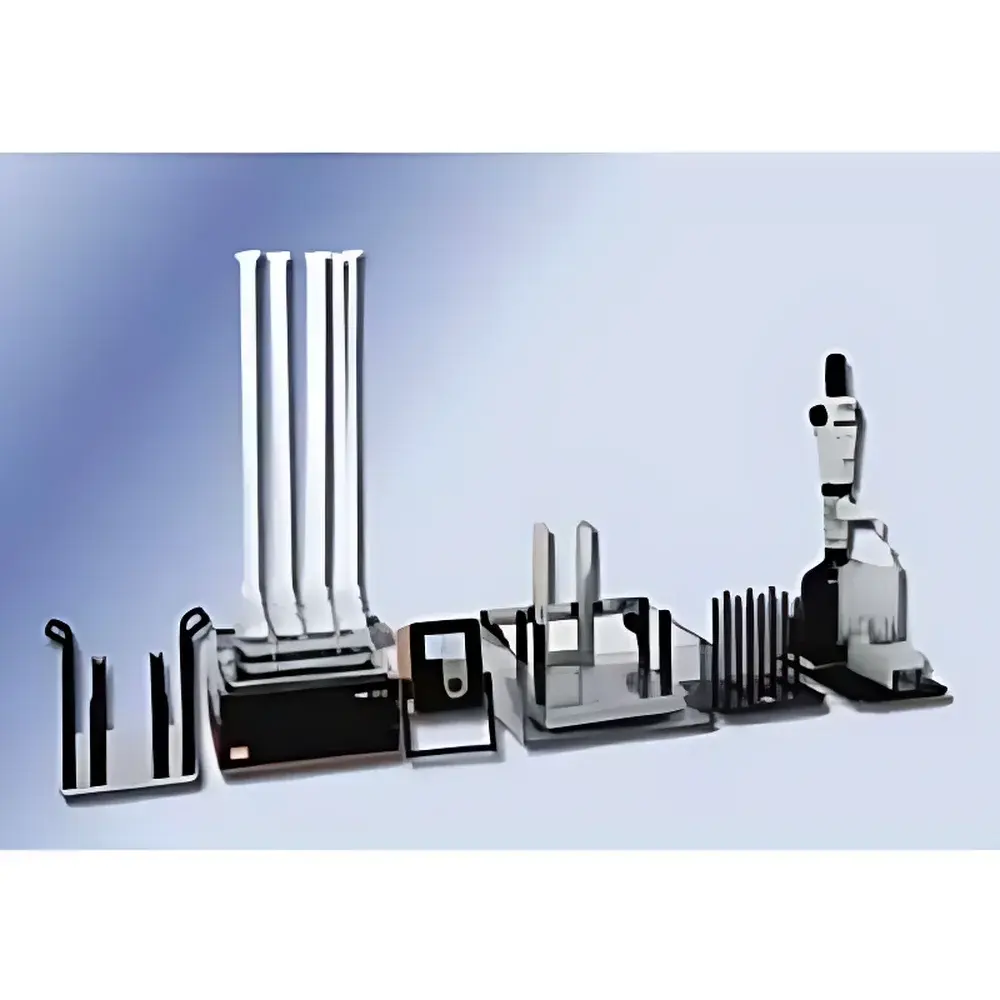
Behr PB-CSB/M COD Sample Testing Workstation
| Origin | Germany |
|---|---|
| Manufacturer Type | Distributor |
| Origin Category | Imported |
| Model | Behr COD |
| Instrument Type | Laboratory Benchtop |
| Measurement Principle | Closed-Reflex Digestion with Spectrophotometric Detection at 610 nm |
| Wavelength | 610 ± 20 nm |
| Range | 10–5000 mg/L COD |
| Accuracy | ≤ ±10% |
| Repeatability | ≤ ±5% |
| LOD | 0.1 mg/L |
| Digestion & Analysis Time | 20 min per batch |
| Batch Capacity | 6 or 12 samples |
| Compliance | ISO 6060, DIN 38409-H41, EN 15372 |
Overview
The Behr PB-CSB/M COD Sample Testing Workstation is a laboratory-grade, benchtop system engineered for standardized chemical oxygen demand (COD) determination in wastewater, surface water, and industrial effluents. It implements the closed-reflux digestion method—fully compliant with ISO 6060, DIN 38409-H41, and EN 15372—followed by spectrophotometric quantification at 610 nm. Unlike open-reflux or rapid digestion kits, this workstation ensures consistent thermal profiles, precise reaction timing, and minimized reagent loss or vapor escape, directly contributing to measurement reproducibility and regulatory traceability. The system supports two configurations: PB-CSB 6/M (6-sample capacity) and PB-CSB 12/M (12-sample capacity), both designed for routine QC/QA labs requiring GLP-aligned workflows and audit-ready documentation.
Key Features
- Modular, rack-mounted architecture integrating digestion, cooling, stirring, and titration functions into a single ergonomic footprint.
- TRS 300 microprocessor controller with pre-programmed digestion cycles—precisely regulating temperature (150 °C ± 2 °C) and duration (120 min standard reflux, adjustable) across all reaction vessels.
- RG 2 borosilicate glass reaction vessels with PTFE-sealed caps (29-channel PTFE sealing ring set included), rated for sustained operation under acidic, high-temperature conditions.
- CSB/E precision heating module with integrated thermal feedback loop and E/B yoke-type mounting frame for uniform heat distribution and mechanical stability.
- LK 1 air-cooling unit with LS support rack, enabling rapid post-digestion cooling (<15 min to <40 °C) without condensate contamination or sample evaporation.
- HTI 1 manual titration station (230 V AC) featuring calibrated burettes, ergonomic grip handles, and drip shields—designed for endpoint detection via ferroin or dichromate colorimetry per ISO standards.
- MRST2 magnetic stir bars and SIST 100 boiling chips (100 g) ensure homogeneous mixing and nucleation control during reflux, reducing bumping and improving digestion completeness.
Sample Compatibility & Compliance
The PB-CSB/M workstation accepts aqueous samples with suspended solids up to 100 mg/L (pre-filtration recommended above this level). It accommodates standard 16 mm × 150 mm digestion tubes and is compatible with potassium dichromate (K₂Cr₂O₇), sulfuric acid (H₂SO₄), and silver sulfate (Ag₂SO₄) reagent systems. All components—including RG 2 vessels, PTFE seals, and cooling hardware—meet EU RoHS Directive 2011/65/EU and are certified for repeated autoclaving (121 °C, 20 min). Method validation data confirm linearity (R² ≥ 0.999), spike recovery (92–105%), and inter-laboratory reproducibility within ISO 5725-2 limits. The system supports full traceability for FDA 21 CFR Part 11–aligned environments when paired with validated LIMS integration.
Software & Data Management
While the PB-CSB/M operates as a hardware-controlled analog workflow, its TRS 300 controller logs time-stamped cycle parameters (start time, setpoint temperature, actual vessel temperature, digestion duration) to internal non-volatile memory. Data export is supported via RS-232 interface to external PCs running Behr’s optional CodSoft v3.2 software (sold separately), which provides automated calibration curve generation, QC flagging (e.g., out-of-range absorbance, incomplete digestion), electronic signature capture, and PDF report generation compliant with ISO/IEC 17025 documentation requirements. Audit trails record all parameter changes, user logins, and result modifications—enabling full GLP/GMP compliance.
Applications
- Regulatory wastewater discharge monitoring per national environmental agencies (e.g., U.S. EPA Method 410.4, China HJ 828–2017).
- In-process control in municipal WWTPs and industrial pretreatment units (textile, pharmaceutical, food & beverage).
- Research-scale COD kinetics studies requiring parallelized, temperature-controlled digestion.
- Method verification and inter-laboratory comparison exercises under ISO/IEC 17043 proficiency testing schemes.
- Educational laboratories teaching standardized wet-chemistry environmental analysis techniques.
FAQ
Does the PB-CSB/M require external cooling water or compressed air?
No—LK 1 uses ambient air convection with forced airflow; no plumbing or utility connections beyond 230 V AC power are needed.
Can the system be upgraded from 6- to 12-sample configuration?
Yes—PB-CSB 6/M and 12/M share identical control electronics and heating modules; only the E/B yoke frame, RG 2 vessel carrier, and MRST2 stir bar count differ.
Is digestion temperature programmable?
Yes—the TRS 300 allows custom temperature profiles (e.g., ramp-hold-cool sequences) within 100–160 °C range, with ±1 °C stability over 120 min.
What maintenance is required for long-term accuracy?
Annual calibration of temperature sensors and photometer (610 nm bandpass filter) is recommended; PTFE seals should be replaced after 200 digestions or visible deformation.
Are consumables supplied with initial purchase?
Standard delivery includes 12× RG 2 vessels, 12× MRST2 stir bars, 12× SIST 100 boiling chips, and one set of 29-channel PTFE seals; reagents and cuvettes are not included.







