
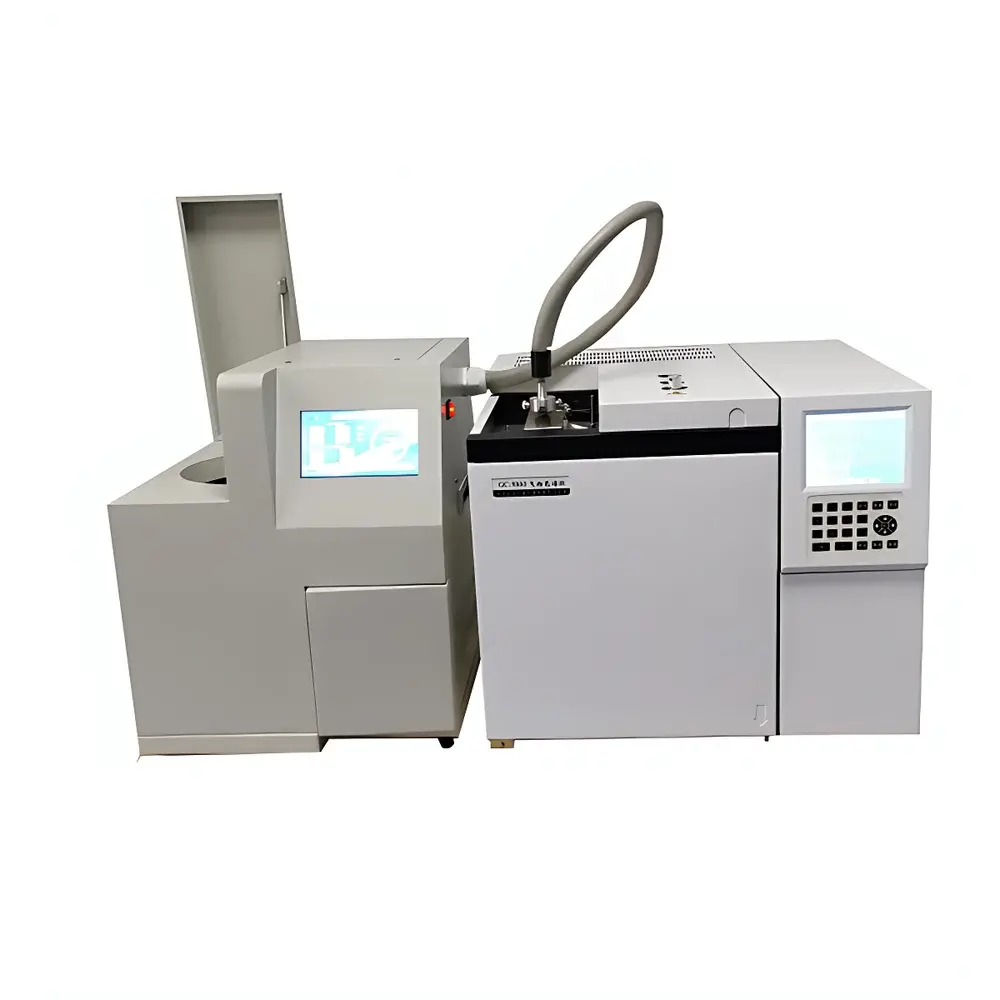
Beifen Sanpu AHS-20A PLUS Automated Headspace Sampler Coupled with GC-9860-5C Gas Chromatograph for Volatile Organic Compounds (VOCs) Analysis in Water
| Brand | Beifen Sanpu |
|---|---|
| Origin | Beijing, China |
| Manufacturer Type | Manufacturer |
| Product Category | Domestic |
| Model | AHS-20A PLUS |
| Instrument Type | Laboratory Water Quality Analyzer |
| Target Analytes | Volatile Organic Compounds (VOCs) |
| Detection Method | Headspace-Gas Chromatography with Flame Ionization Detection (HS-GC-FID) |
| Compliance Standards | GB 5749-2006, GB 3838-2002, GB 8537-2008 |
Overview
The Beifen Sanpu AHS-20A PLUS Automated Headspace Sampler integrated with the GC-9860-5C Gas Chromatograph is a dedicated analytical system engineered for the precise, reproducible quantification of volatile organic compounds (VOCs) in aqueous matrices—including drinking water, groundwater, surface water, and industrial wastewater. This system implements the headspace-gas chromatography-flame ionization detection (HS-GC-FID) principle, leveraging the thermodynamic partitioning of analytes between liquid phase and vapor phase at equilibrium. By heating sealed sample vials to controlled temperatures, VOCs volatilize into the headspace above the aqueous matrix; a precise syringe then transfers the equilibrated vapor directly into the GC inlet, eliminating solvent extraction, concentration steps, and associated contamination risks. The method adheres to the fundamental requirements of ISO 15680:2012 (Water quality — Determination of volatile organic compounds — Headspace gas chromatographic method) and aligns with regulatory frameworks governing environmental monitoring in China, including GB 5749-2006 (Standard for Drinking Water Quality), GB 3838-2002 (Environmental Quality Standard for Surface Water), and GB 8537-2008 (Natural Mineral Water). Its design emphasizes robustness, method transferability, and compatibility with routine compliance testing in accredited environmental laboratories.
Key Features
- Automated 20-position headspace sampler (AHS-20A PLUS) with programmable incubation temperature (30–200 °C), equilibration time (0–999 min), and pressurized vial agitation for enhanced mass transfer and reproducibility.
- GC-9860-5C networked gas chromatograph featuring dual independent oven zones, 8-step programmable temperature ramping, intelligent back-flush capability, and FID optimized for low ng/L-level detection of C2–C12 hydrocarbons and halogenated VOCs.
- Fully integrated EPC (Electronic Pressure Control) for carrier gas (N₂ or He), hydrogen, and air—ensuring retention time stability <0.02 min and peak area RSD <1.5% (n=6) across consecutive injections.
- 5.7-inch industrial-grade color LCD interface supporting both English and Chinese operating systems, real-time parameter monitoring, and local data logging without external PC dependency.
- Modbus/TCP-enabled NETChrom® workstation capable of concurrent control and data acquisition from up to 253 GC units, audit-trail compliant data storage, and seamless integration with LIMS or DCS environments per ISO/IEC 17025 and GLP requirements.
Sample Compatibility & Compliance
The system is validated for direct analysis of untreated or filtered water samples (20 mL in crimp-top headspace vials). It supports quantification of regulated VOCs including benzene, toluene, ethylbenzene, xylenes (BTEX), chloroform, carbon tetrachloride, trichloroethylene, tetrachloroethylene, dichloromethane, vinyl chloride, chlorobenzene, nitrobenzene, and selected pesticides (e.g., lindane, DDT metabolites) at concentrations ranging from 0.05 µg/L to 200 µg/L. Method validation follows EPA Method 524.2 (Determination of VOCs in Water by Purge and Trap Capillary Column GC/FID) principles adapted for static headspace operation, with demonstrated linearity (R² ≥ 0.999), recovery rates of 85–115%, and MDLs consistent with GB 5749-2006 reporting thresholds. All hardware and software components comply with electromagnetic compatibility (EMC) standards IEC 61326-1 and safety standard IEC 61010-1. Data integrity conforms to FDA 21 CFR Part 11 requirements via electronic signatures, user access levels, and immutable audit trails within NETChrom®.
Software & Data Management
NETChrom® is a GxP-ready chromatography data system (CDS) certified for use in regulated environments. It provides full instrument control, sequence scheduling, peak integration using adaptive baseline algorithms, calibration curve generation (linear, quadratic, or weighted), and automated report generation compliant with ISO/IEC 17025 Annex A.2. The software supports raw data archiving in vendor-neutral formats (e.g., mzML-compatible export), configurable electronic signature workflows, and role-based permissions (analyst, reviewer, administrator). Built-in Modbus/TCP server functionality enables real-time telemetry transmission to central SCADA or environmental monitoring platforms. Data backups are encrypted and timestamped; all user actions—including method edits, result overrides, and audit log reviews—are permanently recorded with operator ID and IP address.
Applications
This configuration serves as a primary tool for environmental quality laboratories conducting routine surveillance under national water quality programs. Key applications include: monitoring BTEX and chlorinated solvents in municipal drinking water supplies; screening industrial effluents from petrochemical, pharmaceutical, pesticide manufacturing, and dye synthesis facilities; verifying remediation effectiveness at contaminated sites; supporting regulatory submissions to provincial ecological environment departments; and performing method verification studies for ISO/IEC 17025 accreditation. It is also employed in research settings for kinetic studies of VOC partitioning, method development for emerging contaminants (e.g., PFAS precursors), and inter-laboratory comparison exercises coordinated by CNAS.
FAQ
Is this system compatible with third-party gas chromatographs?
Yes—the AHS-20A PLUS features universal GC interface protocols (TTL, RS-232, and analog voltage outputs) and is validated for seamless integration with Agilent, Shimadzu, Thermo Fisher, and other major GC platforms.
What is the typical analysis cycle time per sample?
A complete HS-GC-FID run—including 30 min equilibration, 1 min injection, and 25 min chromatographic separation—requires approximately 58 minutes, enabling throughput of up to 15 samples per 14-hour shift.
Does the system support unattended overnight operation?
Yes—both the AHS-20A PLUS and GC-9860-5C support scheduled start-up, auto-tuning, and sequence-based batch processing with email/SMS alerts triggered by error conditions or completion events.
Can the method be extended to semi-volatile organic compounds (SVOCs)?
While optimized for VOCs, the system may analyze select SVOCs (e.g., phenols, nitrobenzenes) using elevated vial temperature (up to 120 °C) and longer equilibration times; however, full SVOC coverage requires thermal desorption or liquid–liquid extraction per EPA Method 8270.
What documentation is provided for regulatory audits?
Each unit ships with Factory Acceptance Test (FAT) reports, IQ/OQ documentation templates, 21 CFR Part 11 readiness assessment, and a comprehensive SOP library covering installation, operation, maintenance, and method validation.







