
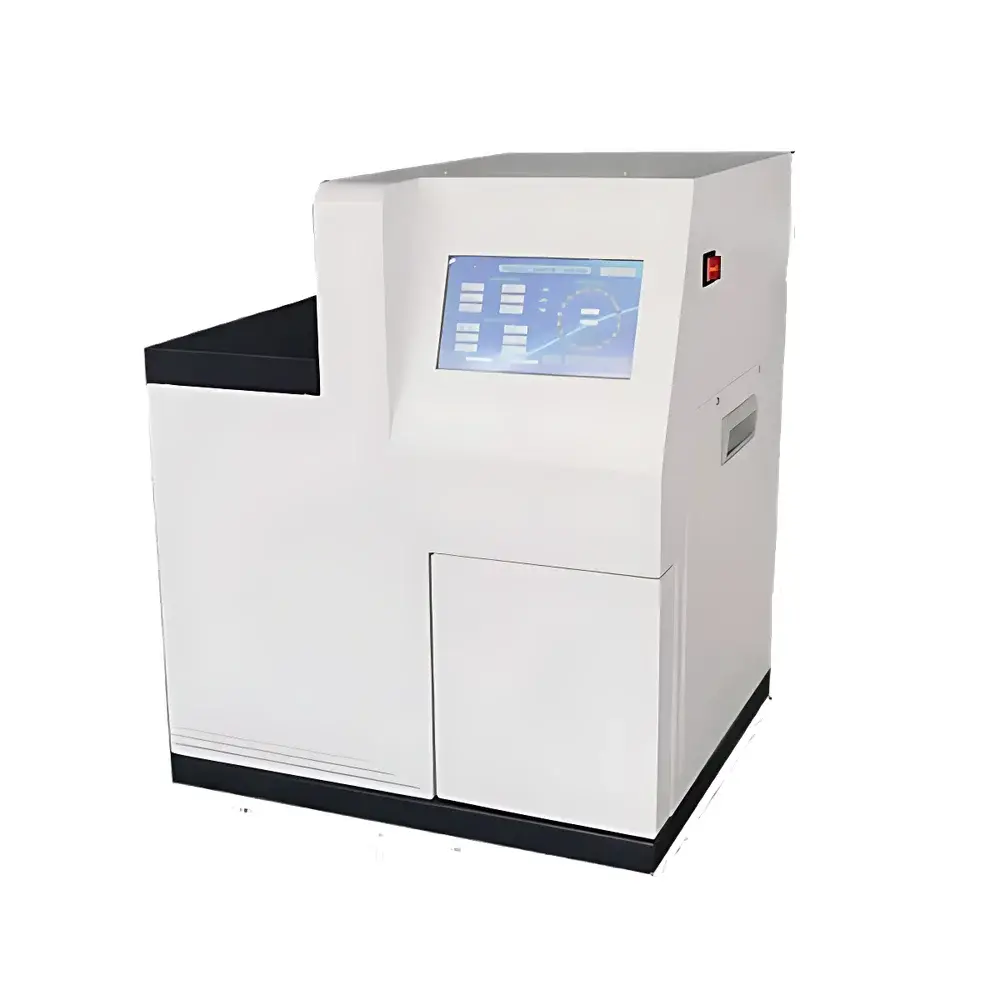
Beifen Sanpu AHS-20A Plus Fully Automated Headspace Sampler
| [Brand | Beifen Sanpu |
|---|---|
| Origin | Beijing, China |
| Manufacturer Type | Direct Manufacturer |
| Model | AHS-20A Plus |
| Sample Capacity | 20-position |
| Heating Range (Sample/Valve/Transfer Line) | 40–220 °C (configurable up to 300 °C) |
| Temperature Accuracy | ±0.5 °C |
| Temperature Stability | <±0.5 °C |
| Pressure Control Range | 0–0.25 MPa (continuously adjustable) |
| Loop Volume | 1 mL (customizable: 0.5 / 2 / 5 mL) |
| Vial Size Compatibility | 10 mL or 20 mL (customizable: 50 / 100 mL) |
| Pressurization Time | 0–999 s |
| Sampling Time | 0–30 min |
| Injection Time | 0–999 s |
| Bake-out/Clean Time | 0–30 min |
| Minimum Time Resolution | 1 ms |
| Purge Flow Rate | 0–100 mL/min (adjustable) |
| RSD | <1.0% (100 ppm ethanol in water) |
| Interface | USB |
| Valve Type | High-inertness 6-port valve with heated connection point |
| Transport Lines | Deactivated fused-silica capillary tubing |
| Drive Mechanism | Motor-driven (no external gas required) |
| Compliance | ASTM D3792, ISO 11843-2, USP <467>, EPA Method 502.2, 524.2, 8240, 8260] |
Overview
The Beifen Sanpu AHS-20A Plus Fully Automated Headspace Sampler is an engineered solution for precise, reproducible, and unattended volatile organic compound (VOC) extraction from liquid and solid matrices prior to gas chromatographic analysis. Based on the principle of equilibrium headspace sampling—where analytes partition between a sealed sample vial’s condensed phase and its vapor phase—the instrument thermally equilibrates samples under controlled temperature and pressure conditions, followed by pressurized transfer of the headspace gas into a high-inertness quantitative loop and subsequent injection onto a GC column via a thermostatted 6-port valve. Designed for routine QC laboratories, environmental testing facilities, and pharmaceutical development labs, it delivers robust performance across regulated and non-regulated environments while supporting method validation requirements per ICH Q2(R2), USP , and EPA Compendium methods.
Key Features
- 20-position sample carousel with automatic vial recognition and collision-avoidance logic—skips empty positions and halts motion upon mechanical anomaly detection.
- Triple-zone independent heating system: sample oven (40–220 °C, optional to 300 °C), valve block (same range), and transfer line (same range), all maintained within ±0.5 °C stability and 0.5% accuracy.
- Fully motor-driven actuation—eliminates dependency on external compressed air or nitrogen, reducing infrastructure requirements and operational hazards.
- Heated 6-port valve with integrated quantitative loop (standard 1 mL; optional 0.5 / 2 / 5 mL); valve-to-loop interface located inside thermal enclosure to prevent condensation and analyte loss.
- Deactivated fused-silica transport lines and inert sampling needles minimize adsorption, carryover, and cross-contamination—validated with <1.0% RSD for 100 ppm ethanol in aqueous matrix.
- 7-inch full-color graphical LCD with intuitive icon-based workflow animation; supports both front-panel and remote USB parameter configuration.
- Configurable sampling protocols: single-vial multi-injection, single-vial single-injection, or multi-vial single-injection—enabling method flexibility without software reprogramming.
- Integrated electronic pressure control (EPC) option enhances long-term retention time stability and reduces manual calibration frequency.
Sample Compatibility & Compliance
The AHS-20A Plus accommodates standard 10 mL and 20 mL crimp-top headspace vials (with optional adapters for 50 mL and 100 mL formats), supporting aqueous solutions, polymers, soils, pharmaceutical tablets, and food matrices. Its thermal and pressure profiles comply with key regulatory frameworks including USP residual solvents testing, EPA Methods 502.2 (halogenated hydrocarbons), 524.2 (purge-and-trap VOCs), 8240 (GC/MS for SVOCs), and 8260D (VOCs in water and soil). The system supports audit-trail-capable operation when paired with 21 CFR Part 11–compliant chromatography data systems (CDS), and maintains GLP/GMP traceability through timestamped method logs, run history, and error-event recording.
Software & Data Management
All operational parameters—including temperature ramps, pressurization duration, loop fill time, injection volume, purge flow rate, and sequence scheduling—are programmable via USB-connected host PC or local touchscreen. The embedded firmware stores up to 20 user-defined methods with version-stamped metadata (date/time of creation, last modification, operator ID). Real-time status monitoring displays current zone temperatures, valve position, vial index, elapsed cycle time, and fault codes. When synchronized with GC systems, the sampler triggers instrument start, injects at precisely defined retention windows, and logs GC acquisition confirmation—ensuring full method traceability. Exportable CSV reports include vial ID, injection count, peak area CV%, and thermal deviation logs for QA review.
Applications
- Residual solvent analysis in APIs and excipients per ICH Q3C guidelines.
- VOC profiling in drinking water, wastewater, and groundwater per EPA 524.2 and ISO 15681-2.
- Flavor and fragrance compound quantification in beverages and dairy products.
- Leachable and extractable studies for medical device packaging per USP .
- Stability-indicating assays for oxidized lipids and degradation volatiles in nutraceuticals.
- Automotive interior air quality testing per ISO 12219-4 (interior materials emissions).
FAQ
Does the AHS-20A Plus support unattended overnight operation?
Yes—its 20-vial capacity, automated vial indexing, and self-diagnostic routines enable continuous batch processing without manual intervention.
Can the system be integrated with Agilent, Shimadzu, or Thermo GC platforms?
Yes—it provides TTL-level GC start triggers and accepts external event signals, ensuring seamless hardware synchronization across major GC brands.
Is EPC (electronic pressure control) included as standard?
EPC is an optional upgrade; base configuration uses precision mechanical pressure regulation with digital setpoint control.
What maintenance intervals are recommended for long-term reliability?
Valve rotor seal replacement every 10,000 injections; quantitative loop cleaning every 500 runs; annual calibration verification against NIST-traceable standards.
How is carryover mitigated during high-concentration sample analysis?
The system employs programmable post-injection bake-out (0–30 min), adjustable purge flow (0–100 mL/min), and inert surface passivation—validated with <0.1% carryover for 10,000 ppm toluene spikes.





