
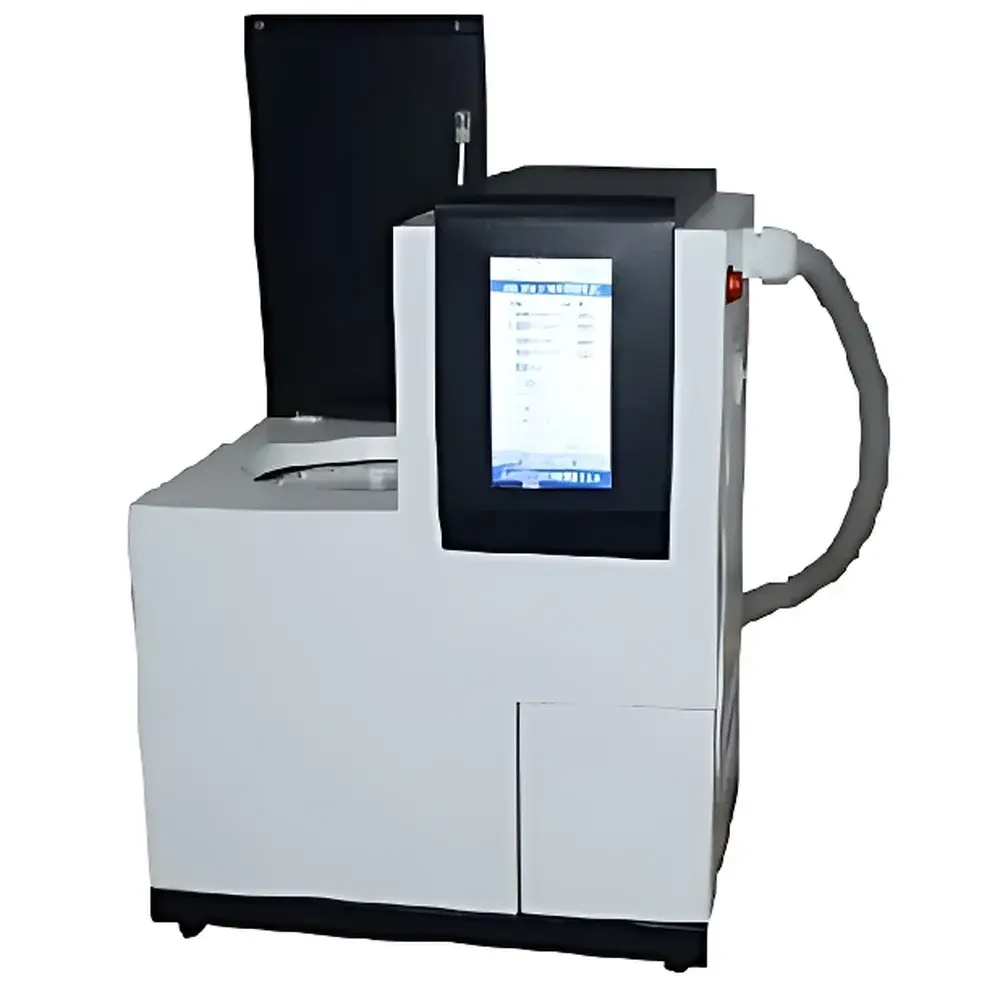
Beifen Sanpu ASTD-20A Fully Automated Thermal Desorber
| Brand | Beifen Sanpu |
|---|---|
| Origin | Beijing, China |
| Manufacturer Type | OEM Manufacturer |
| Product Category | Domestic |
| Model | ASTD-20A |
| Instrument Type | Single-Stage Thermal Desorber / Thermal Desorber |
| Primary Desorption Temperature Range | Ambient to 400 °C |
| Secondary Desorption Temperature Range | 100–400 °C |
| Cold Trap Temperature Range | Down to –35 °C |
| Desorption Recovery Rate | >90% |
| Sample Capacity | 20 positions |
Overview
The Beifen Sanpu ASTD-20A Fully Automated Thermal Desorber is a precision-engineered sample introduction system designed for quantitative trace volatile organic compound (VOC) analysis in environmental, industrial hygiene, and materials testing laboratories. It operates on the principle of thermal desorption — a two-stage gas-phase enrichment technique wherein analytes pre-concentrated on sorbent tubes (e.g., Tenax®, Carbopack™, or activated carbon) are thermally released, cryogenically focused in a low-temperature trap, and then rapidly injected into a gas chromatograph (GC) or GC–MS system as a narrow, high-concentration band. Unlike manual or semi-automated desorbers, the ASTD-20A integrates full sequence automation — including tube loading/unloading, primary/secondary desorption, cold trap modulation, valve switching, and GC synchronization — enabling unattended operation of up to 20 samples per batch. Its dual-zone temperature control architecture (independent heating of primary desorption chamber, secondary desorption zone, transfer line, and injection valve) ensures precise thermal management critical for reproducible analyte release and minimal thermal degradation.
Key Features
- Fully automated 20-position carousel with motorized tube handling and self-calibrating positional indexing
- Four independently controlled temperature zones: primary desorption furnace (ambient–400 °C), secondary desorption zone (100–400 °C), transfer line (up to 350 °C), and injection valve (up to 300 °C)
- Cryogenic cold trap capable of reaching –35 °C using Peltier-based electronic cooling — no liquid nitrogen or external chillers required
- Integrated tube activation module with programmable heating profiles for in-situ regeneration of used sorbent tubes
- Automated back-flush function for transfer line and injection valve to eliminate carryover between runs
- Touchscreen HMI with intuitive workflow navigation, real-time status animation, and method parameter logging
- Native GC synchronization via TTL or Ethernet trigger; compatible with Agilent, Thermo Fisher, Shimadzu, and PerkinElmer GC platforms via dedicated hardware interfaces
- Optional configurations available: ambient-temperature secondary desorption, or cryo-enhanced low-temperature secondary desorption for improved resolution of highly volatile compounds
Sample Compatibility & Compliance
The ASTD-20A supports standard 6 mm OD × 89 mm length stainless steel or quartz sorbent tubes, including multi-bed configurations (e.g., Tenax TA + Carbograph 1TD + Carboxen 1000). It accommodates both single-bed and mixed-bed tubes used in compliance with ISO 16017-1, EPA TO-17, ASTM D6196, and China’s GB 50325–2020 for indoor air and building material VOC testing. All thermal zones are calibrated traceably to NIST-traceable reference standards. The instrument meets electromagnetic compatibility (EMC) requirements per IEC 61326-1 and electrical safety standards per IEC 61010-1. Audit trail functionality, user access levels, and method versioning support GLP/GMP-aligned workflows where required by regulatory submissions.
Software & Data Management
Control is managed via embedded firmware with local touchscreen interface and optional PC-based software (Windows 10/11 compatible) supporting method creation, sequence scheduling, real-time monitoring, and event logging. All method parameters — temperature ramps, hold times, valve timing, trap cooling/heating profiles — are stored with timestamps and operator ID. Raw thermal event logs (including heater power, sensor readings, and fault codes) are exportable in CSV format for root-cause analysis. The system supports 21 CFR Part 11-compliant electronic signatures when deployed with validated third-party LIMS or chromatography data systems (CDS), though native Part 11 features require configuration validation by the end user per organizational SOPs.
Applications
- Indoor air quality assessment per GB 50325–2020 and ISO 16000 series (formaldehyde, benzene, toluene, xylenes, C2–C12 aliphatics)
- Testing of volatile emissions from construction materials (plywood, particleboard, carpets, adhesives)
- Occupational exposure monitoring in manufacturing and chemical processing facilities
- Food packaging migration studies (e.g., residual solvents in laminates)
- Forensic analysis of ignitable liquids and accelerants
- Method development for emerging contaminants including siloxanes, fluorinated ethers, and oxygenated VOCs
FAQ
How often should the cold trap be cleaned or serviced?
The Peltier-cooled cold trap requires no consumables, but its internal surface should be inspected quarterly for frost accumulation or residue buildup. A light ethanol wipe is sufficient if contamination is observed; avoid abrasive cleaners.
Can the ASTD-20A be used for EPA Method TO-17 analysis without modification?
Yes — the instrument meets all thermal desorption performance criteria specified in TO-17, including temperature accuracy (±2 °C), ramp rate control, and recovery validation protocols. Users must validate their specific method using certified reference standards.
Is routine calibration of temperature sensors required?
Per ISO/IEC 17025 guidance, temperature zones should be verified annually using a calibrated NIST-traceable probe. Factory calibration certificates are supplied with each unit.
What maintenance intervals are recommended for the pneumatic valves and actuators?
Valve cycling life exceeds 500,000 operations. Inspect O-rings and seating surfaces every 6 months; replace if cracking or compression set is visible. Use only fluorosilicone-grade replacement seals.
Does the system support remote diagnostics or firmware updates?
Firmware updates are performed locally via USB drive. Remote desktop access is not enabled by default; however, secure SSH or VNC may be configured on customer-managed networks under IT policy approval.





