
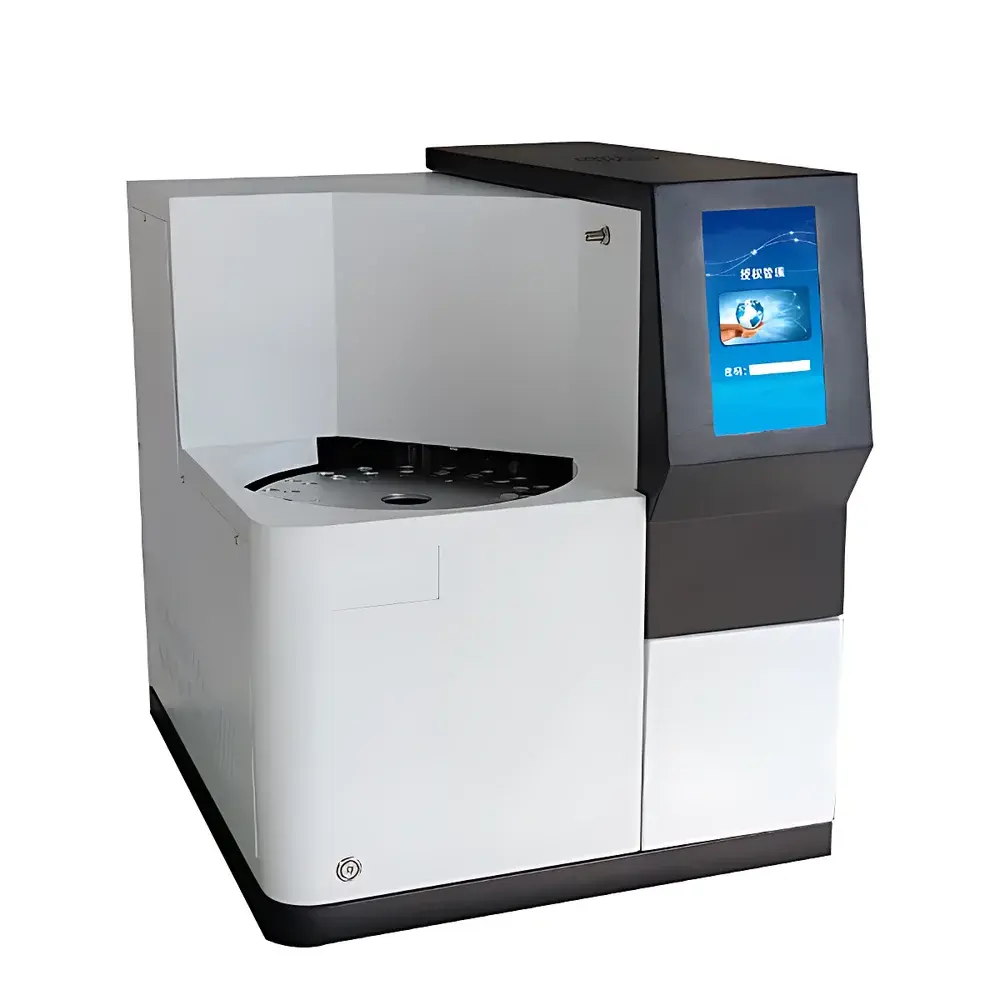
Beifen Sanpu ATDS-20A Cryogenic Cold Trap Dual-Stage Automated Thermal Desorber
| [Brand | Beifen Sanpu |
|---|---|
| Origin | Beijing, China |
| Manufacturer Type | Direct Manufacturer |
| Model | ATDS-20A |
| Cold Trap Range | −35 °C to Ambient |
| Primary Heating Zones | 4 Independent Zones (Desorption 1, Valve, Transfer Line, Desorption 2) |
| Temperature Resolution | 1 °C |
| Temp Control Accuracy | < ±0.5 °C |
| Sample Capacity | 20 Positions |
| Sample Tube Format | 1/4″ OD × 3.5″ (ASTM D6196-compliant) |
| Dual-Stage Desorption | Yes (with Electronic Cooling & Rapid Re-Desorption) |
| Max Ramp Rate | >3000 °C/min |
| Desorption Recovery | >99% (compound-dependent) |
| RSD | ≤2.5% (benzene at 0.05 μg) |
| Purge/Backflush Flow | 0–100 mL/min (adjustable) |
| Simulated Sampling Flow | 0–160 mL/min |
| Dimensions | 350 × 450 × 510 mm |
| Weight | ~40 kg] |
Overview
The Beifen Sanpu ATDS-20A Cryogenic Cold Trap Dual-Stage Automated Thermal Desorber is an engineered solution for trace-level volatile organic compound (VOC) and semi-volatile organic compound (SVOC) analysis in environmental, occupational health, and indoor air quality applications. It implements a two-stage thermal desorption process: first-stage desorption releases analytes from sorbent tubes under controlled heating; second-stage desorption—conducted within a cryogenically focused cold trap (−35 °C)—re-concentrates and sharpens eluting bands prior to GC injection. This architecture enables high sensitivity, narrow peak widths, and improved chromatographic resolution compared to single-stage or ambient-temperature desorption systems. The instrument is designed for seamless integration with any gas chromatograph (GC) or GC-MS system, supporting compliance with major regulatory methods including EPA TO-17, ASTM D6196, ISO 16017-1, and Chinese standards HJ 644-2013, HJ 583-2010, and GB/T 18883-2002.
Key Features
- 20-position fully automated sample carousel with unattended operation and real-time status monitoring via 7-inch capacitive touchscreen interface
- Four independently programmable temperature zones: primary desorption oven (RT–450 °C), six-port valve assembly (RT–300 °C), heated transfer line (RT–300 °C, 24 V low-voltage design), and secondary desorption/cold trap zone (RT–450 °C with integrated Peltier cooling to −35 °C)
- Electronic cryogenic trapping ensures rapid focusing (<100 ms thermal response) and minimizes band broadening during re-desorption
- Motor-driven six-port valve with precise positional feedback and self-calibrating disc alignment—eliminates mechanical drift and improves long-term reproducibility
- Automated tube activation protocol: programmable bake-out cycles (up to 450 °C) with inert gas purge to restore sorbent integrity between analyses
- Integrated simulated sampling module enabling dynamic calibration curve generation without external flow controllers or manual spiking
- Programmable backflush functionality for valve and transfer line cleaning—prevents carryover and cross-contamination across sequential samples
- GC synchronization capability: supports TTL trigger output for GC start, as well as external software initiation (e.g., via Chromeleon, OpenLab, or Empower)
- Modular configuration support: field-upgradable to include ambient or cryogenic secondary desorption options based on application requirements
- Universal GC interface kit included—compatible with Agilent, Thermo Fisher, Shimadzu, PerkinElmer, and other major GC inlet designs
Sample Compatibility & Compliance
The ATDS-20A accepts standard 1/4″ OD × 3.5″ stainless steel or quartz sorbent tubes conforming to ASTM D6196 geometry specifications. Optional fused silica transfer lines are available for active compound analysis (e.g., aldehydes, acids, amines). All thermal zones meet IEC 61000-6-3 EMC requirements and operate within Class II electrical safety standards. Data acquisition and method storage comply with GLP principles, supporting full audit trails for method edits, run logs, and calibration records. While not pre-certified for FDA 21 CFR Part 11, the system’s deterministic timing control, non-volatile parameter storage, and user-accessible event logging provide a foundation for laboratory-specific Part 11 validation.
Software & Data Management
Control is executed via embedded ARM-based firmware with intuitive graphical workflow navigation. Users define multi-step sequences—including primary desorption, cold trap focusing, secondary desorption, GC injection timing, and post-run backflush—all through a point-and-click interface. Method files store complete thermal profiles, flow parameters, valve actuation logic, and synchronization settings. Exportable CSV reports include timestamps, zone temperatures, pressure readings (where applicable), and pass/fail status per sample. No proprietary drivers required: communication occurs over standard USB 2.0 or optional RS-232, ensuring compatibility with LIMS environments and third-party data systems.
Applications
- Environmental monitoring: ambient air, stack emissions (HJ 734-2014), and soil vapor extraction analysis
- Indoor air quality assessment per GB/T 18883-2002 and GB 50325-2010 for benzene, toluene, ethylbenzene, xylenes (BTEX), and TVOC quantification
- Occupational hygiene screening in manufacturing, automotive, and printing facilities (HJ/T 400-2007)
- Building material emission testing (e.g., carpets, adhesives, composite wood) using passive or active sampling
- Reference material preparation and certified standard generation for accredited laboratories
- Method development for emerging contaminants including oxygenated VOCs, halogenated compounds, and C10–C20 n-alkanes
FAQ
How does dual-stage thermal desorption improve detection limits compared to single-stage systems?
Dual-stage desorption combines quantitative release from the sorbent bed with cryofocusing in a narrow-zone cold trap. This refocusing step compresses analyte bands by up to 10× before GC injection—enhancing signal-to-noise ratio and enabling sub-ppt detection without cryogenic liquid nitrogen.
Can the ATDS-20A be validated for ISO 17025-accredited testing?
Yes. Its deterministic thermal control, documented RSD performance (≤2.5% for benzene), built-in calibration verification tools, and comprehensive event logging support full method validation per ISO/IEC 17025:2017 Clause 7.7.
What maintenance is required for the electronic cold trap?
The Peltier-based cooling module requires no consumables. Annual verification of thermal stability at −35 °C and visual inspection of condensation seals are recommended. No refrigerant handling or vacuum pump servicing is necessary.
Is remote monitoring supported?
Local network connectivity is not built-in, but the USB/RS-232 interface allows integration with industrial PCs or SCADA systems via standard serial protocols (Modbus RTU optional upon request).
Does the system support splitless injection into GC inlets?
Yes. The precisely timed secondary desorption pulse and adjustable transfer line dwell time enable optimized splitless transfer to all common GC inlet types—including Agilent 7890/8890, Thermo ISQ, and Shimadzu GC-2030—with minimal band dispersion.
Related Products




