
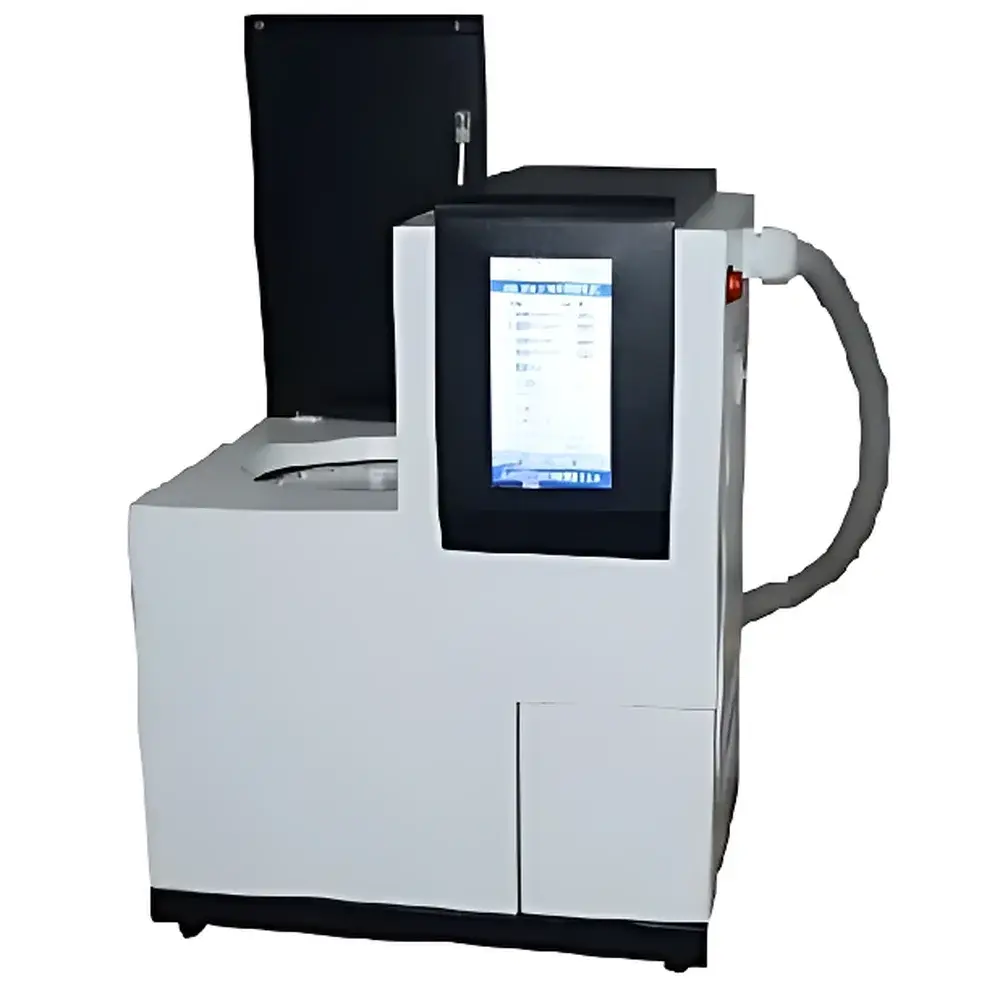
Beifen Sanpu ATDS-20A Dual-Stage Automated Thermal Desorber with Cryogenic Trap
| [Brand | Beifen Sanpu |
|---|---|
| Origin | Shanghai, China |
| Manufacturer Type | Direct Manufacturer |
| Instrument Type | Dual-Stage Thermal Desorber |
| Primary Desorption Temp Range | Ambient to 450 °C |
| Secondary Desorption Temp Range | 100–450 °C |
| Cryogenic Trap Temp Range | −35 °C to Ambient |
| Desorption Recovery Rate | >99% (compound-dependent) |
| Sample Capacity | 20 positions |
| Cold Trap Cooling Method | Electronic Peltier |
| Temperature Control Accuracy | ±0.5 °C |
| RSD | ≤2.5% (for 0.05 μg benzene on Tenax TA tube) |
| Sample Tube Format | 1/4″ OD × 3.5″ (ASTM D6196-compliant) |
| Valve Actuation | Motor-driven 6-port switching valve |
| GC Interface | Universal GC inlet compatibility (split/splitless, PTV, etc.) |
| Dimensions | 350 × 450 × 510 mm (W×D×H) |
| Weight | ~40 kg] |
Overview
The Beifen Sanpu ATDS-20A is a dual-stage automated thermal desorber engineered for high-fidelity, quantitative analysis of volatile and semi-volatile organic compounds (VOCs and SVOCs) in ambient air, indoor air, workplace atmospheres, building materials, automotive cabin emissions, and fixed-source stack gas samples. It operates on the principle of two-stage thermal desorption coupled with cryogenic focusing: analytes are first thermally desorbed from sorbent tubes under inert carrier gas flow (primary desorption), then refocused onto a narrow cryogenically cooled trap (−35 °C), and finally rapidly thermally desorbed (secondary desorption) as a sharp, solvent-free plug directly into the injection port of a gas chromatograph (GC) or GC–MS system. This architecture eliminates cold trapping solvents, minimizes band broadening, and delivers superior sensitivity, reproducibility, and chromatographic peak shape—critical for compliance with regulatory methods such as EPA TO-17, HJ 644–2013, HJ 583–2010, HJ 734–2014, and ISO 16017-1.
Key Features
- Fully automated 20-position sample carousel with motorized indexing and self-calibrating positioning—enabling unattended overnight operation without manual intervention.
- Independent four-zone temperature control: primary desorption oven, secondary desorption chamber, valve manifold (up to 300 °C), and transfer line (up to 300 °C), all adjustable in 1 °C increments with stability better than ±0.5 °C.
- Integrated Peltier-based cryogenic trap capable of reaching −35 °C with rapid thermal ramping (>3000 °C/min during secondary desorption), ensuring narrow (<50 ms) analyte band injection and optimal resolution for early-eluting VOCs (e.g., formaldehyde, acetaldehyde, benzene).
- Motor-driven 6-port valve with precise timing control for sequential functions: desorption, trap cooling/focusing, thermal flash desorption, GC backflush, and automated tube purging—programmable via time-segmented method editor.
- Onboard tube activation protocol with programmable heating (up to 450 °C), inert gas purge (0–100 mL/min), and dwell time (0–60 min), eliminating need for external conditioning ovens.
- Simulated sampling mode with calibrated mass flow controller (0–160 mL/min) for direct generation of calibration curves using standard gases or permeation tubes—fully traceable to NIST-traceable reference standards.
- Automatic valve and transfer line back-flush function prevents carryover between samples; optional fused silica-lined quartz transfer tubing available for highly reactive analytes (e.g., carbonyls, acids, amines).
- Touchscreen HMI with real-time status visualization, event logging, and method storage; supports GLP-compliant audit trail when connected to validated LIMS or chromatography data systems (CDS).
Sample Compatibility & Compliance
The ATDS-20A accepts standard 1/4″ OD × 3.5″ stainless steel or glass sorbent tubes packed with single- or multi-bed media (e.g., Tenax TA, Carbopack B/C, Carboxen 1000, graphitized carbon black). It complies with sample preparation requirements defined in multiple international and national standards, including but not limited to: HJ 644–2013 (ambient air VOCs by TD-GC/MS), HJ 583–2010 (benzene series in ambient air), GB/T 18883–2002 (indoor air quality), HJ 734–2014 (fixed-source VOC emissions), and ASTM D6196–19 (selection of sorbents for air sampling). Its design accommodates both passive and active sampling configurations, and its electronic refrigeration system meets IEC 61000-4-3 immunity requirements for laboratory electromagnetic environments. All thermal zones are certified for continuous operation within Class II safety limits per IEC 61010-1.
Software & Data Management
Control is managed via embedded microprocessor firmware with USB and RS-232 interfaces. The instrument supports method synchronization with major GC and GC–MS platforms—including Agilent, Thermo Fisher, Shimadzu, and PerkinElmer—via TTL trigger or Ethernet-based command protocols (e.g., LabVIEW-compatible SCPI subsets). Raw desorption events, temperature profiles, valve actuation timestamps, and error logs are timestamped and exportable in CSV format. When integrated with 21 CFR Part 11–compliant CDS software (e.g., OpenLab CDS, Chromeleon), full electronic signatures, user access controls, and immutable audit trails can be implemented. Firmware updates are delivered via secure HTTPS download and require digital signature verification prior to installation.
Applications
- Regulatory environmental monitoring: ambient air, indoor air, school classrooms, hospital waiting rooms per GB/T 18883–2002 and HJ 644–2013.
- Industrial hygiene assessment: workplace exposure to benzene, toluene, ethylbenzene, xylenes (BTEX), styrene, chlorinated solvents, and aldehydes.
- Building product emission testing: VOC release from carpets, adhesives, paints, particleboard, and insulation materials per GB 50325–2020.
- Automotive interior air quality: formaldehyde, acetaldehyde, and total hydrocarbon emissions from dashboards, seat fabrics, and trim components (HJ/T 400–2007).
- Fixed-source emission characterization: stack gas VOC profiling for petrochemical, pharmaceutical, and coating manufacturing facilities (HJ 734–2014).
- Method development and validation labs requiring robust, repeatable thermal desorption performance across diverse sorbent matrices and analyte polarities.
FAQ
What sorbent tube formats are supported?
Standard 1/4″ OD × 3.5″ tubes compliant with ASTM D6196 and EPA TO-17 specifications. Custom tube holders available upon request for alternative dimensions.
Does the ATDS-20A meet 21 CFR Part 11 requirements?
The hardware itself is Part 11–capable when paired with validated third-party CDS software that provides electronic signatures, audit trails, and role-based access control. Onboard logging meets ALCOA+ data integrity principles.
Can it interface with older GC models lacking digital triggers?
Yes—via analog TTL pulse output or configurable dry-contact relay for GC start initiation, compatible with legacy instruments dating to the 1990s.
Is cryogenic liquid nitrogen required?
No. The system uses solid-state Peltier cooling exclusively; no consumables, plumbing, or LN₂ handling infrastructure is needed.
What maintenance intervals are recommended?
Valve seal inspection every 6 months; trap cleaning and bake-out quarterly; annual calibration verification using NIST-traceable reference standards per ISO/IEC 17025 guidelines.




