
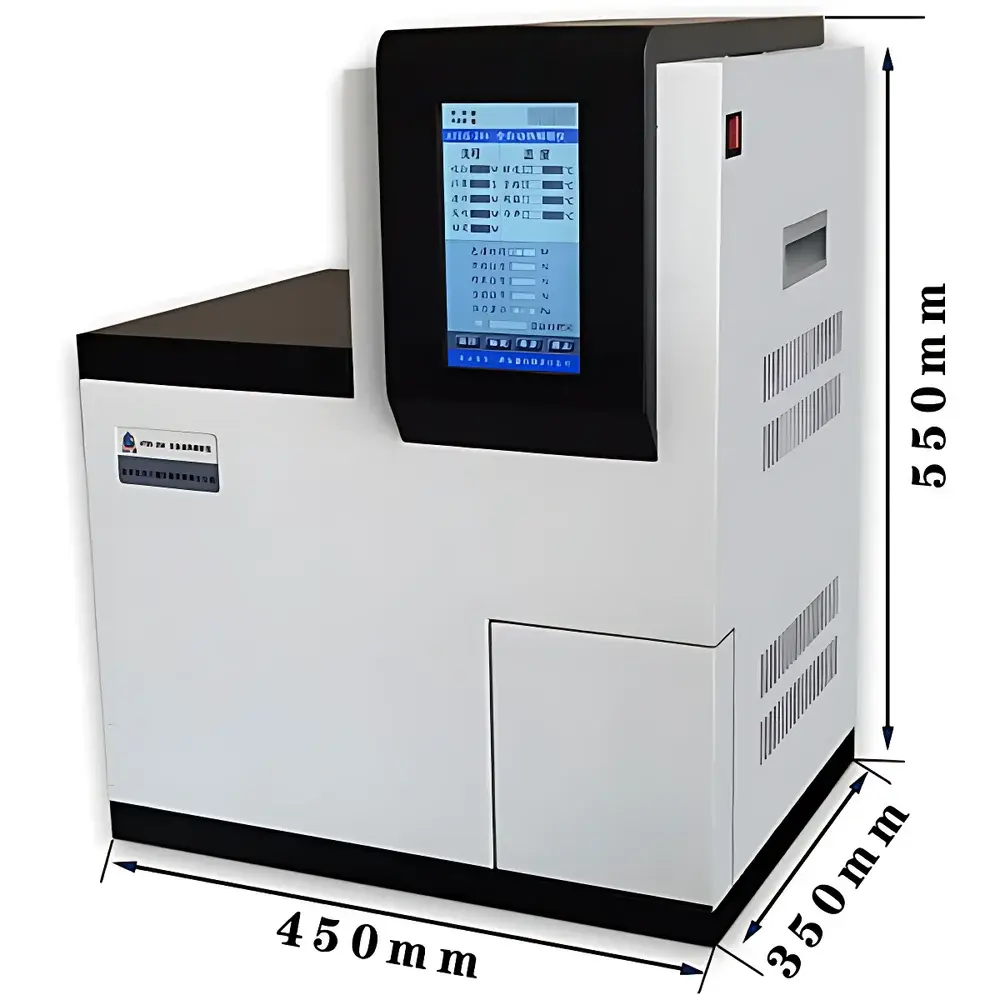
Beifen Sanpu ATDS-20A Fully Automated Two-Stage Thermal Desorber
| [Brand | Beifen Sanpu |
|---|---|
| Origin | Beijing, China |
| Manufacturer Type | Direct Manufacturer |
| Model | ATDS-20A |
| Instrument Type | Two-Stage Thermal Desorber |
| Primary Desorption Temp Range | Ambient to 450 °C |
| Secondary Desorption Temp Range | 100–450 °C |
| Cryo-Focusing Trap Temp Range | −35 °C to Ambient |
| Desorption Recovery Rate | >99% (compound-dependent) |
| Sample Capacity | 20 positions |
| Temperature Control Accuracy | ±0.5 °C |
| RSD | ≤2.5% (for 0.05 μg benzene in methanol) |
| Cold Trap Cooling Method | Electronic Peltier |
| Sample Tube Standard | 1/4″ OD × 3.5″ (ASTM D6196-compliant)] |
Overview
The Beifen Sanpu ATDS-20A Fully Automated Two-Stage Thermal Desorber is an engineered solution for quantitative trace volatile organic compound (VOC) analysis in environmental, industrial hygiene, and building materials testing laboratories. It operates on the principle of two-stage thermal desorption coupled with cryogenic focusing: volatile analytes are first thermally released from sorbent tubes under controlled inert gas flow (primary desorption), then refocused onto a cryogenically cooled trap (−35 °C minimum), and finally rapidly transferred as a narrow band into the GC or GC-MS inlet via secondary desorption at high heating rates (>3000 °C/min). This architecture delivers high sensitivity, chromatographic peak integrity, and reproducible quantitation—critical for compliance with regulatory methods including EPA TO-17, ISO 16017-1, and Chinese national standards HJ 644–2013, HJ 583–2010, and GB 50325–2020.
Key Features
- Fully automated 20-position sample carousel with motorized six-port valve actuation and self-calibrating carousel positioning—enabling unattended overnight operation without manual intervention.
- Independent temperature control across four zones: primary desorption oven (ambient–450 °C), secondary desorption chamber (ambient–450 °C), transfer line (ambient–300 °C), and GC interface valve (ambient–300 °C); all with ±0.5 °C stability and 1 °C programmable resolution.
- Integrated Peltier-based cryo-focusing trap capable of sustained operation down to −35 °C, ensuring efficient analyte refocusing and minimizing band broadening during transfer.
- Programmable multi-step sequence control: primary desorption → trap cooling/focusing → secondary desorption → GC injection → post-run trap and transfer line back-flush (0–100 mL/min, continuously adjustable).
- Dedicated tube activation mode with configurable heating profiles and purge gas flow, enabling in-situ reconditioning of Tenax®, Carbopack™, or mixed-bed sorbent tubes prior to reuse.
- Simulated sampling function with adjustable flow (0–160 mL/min) for direct calibration curve generation using standard gases or liquid spiking—eliminating reliance on external dynamic dilution systems.
- GC synchronization capability via TTL trigger or software command; compatible with Agilent, Thermo Fisher, Shimadzu, and PerkinElmer GC/GC-MS platforms via standardized electrical interfaces and mechanical adapters.
- Optional quartz-lined transfer lines available for analysis of reactive or polar VOCs (e.g., aldehydes, organic acids) to minimize surface adsorption losses.
Sample Compatibility & Compliance
The ATDS-20A accepts standard 1/4″ OD × 3.5″ stainless steel or glass sorbent tubes conforming to ASTM D6196 and ISO 16017-1 dimensional specifications. It supports single- and multi-bed sorbents (e.g., Tenax TA, Carbopack B/C, graphitized carbon black) and is validated for use with EPA Method TO-17-compliant sampling protocols. The instrument meets functional requirements for GLP-compliant laboratories: full audit trail logging (via optional software module), method parameter locking, user-access level management, and electronic signature support aligned with FDA 21 CFR Part 11 principles. Its performance has been verified against HJ 644–2013 (ambient air VOCs), HJ 583–2010 (benzene series), and GB/T 18883–2002 (indoor air quality), delivering RSD ≤2.5% (n=6) for target compounds at sub-ppbv levels.
Software & Data Management
Controlled via a dedicated Windows-based application with intuitive touchscreen GUI (10.1″ capacitive display), the system supports method creation, real-time status visualization (temperature profiles, valve states, timing progress), and event-driven automation. All method parameters—including desorption times, ramp rates, trap hold durations, and back-flush flows—are stored in encrypted project files. Raw log data (timestamps, setpoints, actual readings, error codes) are written to CSV and SQLite formats for LIMS integration. Optional software modules provide IQ/OQ documentation templates, electronic lab notebook (ELN) export, and PDF report generation compliant with ISO/IEC 17025 reporting requirements.
Applications
- Environmental monitoring: ambient air, indoor air, and workplace air VOC profiling per HJ 644–2013, HJ 734–2014, and ISO 16017-1.
- Building material emissions testing: formaldehyde, benzene, toluene, xylenes, and C2–C12 aliphatics from carpets, adhesives, and composite wood products (GB 50325–2020, JIS A 1912).
- Automotive cabin air quality assessment per HJ/T 400–2007 and VDA 278.
- Food packaging migration studies (e.g., residual solvents in laminates per GB 31604.8–2016).
- Pharmaceutical cleanroom monitoring (ISO 14644-8) and residual solvent verification in excipients.
FAQ
Does the ATDS-20A support method validation per ISO/IEC 17025?
Yes—the instrument’s temperature accuracy (±0.5 °C), recovery (>99%), and precision (RSD ≤2.5%) are documented in its factory performance certificate; optional IQ/OQ protocols are provided for laboratory-specific validation.
Can it be integrated into a LIMS environment?
Yes—CSV and SQLite log exports, combined with TCP/IP and RS-232 communication interfaces, enable seamless data ingestion into common LIMS platforms without proprietary middleware.
Is cold trap maintenance required?
No consumables or cryogens are needed; the Peltier cooler is solid-state and rated for >20,000 hours of continuous operation. Routine cleaning of the trap frit is recommended every 200 runs.
What sorbent tube types are supported?
All standard 1/4″ OD × 3.5″ tubes—including stainless steel, glass, and coated variants—with single- or multi-bed configurations (Tenax TA, Carbopack B/C, Carboxen 1000, etc.) are fully compatible.
How is carryover minimized between samples?
Automated high-flow back-flush (0–100 mL/min) of both the transfer line and cold trap after each run, plus independent heating of all transport pathways, ensures <0.1% carryover for high-concentration standards.




