
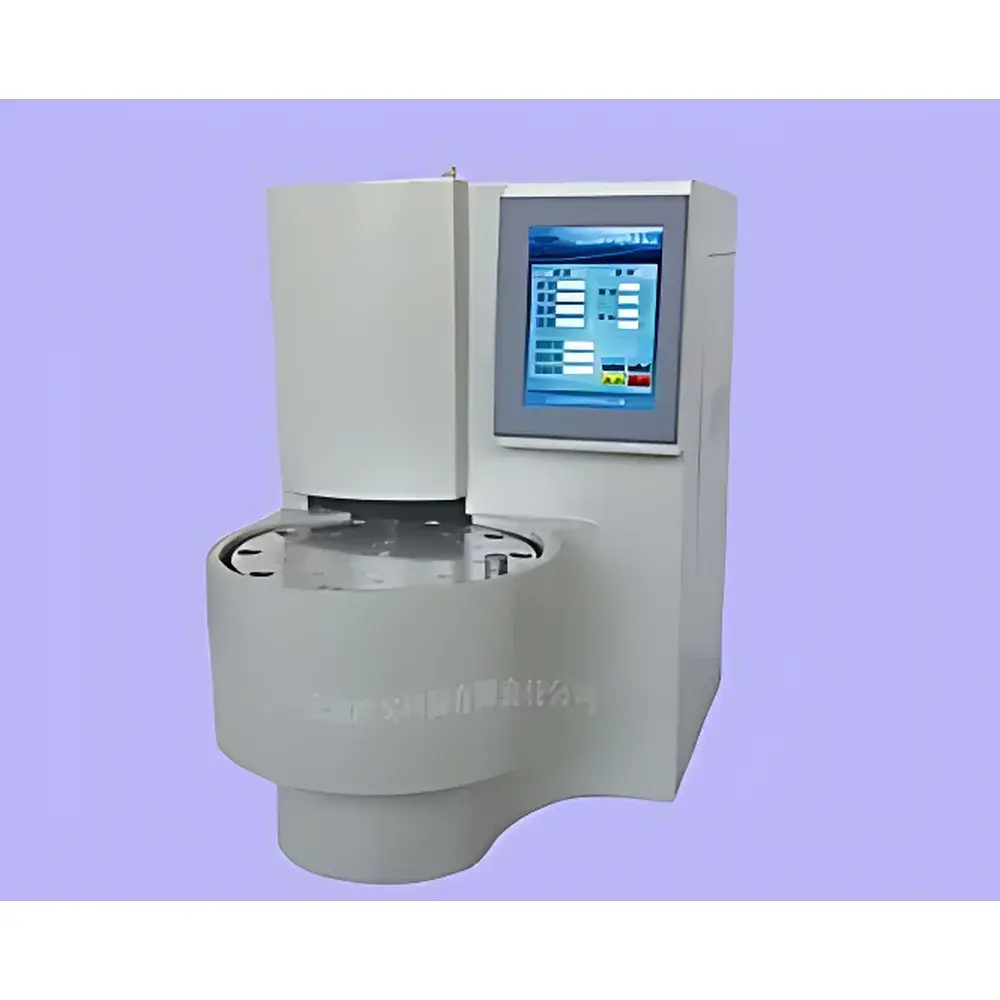
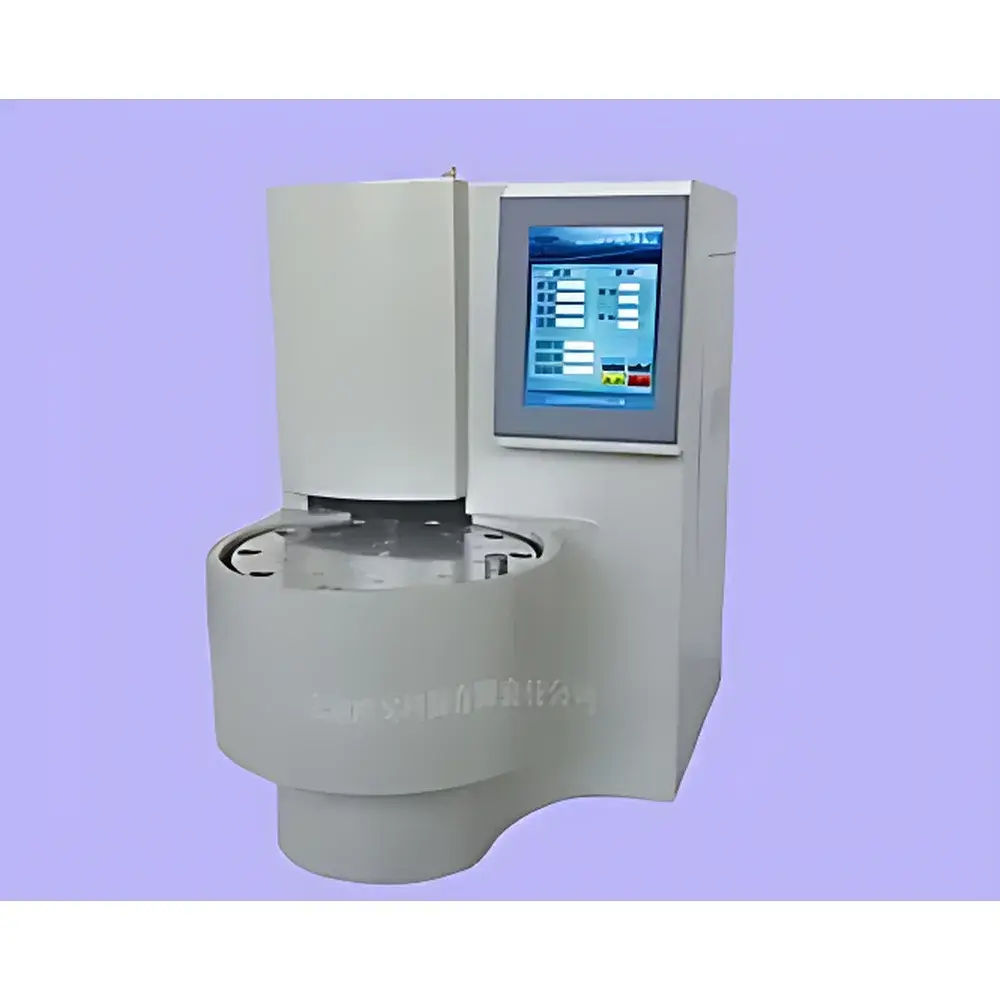
Beifen Sanpu AutoTDS-7820A Fully Automated Multi-Channel Thermal Desorber
| Brand | Beifen Sanpu |
|---|---|
| Origin | Beijing, China |
| Manufacturer | Yes |
| Instrument Type | Dual-Stage Thermal Desorber |
| Automation Level | Fully Automated |
| Sample Capacity | 10 or 20 positions |
| Heating Block Temperature Range | Ambient to 380 °C |
| Transfer Line Temperature Range | Ambient to 150 °C |
| Temperature Accuracy | ±1 °C |
| Timing Range | 1 s to 99 min 59 s |
| Timing Accuracy | <0.1% |
| Power Supply | 220 VAC, 50 Hz |
| Max Power Consumption | <400 VA |
| Optional Configurations | Ambient-Temperature or Cryogenic Secondary Trapping |
Overview
The Beifen Sanpu AutoTDS-7820A Fully Automated Multi-Channel Thermal Desorber is an engineered solution for quantitative trace volatile organic compound (VOC) and semi-volatile organic compound (SVOC) analysis in environmental, occupational health, and materials testing laboratories. Designed for seamless integration with gas chromatography (GC) and GC–mass spectrometry (GC–MS) systems, the AutoTDS-7820A implements dual-stage thermal desorption—comprising primary thermal desorption from sorbent tubes followed by secondary focusing—enabling high-sensitivity, low-background analysis of complex air, soil headspace, and polymer off-gas samples. Its architecture adheres to fundamental principles of thermally driven analyte transfer: precise temperature-controlled desorption ensures reproducible release kinetics, while cryogenic or ambient secondary trapping minimizes band broadening and maximizes chromatographic resolution. The system supports both EPA Method TO-17 compliant workflows and ISO 16000-6 validated sampling protocols, making it suitable for regulatory reporting environments requiring trace-level detection (sub-ppt range) and method traceability.
Key Features
- Fully automated operation for unattended batch processing of up to 20 sorbent tubes per sequence—reducing manual intervention and operator-induced variability.
- Dual independent temperature zones: a programmable heating block (ambient to 380 °C, ±1 °C accuracy) for primary desorption and a separately controlled transfer line (ambient to 150 °C) to prevent condensation and ensure efficient analyte transport to the GC inlet.
- Modular secondary trapping capability: optional ambient-temperature or cryogenically cooled (e.g., liquid nitrogen or Peltier-cooled) trap modules enable method optimization for peak shape, sensitivity, and compound class selectivity—including polar, high-boiling, and thermally labile analytes.
- Integrated 7-inch high-resolution touch LCD interface with real-time graphical monitoring of temperature profiles, timing status, and active command execution—supporting local diagnostics without external PC dependency.
- Robust mechanical design with precision stepper-motor-driven carousel and pneumatic valve sequencing, engineered for long-term reliability under continuous laboratory operation.
- Compliance-ready architecture: firmware supports time-stamped audit logs, user-access levels, and parameter lockout features—facilitating alignment with GLP and GMP documentation requirements.
Sample Compatibility & Compliance
The AutoTDS-7820A accommodates standard 6 mm OD stainless steel or glass sorbent tubes (e.g., Tenax TA, Carbopack B/C, Carboxen 1000), including multi-bed configurations per EPA TO-17 specifications. It accepts both single- and dual-tube formats and interfaces directly with common GC autosampler trays via standardized mounting fixtures. The instrument meets CE marking requirements for electromagnetic compatibility (EMC Directive 2014/30/EU) and low-voltage safety (LVD Directive 2014/35/EU). Its operational parameters are aligned with ASTM D6196-22 (standard practice for selecting sorbents, sampling, and thermal desorption analysis of VOCs), ISO 16000-6:2022 (indoor air—determination of VOCs using sorbent tube/GC–MS), and US EPA Compendium Method TO-17. When paired with compliant data acquisition software, the system supports 21 CFR Part 11–aligned electronic records through configurable user authentication, electronic signatures, and immutable audit trails.
Software & Data Management
Control and method development are performed via Windows-based Beifen Sanpu TDS Control Suite, a dedicated application supporting I/O configuration, multi-step temperature ramp programming, trap activation logic, and GC trigger synchronization (TTL or contact closure). All method parameters—including desorption time, bake-out duration, trap cooling/heating cycles, and GC transfer delay—are stored as encrypted XML files with versioned revision history. Raw instrument logs record every thermal event, valve actuation, and sensor reading with millisecond timestamping. Export options include CSV for LIMS integration and PDF report generation with embedded chromatograms (when linked to vendor-neutral GC data systems). The software architecture permits remote monitoring over LAN and supports scheduled maintenance alerts based on cumulative operational hours.
Applications
- Environmental monitoring: quantification of benzene, toluene, ethylbenzene, xylenes (BTEX), polycyclic aromatic hydrocarbons (PAHs), and chlorinated solvents in ambient, indoor, and workplace air.
- Materials emissions testing: determination of VOC/SVOC off-gassing from carpets, adhesives, paints, automotive interiors, and building products per ISO 16000-9 and ASTM D5116.
- Forensic and failure analysis: identification of residual solvents in pharmaceutical excipients, packaging leachables, and polymer degradation products.
- Quality control in semiconductor manufacturing: detection of airborne molecular contaminants (AMCs) affecting wafer yield.
- Research applications: kinetic studies of sorbent–analyte interactions and method development for emerging contaminants such as fluorotelomer alcohols and substituted phenols.
FAQ
Is the AutoTDS-7820A compatible with all major GC and GC–MS platforms?
Yes—it provides universal TTL and dry-contact triggering interfaces, and its transfer line output conforms to standard 1/16″ stainless steel tubing dimensions used by Agilent, Thermo Fisher, Shimadzu, and PerkinElmer GC inlets.
Can secondary trapping be retrofitted to an existing unit?
Yes—Beifen Sanpu offers factory-installed or field-upgradable secondary trap modules, with mechanical and firmware integration validated per instrument serial number.
What validation documentation is provided with the system?
Each unit ships with a Factory Acceptance Test (FAT) report, temperature calibration certificate traceable to NIST standards, and IQ/OQ protocol templates compliant with ISO/IEC 17025 and FDA guidance.
Does the system support method transfer between laboratories?
Yes—method files are portable across identical AutoTDS-7820A units; inter-laboratory reproducibility is maintained via embedded temperature sensor calibration and pneumatic pressure compensation algorithms.
How is data integrity ensured during extended unattended runs?
The embedded controller maintains local logging independent of host PC uptime; all timestamps are synchronized to internal RTC with battery backup, and critical events trigger automatic file checksum verification.




