
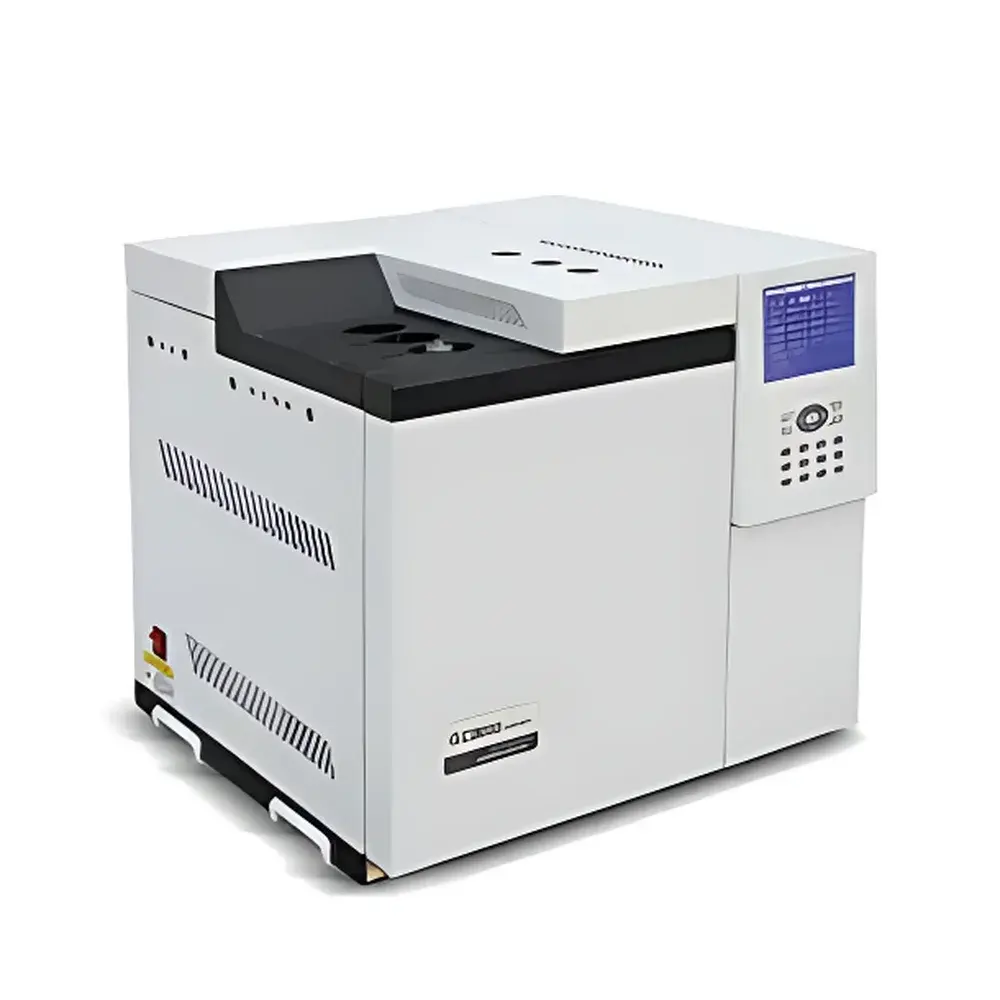
Beifen Sanpu GC-9860 Environmental Air Total Hydrocarbons Gas Chromatograph
| Brand | Beifen Sanpu |
|---|---|
| Origin | Beijing, China |
| Manufacturer Type | Direct Manufacturer |
| Instrument Type | Portable GC System |
| Detection Principle | Flame Ionization Detection (FID) with Dual-Packed Column Configuration (Total Hydrocarbons Column + Methane-Specific Column) |
| Compliance Standards | HJ 38–2017, HJ 604–2017 |
| Temperature Control Range | Ambient +5°C to 400°C |
| Temperature Accuracy | ±0.1°C |
| Programmed Temperature Ramping | 6-Stage |
| Dimensions | 555 × 525 × 485 mm |
| Weight | ~52 kg |
Overview
The Beifen Sanpu GC-9860 Environmental Air Total Hydrocarbons Gas Chromatograph is a purpose-built analytical system engineered for the precise quantification of total hydrocarbons (THC), methane (CH₄), and non-methane hydrocarbons (NMHC) in ambient air and fixed-source emission samples. It operates on the validated principle of direct gas injection coupled with dual-column separation and hydrogen flame ionization detection (FID), fully aligned with Chinese national standard methodologies HJ 604–2017 (ambient air) and HJ 38–2017 (stack emissions). The instrument employs two parallel packed columns — one optimized for total hydrocarbon response and the other selectively resolving methane — enabling differential calculation of NMHC as THC minus CH₄ (reported as carbon-equivalent mass concentration). Oxygen interference is systematically corrected via concurrent analysis of hydrocarbon-free air, ensuring metrological integrity under real-world sampling conditions. Designed for field-deployable operation and laboratory-grade reproducibility, the GC-9860 integrates robust thermal management, fail-safe gas control logic, and embedded diagnostics to support unattended or semi-automated monitoring workflows.
Key Features
- 5.7-inch 320 × 240 pixel LCD display with full Chinese interface; real-time visualization of all temperature zones, flow parameters, and operational status
- Six independent temperature-controlled zones (including dual inlet ports and detector oven), supporting simultaneous FID operation and column-specific thermal optimization
- Six-stage programmable temperature ramping with 0.1°C resolution and up to 40°C/min heating rate below 200°C
- Intelligent rear-door airflow modulation system enabling stable temperature control within ±0.1°C even at near-ambient setpoints
- Comprehensive hardware protection suite: overtemperature cutoff, carrier gas loss detection, and automatic power shutdown upon pressure deviation
- Dual-FID configuration with dedicated amplification board; compatible with both packed-column and valve-based gas sampling interfaces
- Integrated ten-port gas sampling valve for precise, repeatable introduction of ambient or stack gas without dilution or adsorption artifacts
- Onboard self-diagnostic engine delivering contextualized fault codes and actionable remediation guidance in Chinese
Sample Compatibility & Compliance
The GC-9860 accepts undiluted gaseous samples directly from stainless-steel sampling cylinders (e.g., 8-L compressed air or methane standards), Tedlar® bags, or active/passive sampling lines interfaced via the ten-port valve. It accommodates certified reference materials traceable to NIM (National Institute of Metrology, China), including CH₄-in-air (2–100 ppmv) and hydrocarbon-free zero air (≤0.02 ppmv THC). All analytical procedures comply with the measurement uncertainty requirements defined in HJ 604–2017 and HJ 38–2017, including mandatory oxygen interference correction, system blank verification, and calibration curve linearity validation (R² ≥ 0.999 over 0.1–100 ppmv C₁–C₆ range). While not pre-certified to ISO/IEC 17025 or EPA Method 25A, its architecture supports full GLP documentation when paired with compliant data acquisition software and audit-trail-enabled workstations.
Software & Data Management
The system ships with Beifen Sanpu’s proprietary chromatographic data station, supporting real-time peak integration, retention time alignment, and NMHC calculation per regulatory formula (NMHC = THC − CH₄). Raw signal files (.dat) are stored with full metadata: date/time stamps, operator ID, column history, and environmental chamber logs. Export formats include CSV, PDF reports, and XML-compliant outputs suitable for LIMS ingestion. Optional upgrades include 21 CFR Part 11–compliant electronic signatures, user-role-based access control, and automated calibration verification alerts. All firmware updates are delivered via USB or Ethernet, with version rollback capability and checksum-verified installation packages.
Applications
- Ambient air quality monitoring networks for NMHC trend analysis and ozone precursor assessment
- CEMS (Continuous Emission Monitoring Systems) validation and periodic QA/QC audits at industrial combustion sources
- Indoor air quality surveys in manufacturing facilities, printing plants, and coating operations
- Mobile monitoring platforms for fugitive emission mapping using vehicle-mounted configurations
- Research laboratories conducting atmospheric chemistry studies requiring speciated hydrocarbon baseline characterization
- Environmental testing service providers performing third-party compliance verification per local ecological bureaus’ directives
FAQ
Does the GC-9860 meet international standards such as ISO 8573 or EPA Method 25A?
It is designed and validated specifically for HJ 38–2017 and HJ 604–2017. While its core FID performance aligns with fundamental principles of EPA Method 25A, formal equivalency requires site-specific method validation per local regulatory authority requirements.
Can the system be operated without a dedicated lab environment?
Yes — its portable form factor (52 kg), wide input voltage tolerance (AC 220 V ±7%), and integrated air/hydrogen generators enable deployment in mobile labs, field stations, or temporary monitoring setups with stable power and ventilation.
What maintenance intervals are recommended for long-term reliability?
FID nozzle cleaning every 200 injections; column conditioning every 3 months or after exposure to high-boiling contaminants; annual verification of temperature calibration against NIST-traceable thermistors.
Is remote diagnostics supported?
Basic remote status polling is available via RS-232 or optional Ethernet module; full remote control and troubleshooting require on-site technician authorization and secure VPN configuration.
How is data integrity ensured during power interruption?
The system writes critical acquisition buffers to non-volatile memory every 5 seconds; upon restart, it resumes acquisition from the last confirmed timestamp without data loss.
Related Products







