
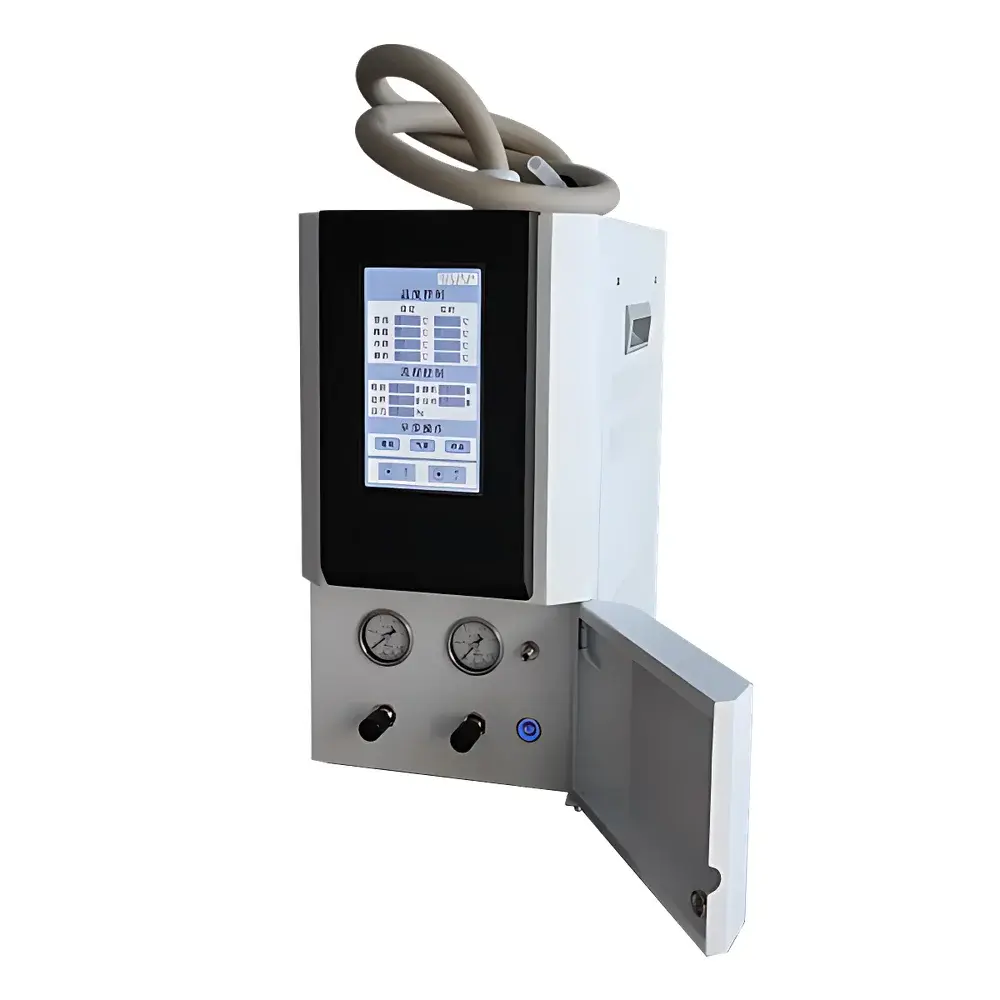
Beifen Sanpu HP-6900N Atmospheric Cryo-Focusing Auto-Sampler with Thermal Desorption
| Brand | Beifen Sanpu |
|---|---|
| Origin | Hebei, China |
| Manufacturer Type | Manufacturer |
| Model | HP-6900N |
| Instrument Type | Dual-Stage Thermal Desorber |
| Desorption Temperature Range | Ambient to 350 °C |
| Cold Trap Temperature Range | −35 °C to Ambient |
| Desorption Recovery Rate | >99% (compound-dependent) |
| Sample Position Count | Not Applicable |
Overview
The Beifen Sanpu HP-6900N Atmospheric Cryo-Focusing Auto-Sampler with Thermal Desorption is a fully automated, benchtop sample introduction system engineered for ultra-trace volatile organic compound (VOC) and semi-volatile organic compound (SVOC) analysis in ambient air matrices. It integrates cryogenic focusing—using solid-state Peltier cooling—and rapid thermal desorption within a single platform, enabling quantitative enrichment and transfer of analytes directly into gas chromatography (GC) or GC–mass spectrometry (GC–MS) systems. Designed in alignment with GB/T 14678–1993 for the determination of hydrogen sulfide, methanethiol, dimethyl sulfide, and dimethyl disulfide in ambient air, the HP-6900N supports method-compliant sampling, pre-concentration, and injection without manual intervention. Its architecture follows established principles of two-stage thermal desorption: first-stage adsorption at controlled flow rates onto sorbent tubes (e.g., Tenax TA, Carbopack B/C), followed by cryo-focusing in a thermally isolated cold trap (−35 °C minimum), and final flash desorption (>2000 °C/min ramp rate) into the GC inlet. This ensures high sensitivity (sub-pptv detection limits), minimal breakthrough, and reproducible analyte transfer across diverse environmental and occupational hygiene applications.
Key Features
- Four independently temperature-controlled zones: desorption oven (ambient to 350 °C), valve manifold (ambient to 220 °C), transfer line (ambient to 220 °C), and cryo-trap (−35 °C to ambient), each adjustable in 1 °C increments with precision better than ±0.5 °C.
- Integrated mass-flow sensor for real-time volumetric sampling calculation; user-defined sampling time and flow rate (0–300 mL/min) enable precise volume-based quantitation per EN 14662 and ISO 16017-1 protocols.
- Automated sequence programming for adsorption, cryo-focusing, thermal desorption, GC injection, and post-run purge—including programmable back-flush of transfer lines and valves (0.01–999 min duration; 0–160 mL/min flow) to eliminate carryover between samples.
- Chemically inert internal surfaces: all gas pathways—including sample tubing, valve ports, and trap housing—are silonized or passivated to minimize adsorption and ensure recovery integrity for polar and reactive compounds (e.g., aldehydes, mercaptans).
- Native synchronization capability: triggers GC oven start, detector activation, and data acquisition via TTL or contact closure signals—fully compatible with Agilent, Thermo Fisher, Shimadzu, PerkinElmer, and国产 GC/GC–MS platforms via standardized interface modules.
- 7-inch capacitive touchscreen HMI with full Chinese/English language toggle, real-time status monitoring (temperature profiles, elapsed time, date/time stamp), and local parameter storage for up to 100 method files.
Sample Compatibility & Compliance
The HP-6900N accommodates standard 6-mm OD stainless steel or quartz sorbent tubes (e.g., Markes UNITY, Gerstel MultiPurpose Sampler-compatible formats) and supports multi-bed configurations (e.g., Tenax GR + Carbograph 1TD + Carboxen 1000). It meets functional requirements for ISO 16017-1 (indoor air), EPA TO-17 (ambient air), and GB/T 14678–1993. All temperature control algorithms comply with GLP audit trails when operated under PC-based method management software. The system’s flow calibration traceability aligns with ISO/IEC 17025–2017 laboratory accreditation criteria. No consumables beyond standard sorbent tubes are required; Peltier coolers eliminate cryogen dependency, reducing operational risk and regulatory burden associated with liquid nitrogen handling.
Software & Data Management
Method configuration, run scheduling, and real-time diagnostics are managed via Windows-based Beifen Sanpu TD Control Suite (v3.2+), supporting FDA 21 CFR Part 11-compliant user access levels (admin/operator), electronic signatures, and immutable audit logs. Raw temperature and flow metadata are embedded in exported .csv and .txt reports alongside GC acquisition timestamps. The software exports calibrated concentration results directly to LIMS via ODBC or CSV batch upload. Remote monitoring is supported over Ethernet (TCP/IP); firmware updates are delivered via signed USB package with SHA-256 verification.
Applications
- Ambient air monitoring for odorants (e.g., reduced sulfur compounds, volatile fatty acids) per municipal and industrial fence-line compliance programs.
- Indoor air quality (IAQ) assessment in offices, schools, and healthcare facilities—targeting formaldehyde, benzene, and terpenes.
- Occupational exposure evaluation in petrochemical refineries, wastewater treatment plants, and pharmaceutical manufacturing cleanrooms.
- Method development and validation studies requiring high-recovery thermal desorption of low-boiling VOCs (C2–C12) and thermally labile SVOCs (e.g., polycyclic aromatic hydrocarbons, phthalate esters).
- Reference material analysis and inter-laboratory comparison exercises where reproducibility across instruments is critical (RSD <3% for replicate n=6 at 100 ng tube⁻¹ level).
FAQ
Does the HP-6900N support unattended overnight operation?
Yes—equipped with watchdog timers, thermal runaway protection, and automatic error logging, it supports continuous 24/7 sequencing with up to 100 predefined methods.
Can it be integrated into an existing LIMS environment?
Yes—via configurable CSV export templates and ODBC connectivity; custom API integration is available upon request for validated environments.
Is the cold trap temperature verified and traceable to NIST standards?
Cold trap calibration certificates (including as-found/as-left data) are provided with each unit; optional annual recalibration service includes NIST-traceable Pt100 sensor verification.
What maintenance intervals are recommended for routine operation?
Valve seals and sorbent tube o-rings should be inspected every 500 runs; Peltier modules require no scheduled maintenance but benefit from annual dust filter cleaning.
Does the system meet electromagnetic compatibility (EMC) requirements for laboratory use?
Yes—certified to IEC 61326-1:2013 Class A for industrial environments, with conducted/radiated emissions tested per CISPR 11.
Related Products





