
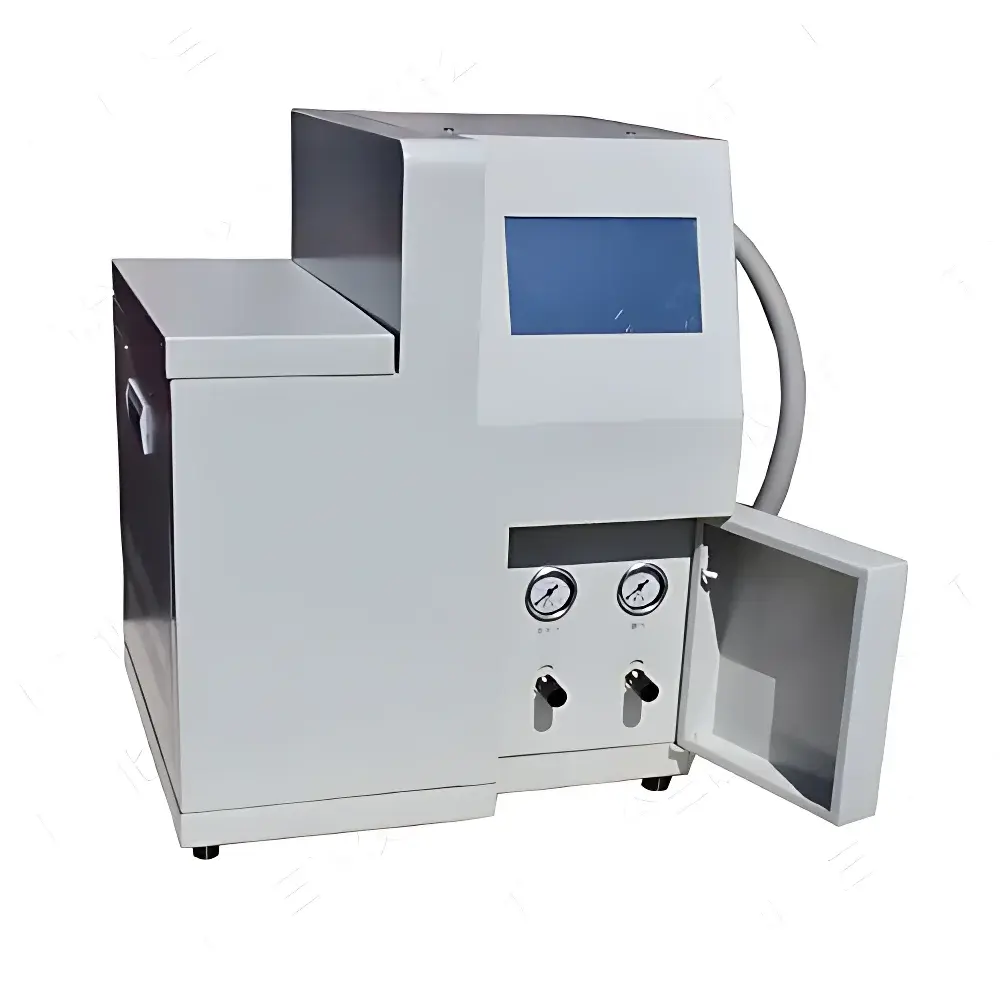
Beifen Sanpu HSA-20A Plus Fully Automated Static Headspace Sampler
| Brand | Beifen Sanpu |
|---|---|
| Origin | Beijing, China |
| Manufacturer Type | OEM Manufacturer |
| Instrument Type | Static Headspace Sampler |
| Automation Level | Fully Automatic |
| Sample Capacity | 20 positions |
| Vial Size Compatibility | 10 mL or 20 mL vials |
| Vial Heating Range | Ambient to 200 °C (1 °C increments) |
| Valve & Loop Temperature Control Range | 40–220 °C (±1 °C accuracy) |
| Quantitative Loop Volume | 1 mL |
| Carrier Gas Control | EPC-compatible (optional) |
| RSD | <1.0% (for 100 ppm ethanol in water) |
| Pressure Regulation | 0–0.25 MPa (continuously adjustable) |
| Sampling Time | 0–30 min |
| Injection Time | 0–999 s |
| Pressurization Time | 0–999 s |
| Bake-out/Flush Flow | 0–100 mL/min (adjustable) |
Overview
The Beifen Sanpu HSA-20A Plus is a fully automated static headspace sampler engineered for robust, unattended operation in routine and regulated gas chromatography (GC) laboratories. It employs the principle of static headspace analysis—equilibrating volatile analytes between a solid or liquid sample phase and its overlying vapor phase at controlled temperature and pressure—followed by precise pressurized transfer of the equilibrated headspace gas into a GC system via a thermostatted six-port valve and inert quantitative loop. Designed for method reproducibility and operational reliability, the HSA-20A Plus eliminates manual intervention across all critical steps: vial pressurization, equilibrium heating, loop filling, injection, and post-injection purge. Its architecture supports compliance-driven workflows, including audit-ready parameter logging, real-time status monitoring, and synchronized GC triggering—making it suitable for QC labs operating under GLP, ISO/IEC 17025, or pharmaceutical quality systems aligned with USP and ICH Q2(R2).
Key Features
- Fully automated 20-position sample carousel with automatic vial recognition and positional fault avoidance—prevents mechanical collision during loading/unloading even when vials are missing.
- Independent, precision-controlled thermal zones: sample vial oven (ambient to 200 °C), six-port valve (40–220 °C), and transfer lines (40–220 °C), all maintained within ±1 °C stability to prevent condensation and ensure analyte integrity.
- Inert, de-activated stainless-steel flow path—including quantitative loop (1 mL standard), valve internal surfaces, and sampling needle—minimizes adsorption, carryover, and cross-contamination; validated RSD <1.0% (n=6, 100 ppm ethanol in water).
- Positive-pressure sampling mechanism enables direct analysis of liquids and solids without derivatization; maintains baseline stability during GC injection due to atmospheric-pressure introduction.
- Motor-driven actuation system—no external compressed gas required—enhances safety, reduces infrastructure dependencies, and simplifies installation in shared lab environments.
- Flexible injection protocols: single-vial multi-injection, single-vial single-injection, and multi-vial sequential injection modes programmable via front-panel interface or USB-connected PC.
- Comprehensive self-diagnostic suite: power-on system check, carousel position calibration, thermal sensor validation, and real-time fault reporting (e.g., heater failure, motor stall, communication loss).
Sample Compatibility & Compliance
The HSA-20A Plus accommodates standard 10 mL and 20 mL crimp-top or screw-cap headspace vials, with optional customization available for 50 mL and 100 mL formats. Its sealed, thermally isolated sample chamber ensures uniform heating and minimal thermal gradient across all 20 positions. The instrument meets core requirements for regulatory-compliant headspace analysis: temperature accuracy (±0.5%), long-term thermal stability (<±0.5 °C), and traceable time-resolution (1 ms timing control). All operational parameters—including setpoints, run logs, timestamps, and error events—are timestamped and stored internally or exported via USB. When integrated with compliant GC data systems, the sampler supports 21 CFR Part 11–ready audit trails through synchronized event logging (e.g., “valve actuation initiated at 14:22:03.487”) and user-accessible configuration history.
Software & Data Management
Operation is supported via dual interfaces: an intuitive 7-inch TFT LCD touchscreen with Chinese/English language toggle and full local control (including method creation, real-time status display, and manual override), and a Windows-compatible USB communication port for remote configuration and batch method deployment. All parameters—equilibration time, pressurization pressure, loop fill duration, injection volume, and purge flow rate—are editable and persistently saved. The system generates a structured CSV log file per sequence, recording vial ID (if barcode-scanned via optional reader), start/stop times, actual temperatures, pressure readings, and fault codes. No proprietary software license is required; integration with third-party chromatography data systems (CDS) is achieved via TTL-level trigger signals and RS-232/USB command sets compliant with ASTM E1947 and IUPAC GC interface standards.
Applications
The HSA-20A Plus is routinely deployed in environmental testing (e.g., VOCs in soil/water per EPA Method 502.2 and 624), pharmaceutical residual solvent analysis (USP , ICH Q3C), food and beverage flavor profiling (e.g., ethanol, esters, aldehydes), forensic toxicology (blood alcohol quantification), and polymer additive migration studies. Its ability to handle heterogeneous matrices—including slurries, suspensions, and semi-solids—without clogging or degradation makes it especially valuable for QC labs processing high-volume batches under strict turnaround time constraints. The 20-vial capacity and <1.0% RSD performance enable statistically robust replicate analysis and calibration curve generation without operator fatigue or procedural drift.
FAQ
Is the HSA-20A Plus compatible with Agilent, Thermo Fisher, and Shimadzu GC systems?
Yes—it provides TTL-level start/stop triggers and accepts standard GC-ready signals; mechanical and electronic integration kits are available for all major GC platforms.
Can the instrument be operated without a computer connection?
Yes—all methods and sequences can be defined, saved, and executed directly from the front-panel interface.
What maintenance is required to sustain <1.0% RSD performance?
Quarterly verification of temperature calibration (using NIST-traceable probe), annual replacement of septa and O-rings, and biweekly cleaning of the transfer line with methanol followed by nitrogen purge.
Does the system support method validation documentation per ISO/IEC 17025?
Yes—built-in parameter logging, electronic signatures (via connected CDS), and configurable report templates meet evidence requirements for uncertainty estimation and equipment qualification.
Is EPC (Electronic Pressure Control) included as standard?
No—EPC is an optional upgrade; standard configuration uses precision mechanical pressure regulators with digital feedback monitoring.






