
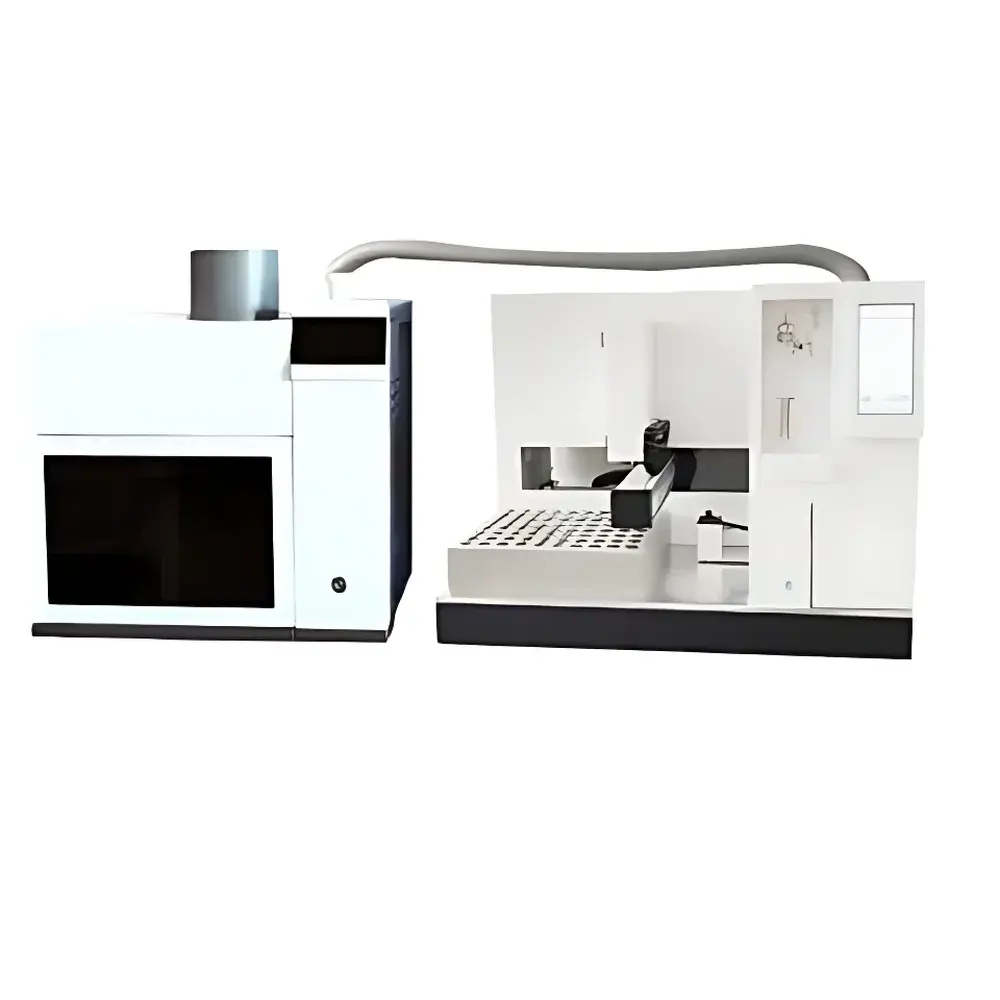
Beifen Sanpu Multi-2025 Methylmercury and Ethylmercury Analyzer
| Brand | Beifen Sanpu |
|---|---|
| Origin | Beijing, China |
| Manufacturer Type | Manufacturer |
| Origin Category | Domestic |
| Model | Multi-2025 |
| Instrument Type | Laboratory Water Quality Analyzer |
| Detection Targets | Methylmercury (CH₃Hg⁺), Ethylmercury (C₂H₅Hg⁺), Total Mercury, Arsenic, Selenium, Antimony, Lead, Bismuth, Cadmium, etc. (12 elements) |
| Compliance | HJ 977–2018, HJ 1269–2022, HJ 1268–2022, SNT 5517–2023 |
| Detection Principle | Purge-and-Trap Coupled with Gas Chromatography–Cold Vapor Atomic Fluorescence Spectrometry (PT-GC-CVAFS) |
Overview
The Beifen Sanpu Multi-2025 Methylmercury and Ethylmercury Analyzer is a dual-mode laboratory instrument engineered for trace-level speciation analysis of organomercury compounds—specifically methylmercury (CH₃Hg⁺) and ethylmercury (C₂H₅Hg⁺)—in aqueous, solid, and biological matrices. It integrates purge-and-trap (PT) sample introduction with high-resolution gas chromatography (GC) separation and cold vapor atomic fluorescence spectrometry (CVAFS) detection—a method recognized for its exceptional sensitivity (sub-pg/L level for methylmercury in water), selectivity, and robustness in complex environmental samples. Unlike conventional total mercury analyzers, the Multi-2025 delivers quantitative speciation data essential for risk assessment, regulatory compliance, and toxicological studies. Its architecture supports both dedicated alkylmercury analysis per Chinese EPA standards (HJ 977–2018, HJ 1269–2022) and broad-spectrum hydride-generation atomic fluorescence (HG-AFS) analysis for 12 elements—including As, Se, Sb, Bi, Pb, Cd, and Hg—enabling laboratories to consolidate multiple analytical workflows onto a single platform without compromising method integrity.
Key Features
- Dual-function design: Simultaneously operates as a speciation analyzer for methylmercury/ethylmercury via PT-GC-CVAFS and as a high-performance HG-AFS system for total elemental analysis.
- Modular purge-and-trap compatibility: Interfaces seamlessly with commercial purge-and-trap concentrators (e.g., Tekmar, OI Analytical, or domestic equivalents), allowing integration with existing laboratory infrastructure and minimizing capital expenditure.
- Optimized GC separation: Employs a modified OV-3 packed column—selected for enhanced thermal stability, reproducible alkylmercury resolution, and extended service life compared to conventional capillary columns under routine high-throughput operation.
- High-temperature pyrolysis module: Capable of thermal decomposition up to 1050 °C, ensuring complete conversion of alkylmercury species to elemental mercury vapor prior to CVAFS detection.
- Integrated 3D-printed reaction manifold: Consolidates hydride generation, gas–liquid separation, and quartz cell interface into a single monolithic flow path fabricated from mercury-inert polymer material; eliminates tubing connections, reduces dead volume by >60%, and minimizes memory effects and cross-contamination.
- Automated diagnostics and consumables tracking: Real-time monitoring of lamp intensity, pump tube wear, reagent levels, and system pressure enables predictive maintenance and audit-ready operational logging.
Sample Compatibility & Compliance
The Multi-2025 is validated for use with drinking water, wastewater, surface water, soil extracts, sediment pore water, biological tissues (e.g., fish muscle, blood), agricultural products, and cosmetic raw materials. It fully complies with Chinese national standard methods including HJ 977–2018 (water), HJ 1269–2022 (soil and sediment), HJ 1268–2022 (LC-AFS alternative for water), and SNT 5517–2023 (export aquatic products). Method performance meets requirements for GLP-aligned laboratories, supporting full traceability, electronic signatures, and audit trails compatible with FDA 21 CFR Part 11–compliant data management practices when deployed with validated software configurations.
Software & Data Management
The graphical user interface provides real-time visualization of instrument status—including GC oven temperature ramping, purge cycle progression, carrier gas flow stabilization, and CVAFS signal baseline drift correction. All analytical sequences are programmable with customizable calibration curves (linear, quadratic, or weighted), QC check points (blanks, spikes, duplicates), and automatic pass/fail evaluation against predefined acceptance criteria. Data export supports native .csv, Microsoft Excel (.xlsx), Word (.docx), and PDF formats—with embedded metadata (operator ID, timestamp, instrument serial number, method version) to satisfy ISO/IEC 17025 documentation requirements. Audit logs record all parameter modifications, result overrides, and software updates with user attribution and time stamps.
Applications
- Regulatory monitoring of methylmercury in municipal drinking water supplies and wastewater effluents per HJ 977–2018.
- Speciation analysis of methylmercury and ethylmercury in contaminated soils and sediments for site remediation assessment (HJ 1269–2022).
- Food safety testing of seafood, rice, and dietary supplements for organic mercury contamination.
- Research applications in biogeochemical cycling of mercury in wetlands, estuaries, and aquaculture systems.
- Multi-element screening (As, Se, Sb, Pb, Cd, etc.) in clinical, agricultural, and geological samples using standardized HG-AFS protocols.
- Method development and validation support for laboratories seeking CNAS or CMA accreditation.
FAQ
Does the Multi-2025 require dedicated purge-and-trap hardware, or can it interface with existing systems?
Yes—the instrument features standardized pneumatic and electrical interfaces compliant with ASTM D7411 and ISO 16773–2, enabling direct integration with third-party purge-and-trap concentrators without proprietary lock-in.
What is the typical detection limit for methylmercury in ultrapure water using this system?
Under optimized PT-GC-CVAFS conditions (25 mL sample, 10× preconcentration), the method detection limit (MDL) is ≤0.03 ng/L (30 pg/L) with RSD <5% (n=7) at 0.1 ng/L spike level.
Is the 3D-printed reaction module certified for long-term use with acidic hydride-generation reagents?
Yes—the module is fabricated from chemically resistant, low-adsorption photopolymer and has undergone accelerated aging tests (>5000 cycles with 5% HCl/3% KBH₄), confirming structural integrity and consistent signal response over 18 months of continuous operation.
Can the software generate reports compliant with ISO/IEC 17025 Clause 7.8.2 (Reporting of Results)?
Yes—reports include uncertainty estimation per GUM guidelines, measurement traceability statements, and full chain-of-custody metadata required for accredited testing laboratories.
Is training and application support available for international users?
Beifen Sanpu provides remote application troubleshooting, method transfer assistance, and on-site installation qualification (IQ) / operational qualification (OQ) services through authorized regional partners in APAC, EMEA, and LATAM regions.
Related Products







